
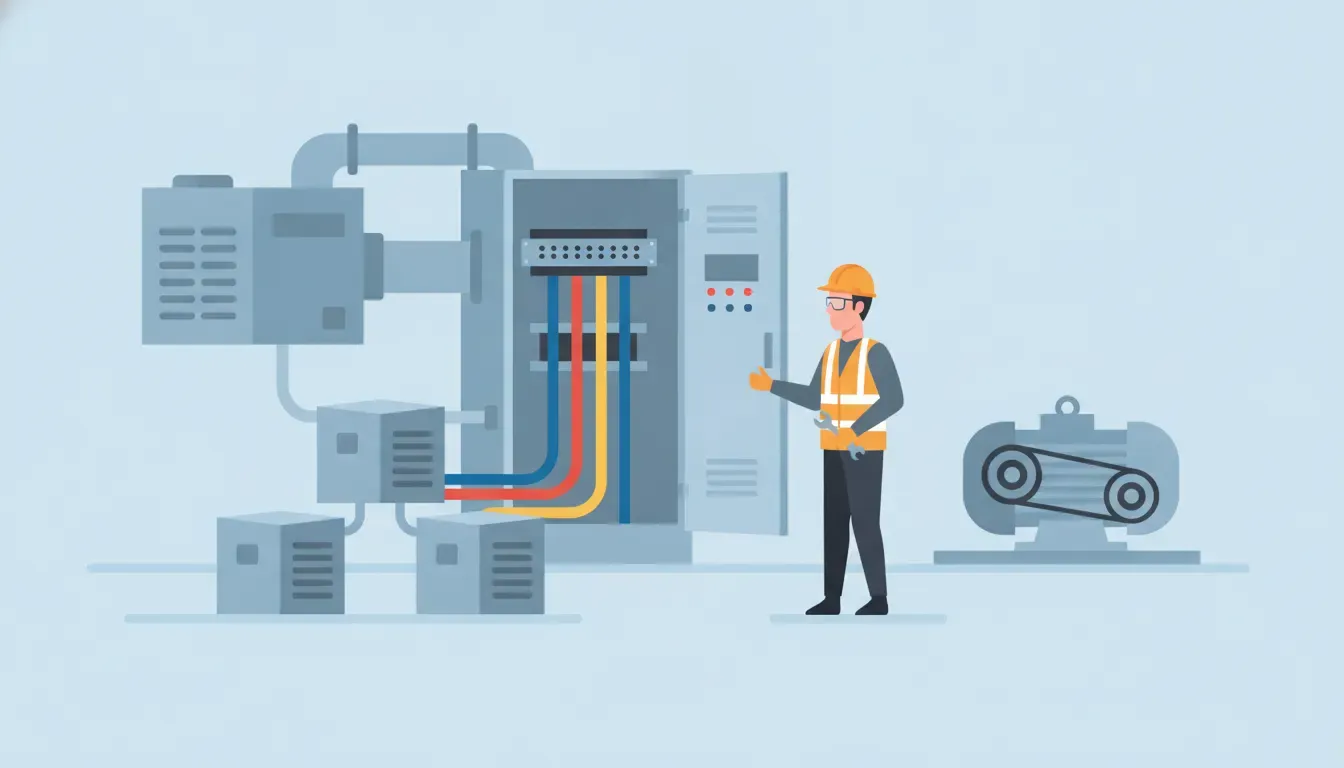
When a business adds larger HVAC equipment, pumps, elevators, refrigeration, or production machinery, its electrical service has to support more than lights and receptacles. 3 phase power distributes alternating current across three phases, making it a common choice for commercial buildings with substantial or motor-driven loads. The right configuration depends on the building, equipment, utility service, and applicable code requirements.
Schedule Service for a commercial electrical evaluation before adding major equipment.
What is 3 phase power?
3 phase power is an alternating-current system that uses three energized phases with waveforms offset from one another. Because the phases work together, the system can deliver a steadier supply of power to motors and other larger loads than a comparable single-phase arrangement. It is not one universal voltage or panel type, so the equipment and service must be evaluated together.
For a business owner, the important point is practical: three-phase service can support certain commercial loads efficiently. Having three phases does not automatically make a building safe, adequately sized, or ready for every piece of equipment. Service voltage, conductor sizing, overcurrent protection, grounding and bonding, disconnects, and equipment ratings still matter.
What do commercial three-phase voltage configurations mean?
Three-phase service does not identify one fixed voltage. A commercial building may have a configuration selected for its lighting, receptacles, motors, HVAC equipment, process loads, and distribution distances. Common terms can describe the relationship between phase-to-phase and phase-to-neutral voltage, but the label on one building should never be applied to another building without verification.
For example, a facility may use a distribution arrangement that supports standard receptacles and lighting along with three-phase equipment. A larger facility may distribute power at a higher voltage and use transformers or other equipment to serve lower-voltage loads. Legacy or specialized installations can follow different designs. The equipment nameplate, panel schedule, service documentation, and measured conditions are more reliable than an assumption based on a building's size or location.
This is especially important when buying or leasing commercial space. Ask for the electrical service information early, then compare it with the equipment schedule. If the documentation is missing, incomplete, or inconsistent, a commercial electrical inspection can help identify what needs to be confirmed before a new load is ordered.
Why do commercial buildings use 3 phase power?
Commercial buildings often use 3 phase power because businesses may operate equipment that draws more power and runs for longer periods than typical household appliances. Three-phase distribution can provide smoother motor operation and a practical way to serve larger loads across a facility when the service, feeders, and equipment are designed as a coordinated system.
- Motor performance: Three-phase motors can produce smoother torque for equipment such as pumps, fans, compressors, and certain HVAC systems.
- Higher usable capacity: A properly designed three-phase service can distribute substantial loads across the phases rather than placing every demand on a single phase.
- Facility flexibility: A commercial service may support both three-phase equipment and line-to-neutral loads, depending on its configuration and distribution equipment.
- Future planning: A load review can identify whether planned tenant improvements or equipment additions fit within the existing service or require a larger design.
These benefits are design benefits, not a promise that a three-phase upgrade will lower a specific utility bill or solve every power-quality issue. An electrician needs to review actual equipment nameplates, operating schedules, and existing measurements before recommending a change.
Which commercial loads may need three-phase service?
Equipment with larger motors, heating elements, compressors, or continuous operating demands may be a reason to investigate three-phase service. The equipment manufacturer determines the required voltage and phase arrangement. A building owner should never assume that a familiar voltage or a nearby breaker is suitable for new equipment.
| Commercial load | Why phase service may matter | What should be verified |
|---|---|---|
| Large HVAC equipment | Compressors, air handlers, and chillers can create significant motor loads. | Nameplate phase, voltage, MCA, MOCP, disconnect, and available capacity. |
| Pumps and motors | Three-phase motors are common where steady rotation and sustained operation are important. | Motor rating, phase rotation, starter or drive requirements, and protection. |
| Commercial refrigeration | Refrigeration systems may run for long periods and can have high startup demand. | Manufacturer requirements, circuit capacity, conductor sizing, and service conditions. |
| Elevators and lifts | These systems can involve dedicated motors and specialized controls. | Approved equipment documents, disconnecting means, emergency requirements, and coordination. |
| Commercial kitchen or process equipment | Ovens, dishwashers, heating equipment, and production machinery may have substantial loads. | Total connected load, demand, ventilation interlocks, and the equipment schedule. |
The same type of equipment can have different electrical requirements from one model to another. Keep the equipment schedule, installation instructions, and nameplate information available for the electrician and any engineer or utility representative involved in the project.
Does every commercial building need 3 phase power?
No. A small office, storefront, or other light-commercial space may operate appropriately with its existing service if the calculated demand and equipment requirements fit. A larger service is not automatically better. The right choice is the service arrangement that safely supports the building's present loads, planned additions, and required distribution equipment.
Three-phase service is worth discussing when a business sees one or more of these conditions:
- New equipment documentation calls for three-phase power.
- Motors have difficulty starting, or equipment causes repeated breaker trips.
- The building is adding a large HVAC system, lift, compressor, pump, or commercial kitchen line.
- Tenant improvements will add substantial lighting, receptacle, refrigeration, or process loads.
- The existing service has limited capacity for planned growth.
- Voltage complaints, heat at electrical equipment, or other power-quality symptoms need investigation.
These signs do not diagnose a three-phase problem. A tripping breaker can result from an overloaded circuit, a failing component, a short, incorrect protection, or an equipment issue. Stop using equipment that is smoking, sparking, overheating, or producing a burning odor, and arrange qualified service rather than repeatedly resetting a breaker.
What does an electrician evaluate before a change?
A commercial electrician begins with the building's actual electrical conditions, not just the requested phase count. The evaluation connects the utility service, service equipment, distribution panels, feeders, branch circuits, equipment, and expected operation. This helps a business avoid ordering equipment that the building cannot safely support.
- Existing service: Identify the service configuration, service rating, phase arrangement, voltage, main disconnect, panels, and available documentation.
- Equipment schedule: Review nameplates and manufacturer instructions for motors, HVAC, heating, refrigeration, lighting, and controls.
- Load calculation: Account for connected loads, expected demand, continuous loads, motor loads, and planned expansion rather than adding breaker sizes together.
- Distribution path: Trace whether the service, feeders, transformers, panels, disconnects, conductors, and overcurrent devices can support the proposed equipment.
- Phase balance: Check how line-to-neutral loads are distributed and look for conditions that could create imbalance or unnecessary stress.
- Condition and safety: Look for damaged equipment, loose or overheated connections, inadequate working space, grounding and bonding concerns, and signs of moisture or corrosion.
- Project requirements: Determine whether utility coordination, drawings, permits, inspections, shutdown planning, or other professionals are needed for the scope.
Measurements and documents support the decision, but they do not replace a complete design review when the work affects service equipment or major commercial distribution. My Electrician also provides electrical inspection services for businesses that need a clearer picture of existing conditions before planning work.
How can a business recognize a capacity or distribution concern?
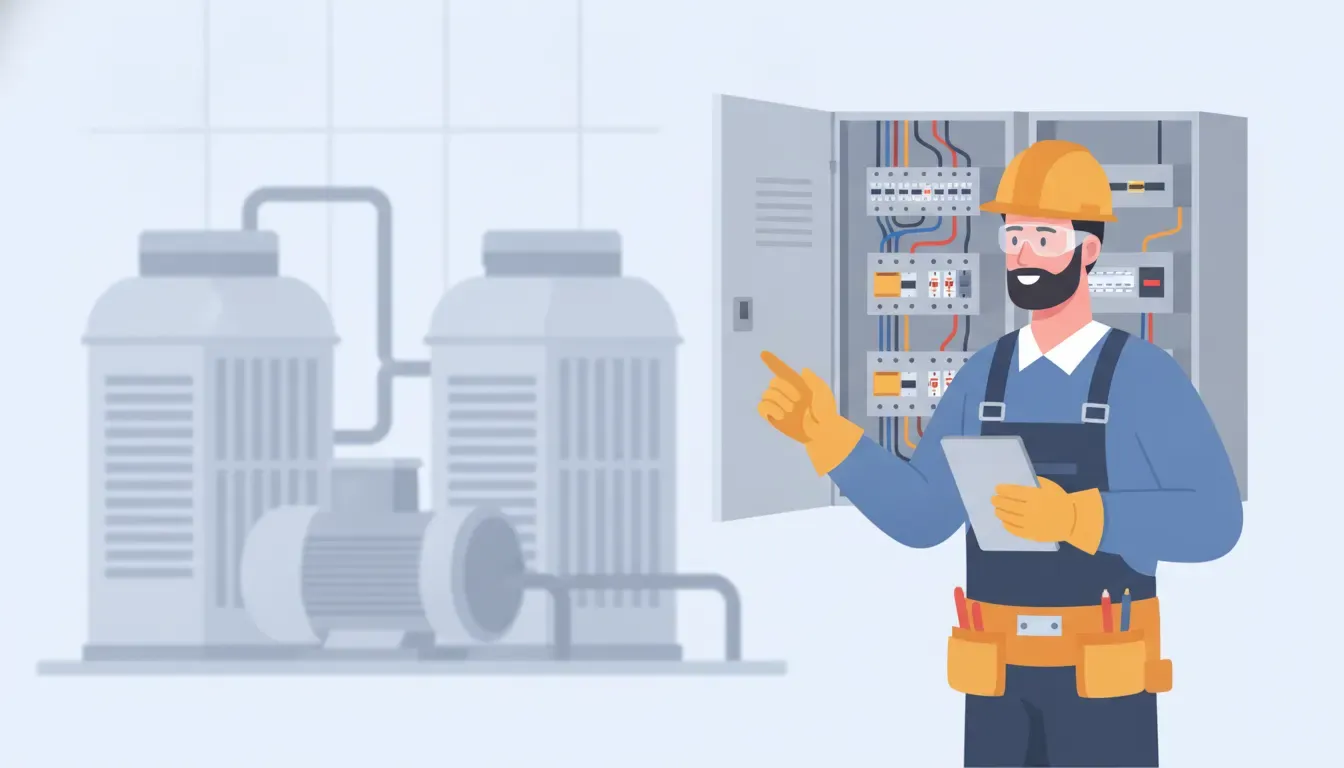
Electrical symptoms in a commercial building can be easy to misread. A single complaint may come from a branch circuit, a piece of equipment, a panel connection, the service, or the utility. The useful next step is to document when the symptom occurs, which equipment is operating, and whether the issue affects one room, one tenant, or the entire property.
- Breakers trip when large equipment starts or several loads run together.
- Lights dim when a motor or compressor starts.
- Electrical equipment feels unusually hot, buzzes, or has a burning smell.
- Motors do not start reliably, run in the wrong direction, or shut down unexpectedly.
- New equipment cannot be connected without using temporary cords or improvised adapters.
- A remodel adds loads that were not included in the original service plan.
Do not use extension cords or adapters as a substitute for a properly designed commercial circuit. Keep employees and occupants away from damaged equipment and exposed energized parts. A qualified electrician can determine whether the issue is local to a machine or points to a broader service and distribution concern.
What safety and code questions matter for commercial three-phase systems?
Commercial electrical work involves hazards that are not appropriate for do-it-yourself troubleshooting. The system should be evaluated and worked on by qualified professionals using the applicable adopted codes, manufacturer instructions, and workplace safety procedures. OSHA's electrical standards for general industry address electrical safety requirements, while NFPA 70E provides a recognized framework for electrical safety in the workplace.
Project questions may include:
- Is the equipment listed and rated for the available voltage and phase arrangement?
- Are disconnects, overcurrent protection, working clearances, and equipment grounding arranged correctly?
- Does the work require an electrical permit, inspection, utility coordination, or approved plans?
- Will energized work be avoided, and are lockout and verification procedures defined?
- Does the commercial equipment require an arc-flash evaluation, labels, or a documented safety program?
- Are existing enclosures, conductors, terminations, and equipment suitable for the environment?
Code requirements vary with the scope, jurisdiction, occupancy, equipment, and adopted editions. This article is general education, not a substitute for a site-specific design or code determination by the responsible professionals and authority having jurisdiction.
How should a business plan for 3 phase power?
Plan the electrical service before ordering major equipment or finalizing a tenant improvement. Early coordination gives the business time to compare the equipment schedule with the existing service. It also helps identify utility or permitting steps, sequence shutdowns, and make room for safe distribution. Planning early reduces the chance that a late change will delay operations.
- Collect the facts: Gather equipment nameplates, manufacturer instructions, planned operating hours, floor plans, panel schedules, and recent electrical records.
- Define the growth plan: Include equipment that may be added later instead of sizing only for today's operation.
- Request an evaluation: Have a commercial electrician inspect the existing system and explain what is known, what must be measured, and what remains subject to design or utility approval.
- Coordinate the scope: Align the electrician, equipment suppliers, building owner, utility, engineer, and authority having jurisdiction as needed.
- Protect operations: Plan access, shutdowns, temporary power needs, employee communication, testing, and final documentation before work begins.
Businesses can also use a commercial electrical maintenance checklist to organize recurring observations and maintenance conversations. Preventive attention does not eliminate every failure, but it can help a facility notice heat, damage, capacity changes, and documentation gaps sooner.
Call 877-762-7483 or contact My Electrician to schedule a commercial electrical service evaluation.
Frequently Asked Questions
Do commercial buildings always have 3 phase power?
No. Many commercial buildings use three-phase service, but the correct arrangement depends on the building's size, equipment, utility availability, service design, and calculated demand. Some smaller commercial spaces can operate with a properly sized single-phase service.
Does three-phase power mean 480 volts?
No. Three-phase describes the relationship among the phases, not one fixed voltage. Commercial buildings may have different service and distribution voltages. The equipment nameplate and the building's electrical documentation must be checked before connecting anything.
Can an existing commercial building be changed to three-phase power?
Sometimes, but the project may involve more than changing a breaker. The electrician may need to evaluate the utility service, transformer, service equipment, feeders, panels, disconnects, grounding, protection, equipment, permits, and shutdown plan. The utility or an engineer may also need to participate.
What happens if the phases are not balanced?
Uneven loading can increase neutral current in some systems, contribute to voltage imbalance, and place unnecessary stress on equipment. A qualified electrician can measure the system, identify the cause, and determine whether load redistribution, equipment repair, or a broader design change is appropriate.
Can a business owner install or test a three-phase system?
Do not attempt to install, open, test, or modify energized commercial electrical equipment unless you are qualified and authorized under the applicable safety program. Three-phase systems can expose workers to shock, arc-flash, equipment-damage, and fire hazards. Arrange an evaluation with a qualified commercial electrician.