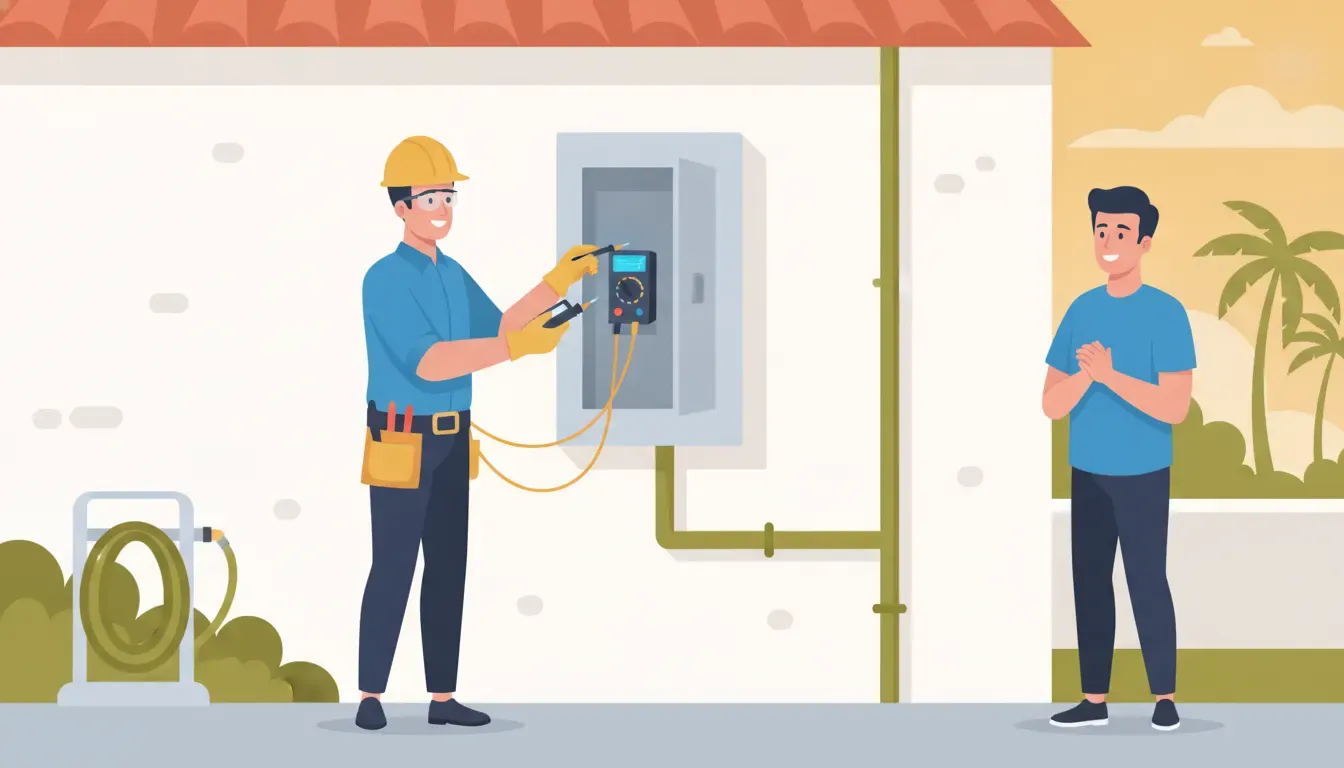
Finding a licensed electrician to replace circuit breaker equipment starts with more than finding the lowest estimate. A breaker that trips, feels hot, buzzes, or will not reset may be faulty, but the symptom can also point to a wiring problem, a loose connection, an overloaded circuit, or panel damage. The right professional should explain the diagnosis, match the replacement to the panel and circuit, check the load, test the finished work, and document what was done. This guide shows homeowners what to ask before authorizing breaker replacement and how to recognize a safety-first service process.
What Should You Ask Before Authorizing Breaker Replacement?
Start with questions that reveal whether the electrician intends to diagnose the problem or simply swap a part. A professional should be willing to explain what was observed, what was tested, and why replacement is recommended. You do not need to identify the technical fault yourself. Your role is to describe what happened and make sure the proposed work addresses the cause as well as the visible symptom.
- What did you find? Ask whether the breaker itself failed or whether the circuit has signs of overload, shorting, heat, loose wiring, moisture, or damage elsewhere.
- What part will be replaced? Ask for the breaker type, amp rating, pole configuration, and any special protection required by the circuit.
- What testing will you perform? The answer should cover the circuit and connections, not only the replacement part.
- Will the work require a permit or inspection? Requirements depend on the job and local jurisdiction, so ask who will determine and handle them.
- What documentation will I receive? A written description of the work, the installed component, test results, and any follow-up recommendation can help with future service or a home sale.
Be cautious if someone recommends a larger breaker simply because the current breaker trips. A higher rating can allow wiring to carry more current than it was designed to handle. The correct solution may be a same-rated replacement, circuit repair, load balancing, or a larger project that includes panel or service evaluation.
How Can You Verify the Electrician's License and Coverage?
Ask for the business name and the license information used for the job. Then verify that the license is active and applies to the work being proposed. In Florida, the Department of Business and Professional Regulation provides public information for electrical contractors and license records. You can use the Florida electrical contractor public records page as a starting point, and you can ask the contractor which record or license should be checked.
License verification is one part of hiring responsibly. Also ask whether the company carries the insurance appropriate for its work, whether the person arriving is an employee or subcontractor, and who is responsible for permits and inspections if they apply. A clear answer is more useful than a badge or a vague claim on an advertisement.
Look for a service company that can explain its process in plain language. You should not have to accept a diagnosis that you cannot understand, and you should not be pressured to approve extra work before the electrician explains the safety reason. My Electrician FL positions its electrical service around licensed expertise, safety, upfront pricing, and written workmanship coverage. Confirm the current scope and terms with the company before authorizing a specific job.
Why Does Diagnosis Matter Before a Breaker Is Replaced?
A circuit breaker is designed to interrupt power when current becomes unsafe. Frequent trips are therefore information, not merely an inconvenience. Replacing the breaker without investigating the reason it opened can leave the real hazard in place. The cause could be an appliance fault, damaged insulation, a short circuit, a loose termination, a failing breaker, or a circuit that is carrying a load it was not designed to serve.
Ask the electrician to separate the symptoms from the diagnosis. Useful observations include:
- How often the breaker trips and whether it happens when a particular appliance starts.
- Whether the breaker resets immediately, resets only after cooling, or will not reset at all.
- Whether you noticed buzzing, crackling, flickering lights, a burning odor, discoloration, rust, or warmth near the panel.
- Whether one room, appliance, outlet, or group of lights loses power when the breaker opens.
- Whether recent renovations or new equipment changed the electrical load.
A thorough evaluation may include visual inspection, voltage measurements, continuity checks, connection inspection, and load testing. The exact tests depend on the symptoms and the equipment. You can ask the electrician to explain each test and what a result means. If the evidence points to wiring or panel damage, the safe recommendation may extend beyond a single breaker.
What Should the Electrician Check Before Matching a Breaker?
Breakers are not interchangeable just because they look similar or share an amp number. The replacement must be compatible with the panel and suitable for the circuit. Ask the electrician to confirm the panel brand and model, the breaker family approved for that panel, the number of poles, the voltage rating, the amp rating, and any required protection such as GFCI or AFCI features.
The electrician should also inspect the breaker connection point, the bus bar, surrounding insulation, and nearby terminations for heat or corrosion. A damaged connection can make a new breaker unsafe. If the panel is obsolete, contaminated, visibly damaged, or affected by moisture, ask whether the component replacement is a durable repair or only a temporary step while a larger evaluation is planned.
Do not remove the panel cover to collect this information. A homeowner can safely photograph the closed panel door and label, note which breaker trips, and clear access around the equipment. Internal panel work should be left to a qualified professional. The electrical panel services page explains the broader kinds of panel repair, upgrade, replacement, and installation work that may be considered when a breaker issue involves the panel itself.
What Should Load Checks and Testing Include?
Matching a breaker is only part of protecting a circuit. The electrician should consider what the circuit supplies and whether the current demand is appropriate for the conductors, equipment, and panel. Ask how the load will be evaluated, especially if the problem began after adding an air conditioner, range, dryer, pool equipment, workshop tool, electric vehicle charger, or other high-demand appliance.
After the replacement, the electrician should verify that connections are secure, the circuit is energized correctly, and the breaker operates as intended. Testing may include checking voltage, polarity, continuity, grounding, and operation under an appropriate load. The exact procedure varies by equipment and local requirements, but the goal is the same: confirm that the replacement restored safe protection rather than simply restoring power.
Ask whether the circuit will be labeled clearly and whether the electrician will explain any limits or follow-up work. A breaker that trips again after replacement is not a reason to keep resetting it. It is a reason to stop using the affected circuit and call for further diagnosis. OSHA's electrical wiring and protection standard illustrates why ratings, circuit protection, and correct application matter. Homeowners should rely on a qualified electrician for residential evaluation and repair rather than trying to apply a rating from a different device or installation.
What Documentation Should You Receive?
Before work begins, request a written estimate that states the diagnosed issue, the proposed repair, what is included, and what would require separate approval. My Electrician FL describes an upfront pricing process, but the exact scope and price for your home depend on the inspection and the work required. Do not approve an estimate that leaves the core repair vague.
After the work, ask for documentation that includes the date, circuit or panel location, breaker type and rating, testing performed, and any unresolved recommendation. Keep invoices, permit information, inspection results, photos supplied by the electrician, and warranty paperwork with your home records. These details can help the next electrician understand the system and can be useful during remodeling, insurance questions, or a future sale.
Documentation should also make clear whether the breaker replacement solved the original issue or whether the electrician found a condition that needs additional work. A written recommendation is not automatically an upsell. It may identify a real safety concern. The important distinction is whether the recommendation is supported by observations and testing and whether you are given time to understand the options.
When Is Breaker Trouble an Emergency?
Call for urgent electrical help when you see smoke, flames, active arcing, a strong burning odor, a panel that is hot, or damage that appears to be worsening. Move people away from the area. If there is an active fire, call emergency services and follow their instructions. Do not open the panel, touch exposed wiring, throw a breaker repeatedly, or use water on an electrical fire.
A breaker that buzzes, feels warm, trips repeatedly, or will not reset also deserves prompt professional attention even when there is no smoke. Unplugging a suspected appliance and keeping the affected circuit off may reduce immediate risk, but it does not identify or repair the underlying problem. My Electrician FL offers 24/7 emergency electrical service, so homeowners can ask about the appropriate response when a breaker problem affects safety or essential power.
How Can You Compare Estimates Without Choosing on Price Alone?
Compare the scope of work, not just the total. A lower estimate may cover only a part swap, while another may include diagnosis, load checks, connection inspection, testing, labeling, permit coordination, and documentation. Ask each electrician to state what is included and what conditions could change the recommendation.
Use these comparison questions:
- Does the estimate identify the suspected cause, or does it promise a replacement before diagnosis?
- Does it name the breaker type and rating, or only say "new breaker"?
- Does it explain how the electrician will check the circuit and panel connection?
- Does it include final testing and a written record?
- Does the company explain its license, insurance, warranty, and permit approach clearly?
- Can the electrician describe what would make a panel repair or circuit repair safer than a simple replacement?
For a homeowner in Port St. Lucie, Stuart, Palm City, Jensen Beach, Fort Pierce, Vero Beach, or nearby communities, local availability can also matter when a breaker failure leaves essential equipment without power. A company that provides both scheduled service and emergency response may be able to match the appointment to the risk instead of treating every call the same.
If the electrician cannot answer basic questions, discourages documentation, or suggests bypassing a safety device, choose another provider. The objective is not to buy the most expensive option. It is to hire someone who can show that the proposed work is appropriate, correctly matched, safely tested, and clearly recorded.
How Do You Prepare for the Appointment?
Write down what happened, when it started, which appliances were running, and whether the breaker tripped more than once. Take a photo of the closed panel label if it is safe to do so. Clear furniture or storage away from the panel, secure pets, and make sure the electrician can access the affected rooms and appliances. Do not open the panel or remove the dead front before the appointment.
Have your questions ready: What caused the trip? Is the breaker the problem? Is the circuit appropriately loaded? Is the replacement compatible with this panel? What testing will be completed? What records will I receive? These questions keep the visit focused on safety and help you understand whether the recommendation is a breaker replacement, a circuit repair, a panel repair, or a larger electrical evaluation.
Frequently Asked Questions
Can I replace a circuit breaker myself?
Breaker replacement involves an electrical panel and can expose you to dangerous energy even when a breaker is switched off. Do not remove the panel cover or replace a breaker as a DIY project. A qualified electrician can diagnose the cause, match the part, inspect the connection, and test the circuit.
Should I install a larger breaker if the current one keeps tripping?
No. A larger breaker may allow more current than the circuit wiring can safely carry. Repeated trips call for diagnosis. The correct solution could be a same-rated breaker, circuit repair, load balancing, or a panel or service evaluation.
What information should I give the electrician?
Describe how often the breaker trips, what was running, whether it resets, and any heat, odor, buzzing, flickering, corrosion, or visible damage you noticed. Do not touch the equipment to investigate further.
How do I know whether the electrician is licensed?
Ask for the legal business name and license information, then verify the record through the appropriate state or local licensing source. Also ask about insurance, permits, written estimates, testing, and documentation. A professional should answer without pressuring you to skip verification.
What if the breaker trips again after replacement?
Stop repeatedly resetting it and contact the electrician for follow-up diagnosis. A second trip can indicate that the original cause remains, that another component is failing, or that the circuit load needs attention.
Does every breaker problem require panel replacement?
No. Some problems can be resolved with a properly matched breaker or a circuit repair. Panel replacement may be considered when the panel is damaged, obsolete, affected by heat or moisture, or unable to support the home's needs. The recommendation should follow an inspection, not a guess.
Choose a Safety-First Electrical Service
The best licensed electrician to replace circuit breaker equipment will explain the problem before proposing the part, verify compatibility, evaluate the load, test the finished work, and leave you with understandable records. Those steps protect your home better than a fast swap based only on the number printed on the old breaker. If your breaker is hot, noisy, damaged, repeatedly tripping, or refusing to reset, arrange a professional evaluation instead of continuing to reset it.
Call 877-762-7483 to schedule circuit breaker service with My Electrician FL.