
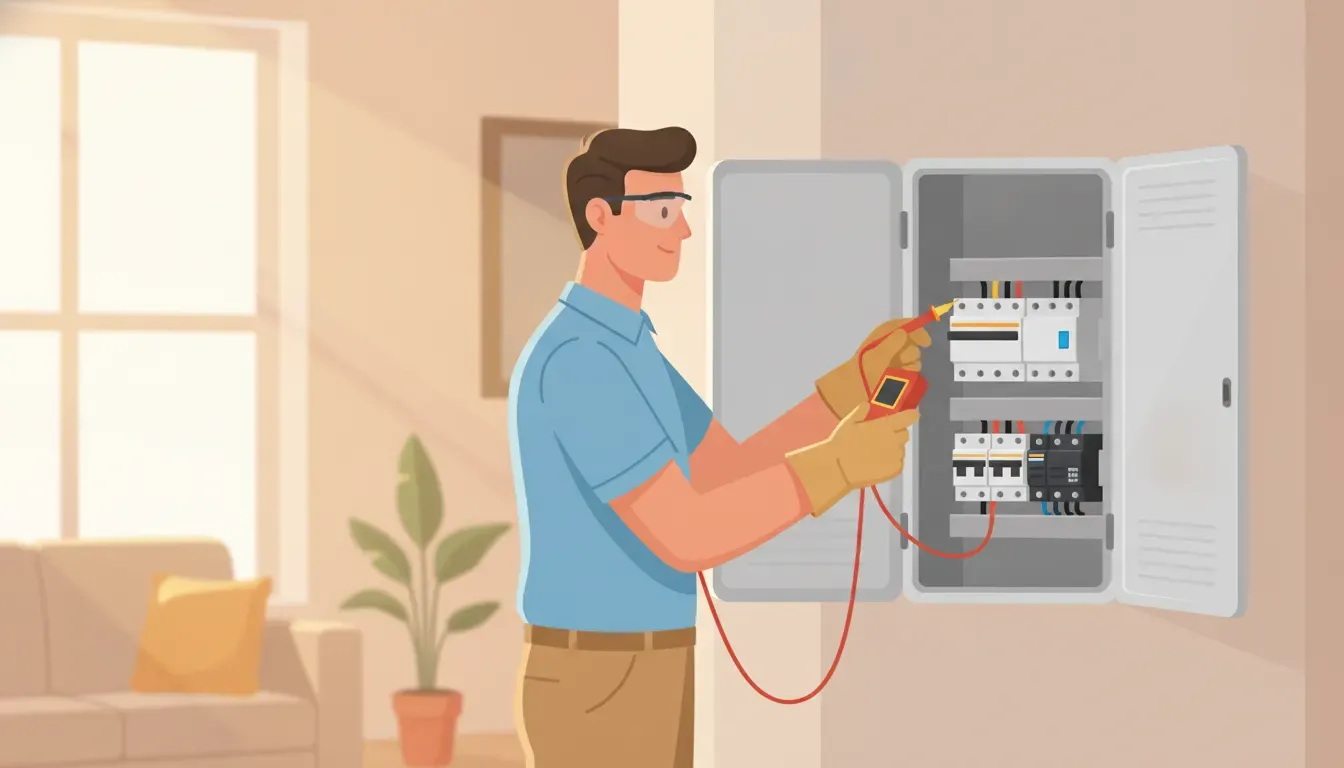
If your breaker trips when you use an appliance, will not reset, or seems unusually warm, you may wonder whether you need an arc fault circuit breaker. An arc fault circuit interrupter, commonly called an AFCI, is designed to recognize electrical arcing patterns that can damage wiring and start a fire. It is different from a standard overcurrent breaker and from a ground-fault circuit interrupter, or GFCI.
That difference matters. A tripping AFCI does not automatically mean the breaker is defective, and adding an AFCI is not a do-it-yourself substitute for diagnosing the circuit. The breaker, panel, wiring, devices, and local code requirements all have to work together. This guide explains what AFCI protection does, which homeowner symptoms deserve attention, how AFCI and GFCI protection differ, and when to schedule a professional inspection.
What Does an Arc Fault Circuit Breaker Do?
An arc fault circuit breaker monitors the electrical current on a circuit for patterns that can indicate an unintended arc. An arc can occur when electricity jumps across a damaged, loose, pinched, or deteriorated connection instead of traveling continuously through the intended conductor. The heat from that event can damage insulation and surrounding materials even when the current is not high enough to trip a standard breaker quickly.
When an AFCI identifies a pattern consistent with a hazardous arc, it interrupts power to the protected circuit. The goal is not simply to keep a circuit from drawing too much current. The goal is to reduce the chance that an arcing condition will continue long enough to create a fire hazard.
The U.S. Consumer Product Safety Commission's AFCI guide describes AFCIs as devices that detect hazardous arcing conditions and interrupt power as part of home fire prevention. The Electrical Safety Foundation International's AFCI overview also explains that arcing can be associated with damaged wiring, pinched cords, or other conditions that allow electricity to jump across an unintended gap. These sources are useful background, but they do not replace an evaluation of the particular wiring in your home.
AFCI protection may be provided by a breaker at the electrical panel or by a listed AFCI receptacle in an approved location. The correct option depends on the existing system, the circuit layout, the equipment listing, and the requirements adopted by the authority having jurisdiction. A licensed electrician should confirm the appropriate device before installation.
How Is AFCI Protection Different From a Standard Breaker?
A standard circuit breaker primarily protects conductors from overcurrent. It is intended to open the circuit when the current becomes too high for the circuit's rated capacity, such as during an overload or a short circuit. It is an essential part of a safe electrical system, but it is not designed to identify every type of arcing pattern.
An arc fault circuit breaker adds electronic detection intended to identify certain dangerous arcing conditions. It still provides overcurrent protection, but it also has an arc-detection function. This is why replacing a standard breaker with an AFCI is not just a matter of matching the amp rating and snapping in a similar-looking device.
Breakers also have to match the panel and circuit. A device that appears to fit may not be listed for a particular panel or compatible with the panel's bus, wiring configuration, or neutral arrangement. The wrong combination can create a false sense of security, nuisance trips, or an unsafe installation.
If a standard breaker or AFCI trips, avoid repeatedly resetting it to keep an appliance running. Repeated trips are information about the circuit. The cause could be an overload, a short, damaged wiring, a loose connection, a failing appliance, an incompatible device, or another problem that requires testing.
How Is an AFCI Different From a GFCI?
AFCI and GFCI protection address different hazards:
- AFCI protection is intended to detect certain hazardous arcing patterns that can contribute to electrical fires.
- GFCI protection is intended to respond to an imbalance in current and reduce the risk of electric shock when electricity takes an unintended path, such as through a person to ground.
In simple terms, AFCI protection focuses on fire risk from arcing, while GFCI protection focuses on shock risk from current leakage. One device does not automatically replace the other. Some applications use dual-function protection, but the specific product must be listed and installed for the panel and circuit.
The locations and conditions that require or allow AFCI and GFCI protection depend on the code edition adopted in your jurisdiction, the type of space, the circuit, the construction or remodeling work, and inspection requirements. Do not rely on a general online list as a final answer for an older home or a current project. An electrician can compare the existing installation with the applicable local requirements.
My Electrician's homeowner guide to GFCI outlet installation explains the other type of protection in more detail. The distinction is helpful when a homeowner sees a test button or a breaker that trips and is unsure what it is meant to protect.
What Homeowner Symptoms Can Point to an AFCI or Circuit Problem?
Homeowners usually notice symptoms before they know the technical name of the problem. These signs do not prove that the arc fault circuit breaker itself has failed, but they justify stopping to assess the circuit rather than repeatedly resetting it.
- The breaker trips repeatedly. A trip that returns after the same appliance or device is used may point to an appliance, wiring, load, or breaker issue.
- The breaker will not reset. A breaker that immediately trips again or will not remain on needs diagnosis. Do not force the handle into position.
- You hear buzzing, crackling, or sizzling. Sound from a panel, outlet, switch, or connected device can indicate a loose connection, arcing, or another condition that needs prompt attention.
- You notice a burning odor or warmth. Turn off the affected circuit if you can do so safely without touching damaged components, then seek professional help. Smoke, flames, or active sparking call for emergency response and may require leaving the area and contacting emergency services.
- Lights flicker when a circuit operates. Flickering can have several causes, including a loose connection, an overloaded circuit, a failing device, or a utility issue. It should not be diagnosed from the symptom alone.
- The AFCI test button does not work as expected. A protection device that fails its test should be evaluated instead of being treated as a normal breaker.
For any of these symptoms, do not remove the panel cover or reach inside the panel. An electrical panel can contain energized parts even when an individual breaker is off. A professional can isolate the circuit, test the equipment, inspect terminations, and determine whether the protection device is the right solution.
Why Does Panel and Circuit Matching Matter?
Correct matching is one of the most important parts of installing or replacing an arc fault circuit breaker. Electrical panels are not interchangeable systems. A replacement device must be approved for the panel family and installed in the correct position. The electrician also needs to evaluate the circuit conductors, load, neutral arrangement, grounding, connected devices, and available space.
Panel and circuit matching can matter in several ways:
- Panel compatibility: the breaker must be listed or approved for the panel and bus arrangement. Physical fit alone is not enough.
- Correct rating: the breaker rating must correspond to the circuit conductors and intended load. A larger rating cannot be used to stop nuisance trips without confirming the circuit can safely carry that current.
- Neutral and circuit configuration: AFCI devices can require specific wiring arrangements. A shared or misidentified neutral can create trips or prevent correct operation.
- Connected equipment: appliances, electronic power supplies, motors, and damaged cords can produce conditions that cause an AFCI to trip. The device may be reporting a problem downstream.
- Inspection and code requirements: the required protection can depend on the work being performed, the room or circuit, the adopted code edition, and the local inspection process.
These checks are why an electrician should diagnose the cause before changing a breaker. If an AFCI trips because of a wiring problem, installing another breaker without repairing the wiring leaves the underlying hazard in place. If it trips because of an incompatible or incorrectly wired device, the next step may be correction of the installation rather than replacement with a different-looking breaker.
Can You Test an Arc Fault Circuit Breaker?
Many AFCI devices include a test button. ESFI recommends monthly testing of AFCI protection according to the device instructions. In general, the test should cause the protected device to trip, and the breaker must then be reset using the manufacturer's procedure. The exact behavior varies by device, so follow the label and instructions for the installed product.
Testing is not the same as diagnosing. If the device does not trip during a test, will not reset, trips immediately after reset, or shows heat or damage, do not keep operating it. A licensed electrician can test the circuit and determine whether the device, wiring, connected equipment, or panel is responsible.
Never remove the dead-front or panel cover to test a breaker. Use only the external test control provided for that purpose. If you are not comfortable operating the test button, contact a professional rather than experimenting with the panel.
What Should You Do If an AFCI Keeps Tripping?
Start with safety. If there is smoke, a burning smell, visible arcing, or a hot panel, keep people away from the area and request urgent electrical help. If the symptom is a routine trip without visible damage, unplug or stop using the device that was operating when the trip occurred, if doing so is safe, and note what happened.
Do not repeatedly reset the breaker, bypass the AFCI, install a higher-rated breaker, or use an extension cord as a permanent workaround. Those actions can hide the symptom or place more demand on a circuit that needs repair.
An electrician may inspect the breaker and panel, test circuit insulation and connections, check the load, examine receptacles and switches, and look for appliance or cord problems. My Electrician's electrical repair service includes troubleshooting for breaker, wiring, panel, outlet, and circuit concerns. For a suspected breaker replacement, the circuit breaker replacement and repair service provides a more focused starting point.
When Should You Schedule Professional AFCI Service?
Schedule an inspection or repair when an AFCI trips more than once, cannot be reset, fails a test, or appears to be associated with heat, odor, buzzing, or visible damage. Professional service is also appropriate before remodeling, adding a major load, converting a room, or updating an older panel. A home inspection, renovation, or insurance concern may identify the need for a closer look even when the breaker appears to work normally.
My Electrician serves homeowners and businesses from Palm Beach Gardens through Vero Beach, including Port St. Lucie, Fort Pierce, Stuart, Jensen Beach, Jupiter, and nearby communities. Service starts with understanding the symptom and the circuit, not with selling a particular device. The electrician can explain whether the next step is a breaker replacement, wiring repair, panel work, a GFCI or AFCI upgrade, or continued monitoring.
For additional background, see the breaker box guide and the company's electrical inspection service. These resources can help you prepare questions, but the right protection device still depends on the actual equipment and the requirements for your project.
Frequently Asked Questions
What is an arc fault circuit breaker?
An arc fault circuit breaker is an AFCI device designed to detect certain electrical arcing patterns and interrupt power. It also provides overcurrent protection, but it does not replace a complete evaluation of the wiring, panel, and connected equipment.
Does an AFCI replace a regular circuit breaker?
An AFCI may replace a standard breaker only when the device is approved for the panel, correctly rated for the circuit, and installed in accordance with applicable requirements. A physical fit is not enough to establish compatibility.
Is an AFCI the same as a GFCI?
No. AFCI protection addresses certain fire risks associated with arcing, while GFCI protection addresses shock risk associated with current leakage or imbalance. A circuit may need one, the other, or a listed combination device depending on the application and local requirements.
Why does my AFCI trip when nothing seems wrong?
The trip may be related to a damaged cord, appliance fault, loose connection, wiring issue, circuit load, neutral problem, incompatible device, or breaker fault. The absence of visible damage does not identify the cause. Repeated trips call for testing instead of repeated resets.
Can I install an AFCI breaker myself?
Panel work can expose you to energized parts and requires correct device selection and wiring. Because compatibility, circuit configuration, and local requirements matter, have a licensed electrician evaluate and install the device.