
Attic Roof Fan Installation: Electrical Planning and Safety Guide
An electrically powered attic roof fan is both a roof project and an electrical project. The fan, controls, circuit, wiring method, roof opening, moisture protection, and final testing must work together. Before choosing a location or cutting into a roof, have the electrical scope evaluated and coordinate the work with the appropriate roofing professional.
Schedule an electrical inspection for your attic roof fan installation plan.
This guide explains what homeowners should ask about circuit capacity, switch or thermostat controls, wiring protection, roof and moisture coordination, and inspection questions. It is planning guidance, not a promise that a particular fan or roof is suitable without an on-site evaluation.
What is attic roof fan installation?
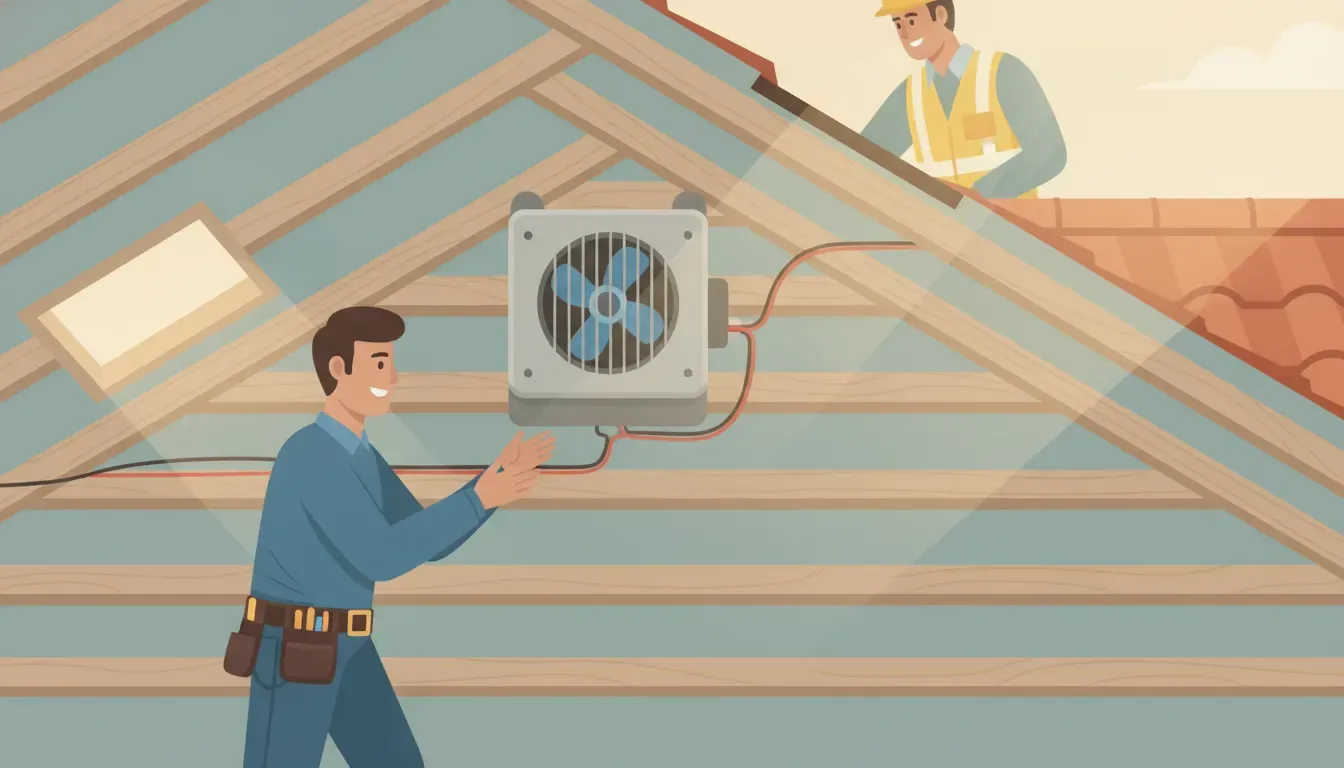
Attic roof fan installation is the coordinated placement and connection of a powered ventilation fan that exhausts air through a roof opening. The project may involve electrical planning inside the attic, a control such as a thermostat or switch, a weather-resistant exterior assembly, roof flashing, sealing, and a test of the complete system.
The best installation plan starts with the actual attic and roof, not a generic fan diagram. An electrician looks at the available power and wiring path. A roofing professional evaluates the roof covering, framing, flashing, drainage, and weather seal. Depending on the equipment and project, a building department or inspector may also have requirements that need to be confirmed before work begins. Florida Building Code resources are available through the Florida Building Commission.
A powered roof fan is different from a passive ridge, soffit, or gable vent. It has a motor and electrical connection, so a ventilation improvement can also create a circuit, control, and moisture-exposure question. The roof design also needs adequate intake ventilation and a location that does not create a new water-entry problem. Those decisions belong to the professionals evaluating the home and the selected equipment.
How does an electrician plan the electrical connection?
An electrician plans the connection by matching the fan manufacturer's electrical requirements to the home's existing system and the attic's conditions. The review normally considers the fan's voltage and load, the available circuit, conductor condition and size, grounding and bonding, overcurrent protection, the control arrangement, the wiring route, and how the connection will be enclosed and protected.
The electrician may begin at the panel and then trace the proposed route to the fan location. Attic access, finished ceilings, insulation, truss layout, junction boxes, and existing equipment can change the safest route. The fan should not be connected by guesswork, an extension cord, or an unprotected splice. The equipment instructions and applicable local requirements determine the final installation method.
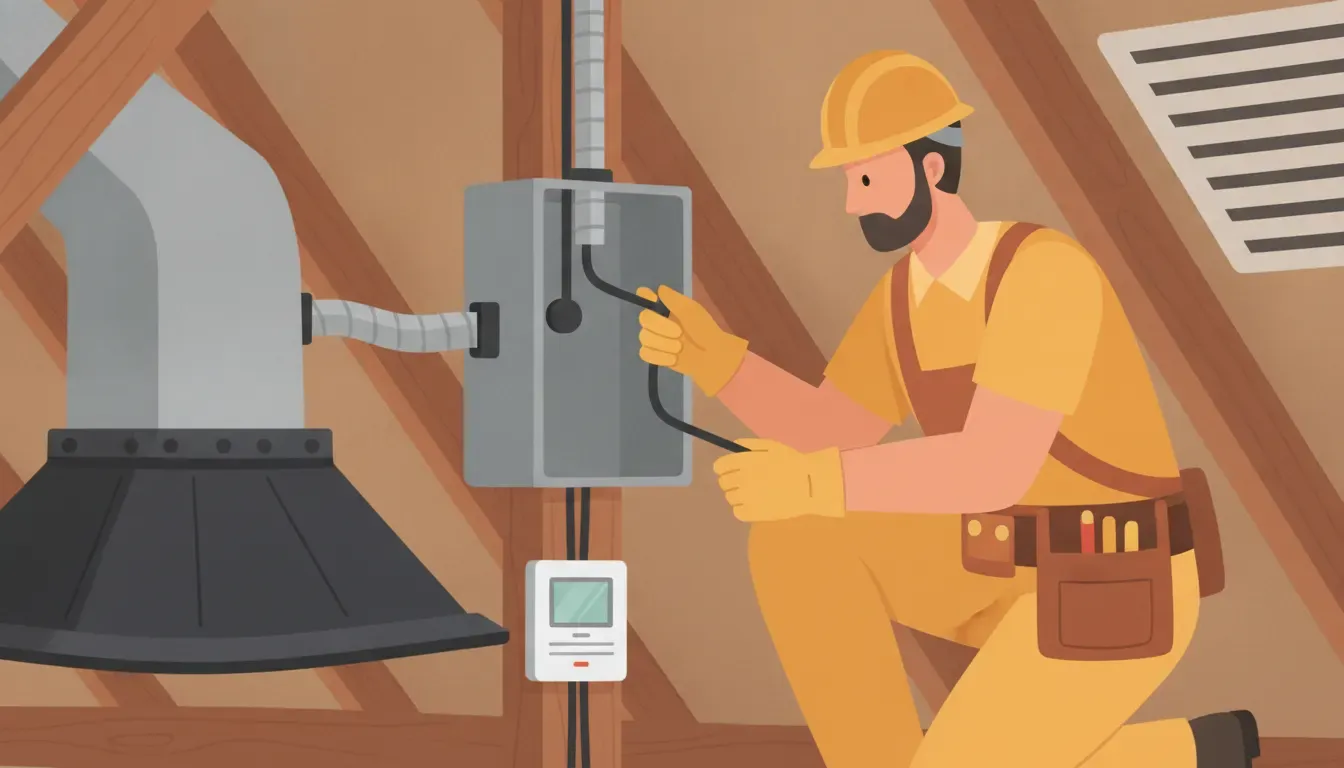
For general electrical work, OSHA wiring-method guidance emphasizes suitable wiring methods, components, equipment, and protection. Residential work still requires an evaluation of the actual home, equipment, and jurisdiction. A homeowner should ask the electrician to explain how the selected fan will be powered and protected rather than accepting a vague statement that any nearby outlet or light circuit will work.
What should be checked at the electrical panel?
- Available capacity: The electrician checks whether the proposed circuit has enough capacity for the fan and any other loads already connected to it.
- Breaker and panel condition: The breaker, panel space, terminations, labeling, and signs of heat or damage are reviewed before new work is added.
- Wiring condition: Insulation, conductor routing, junction boxes, splices, and protection from physical damage are part of the evaluation.
- Grounding and bonding: The fan and its metal components need the correct connection method for the installation.
- Future access: The plan should leave serviceable connections and avoid burying a junction or control where it cannot be inspected.
If the panel shows heat, corrosion, loose connections, repeated breaker trips, or other warning signs, the attic fan should not be used as a reason to conceal or bypass the problem. My Electrician FL can also evaluate broader electrical repair concerns discovered during planning.
Does an attic roof fan need its own circuit?
An attic roof fan does not automatically require one specific circuit arrangement for every home. Whether it can share an existing circuit or needs a dedicated circuit depends on the fan's listed requirements, the load already on the circuit, the wiring method, the control equipment, and applicable electrical requirements. Only an electrician evaluating the actual system can make that determination safely.
| Planning question | What the electrician reviews | Why it matters |
|---|---|---|
| Can an existing circuit be used? | Connected loads, conductor condition, breaker protection, and the fan's listed requirements. | A nearby circuit may not have enough capacity or the right wiring arrangement. |
| Would a dedicated circuit be more appropriate? | Fan load, route length, panel capacity, access, and future service needs. | A separate circuit may simplify protection and reduce interaction with other loads when the design calls for it. |
| What control will operate the fan? | Wall switch, thermostat, timer, humidity control, or equipment-specific control. | Incompatible controls can cause unreliable operation or create a service problem. |
| Where should connections be made? | Accessible boxes, approved enclosures, attic exposure, and protection from damage. | Connections need to remain secure, protected, and serviceable. |
Do not assume that a fan's low motor wattage makes every circuit safe. The complete circuit may power other equipment, the existing wiring may be damaged, or the control may change the wiring requirements. If the project needs a new route or dedicated circuit installation, planning it before the roof work begins can reduce surprises.
How should switch, thermostat, and control wiring be planned?
Controls are part of the installation, not an afterthought. A switch, thermostat, timer, humidity control, or equipment-specific controller may start the fan automatically or allow manual operation. The electrician should confirm that the selected control is compatible with the fan and that the control location is practical for testing and future service.
Homeowners should ask whether the control belongs inside the living area, at the attic access point, near the fan, or in another approved location. The answer depends on the equipment and the way the system is intended to operate. A thermostat or sensor placed where it receives misleading heat or moisture can cause poor operation, while an inaccessible control can make troubleshooting harder.
Smart controls can add convenience, but they do not correct an unsuitable circuit or damaged wiring. If a control is replaced, the electrician should verify the conductors, device ratings, connections, and fan response. Keep the product instructions and control model information available for the installer.
For a broader home project that includes fixtures or switches, My Electrician FL also provides lighting installation and electrical upgrade service. The attic fan plan should remain focused on the fan's own electrical and roof coordination needs.
How do moisture and roof work affect electrical safety?
Attics and roofs can expose electrical equipment to heat, humidity, condensation, wind-driven rain, roof leaks, and changing weather conditions. The selected fan, boxes, connectors, conduit, and seals must be appropriate for their locations. A roof opening that is not correctly flashed or sealed can allow water to reach the attic and nearby electrical components, even when the wiring connection itself was made correctly.
The electrical and roofing scopes should be coordinated before anyone cuts an opening. Confirm who will locate the fan, who will cut and repair the roof covering, who will install or inspect the flashing, and who will make the electrical connection. A homeowner should not assume that an electrician performs roofing work or that a roofer is responsible for circuit design.
Moisture damage deserves prompt attention. The Electrical Safety Foundation International's water-damaged equipment guidance explains why electrical equipment exposed to water may need professional evaluation before it is energized. If you see water near a junction box, fan motor, switch, panel, or attic wiring, keep clear and arrange an inspection. Do not dry, open, or re-energize affected equipment as a do-it-yourself shortcut.
What roof questions should be answered before installation?
- Is the proposed fan location compatible with the roof slope, framing, and existing ventilation plan?
- Will the opening, flashing, and seal be installed according to the selected roof and fan requirements?
- Does the attic have a safe and serviceable path for the wiring and control?
- Could insulation, storage, or future roof work damage the fan wiring or enclosure?
- Who will inspect the roof seal and who will test the electrical system after the work is coordinated?
The goal is not simply to make the fan run. It is to create a ventilation system that does not introduce avoidable electrical or water-entry risks.
What safety checks should happen before power is restored?
Before the fan is energized, the electrician should confirm that the wiring, enclosure, control, equipment connection, and roof coordination match the approved scope. A final test should include the switch or control, fan operation, unusual noise or vibration, visible heat or damage, and the condition of accessible connections.
- Confirm the equipment: Verify the fan model, voltage, controls, and installation instructions match the planned work.
- Inspect the connection: Check the box, conductors, splices, grounding or bonding provisions, fittings, and enclosure.
- Review the route: Make sure the wiring is protected from sharp edges, heat sources, movement, storage, and other attic hazards.
- Coordinate the roof: Confirm that the exterior fan assembly, flashing, seal, and roof covering have been addressed by the responsible professional.
- Test the controls: Operate the fan from each intended control and confirm that it starts, stops, and responds as expected.
- Explain maintenance: Ask how to recognize water entry, unusual sound, loss of operation, or other symptoms that call for service.
For an additional homeowner reference, the home electrical inspection checklist explains common areas a professional may review. The checklist is not a substitute for an attic-specific evaluation, especially when roof work or moisture exposure is involved.
Do not restore power simply because the fan is physically mounted. If a breaker trips, the fan hums without starting, a control behaves unpredictably, or the attic smells hot, turn the system off and request professional diagnosis. A new symptom after installation can point to a wiring, control, motor, or moisture issue.
When is attic fan installation an emergency?
Most attic roof fan projects are planned installations, but some conditions need prompt attention before any new work begins. Smoke, active sparking, a burning odor, a hot panel or junction box, exposed energized wiring, repeated breaker trips, or water reaching electrical equipment can create an immediate safety concern.
If there is an active electrical fire, leave the area and call emergency services. If there is no active fire but you see heat, sparks, smoke, or damaged wiring, keep people away from the area and contact a qualified electrician. My Electrician FL offers 24/7 emergency electrical service for urgent electrical concerns in its service area.
Do not climb onto a roof during lightning, high winds, or wet conditions to investigate a fan. A roof and electrical hazard can exist at the same time, and a safe response may require separate emergency and roofing professionals.
For nonurgent planning, you can also review the company's approach to electrical service and workmanship before scheduling. My Electrician FL serves homeowners and businesses from Palm Beach Gardens through Vero Beach, including Port St. Lucie and surrounding Treasure Coast communities.
Schedule Service before connecting an attic roof fan, and get the electrical scope explained first.
Frequently Asked Questions
Can I install an attic roof fan on any roof?
No. A specific fan and roof location may not be suitable without an evaluation. Roof slope, framing, existing ventilation, roof covering, flashing, weather exposure, attic access, and the electrical route all affect the plan. Have the electrical and roof scopes reviewed before choosing the equipment or cutting an opening.
Can an attic roof fan use an existing outlet?
It may be possible in some installations, but an existing outlet does not automatically provide the correct circuit, enclosure, control, or protection. An electrician should evaluate the outlet, circuit load, wiring condition, fan instructions, and attic environment. Do not use an extension cord as a permanent installation method.
Does an attic roof fan need a thermostat?
Some attic fans use a thermostat or another automatic control, while others may be operated by a switch or equipment-specific controller. The correct control depends on the selected fan and the desired operation. The control must be compatible, correctly wired, and placed where it can sense conditions and be serviced safely.
Should a roofer or electrician install an attic roof fan?
Powered attic roof fan projects often need both roofing and electrical expertise. The roofer handles the roof opening, flashing, and weather seal when that work is within the roofing scope. The electrician handles the circuit, wiring, controls, connection, and testing. The homeowner should coordinate the scopes so neither trade assumes the other is responsible for a safety-critical part of the project.
What should I do if an attic fan leaks or trips the breaker?
Turn the fan off and avoid touching wet electrical equipment or opening the enclosure. If water is near wiring or the panel, keep clear and request professional evaluation. A leak may require roofing work, while a breaker trip may involve the fan, circuit, control, or moisture. Do not repeatedly reset the breaker or continue operating the fan until the cause is identified.