
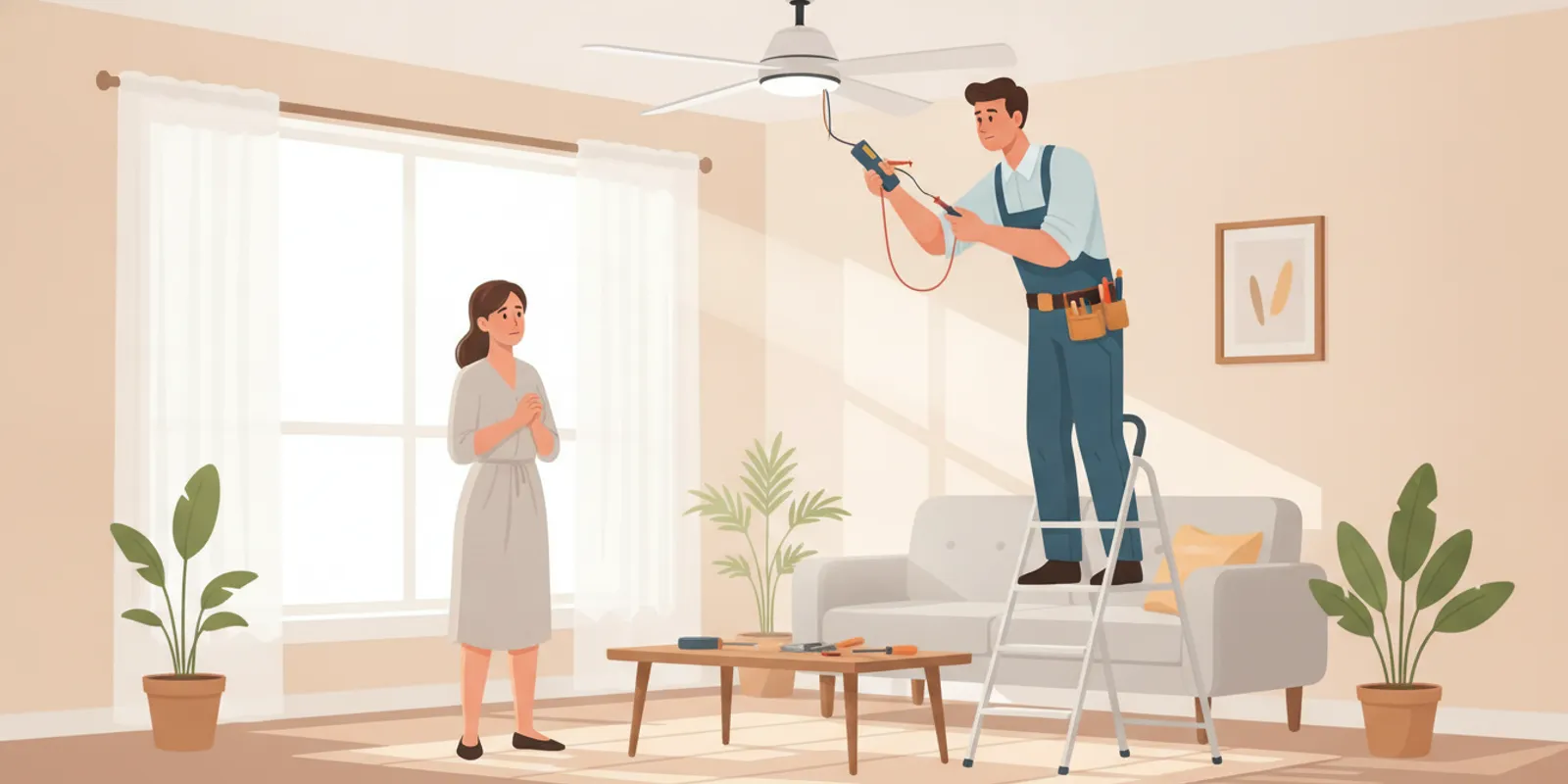
A new ceiling fan can make a room feel more comfortable, but choosing a fixture is only part of the job. For ceiling fan installation Port St. Lucie homeowners should consider the room, the existing ceiling wiring, the fan’s support, and how its controls will work before installation begins. Here is a practical guide to planning the project and recognizing when professional electrical help is the safer next step.
Schedule Service to discuss your ceiling fan installation
What should you decide before choosing a ceiling fan?
Start with how the room is used. A fan for a bedroom may need quiet operation and a convenient control. In a living room, you may care more about the fixture’s appearance, lighting, and reach. A covered patio or other damp location calls for a fan specifically rated for that environment. Do not assume that a fan suitable for an indoor bedroom can also be used outdoors.
Measure the room and note the ceiling height, nearby walls, beams, and light fixtures. These details help you narrow down a fan size and mounting style that suit the space. Follow the manufacturer’s guidance for the specific fan. If the room has an angled ceiling or limited clearance, include that detail when asking about installation.
- Room use: Identify whether the fan is for a bedroom, living area, or covered outdoor space.
- Ceiling shape: Note whether the ceiling is flat, sloped, unusually high, or obstructed.
- Lighting: Decide whether you want an integrated light kit, a fan without lighting, or to keep a separate ceiling light.
- Controls: Think about whether you prefer a wall control, pull chains, or another compatible control arrangement.
- Appearance: Consider the blade finish and fixture style alongside the room’s size and furnishings.
These choices are useful to settle before work starts. They also help an electrician understand your goal and identify questions that need to be answered at the home. If you are still comparing electrical work options, review the available electrical services and ask which service best fits the project.
How does the room affect fan planning?
Think about the people and activities in the space, not only its dimensions. In a bedroom, consider whether you want to adjust the fan without getting out of bed and whether a light kit would replace or supplement existing lighting. In a family room, account for seating, doors, and the path people use through the space. A fan’s position should make sense for the room’s layout while leaving the electrician able to assess the ceiling structure and mounting location.
For a kitchen or dining area, consider how the fixture will relate to cabinets, pendant lights, and other overhead features. In a covered outdoor area, the ceiling may be exposed to moisture or humid conditions even when the fan is protected from direct rain. Read the product label and manufacturer information to confirm the stated location rating. If you are unsure whether the model suits a patio or porch, ask before purchasing rather than relying on its appearance.
Make a short list of priorities, then rank them. For example, a homeowner replacing a bedroom fixture might prioritize quiet operation, a light, and simple controls. Someone furnishing a covered sitting area might put the location rating and clearance first. A clear order of priorities helps compare similar models without assuming that one fan suits every room.
What should you check about the existing ceiling and wiring?
A ceiling fan is not simply a light fixture with blades. It moves, and the mounting point must be suitable for that movement. An existing ceiling light box may not be designed to support a fan. A qualified electrician can check the box, mounting support, wiring, and connections rather than relying on how sturdy the fixture looks from the room.
Think about what is already in place. Is there a light fixture where the fan should go? Does the wall switch operate that light, or is it controlled another way? Are you replacing an older fan, or adding a fan where there has never been one? A new location or a change to the existing controls can involve different work from a straightforward replacement.
Do not remove the fixture to investigate wiring if you are not qualified to do so. Electrical work can expose energized conductors, and an uncertain switch position is not proof that a circuit is safe. If you see damaged insulation, a loose-looking fixture, discoloration, or signs of moisture, leave the area alone and describe what you observed when you contact an electrician. For broader repair needs, see the company’s electrical repair service.
When the ceiling has an unusual structure or the project may need a new switch or circuit, explain that early. A dedicated circuit service is a distinct electrical option, but an electrician should determine whether a particular installation needs any circuit work after assessing the home. Do not assume one is required—or that existing wiring is suitable—without an evaluation.
Which fan and control choices should you compare?
Once you know where the fan will go, compare the options that affect everyday use. The table below is a planning aid, not a substitute for the instructions for a specific fan or an assessment of the wiring. Check fixture ratings and manufacturer requirements before buying.
| Choice | What to compare | Why it matters |
|---|---|---|
| Location rating | Indoor, damp-location, or other rating stated by the manufacturer | The fixture must be appropriate for the environment where it will be installed. |
| Mounting style | Standard, low-profile, or angled-ceiling compatibility | Ceiling height and shape affect fit and the mounting approach. |
| Light kit | Integrated lighting, no light, or a compatible add-on kit | Lighting needs can affect fixture choice and control preferences. |
| Operation | Wall control, pull chains, or a compatible remote option | Controls should work with the fan and the room’s existing electrical setup. |
| Replacement or new location | Existing fan location versus a new installation point | A new location may require additional evaluation of support, wiring, and controls. |
Keep the fan’s instructions and product information available. A professional can use the model details to check compatibility and explain what the project involves. Avoid purchasing based only on blade appearance or a promotional claim; the fixture still has to fit the room and its installation conditions.
Control choices deserve particular attention when replacing a light or an older fan. A room may have one wall switch, separate switches, pull chains, a remote, or a combination. A replacement model may not use every control the same way as the old fixture. Before buying, check the product’s stated control compatibility and tell the electrician what controls you want to use. Do not assume a remote receiver or wall control can be added to every setup without checking the specific fan instructions and home wiring.
What can an electrician assess during a home visit?
An electrician can look at the proposed location, the existing fixture or fan, the mounting arrangement, and visible conditions that may affect the work. They can also discuss how the fan and any light should be controlled. If you are unsure whether the ceiling location is appropriate, an assessment is a better first step than removing a fixture or attempting to modify the wiring yourself.
Use the visit to explain what you want the finished room to do. For example, you may want the fan and light to operate separately, or you may be replacing a fan that has stopped working. Mention any symptoms you have noticed, such as a fan that wobbles, a light that flickers, a control that feels warm, or a breaker that trips. These observations do not identify a cause on their own, but they help the electrician understand what you are experiencing.
Ask what is included in the proposed work and what conditions could change the scope. A simple replacement at an existing location is not automatically the same as adding a fan where there is no fixture, changing controls, or addressing a visible concern. The electrician can explain what can be confirmed during the visit and whether any additional work should be discussed before proceeding. If the assessment identifies a separate issue, ask for a clear explanation rather than assuming it is part of the original installation.
For a larger home electrical review or questions about the condition of other components, ask whether an electrical inspection is appropriate. Keep the discussion focused on the concern you have; an inspection is not automatically part of every fan installation.
How can you prepare for installation day?
A few simple preparations can make a service visit easier. Clear furniture and fragile items from below the proposed fan location. Make sure the electrician can reach the ceiling, wall switch, and electrical panel if access is needed. Secure pets in another room and tell the technician about ceiling height, access limitations, or other details that may affect the visit.
- Have the fan’s make, model, and installation instructions available if you have already purchased it.
- Show the electrician which switch or control operates the current fixture, if known.
- Describe whether this is a replacement, a new location, or a change to an existing light-and-fan setup.
- Point out any visible damage, unusual noise, wobbling, flickering, or prior electrical symptoms.
- Ask what preparation is needed before work begins, and confirm the scope and price before authorizing work.
Never try to speed up the visit by taking down a fan or opening a ceiling box yourself. Leave electrical connections intact and let the professional assess them. If you notice an urgent electrical problem, use the company’s emergency electrician service information to decide how to request help.
What safety concerns should you take seriously?
Stop using a fan if it is visibly loose, makes a sudden scraping sound, or begins wobbling severely. If a switch, fixture, or surrounding ceiling feels hot, smells burnt, sparks, or shows scorch marks, do not touch or dismantle it. Keep people away from the area and contact a qualified electrician for guidance. If there is smoke or fire, leave the home and contact emergency services.
Do not use a fan to mask a separate electrical symptom. A flickering light, repeated breaker trips, or a burning odor deserves attention even if the fan still runs. Write down when the symptom happens and what else was operating at the time, but do not repeatedly reset a breaker or continue using equipment that appears unsafe.
For general product safety information, homeowners can consult the U.S. Consumer Product Safety Commission. Follow the warnings and installation instructions supplied with the specific fan, and ask a licensed professional about electrical work that is outside your experience.
What homeowner symptoms point to a problem beyond the fan?
Sometimes the reason for a service call is not simply a planned upgrade. The fan may make a new humming or rattling sound, stop responding to its control, or operate intermittently. A light kit might flicker, or the breaker may trip when the fan is used. These signs can have different causes, so avoid guessing at a repair based on one symptom.
Notice when the issue occurs. Does it happen only when the fan is running, when the light is switched on, or when another appliance is in use? Does the symptom occur every time or only occasionally? Share the details with the electrician, including whether the fan was recently installed or changed. This information helps frame the assessment, but it does not replace an on-site check.
If you notice a burning smell, sparks, a hot switch, or a fixture that appears to be pulling away from the ceiling, stop using it and keep clear. Do not open the fan housing or remove the canopy to look for a problem. For symptoms that affect other lights or outlets too, describe the broader pattern rather than limiting the call to the fan. My Electrician’s circuit breaker service may be relevant to a breaker concern, though an electrician will need to assess what is actually causing it.
What should you check once installation is complete?
Before the service visit ends, ask the electrician to explain the controls and any operating details specific to your fan model. If the fan includes a light, make sure you understand which switch, remote, or pull chain operates each function. Ask where to find the manufacturer’s instructions and what normal operation should look and sound like. These simple questions help you use the fixture as intended instead of guessing when a control behaves differently than expected.
From a safe position on the floor, observe whether the fixture operates as expected when the electrician demonstrates it. A small amount of movement may be different from a fan that visibly wobbles, scrapes, or makes a new persistent noise. Do not climb up to tighten, adjust, or open the fixture. If something seems wrong during the demonstration, point it out before the technician leaves. If a new issue develops later, stop using the fan when there is a safety concern and describe the change when requesting help.
Keep the purchase information and instructions together with any service paperwork. If you replace a bulb, accessory, or control later, use only items identified as compatible by the manufacturer. A different light kit or control may not be interchangeable simply because it appears to fit. When in doubt, verify compatibility rather than modifying electrical parts or attempting a workaround.
What questions should you ask before scheduling?
A clear conversation before the appointment can help you understand the work and avoid assumptions. Ask whether the planned visit covers the installation you described, what the electrician will inspect, and whether the existing location and controls appear compatible. If the assessment reveals additional work, ask for an explanation and an updated price before deciding how to proceed.
You can also ask how the fan’s light and motor will be controlled, whether the fixture you selected is suitable for the location, and what access or preparation is needed. The answer may depend on the fan model and the home’s existing wiring, so a phone conversation cannot confirm every installation detail in advance.
My Electrician serves homeowners across the local area, including communities between Palm Beach Gardens and Vero Beach. Learn more about its service areas, or check the ceiling fan installation and repair service for a relevant service option. You can also read about the company’s background on the About Us page.
Request ceiling fan installation or repair service for your home
Frequently asked questions
Can an existing ceiling light box support a fan?
Not necessarily. The visible fixture box may not be suitable for a fan’s movement and load. Have an electrician check the mounting support and installation conditions instead of assuming the existing box is adequate.
Can I install a fan where there is no ceiling fixture?
Possibly, but a new location can require evaluation of support, wiring, and controls. The work depends on the home and the desired setup. Ask an electrician to assess the location before buying a fan or opening the ceiling.
What should I do if a ceiling fan wobbles?
Stop using it if the wobble is severe, the fixture appears loose, or you hear unusual sounds. Do not climb up to adjust electrical or mounting parts unless you are qualified. Have the fan and its mounting checked by a professional.
Should I buy a fan before arranging service?
You can compare models first, but verify the fan’s suitability for the room and ceiling before installation. Keep the product details available and ask whether the selected model and controls fit the existing setup.
What is the safest next step?
Write down the room, fan location, control preferences, and any symptoms you have noticed. Share those details when arranging service, and wait for an electrician to confirm that the mounting and electrical conditions are suitable before installation proceeds.
Call My Electrician to discuss your ceiling fan service needs at (877) 762-7483
A professional assessment can help you move from choosing a fan to a safe plan that fits your Port St. Lucie home.