
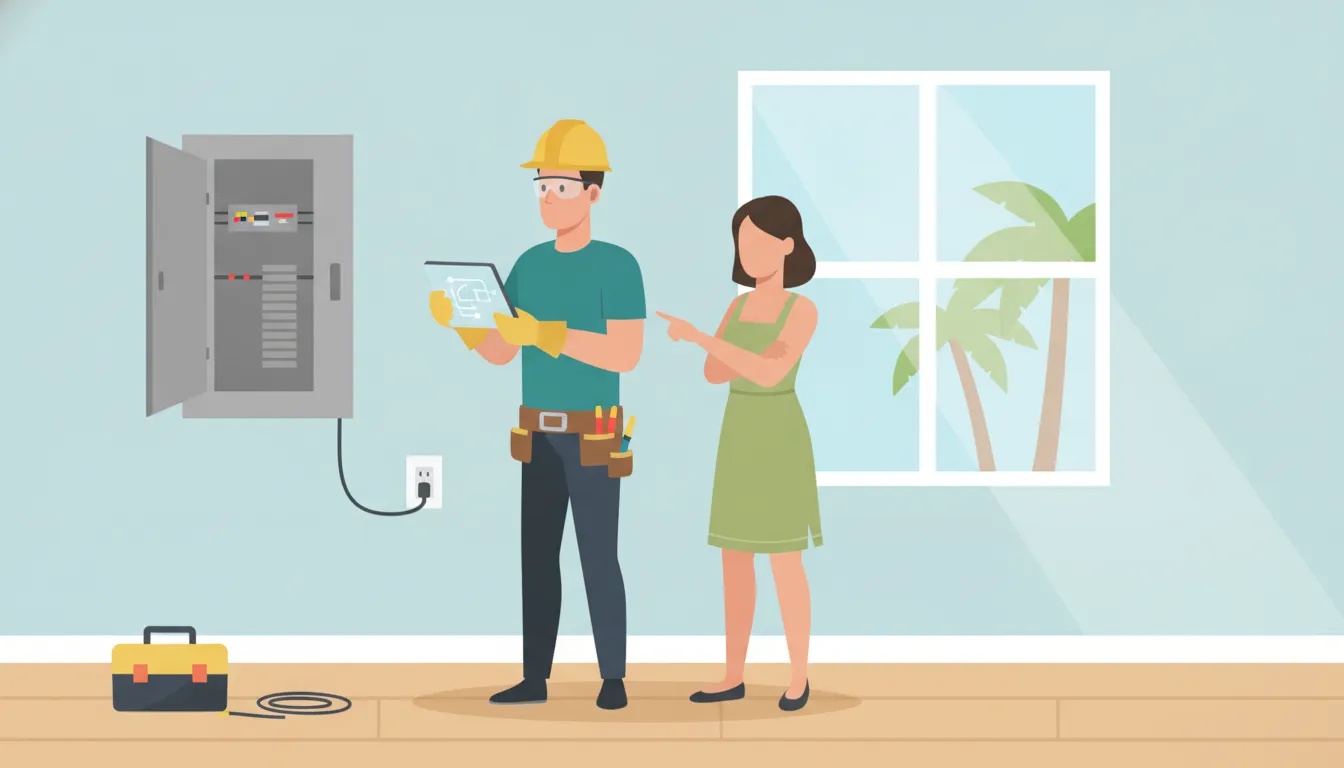
A breaker that trips once may be inconvenient. One that trips repeatedly, feels hot, buzzes, or leaves part of the home without power deserves prompt attention. Those symptoms can point to a circuit, panel, or wiring problem that a replacement breaker alone will not solve.
Safe circuit breaker installation means selecting a breaker listed for the specific panel, then confirming its rating works with the circuit conductors, connected equipment, and required protection. It is not safe to choose a replacement based only on the amperage printed on the old breaker. A professional evaluation should include an upfront quote, code-aware work, testing, safety checks, and an explanation of the findings.
Because electrical panels can contain energized parts even when some circuits are switched off, panel work is not a weekend DIY project. The right starting point is understanding what the electrician evaluates, from panel compatibility to the condition and purpose of the circuit.
Schedule Service for a professional circuit breaker evaluation.
What Does Circuit Breaker Installation Actually Involve?
When a breaker keeps tripping, will not reset, feels unusually warm, or serves a circuit that suddenly stops working, the visible switch is not always the whole problem. Professional circuit breaker installation is a safety and compatibility assessment, not simply replacing one label with another. The electrician evaluates the panel, circuit, wiring, and protection requirements before restoring power.
- Assess the symptoms and the circuit. The process begins with questions about what happened, which outlets or appliances are affected. And whether there were warning signs such as buzzing, burning odors, sparking, or repeated trips. The electrician may evaluate grounding, load conditions, and voltage, using meters and load tests when troubleshooting voltage drops, intermittent shorts, or nuisance tripping. This helps distinguish a worn breaker from a circuit or equipment problem.
- Confirm panel and breaker compatibility. A replacement breaker must be listed and approved for the specific panel, as indicated on the panel label. Compatibility involves more than matching the amperage number. The professional checks the panel model, breaker type, bus configuration, available space, and the circuit's conductors and equipment. If the circuit needs special protection, such as GFCI or AFCI, a standard breaker may not be appropriate.
- Determine the correct size and protection. The old breaker's rating is not, by itself, proof that the same rating is safe. Sizing must account for the circuit conductors, connected load, equipment requirements, and the intended use of the circuit. A new or modified circuit may also require a dedicated circuit or specific fault protection. Local permit and code requirements vary, so the installation must be evaluated against the requirements that apply to the property.
- Install and terminate the breaker securely. After the appropriate equipment is selected, the electrician verifies proper seating, alignment, orientation, and clearance within the panel. Conductors are placed fully in their terminals and tightened according to the manufacturer's specifications. The work also includes checking that wiring is secure and does not contact the enclosure or another phase. These are professional panel-work tasks, not instructions for a homeowner to perform inside an energized panel.
- Test, label, and explain the result. Before considering the job complete, the electrician tests breaker operation, verifies voltage at the load terminals, and performs safety checks. The panel directory should clearly identify the circuit so future troubleshooting is safer and more efficient. The customer should also receive an explanation of what was found, what was changed, and which symptoms require prompt attention.
This educational overview is different from a commercial circuit breaker service page. If the panel shows heat, water damage, physical damage, burning smells, or a breaker that trips immediately. Leave the panel closed and arrange professional help rather than attempting a DIY replacement.
How Do You Know Which Breaker Fits Your Panel?
If a breaker trips repeatedly, a circuit goes dead, or you notice heat, buzzing, or discoloration near the panel, replacing the breaker may seem straightforward. It is not. The correct choice depends on the panel, the circuit, and the protection the installation requires. The amperage printed on the old breaker is useful information, but it is not enough evidence by itself for safe circuit breaker installation.
Start with the panel label and breaker listing
Every panel has a label that identifies approved breaker types and compatible equipment. A replacement breaker must be listed and approved for use with that specific panel, as stated on the panel label. This is not the same as choosing a breaker that looks similar or happens to carry the same brand name. Brand, series, model, and approval information all matter.
Some panels accept only breakers from a particular product family. Others may allow specific classified replacement breakers, but that determination must come from the panel and breaker documentation. A qualified electrician checks those details instead of relying on appearance, a hardware-store description, or the size of the opening in the panel.
Confirm the physical and electrical fit
The breaker must fit the panel's bus configuration and mounting arrangement. It should seat correctly, align with the panel, and maintain the required clearance from adjacent equipment. A breaker that can be forced into place is not necessarily compatible. Poor fit can create unreliable electrical contact, heat, or damage.
The electrician also evaluates the circuit conductors and the connected load. Wire size, circuit type, equipment requirements, and the condition of existing connections affect whether a breaker is appropriate. A larger breaker cannot be used simply to stop nuisance trips if the conductors or equipment are not rated for it. Likewise, a smaller breaker may not address the underlying problem if the circuit is damaged or overloaded.
Check whether GFCI or AFCI protection is required
Protection type is another key part of the match. A standard breaker is not an acceptable substitute where GFCI or AFCI protection is required. GFCI protection helps address shock hazards in applicable locations, while AFCI protection is intended to reduce fire risks associated with certain arcing conditions. Requirements depend on the circuit, location, and work being performed.
For example, listed combination AFCI breakers may be required when branch-circuit wiring is modified, replaced, or extended. Local requirements can vary, so the installation should be evaluated against current code provisions, the panel manufacturer's instructions, and the authority having jurisdiction. Because the panel can contain energized parts even when a branch breaker is off. Compatibility checks and installation should be handled by a qualified professional rather than attempted as energized-panel work.
Why Is Breaker Sizing More Than Matching the Amps?
When a breaker trips repeatedly, runs hot, or no longer resets, the amperage printed on the old device can seem like the obvious replacement choice. It is only one part of the decision. A safe circuit breaker installation must account for how the circuit is used. What conductors serve it, what equipment is connected, and what protection the panel and local requirements call for.
The breaker helps protect the circuit conductors from carrying more current than they can safely handle. If someone installs a larger breaker simply to stop nuisance trips, the breaker may allow more current to flow before opening. That can leave wiring exposed to overheating. Choosing a smaller breaker without evaluating the connected equipment can also create recurring trips and unreliable operation.
What factors affect the correct breaker size?
| Factor | Why it matters | What a professional evaluates |
|---|---|---|
| Connected load | The total demand may be different from the rating of one appliance or the old breaker. | How the circuit is used, what loads operate together, and whether abnormal demand is causing trips. |
| Circuit conductors | The breaker must provide appropriate overcurrent protection for the wiring it serves. | Conductor size, insulation, condition, terminations, and compatibility with the circuit design. |
| Equipment requirements | Motors and other equipment can have starting or operating characteristics that affect protection. | Manufacturer requirements, nameplate information, and whether the existing circuit is suitable. |
| Dedicated circuits | Some equipment should not share a circuit with general-use loads. | Whether a dedicated circuit, GFCI, or AFCI protection is needed for the application. |
Load conditions can change over time. A circuit that once served a single appliance may now power additional equipment, extension cords, or high-demand devices. Motors can also require different protection considerations than simple lighting or receptacle loads. The right answer comes from evaluating the complete circuit, not from copying a label.
My Electrician FL provides circuit installation work involving dedicated circuits, GFCI, and AFCI protection. Its electrical inspection process evaluates grounding, load conditions, and voltage, while advanced meters and load tests can help investigate voltage drops and nuisance tripping. These checks help distinguish a correctly sized replacement from a symptom-covering guess.
Do not open an energized panel or replace a breaker based only on its appearance or amperage. A breaker that is not listed for the specific panel can be incompatible even when its amp rating looks right. If the breaker trips immediately, will not reset, feels hot, or is accompanied by buzzing, a burning smell, or sparking, stop troubleshooting and arrange professional help.
For a safety-focused evaluation, see circuit breaker service and explain what the circuit is doing, which equipment it serves, and when the problem occurs.
What Safety and Code Checks Matter Before Power Is Restored?
A safe circuit breaker installation is not complete when the breaker is in place. Before power is restored, the work should be reviewed against the panel, the circuit, the equipment being served, and the applicable electrical requirements. That final review helps confirm the new protection will operate as intended instead of creating a new hazard.
Permit requirements are one of the first questions to resolve. Some jurisdictions require an electrical permit for service-panel work, while the requirements for a breaker or branch-circuit change may differ. For example, the City of San Jose identifies a permit requirement for a residential main service panel upgrade. That example should not be treated as a Florida rule. Permit and inspection requirements vary by city, county, project type, and the extent of the work, so they should be confirmed locally before work begins.
The National Electrical Code, or NEC, provides a widely used framework for safe electrical installations. Its requirements address general installation conditions, overcurrent protection, and panelboards. Local authorities may adopt amendments or apply additional requirements. A qualified electrician checks the current rules that govern the property rather than assuming that an older installation or a different jurisdiction provides the right answer.
Grounding, connections, and manufacturer instructions
Grounding deserves specific attention because it provides an intentional path for fault current and supports protective-device operation. The electrician evaluates the grounding and the condition of the conductors, not just the breaker label. OSHA guidance also emphasizes that grounded conductors and equipment grounding conductors must be identifiable and distinguishable from other conductors. Any concern about missing, damaged, or incorrectly identified wiring should be resolved before energizing the circuit.
The breaker and panel manufacturer instructions matter as well. NEC 110.3(B) is commonly summarized as requiring equipment to be installed according to its listing and instructions. That includes the correct breaker type, proper seating and alignment, terminal preparation, and the manufacturer-specified connection requirements. A breaker that matches the amperage but is not listed for the specific panel is not an acceptable substitute. Panel compatibility must be confirmed from the panel labeling and approved equipment information.
Labeling and testing before restoration
The panel directory should clearly identify the circuit's purpose. Permanent labeling makes future shutoffs safer and helps an electrician trace a problem without guessing. Before the circuit is returned to service, a professional review can include visual checks. Verification of clearances and conductor placement, and testing for proper breaker operation and voltage at the load terminals. Where the circuit or location requires GFCI or AFCI protection, the correct protective device must be evaluated rather than replacing it with a standard breaker.
My Electrician FL's documented process includes assessment, code-aware work, testing, safety checks, and customer education. If the panel has unexplained wiring, signs of heat, or uncertain grounding, professional electrical repair can provide a safer evaluation than guessing from the old breaker's size.
When Should You Stop Troubleshooting and Call an Electrician?
A breaker that trips once after several high-demand appliances run at the same time may be responding to a temporary overload. You can turn off or unplug the appliances and monitor the circuit. The decision changes when the same breaker trips again, trips immediately after resetting, or will not reset at all. Repeated trips can point to a problem with the circuit, connected equipment, wiring, or panel. Replacing the breaker without identifying the cause may leave the underlying hazard unresolved.
Stop troubleshooting and seek professional help if you notice heat around the panel, a buzzing or sizzling sound, a burning odor, visible sparks, or smoke. These symptoms can indicate overheating or arcing. Do not remove the panel cover, tighten connections, or keep resetting the breaker to restore power. Visible arcing or sparking, burning smells, and breakers that trip immediately are recognized red flags requiring immediate professional attention (electrical safety guidance).
Water, damage, and unusual behavior need prompt evaluation
Water intrusion is another reason to stop. A leaking pipe, storm damage, flooding, or moisture around electrical equipment can create risks that are not safe to assess by trial and error. Keep away from wet equipment and contact an electrician. The same applies when the panel, breaker, enclosure, or nearby wiring shows cracks, impact damage, corrosion, charring, or melted plastic. Physical damage can affect the equipment beyond the part that is visible.
It is also wise to call when lights flicker, outlets go dead, or power drops occur alongside breaker problems. A professional can use meters, circuit analyzers, and load tests to investigate voltage drops, intermittent shorts, nuisance tripping, and other causes. The goal is not simply to install a replacement. The electrician should evaluate the panel, grounding, circuit load, conductors, and protection requirements before recommending a repair or circuit breaker service.
For urgent failures, My Electrician offers a 24/7 emergency electrician response for critical electrical problems, including circuit breaker failures. If you are unsure whether a symptom is serious, review these signs you need an electrician and choose safety over experimentation. A qualified professional can explain what they find, provide an upfront quote before work begins, and complete the appropriate testing and safety checks.
What Can a Professional Electrician Check for You?
If a breaker trips repeatedly, feels warm, buzzes, or leaves part of your home without power, replacing it without checking the circuit can miss the real problem. A professional electrician evaluates the breaker as part of the larger electrical system. That helps determine whether the issue involves the breaker, the wiring, the connected equipment, or the panel itself.
During an evaluation, the electrician can check the condition and compatibility of the panel and breaker, along with grounding, voltage, and the load conditions on the circuit. Load conditions describe how much electrical demand the circuit is handling. This matters because a breaker must work with the panel, circuit conductors, and equipment it protects. The amperage printed on the old breaker is not, by itself, enough evidence for selecting a replacement.
For symptoms such as nuisance tripping, intermittent power, or lights that dim when equipment starts. My Electrician uses advanced meters and load tests to investigate voltage drops, intermittent shorts, and related faults. These tests provide information that may not be visible from the panel exterior. Depending on the concern, a professional may also use circuit analysis or thermal imaging tools to identify unusual conditions without asking a homeowner to work inside the panel.
A clear plan before work begins
A professional process should include an assessment and an upfront quote before work begins. The electrician can explain whether the appropriate solution is a breaker replacement, electrical repair, a panel-related correction, or a new circuit. If a high-demand appliance needs its own supply, dedicated circuit installation may be part of the conversation. If the symptoms point to a broader fault, professional electrical repair can address the underlying issue rather than treating only the visible symptom.
Installation or repair should be completed with code-aware practices and according to applicable manufacturer requirements. Local permit and inspection needs can vary by jurisdiction and by the work being performed, so the electrician should confirm what applies to your property. After the work, testing and safety checks help verify operation, voltage, connections, and the condition of the circuit. Clear labeling also makes it easier to identify the correct circuit later.
Education is part of a useful evaluation. The electrician should explain what was found, what was changed, and which symptoms should prompt another call. My Electrician serves homeowners and businesses across the Treasure Coast and Palm Beaches, from Vero Beach through West Palm Beach, with Port St. Lucie as its home base. For critical breaker failures, documented service includes 24/7/365 emergency response. If you notice sparking, a burning smell, water exposure, or a breaker that will not reset, avoid panel work and request professional help.
Schedule Service for a clear, safety-focused electrical evaluation before the FAQ.
Frequently Asked Questions
Can I install a circuit breaker myself?
Circuit breaker installation is not a safe weekend DIY project. A panel can remain energized even when one branch circuit is off. And choosing the wrong breaker or making an incorrect connection can create shock, fire, or equipment hazards. A qualified electrician should verify the panel, circuit, conductors, load, grounding, and required protection before completing the work.
How do you know which breaker fits your panel?
The replacement must be listed and approved for the specific panel, not selected by amperage alone. The electrician checks the panel label, breaker type, bus configuration, circuit wiring, equipment requirements, and whether GFCI or AFCI protection applies. The panel manufacturer's compatibility information and installation instructions also matter.
Why does a new breaker keep tripping?
Repeated or immediate tripping can point to an overload, short circuit, wiring problem, damaged equipment, or a protection device doing its job. Replacing the breaker again without finding the cause may leave the underlying hazard in place. An electrician can use meters and load testing to investigate nuisance tripping, voltage drops, and intermittent faults.
Do I need a permit for circuit breaker installation?
Permit and inspection requirements vary by location and by the type of installation. A main service panel upgrade, branch-circuit modification, or added protection may have different requirements. Your electrician should confirm the applicable local code and permit process before work begins.
When is a breaker problem an emergency?
Stop troubleshooting and seek professional help if you notice sparking, a burning smell, heat. Water intrusion, physical panel damage, or a breaker that will not reset or trips immediately. Do not open or work inside the panel. For a critical breaker failure, My Electrician documents 24/7/365 emergency response at emergency electrical service.
Schedule a Safe Circuit Breaker Evaluation
If a breaker keeps tripping, feels warm, or does not seem to match your panel, a professional evaluation can help identify the right next step without guesswork. My Electrician FL can assess the panel, circuit, and safety requirements before recommending service. Schedule Service for circuit breaker evaluation.