
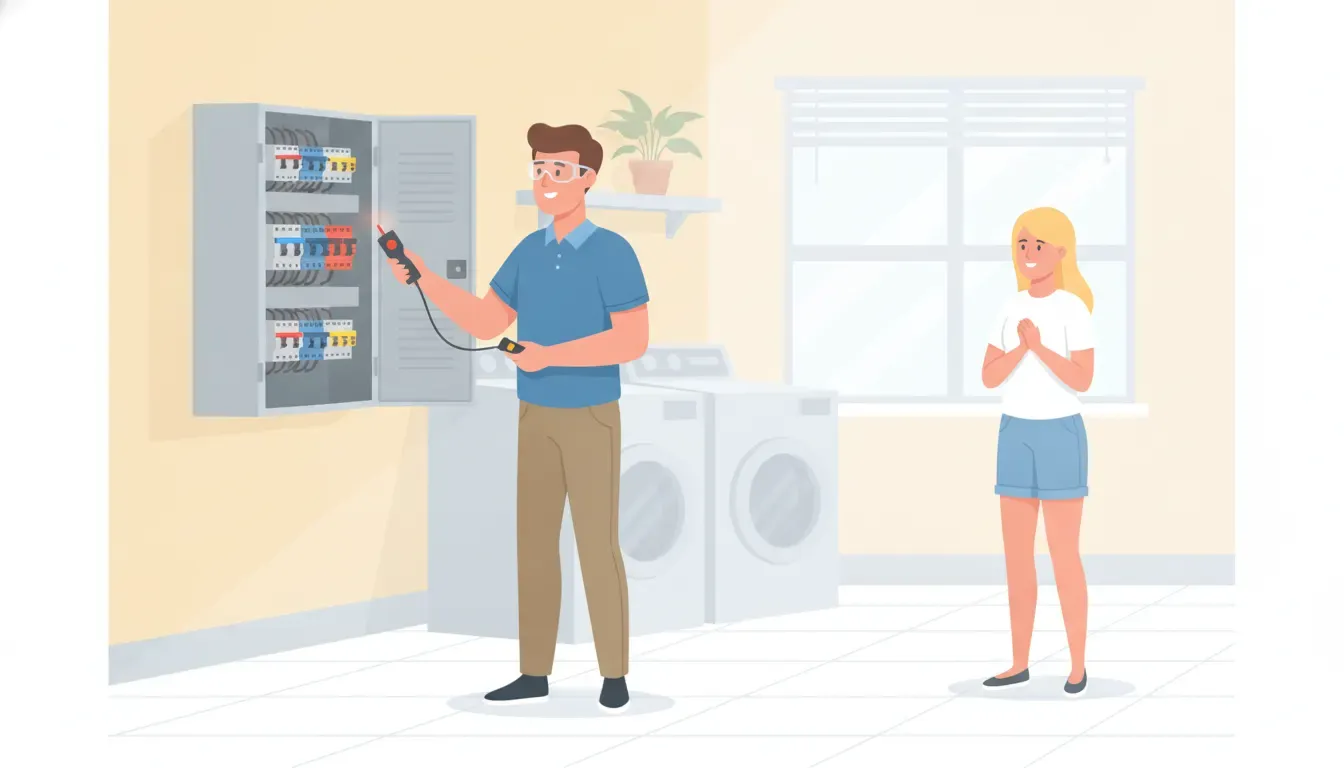
If a breaker keeps tripping, feels unusually warm, or will not reset, you may be searching for circuit breaker replacement in Jupiter. The safest next step is not to guess which breaker to buy. A qualified electrician should first identify whether the problem is the breaker, the connected circuit, a loose connection, moisture, or a larger panel concern.
Circuit breaker replacement in Jupiter starts with diagnosis. An electrician verifies the panel and breaker are compatible, checks the circuit for a fault, evaluates the load, installs the correct listed component when replacement is appropriate, and tests the circuit before returning it to normal service. A breaker that trips repeatedly should not be treated as a reset button.
Jupiter homes can experience heavy humidity, storm exposure, salt air, and changing electrical demand from additions, pools, air-conditioning equipment, workshops, or EV chargers. Those conditions make a careful evaluation more useful than a one-size-fits-all replacement. This guide explains what homeowners can safely observe, what professional service involves, and when a single breaker may point to a panel-level issue. Homeowners can also review My Electrician FL's Jupiter electrical service area for local scheduling context.
Schedule a circuit breaker evaluation in Jupiter with My Electrician FL.
What Signs Suggest a Circuit Breaker Needs Professional Attention?
A breaker does not always fail in an obvious way. Sometimes the only symptom is a circuit that loses power during normal use. Other times, the panel gives you clearer warnings. Treat these observations as reasons to arrange an evaluation, not as permission to remove the panel cover or replace a component yourself.
- Repeated tripping: The same breaker trips during ordinary use or immediately after reset.
- Failure to reset: The breaker will not stay on, or it moves back to the trip position.
- Heat or discoloration: The cover or breaker area feels warmer than usual, or you see browning, melting, or scorch marks.
- Unusual sound or odor: Buzzing, crackling, sizzling, or a burning smell comes from the panel or nearby equipment.
- Intermittent power: Lights flicker, a room loses power, or equipment cuts out without an obvious utility outage.
- Visible moisture or corrosion: Rust, staining, or white residue appears around the panel.
One isolated trip after a temporary overload does not prove that a breaker needs replacement. However, repeated trips, heat, odor, noise, visible damage, or unexplained power loss should not be dismissed. Write down what happened, which room or appliance was affected, and whether rain or a storm preceded the symptom. That information helps the electrician start with a clearer picture.
What Can a Homeowner Safely Check Before Service?
Homeowners can observe symptoms from outside the equipment, but electrical panels are not safe do-it-yourself work areas. Do not remove the dead front or inner cover. Do not tighten terminals, rearrange breakers, install a tandem breaker, or use a replacement part based only on its appearance. Turning off the main breaker does not eliminate every electrical hazard inside service equipment.
Keep the panel closed
Keep children, pets, and stored items away from a panel that is hot, wet, damaged, or making a new sound. If the breaker can be reset once without heat, odor, noise, or visible damage, follow the manufacturer's general reset position only if you can do so without opening the panel. Do not repeatedly reset a breaker that trips again. Repeated resets can leave an unresolved fault in service.
Record the useful details
Before the electrician arrives, note the affected circuit or room, what was running, how often the problem occurs, and whether it started after a storm, renovation, appliance installation, or plumbing leak. A photo of the closed panel and its exterior label can be useful if it does not require moving the cover or touching equipment. Do not photograph exposed wiring or open the enclosure to identify a model.
When Is a Tripping Breaker an Emergency?
Smoke, flames, active arcing, a strong burning smell, severe heat, or rapidly worsening damage requires immediate safety action. Move people away from the panel, leave the home if necessary, and call 911 from a safe location. Do not use water on electrical equipment, pull the panel cover, or re-enter until emergency personnel say it is safe.
A warm or noisy panel without smoke may not require a 911 call, but it still deserves prompt professional attention. Keep clear of the equipment and stop using the affected circuit if doing so is safe. If the condition becomes hotter, louder, or visibly worse, treat the change as more urgent. The U.S. Consumer Product Safety Commission provides household electrical safety guidance, but an online resource cannot diagnose an energized panel.
How Does an Electrician Diagnose the Problem?
Professional diagnosis separates a defective breaker from a problem that caused the breaker to trip. A breaker is designed to interrupt power when current, heat, or another condition exceeds what the circuit can safely carry. Replacing it without checking the cause can leave the underlying problem in place.
Visual and panel checks
The electrician reviews the panel's condition, breaker layout, labels, signs of overheating, moisture exposure, corrosion, and prior modifications. The specific panel and breaker combination matters. A breaker that fits a slot physically may still be the wrong listed component for that panel. Compatibility, rating, and installation instructions all need to match.
Circuit and load testing
Testing may include voltage measurements, continuity checks when appropriate, load measurements, connection checks, and circuit analysis. The electrician may evaluate the appliances and devices connected to the circuit, look for a short or ground fault, and check whether the circuit is carrying more demand than its design allows. A load test can help reproduce the symptom without asking a homeowner to experiment with repeated resets.
Why the cause changes the repair
If the breaker is defective and the circuit is otherwise sound, the work may be limited to replacing the compatible breaker and testing the circuit. If the breaker is doing its job because of a damaged conductor, loose termination, failing appliance, moisture intrusion, or overloaded circuit, that condition needs its own repair. If the equipment is obsolete, damaged, overcrowded, or unable to support planned loads, the recommendation may expand beyond one breaker.
What Happens During Circuit Breaker Replacement?
Once the electrician confirms that replacement is appropriate, the work should follow a controlled sequence. The exact process depends on the panel, circuit, service arrangement, and condition found during diagnosis.
- Confirm the scope: The electrician explains the observed symptoms, test results, compatible replacement, and any related repair that must be completed.
- Make the equipment safe: Power is controlled using the appropriate procedure for the work. Homeowners should not attempt to create the work condition themselves.
- Verify the replacement: The new component must match the panel's approved equipment, circuit requirements, rating, and manufacturer instructions.
- Inspect the connection: The electrician checks the breaker connection and surrounding conductors for heat damage, looseness, corrosion, or other conditions that could affect safe operation.
- Test under the intended load: The circuit is checked after installation. The electrician looks for proper voltage, stable operation, and a return of the original symptom.
- Explain the result: The homeowner should receive a plain-language explanation of what was found, what was replaced, which circuit is served, and whether follow-up work remains.
A professional replacement is more than snapping a new part into a panel. The testing and explanation are important because they confirm whether the breaker was the cause or only the visible response to another issue.
When Does a Breaker Problem Point to the Entire Panel?
A single breaker can be the right repair, but certain patterns call for a broader panel or service evaluation. These include multiple breakers tripping, heat or discoloration in more than one location, limited space for needed circuits, extensive corrosion, damaged bus components, repeated repairs, or a panel that cannot safely support current and planned loads.
Major electrical additions can also change the question. A new air-conditioning system, electric range, pool equipment, workshop, home addition, generator, or EV charger may require a load review. A larger breaker is not a shortcut to more capacity. The service conductors, calculated load, panel rating, circuit distribution, and equipment requirements all matter.
In a Jupiter home, moisture or storm exposure should be part of the conversation if the panel is in a garage, exterior area, utility room, or another location affected by leaks or wind-driven rain. Tell the electrician what you observed and when it started. Do not cover corrosion or staining before the inspection.
How Can Jupiter Homeowners Prepare for an Evaluation?
You can make the appointment more productive without touching the electrical equipment. Gather the approximate age of the home, records from a recent renovation, appliance plans, and notes about past trips or outages. Make a list of the rooms, appliances, or outdoor equipment affected. If the issue follows heavy rain or a storm, include that detail.
It is also useful to prepare practical questions:
- Did testing show a defective breaker, a circuit fault, a connection issue, or another cause?
- Is a compatible breaker available for this panel?
- Does the circuit need a repair beyond the breaker itself?
- Does the home need a load review because of planned equipment?
- Are permit, inspection, or utility coordination requirements part of this scope?
- What testing and documentation will be completed after the work?
Permit and inspection requirements can depend on the work and the local jurisdiction. A qualified contractor should explain what applies to the planned repair rather than asking a homeowner to rely on a general online rule.
Frequently Asked Questions
Can I replace a circuit breaker myself?
Replacing a breaker can expose a homeowner to dangerous electrical parts and can introduce an incompatible component or unsafe connection. Do not remove the panel cover or attempt the replacement. Have a qualified electrician diagnose the problem and complete the work.
Does a tripped breaker always need replacement?
No. A trip may result from a temporary overload, a failing appliance, a short, a ground fault, a damaged conductor, or a defective breaker. Repeated trips need diagnosis. Replacing the breaker without finding the cause may not solve the problem.
How do I know if the problem is the breaker or the panel?
Home symptoms cannot reliably make that distinction. Multiple affected circuits, heat, corrosion, damaged bus components, repeated repairs, limited capacity, or planned high-demand equipment can justify a broader panel evaluation. Testing identifies the safer scope.
What should I do if my panel smells like it is burning?
Move away from the panel and call 911 from a safe location if there is smoke, flame, active arcing, or immediate danger. Do not touch the panel, use water, or repeatedly reset a breaker. Once emergency personnel say it is safe, an electrician can evaluate the equipment.
Can a larger breaker fix a circuit that keeps tripping?
No. Installing a larger breaker without verifying the circuit conductors, equipment, and panel can create an unsafe condition. The correct solution depends on testing and the design of the circuit. Never increase a breaker rating to stop nuisance trips.
What Is the Safest Next Step?
If a Jupiter home's breaker trips repeatedly, will not reset, feels hot, buzzes, smells unusual, or shows visible damage, keep the panel closed and arrange a professional evaluation. My Electrician FL can inspect the circuit, perform appropriate testing, and explain whether the next step is a compatible breaker replacement, a circuit repair, or a larger panel concern.
Call 877-762-7483 to schedule circuit breaker replacement in Jupiter with My Electrician FL.