
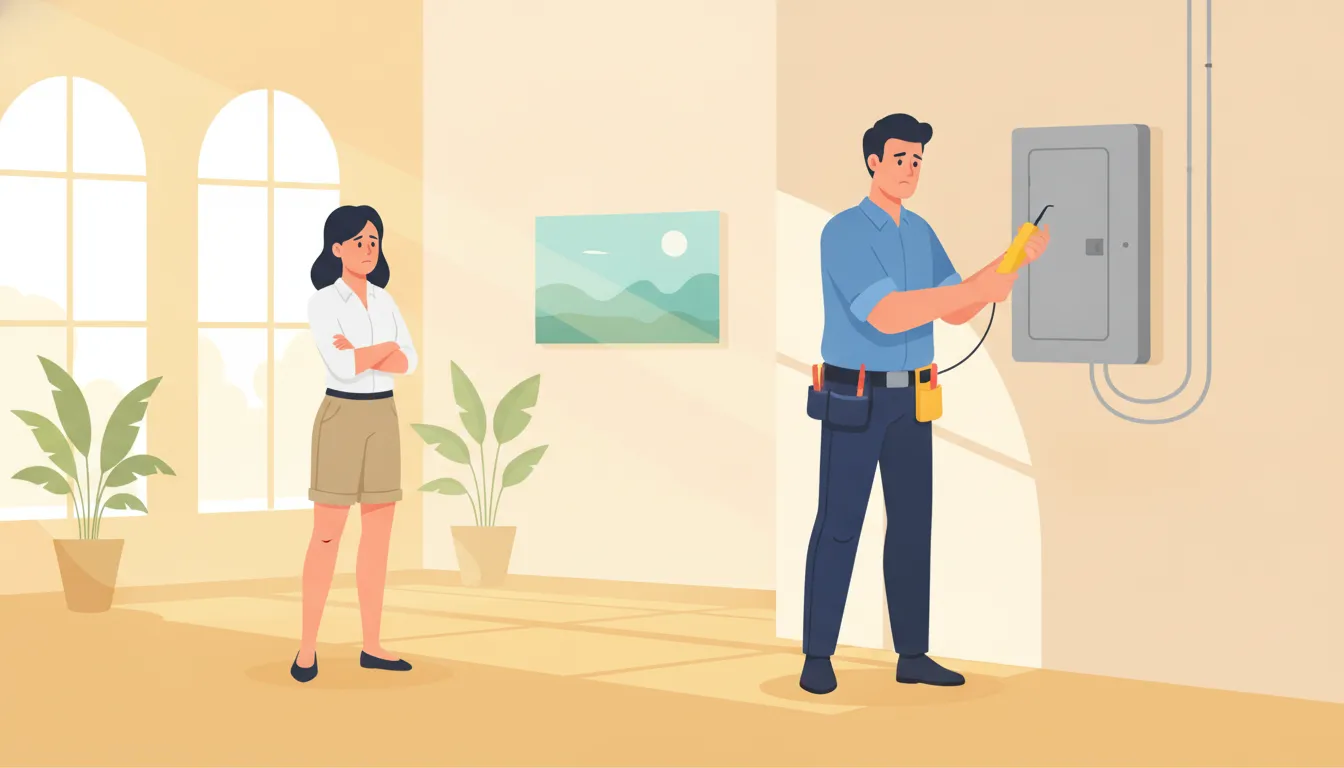
A breaker that trips once after a demanding appliance runs may be responding to a temporary load. Repeated trips, warmth, buzzing, or partial power loss deserve an evaluation. Burning odor, sparks, smoke, visible scorching, or a hot panel call for extra caution. Contact emergency services when there is immediate danger.
Circuit breaker replacement may restore power, but repeated trips do not prove the breaker is defective. An electrician should check the affected circuit, connections, electrical load, and panel condition before recommending a replacement.
You can safely note affected rooms or devices, the timing, and what you observe from outside the panel. Do not open the panel, touch wiring, bypass the breaker, or test energized equipment. A professional assessment can identify the real warning signs before replacement work begins.
Schedule Service for circuit breaker replacement and repair.
What Homeowner Symptoms Suggest a Breaker Needs Attention?
| What you notice | What it may mean | Safe next step |
|---|---|---|
| One trip after heavy appliance use. | The circuit may need a professional load review. | Note the device and stop repeated resets. |
| Repeated trips or partial power loss. | The breaker, circuit, connected device, or panel needs assessment. | Arrange electrical evaluation. |
| Heat, buzzing, odor, sparks, smoke, or scorching. | Potentially urgent electrical hazard. | Keep clear and seek emergency help when danger is immediate. |
| Water near electrical equipment. | Possible shock and equipment hazard. | Do not enter water or operate controls; call a qualified professional. |
A breaker that trips once may have responded to a temporary electrical demand. Repeated trips deserve attention, especially when the same outlet, room, appliance, or group of lights loses power each time. The breaker may be involved, but the problem may be elsewhere in the circuit. The symptom is a reason to investigate, not proof that circuit breaker replacement is the answer.
What you can safely observe
Notice what happens before the outage. Does power disappear from only part of the home? Do lights flicker, or do several outlets stop working together? Write down whether the trip occurs when a particular appliance starts, during heavy use, or without an obvious pattern. This information can help an electrician narrow the issue without asking you to open the panel.
From a safe position, look for warning signs around the outside of the equipment. Warmth, buzzing, crackling, a burning odor, discoloration, or scorching is not normal. Do not touch the panel, remove its cover, probe an outlet, or tighten anything. Keep children and pets away. Stop repeatedly resetting the breaker while the cause is unknown.
Sparks, frayed wiring, or an unexplained burning odor call for immediate caution. The CDC advises shutting off the electrical system at the main breaker when it can be done safely. Do not approach or operate electrical controls from standing water. If the equipment may be wet, it must be completely dry and inspected by a qualified electrician before it is returned to service.
Visible scorching or a hot, buzzing panel can indicate a more urgent condition than a simple nuisance trip. If there is smoke, active sparking, fire, or an immediate threat to people or property, leave the area and contact emergency services. For suspected breaker failure, My Electrician provides 24/7/365 emergency response.
An electrician can assess the breaker and the surrounding circuit. The evaluation includes connected load, connections, and panel condition. It determines whether replacement is appropriate or another repair is needed. Safe observations are valuable, but symptoms alone do not identify the failure.
Is Circuit Breaker Replacement Safe to Do Yourself?
For most homeowners, circuit breaker replacement is not a safe do-it-yourself project. A panel can contain energized parts even when one branch breaker appears to be off. Opening the cover or loosening a conductor can expose you to shock, burns, equipment damage, or fire. A tripping breaker may also be responding to a problem elsewhere in the circuit. Changing the part without testing can leave the hazard in place.
Stay on the observation side of the problem. Note which breaker moved, what room or appliance lost power, and whether a particular device was running. If a device may be involved, unplug it from a dry location and leave it disconnected. Do not remove outlet covers, open the panel, touch wiring, or bypass the breaker. Do not keep resetting it. Repeated trips call for an evaluation, not a forced reset.
Keep clear when the panel or nearby equipment feels hot, buzzes, sparks, smokes, shows scorching, or produces a burning odor. The CDC advises caution around frayed wiring, sparks, and unexplained burning smells. Shut off the electrical system at the main breaker only when that can be done safely. If reaching the main switch requires standing in water, do not enter the water or operate the control. Wet equipment should be completely dry before returning to service.
After flooding, a storm, or water intrusion, do not assume visible drying makes the panel, wiring, or appliances safe. Stay in a dry area, keep people away, and arrange qualified inspection before re-energizing equipment. If someone may have received an electric shock, call 911 or emergency medical help. Do not touch the person until the electrical danger is controlled.
A professional can assess the breaker, surrounding connections, circuit load, and panel condition before recommending repair or replacement. That approach helps match the repair to the actual problem and supports code-compliant work. If you see immediate danger or the breaker failure leaves the home unsafe, contact professional electrical repairs instead of attempting the replacement yourself.
What Should You Do Before Requesting Circuit Breaker Replacement?
Repeated trips are a signal to pause and investigate, not proof that the breaker itself has failed. The companion guide Why Your Breaker Keeps Tripping explains common causes in greater detail. This article focuses on the replacement decision: what to observe safely and what a professional should verify before installing a new breaker.
Before requesting circuit breaker replacement, record which room or device loses power, when the trip occurs, and any visible warning signs. Do not keep resetting the breaker to test it. Giving an electrician this concise observation record supports a safer assessment without asking you to diagnose energized equipment.
Which observations help the electrician?
Pay attention to the pattern without opening the panel or touching electrical equipment. Does the trip happen when one particular appliance starts, when multiple devices are used together, or at seemingly random times? Does only one room lose power, or are several areas affected? A homeowner can also note whether there is unusual warmth, buzzing, a burning odor, smoke, sparking, or visible scorching around an outlet, switch, appliance cord, or panel. These observations can help an electrician focus the assessment.
Stop resetting the breaker repeatedly if the problem returns. If you notice smoke, sparks, a burning smell, or a hot or buzzing panel, keep clear and seek urgent electrical help. Do not remove the panel cover, test wiring, bypass the breaker, or continue using equipment that may be damaged. If there is an immediate fire or shock danger, contact emergency services.
Why professional testing matters
An electrician evaluates the complete path of the problem rather than treating the breaker as an isolated part. My Electrician uses infrared cameras, circuit analyzers, advanced meters, and load tests to investigate electrical faults and intermittent problems. These tools can help identify abnormal heat, voltage concerns, changing loads, or faults that may not be obvious during a brief visual inspection. The assessment may also consider the breaker fit and condition, nearby connections, affected devices, circuit demand, grounding, and the overall panel condition.
That process helps distinguish a true breaker failure from a circuit or load problem. My Electrician describes its service approach as an assessment followed by an upfront quote, code-compliant work, testing, safety checks, and an explanation of the results. When repeated trips point to a broader fault, professional electrical repairs may be needed instead of a part swap. A careful diagnosis protects the rest of the system and helps ensure that any circuit breaker replacement addresses the actual cause.
What Does an Electrician Check Before Replacing a Breaker?
A professional does more than identify the switch that appears to be causing trouble. Before recommending circuit breaker replacement, the electrician evaluates whether the breaker is actually defective and whether another problem caused it to trip. That assessment helps prevent a new breaker from being installed into a circuit that remains overloaded, damaged, or unsafe.
How is the breaker and panel evaluated?
The first check is whether the breaker is the correct type, size, and configuration for the panel and circuit. The electrician looks for signs of heat, discoloration, cracking, scorching, unusual movement, or other visible damage. They also assess how the breaker fits in the panel and whether the surrounding panel components show signs of overheating or deterioration. A replacement must match the equipment and the circuit design. Installing a breaker simply because it looks similar is not a safe substitute for that evaluation.
Connections around the breaker receive attention as well. Loose or damaged connections can create heat, intermittent power, buzzing, or nuisance trips. The electrician may inspect the condition of the conductors, terminals, bus connections, and other accessible components. They also consider the panel's overall condition, age, available capacity, and whether the issue appears isolated to one breaker or connected to a broader panel concern.
What is tested on the affected circuit?
The electrician traces what the circuit supplies, including the outlets, lights, appliances, and other devices that lost power or appear connected to the symptom. The assessment considers the circuit's normal load and whether recently added equipment, a failing appliance, a short, or an intermittent connection could be contributing to the trips. A breaker that repeatedly opens may be protecting the wiring from a condition that still exists. So replacing it without finding the reason can leave the underlying problem unresolved.
Professional testing can include voltage measurements, load testing, circuit analysis, and checks for unusual electrical behavior. My Electrician describes using advanced meters, circuit analyzers, infrared cameras, and load tests to investigate faults and intermittent problems. These tools help the electrician evaluate conditions that may not be apparent during a brief visual inspection. The process may also include checking grounding and other safety-related parts of the circuit before power is restored.
Homeowners should not open the panel, touch wiring, or attempt these tests themselves. If there is a burning odor, sparking, visible scorching, smoke, or a hot or buzzing panel, stop resetting the breaker. Keep people away from the area and seek urgent electrical help. For routine symptoms, a professional electrical repair assessment can determine whether the appropriate solution is a breaker replacement, a circuit repair, or a larger panel correction.
After the scope is clear, My Electrician's stated process includes an assessment, an upfront quote, code-compliant work, testing, safety checks, and an explanation of the completed service. The company describes following the National Electrical Code and local building codes, helping ensure the repair is not only functional but appropriate for the electrical system.
When Is the Problem Bigger Than One Breaker?
A single breaker can fail, but repeated electrical symptoms may point to a problem involving the circuit, the panel, or the home's available capacity. If several breakers trip or multiple rooms lose power, the issue deserves a broader assessment. Lights that dim or flicker throughout the home, unusual heat, buzzing, scorching, or burning odors near the panel also require attention. Replacing one component without checking what surrounds it can leave the underlying hazard unresolved.
Panel condition matters as much as the individual breaker. Corrosion, heat damage, loose connections, signs of arcing, outdated equipment, or a panel that cannot comfortably support the home's present electrical demand may call for more than circuit breaker replacement. New appliances, renovations, electric vehicle charging, or other added loads can also make a capacity review appropriate. An electrician can evaluate the panel, circuits, connections, and load before recommending a focused repair, a capacity improvement, or a complete panel replacement.
What widespread symptoms can tell you
Pay attention to the pattern rather than trying to diagnose the cause. One dead outlet after a single trip is different from several rooms losing power, appliances behaving unpredictably, or breakers tripping again after the visible load has been removed. A service professional may need to trace the affected circuits and inspect the panel's condition before deciding whether the breaker is the correct part to replace. My Electrician FL's electrical panel services can address panel-related concerns alongside individual circuit issues.
Storms and water exposure raise the urgency. Do not operate electrical controls while standing in water, and do not enter standing water to reach a main switch. The CDC advises never turning power on or off while standing in water. Floodwater can contain conductive and corrosive contaminants, so equipment or wiring exposed to it should not simply be dried and re-energized. Guidance from the Minnesota Department of Labor and Industry states that flood-exposed panels, switches, receptacles, wiring, conductors, and cables require replacement under its flood-damage guidance.
If you see sparks, frayed wiring, or an unexplained burning odor, move away and shut off the system at the main breaker only if you can do so safely from a dry location. If water, smoke, or suspected shock is involved, prioritize emergency help and professional evaluation over any breaker replacement decision. A qualified electrician can determine whether the next step is a component repair, panel work, or a larger electrical safety response.
How Can You Prepare for a Circuit Breaker Service Visit?
A little information can help an electrician understand what happened without asking you to investigate energized equipment. Prepare from a safe distance, and leave testing, panel access, and circuit breaker replacement to a qualified professional.
- Write down what you noticed. Record whether the breaker tripped once or repeatedly, whether power came back temporarily, and what you heard or smelled. Note flickering lights, a burning odor, buzzing, warmth, smoke, sparks, or a sudden loss of power. Include the approximate time each symptom appeared. These details can help separate an isolated event from a problem that returns under certain conditions.
- Identify the affected areas and devices. From a safe location, make a list of rooms with lost power and appliances or fixtures that were running when the problem began. You can unplug an appliance if the plug and surrounding area are dry and there is no sign of damage. But do not remove outlet covers, open the panel, touch wiring, or attempt to determine which component has failed. A tripped breaker can be responding to an underlying circuit or equipment problem, so symptoms alone do not confirm that the breaker is defective.
- Stop repeated resets. If the breaker trips again, do not keep resetting it to restore power. Repeated trips are a reason to arrange an evaluation, not an invitation to force the circuit back into service. If you see smoke, sparks, frayed wiring, scorching, or an unexplained burning odor, keep clear and seek urgent electrical help. CDC guidance advises shutting off the electrical system at the main breaker when that can be done safely, but never approach electrical controls while standing in water. Review CDC electrical hazard guidance for water, fire, and shock safety.
- Make a safe path to the work area. Move furniture, stored items, and clutter away from the panel and affected rooms so the electrician can work without obstruction. Do not move anything that is wet, hot, sparking, or visibly damaged. Keep children and pets away from the area until the visit is complete.
- Share storm, water, and renovation history. Tell the electrician about recent lightning, storms, flooding, leaks, humidity-related damage, or any recent appliance, outlet, or remodeling work. Wet electrical equipment should not be re-energized until it has been inspected by a qualified electrician, and equipment must be completely dry before returning to service. This context helps the electrician assess the broader safety concern rather than treating one symptom in isolation.
Frequently Asked Questions
How can I tell if breaker replacement is the right next step?
Replacement may be appropriate when a professional assessment finds that the breaker is damaged, worn, overheated, or no longer operating correctly. Because similar symptoms can come from the connected load, wiring, connections, or panel, an electrician should evaluate the surrounding circuit before recommending a part change.
Should I match the old breaker myself?
No. Breakers must be compatible with the panel and circuit, and the correct choice depends on the equipment and electrical system. Do not remove the panel cover or install a breaker yourself. Give the electrician the panel information and the symptoms you observed from a safe position.
What happens during a breaker replacement visit?
The electrician can review the symptoms, identify the affected circuit, inspect the panel and connections, evaluate load and condition, and explain the recommended repair. If replacement is appropriate, the work should be followed by testing and safety checks so you understand what was completed.
What should I do if the new breaker trips?
Do not keep resetting it or assume another replacement will solve the problem. Stop using the affected circuit if you can do so safely, keep clear of heat, smoke, sparks, or a burning odor, and arrange professional evaluation. A repeated trip can indicate that the surrounding circuit or connected equipment still needs attention.
Schedule a Circuit Breaker Evaluation
A professional evaluation can help identify whether the breaker or a surrounding circuit needs attention before replacement work begins. My Electrician FL can review the symptoms, assess the panel and affected circuit, and explain the recommended next step in plain language.