
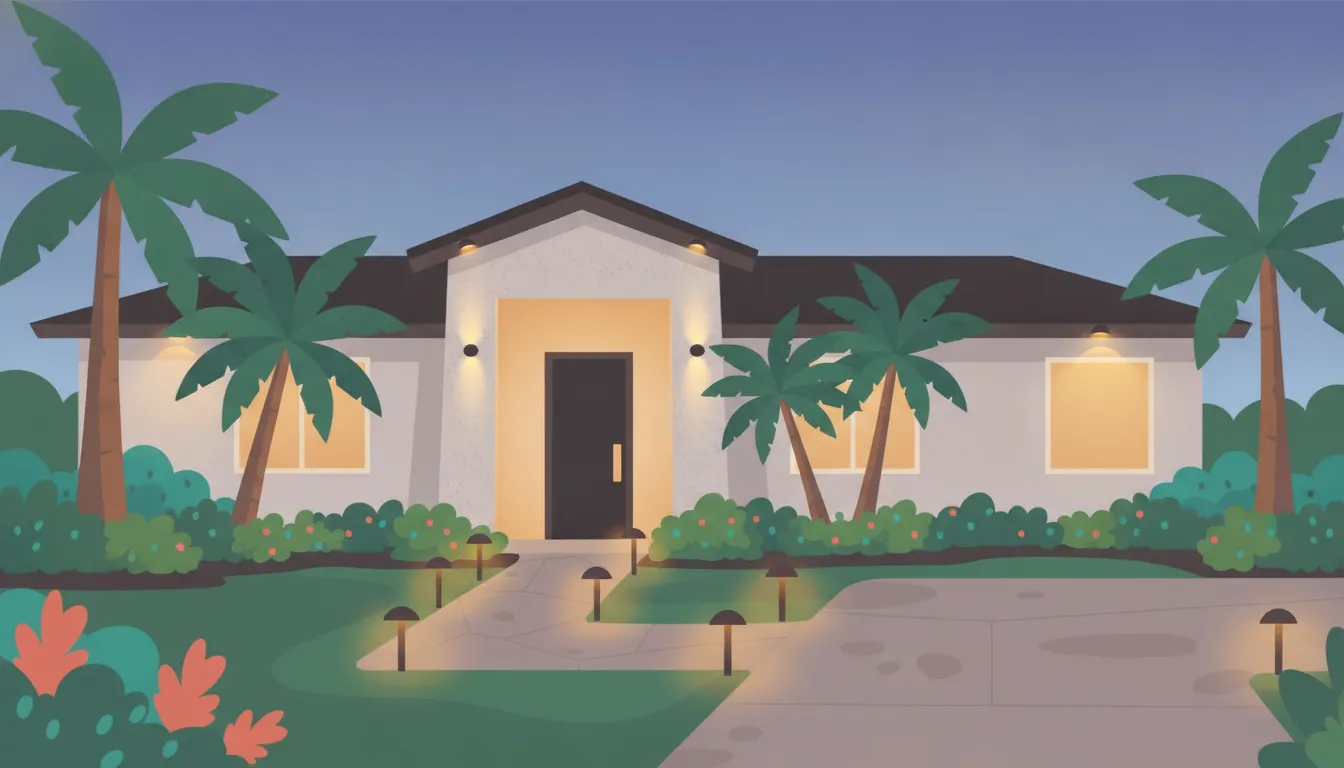
Outdoor lighting can make a Florida home feel safer and more welcoming after sunset, but the price depends on more than the number of fixtures. The layout, wiring distance, fixture quality, transformer, and installation conditions all shape the final project total. Whether you are lighting a short walkway or an entire backyard. Knowing where the money goes helps you plan a system that fits both your goals and your budget.
For a standard professional project, the cost to install landscape lighting commonly falls between $2,000 and $6,000, according to My Electrician's landscape-lighting service guidance. A smaller installation may cost less, while a larger or more detailed design can cost considerably more. Low-voltage LED fixtures are often a practical choice for residential properties because they use less energy and offer flexible placement.
Treasure Coast homeowners should also account for Florida's salt air, humidity, and intense weather when comparing fixtures. Corrosion-resistant materials, safe wire placement, and a properly sized system can matter just as much as the initial quote. Understanding what drives the estimate makes it easier to compare options and choose lighting that delivers lasting safety, curb appeal, and value. In the sections below, we break down typical costs, the main price drivers, and the choices that give Florida homeowners the strongest return on a landscape lighting investment.
Schedule Professional Landscape Lighting Installation
How Much Does It Cost to Install Landscape Lighting?
The cost to install landscape lighting is typically $2,000 to $6,000 for a standard professional installation. Your final price depends on the size of the property, the number and type of fixtures, the complexity of the layout, and how much wiring is needed. A modest front-yard project may fall near the lower end, while a larger property with multiple lighting zones, long wire runs, and premium fixtures can cost more.
For many homeowners, a project around $3,250 is a realistic midpoint for a professionally designed and installed system. That figure is not a flat quote, however. A licensed electrician should evaluate the property and lighting goals before assigning a precise price.
How much does each landscape lighting fixture cost?
Installed fixture pricing commonly falls between $150 and $350 per fixture. The range reflects more than the fixture itself. Path lights, spotlights, wall lights, well lights, and other fixtures vary in materials, brightness, beam spread, finish, and durability. A corrosion-resistant fixture may be especially important in Florida, where outdoor equipment faces heat, humidity, rain, and salt air.
Fixture count also changes the project total quickly. A small system with six to eight strategically placed lights may create a strong effect around a walkway, entry, or planting bed. A larger installation may include path lighting, tree uplighting, accent lighting, steps, patios, driveways, and several separately controlled zones. Large residential systems can range from $3,000 to $20,000 when the design and property size call for extensive coverage.
How much of the price is labor?
Labor often accounts for 50% to 70% of the total landscape lighting budget, according to the project cost breakdown in the research source. That share covers planning the layout, placing and securing fixtures, routing and burying cable, connecting the transformer, managing voltage drop, testing each zone, and making adjustments after installation.
Paying for professional labor is not simply paying someone to place lights in the ground. The system needs to operate safely and consistently, with wiring protected from routine landscaping and fixtures aimed to illuminate useful areas without creating glare. A professional outdoor landscape lighting installation can also give you a clearer project scope and an easier path to future repairs or additions.
When comparing estimates, ask whether the proposal includes fixtures, transformer capacity, wire, connections, trenching or cable burial, controls, setup, and testing. Comparing complete scopes instead of a single fixture price helps you understand what you are actually purchasing and avoids surprises during the work.
What Factors Drive the Cost of Landscape Lighting?
The final price depends less on a single fixture price than on how the lighting plan fits your property. A small, open yard with a short wire run is a different project from a large. Planted lot with several entertaining areas, mature trees, walkways, and multiple lighting zones. Understanding the cost drivers makes it easier to compare quotes and decide where quality matters most.
Fixture count and fixture type
Every additional fixture adds equipment, connection points, aiming, and installation time. Path lights, uplights, accent lights, well lights, deck lights, and floodlights each serve a different purpose, and their construction and installation requirements can vary. Path lights may guide a walkway, while an uplight may need careful positioning to highlight a tree without creating glare. A thoughtful design uses the right number of fixtures rather than placing lights everywhere.
Fixture quality also affects the budget. Durable, weather-resistant LED fixtures generally cost more initially than basic options, but LEDs use less energy and have a longer service life than halogen lighting. The U.S. Department of Energy explains that energy-efficient exterior lighting can reduce energy use and operating costs over time: energy-efficient exterior lighting guidance.
Transformer size and system quality
A low-voltage system needs a transformer sized for the connected load, with enough capacity for reliable operation and reasonable room for future additions. A lower-cost transformer may not be the best value if it cannot support the planned fixture count or withstand the demands of an outdoor installation. Controls, timers, photocells, and zoning can also change the equipment cost while making the system easier to manage.
Wire runs, trenching, and access
Wire must travel from the transformer to the fixtures, and the route can be one of the largest labor considerations. Short, accessible runs across open beds are usually simpler than routes beneath lawns, driveways, patios, dense groundcover, or established root systems. Trenching, boring, surface restoration, and careful placement around irrigation or other utilities can add time and materials.
Voltage drop and property layout
Voltage drop occurs when a circuit loses usable voltage over a long wire run. If it is not addressed, fixtures farther from the transformer may appear dimmer or perform inconsistently. A professional plan may account for this with properly sized wire, shorter runs, multiple circuits, additional transformers, or a different fixture layout. That means the size and shape of the property can affect both material quantities and plant count, especially when lights are spread across distant areas.
Existing electrical access and local labor
If a suitable electrical connection already exists, the project may require less rough-in work. A new or inadequate connection can require additional electrical work, coordination, and inspection considerations. Labor reflects this site-specific effort, not just time spent placing fixtures. Labor often represents 50% to 70% of a professional lighting project budget, according to the customer's landscape-lighting guidance .
Local licensing, safety requirements, accessibility, and the experience needed to work around existing electrical and landscape systems all influence labor. For a property-specific plan, compare what each quote includes, such as fixture quality, transformer capacity, wire routing, trench restoration, controls, and warranty coverage.
Landscape Lighting Cost by Fixture Type
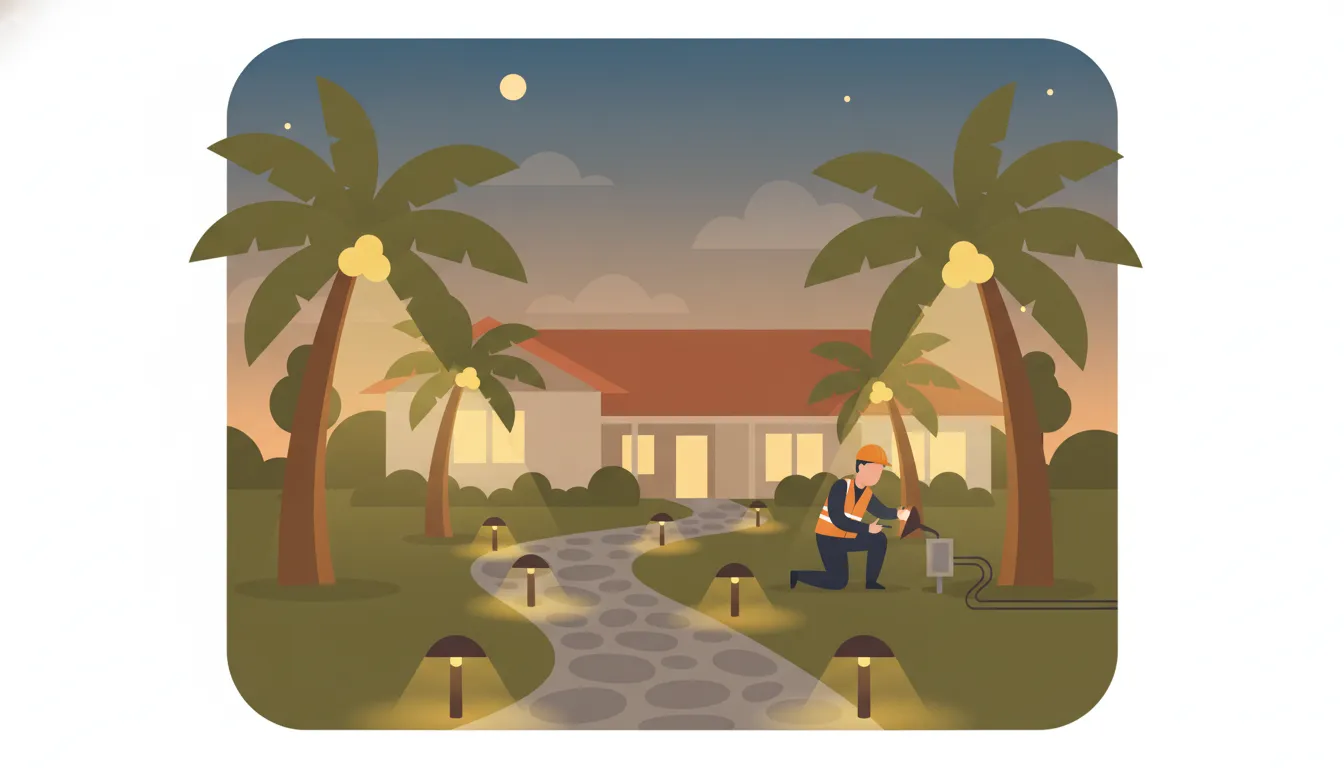
Fixture selection is one of the clearest reasons the cost to install landscape lighting can vary from one property to another. A basic path light may be relatively simple to place, while a recessed in-ground fixture can require more careful preparation and a more exact finish. As a practical planning range, many homeowners should expect about $100 to $200 per fixture for a core installation. With a more typical installed range of roughly $150 to $350 per fixture when fixture quality, labor, and site conditions are included. These figures are planning guidelines, not a substitute for a property-specific quote. The layout, number of fixtures, wire distance, and electrical equipment can change the total.
| Fixture type | Typical installed cost per fixture | Best use |
|---|---|---|
| Path light | $100-$200 | Walkways, driveways, steps, and garden paths |
| Accent or uplight | $150-$300 | Highlighting trees, palms, walls, architectural details, or entry features |
| Well light | $175-$350 | Concealed lighting for trees, facades, and upward illumination from planting beds |
| In-ground or brick light | $200-$350 | Flush illumination in patios, masonry, steps, and hardscaped areas |
| Deck light | $100-$250 | Deck stairs, railings, seating areas, and outdoor entertaining spaces |
| Bollard light | $175-$350 | Path definition, driveway edges, and broader low-level area lighting |
| Spot or flood light | $150-$350 | Large trees, walls, gates, security-sensitive areas, and broad coverage |
The fixture price is only one part of the project. A quote may also need to account for the transformer, low-voltage cable, connectors, trenching or protected wire placement, timers or other controls, and access to the installation area. Difficult soil, extensive hardscape, long wire runs, or a need to repair existing wiring can add labor without adding many visible fixtures. Coastal Florida conditions also make durable, corrosion-resistant equipment important, especially where salt air and humidity are constant concerns. Asking for a fixture-only price can therefore create an incomplete comparison between proposals.
Professional design and installation add value beyond getting each light to turn on. An electrician can balance the system load, manage voltage drop across longer runs, select compatible equipment. And position fixtures so the result is useful without excessive glare or dark gaps. Proper placement can make a short walkway safer, bring attention to architectural features, or improve visibility around entrances while keeping the lighting comfortable for neighbors and occupants. For a clearer scope, review outdoor landscape lighting installation and ask for an upfront, flat-rate quote that separates fixture choices from site work and electrical components.
Low-Voltage vs. Solar: Which Landscape Lighting Pays Off?
Solar and wired landscape lighting can both improve an outdoor space, but they serve different priorities. Solar fixtures are inexpensive and simple to place. A professionally installed low-voltage system costs more at the beginning, yet it generally provides steadier illumination, more control, and a design that can grow with your property.
When solar lighting is the practical choice
Solar lights can make sense when you want a modest decorative effect rather than dependable task or security lighting. They work well for outlining a garden bed, adding a soft glow along a walkway, or creating seasonal interest without trenching wire or installing a transformer. They are also useful when you want to test a lighting concept before committing to a permanent design.
The tradeoff is that each fixture depends on its own battery and the sunlight it collects. Shade from trees, cloudy weather, dirt on the panel, and aging batteries can reduce brightness or runtime. Solar fixtures are therefore less suitable for areas where you need consistent light at the entry, steps, driveway, or other locations where visibility matters.
Why homeowners choose professionally installed low-voltage lighting
A 12-volt low-voltage system uses a central transformer, planned wire runs, and fixtures positioned for the property. It can deliver more consistent light and make it easier to control brightness, schedules, and zones. Low-voltage systems are also safer and more flexible for residential landscapes than line-voltage systems, when installed correctly.
Professional installation typically costs more than a solar setup because the project includes design, durable fixtures, transformer sizing, wiring, connections, and labor. A pricing guide reports professional installations in the range of $3,000 to $20,000. Compared with about $200 to $1,600 for a similarly sized solar installation and $695 to $3,600 for a big-box low-voltage kit before installation. Your property's size, access, fixture count, and design complexity determine where a project falls within those broad ranges.
For long-term operating costs, specify LED fixtures. The U.S. Department of Energy notes that energy-efficient exterior lighting and proper controls can reduce energy consumption and operational costs. LED fixtures are also preferred for landscape lighting because they use less energy and generally last longer than halogen bulbs. Sources: Department of Energy exterior lighting guidance and the DOE exterior lighting guide.
- Choose solar for low-cost, decorative lighting in sunny, non-critical areas.
- Choose professional low-voltage lighting for reliable illumination, stronger coverage, controls, and a lasting design around entrances, paths, steps, and outdoor living areas.
- Compare the complete project cost, including replacement batteries, fixture quality, wiring, installation, maintenance, and future expansion.
Can You Install Landscape Lighting Yourself to Save Money?
DIY landscape lighting can reduce the upfront cost, but the right choice depends on the system, the layout, and your comfort working around electrical connections. A small solar path-light setup is usually manageable for a homeowner who wants a simple accent along a walkway. Basic plug-in path lights can also be reasonable when the transformer and connections are designed for outdoor use. The receptacle is appropriate, and the installation follows the manufacturer's instructions.
Those simpler projects have limits. Solar fixtures may not provide consistent light when shade, weather, or battery performance reduces their output. Plug-in systems can also leave cords exposed to foot traffic, moisture, landscaping tools, or lawn equipment. Before buying anything, spend time planning your lighting installation, including where light is needed, how much coverage you want, and how the system will be powered.
When a DIY kit may make sense
A homeowner may reasonably handle a small, low-risk project when it uses solar fixtures or a simple. Listed plug-in kit, requires no new circuit, and does not involve modifying fixed house wiring. Keep fixtures and connections away from standing water, protect cables from damage, and follow the product's spacing and installation requirements. A low purchase price is not the same as a low total cost. So account for replacement batteries, broken fixtures, uneven illumination, and the time required to troubleshoot the system.
When professional installation is the better value
Professional help is the safer choice for larger low-voltage layouts, multiple wire runs. New transformers, buried cable, connections near the home, or any project that changes fixed electrical wiring. The system must deliver suitable voltage at fixtures across the full run. Poorly planned wire lengths, undersized conductors, or too many fixtures can cause dim lights, unreliable operation, and premature component failure. A professional can plan the transformer capacity, distribute the load, protect connections, and account for the conditions around each fixture.
Professional electrical installation also helps ensure compliance with local electrical codes and safety standards, as noted in guidance from the Connecticut Office of Design and Construction. Code compliance is not just a paperwork concern. It supports safer connections, appropriate protection from moisture, and a system that can be serviced without creating additional hazards.
For a few solar lights, DIY may be the economical answer. For a permanent design intended to illuminate walkways, landscaping, steps, patios, or the front of the home for years. The cost to install landscape lighting professionally may provide better long-term value than repeatedly replacing or repairing an improvised setup. Compare the complete project, not only the price of the kit: equipment, trenching or cable placement, transformer work, troubleshooting, maintenance, and safety all belong in the decision.
Does Landscape Lighting Add Value and Safety to Your Florida Home?
Well-planned landscape lighting does more than make a property look attractive after sunset. It helps homeowners see changes in elevation, identify the route to the front door, and use outdoor spaces more comfortably in the evening. A thoughtfully designed system can also make a home feel more cared for from the street. Which supports curb appeal and may contribute to how buyers perceive the property.
How does landscape lighting improve safety?
Path lights can define walkways, steps, and changes in grade, while accent lights can highlight features without flooding the entire yard with glare. This distinction matters. Path and accent fixtures serve different visual purposes, so the goal is not simply to add as many lights as possible. The right placement provides useful visibility where people walk and soft emphasis where you want architectural or landscape details to stand out. Outdoor lighting services can help you plan those locations around the way your household actually uses the property.
Lighting the entry and the walkway leading to it also supports basic home security. Visitors can approach more safely, homeowners can see who is near the door, and dark hiding places around common access points become less inviting. Research from Oklahoma State University Extension notes that landscape lighting can increase the perception of safety and security in residential outdoor spaces: Oklahoma State University Extension. Lighting is not a substitute for locks, cameras, or an alarm system, but it is a practical layer in a broader security plan.
What should Florida homeowners look for in landscape fixtures?
Florida's coastal conditions deserve special consideration. Salt air and high humidity can accelerate corrosion, especially on exposed outdoor hardware. Choosing corrosion-resistant fixtures and connectors can help the installation hold up better in communities along the Treasure Coast and other coastal areas. A fixture that looks attractive on installation day is not enough. Its materials, seals, wiring connections, and placement should suit the environment where it will operate.
These decisions affect the cost to install landscape lighting, but they also affect service life and reliability. A cheaper fixture that corrodes or develops connection problems may cost more over time through replacement and troubleshooting. LED landscape lighting and appropriate controls can also reduce long-term operating costs and energy consumption, according to the U.S. Department of Energy's guidance on energy-efficient exterior lighting: Department of Energy.
The best design balances visibility, appearance, durability, and maintenance. Instead of treating lighting as decoration alone, consider which walkways need definition, which entrances need dependable visibility, and which landscape features deserve emphasis. That approach can make the investment more useful every night while preserving the welcoming look Florida homeowners want.
How Do You Get an Accurate Landscape Lighting Quote?
A reliable quote should reflect your property, lighting goals, electrical setup, and the level of workmanship needed for a safe installation. Before comparing the cost to install landscape lighting, make sure each estimate covers the same scope. A licensed electrician should explain what will be installed, how the system will be powered, and what is included in the final price.
Use these steps to prepare for an accurate quote and a smoother project:
- Define your goals and the areas you want to illuminate. Walk the property at dusk and note where you need better visibility or where you want to highlight landscaping. Common priorities include walkways, steps, driveways, entries, patios, trees, garden beds, and dark areas near the home. Decide whether your main goal is safer movement, added security, curb appeal, or a combination of all three. A clear priority list helps the electrician design the system around how you use the property.
- List the fixtures and lighting effects you want. Identify whether you prefer path lights, accent lights, well lights, step lights, deck lights, or floodlights. You do not need to know the exact model or wattage before the consultation. However, describing the areas and effects you want gives the professional a useful starting point. The fixture count, placement, quality, and finish can all affect the final scope and cost.
- Have a licensed professional assess the wiring and voltage drop. The electrician should review available power, transformer capacity, wire routes, connection points, and the condition of existing landscape-lighting wiring. Voltage drop occurs when power decreases over a long or improperly planned wire run, which can cause lights farther from the transformer to appear dimmer. An on-site assessment helps identify routing challenges and reduces the risk of an unreliable system.
- Request an upfront, flat-rate quote. Ask for the complete project price before work begins, including fixtures, transformer equipment, wiring, labor, removal of unsuitable components, and any necessary electrical corrections. My Electrician uses upfront flat-rate pricing rather than vague "starting at" figures, so you can review the scope and expected investment before approving the work.
- Review the warranty and scheduling details. Confirm which parts and labor are covered, how service questions are handled, and when installation can begin. My Electrician provides a 2-year warranty on parts and labor for its work. The company also offers 24/7 emergency electrical service, which can be useful if an existing outdoor system creates an urgent electrical concern. Review the service area to confirm coverage from Port St. Lucie through Palm Beach Gardens.
When you are ready to discuss your property, contact us to schedule service and request a clear project assessment. My Electrician serves homeowners across the Treasure Coast and Palm Beaches. You can also review the company's service areas before arranging your consultation.
Get a Clear Landscape Lighting Quote for Your Home
Frequently Asked Questions
How much does it cost to install landscape lighting?
A standard professional installation typically costs $2,000 to $6,000, depending on the number of fixtures, lighting design, wire runs, transformer needs, and site access. A simple path-lighting project will cost less than a larger design with multiple zones, accent lights, and challenging landscape features. An on-site assessment is the best way to receive an accurate, project-specific price.
What is the average cost per fixture for landscape lighting?
Installed pricing commonly falls between $150 and $350 per fixture, including materials and labor. The fixture style matters because path lights, uplights, well lights, and accent fixtures serve different purposes and may require different installation methods. The transformer, wiring layout, controls, and labor can also affect the total more than the fixture count alone.
Does Florida's climate affect landscape lighting choices?
Yes. Florida's humidity and coastal salt air can accelerate corrosion, especially near the Treasure Coast and Palm Beaches. Corrosion-resistant fixtures and properly protected connections can help a system remain dependable in demanding outdoor conditions. Your electrician should consider the home's exposure, drainage, irrigation, and landscaping before selecting equipment.
Is low-voltage landscape lighting safer for a home?
Low-voltage systems commonly operate at 12 volts and are generally safer to work with and easier to modify than 120-volt line-voltage systems. They still require thoughtful transformer sizing, voltage-drop planning, protected connections, and proper installation. A professional can design the system for consistent brightness and safe long-term operation.
Can I install landscape lighting myself to save money?
DIY kits can reduce upfront labor costs, but they may leave you responsible for layout, voltage-drop issues, weatherproof connections, and code-related requirements. Professional installation helps address those details and can improve reliability. If you are comparing options, focus on the complete system cost and expected maintenance, not only the kit price.
Ready to Plan Your Landscape Lighting?
Investing in landscape lighting is a decision, but it does not have to be a guessing game. A thoughtful lighting plan helps you understand the right scope for your property. The fixture choices that fit your goals, and the installation details that matter before work begins. That clarity translates into realistic expectations and upfront pricing instead of surprises.
For clear guidance and a straightforward quote, schedule service with My Electrician. Our team serves Treasure Coast homeowners from Palm Beach Gardens through Vero Beach, and every installation is backed by a two-year warranty on parts and labor. Call 877-762-7483 to schedule service and take the next step toward a safer, more inviting landscape with a licensed electrical team that stands behind its work.