
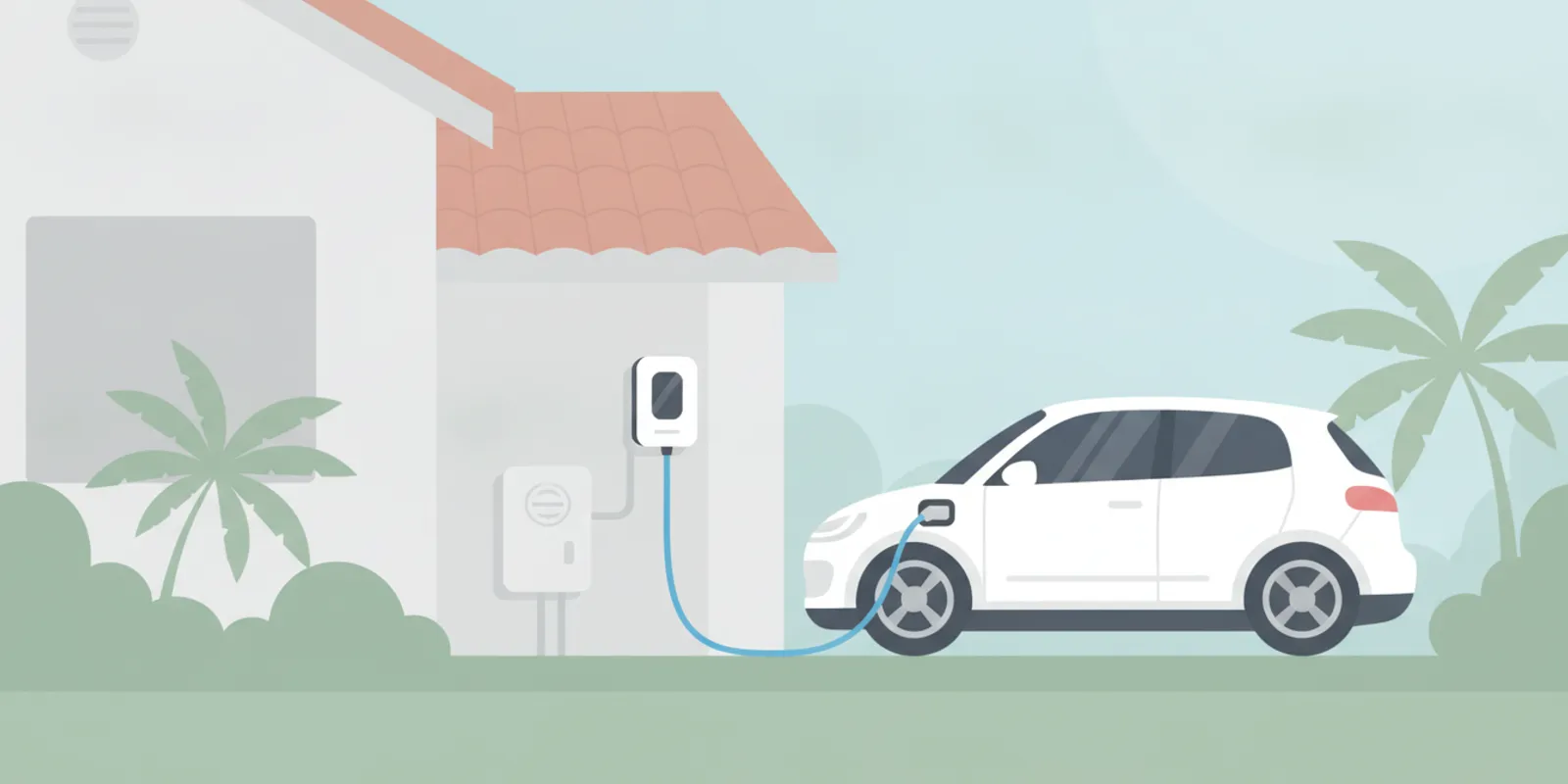
Planning a home EV charger installation in Florida? The electrical box, wiring route, panel capacity, and charger location can all affect the work involved. Knowing what an estimate should address can help you compare options without guessing at a price before the home has been assessed.
Schedule an assessment for your home EV charger installation
What does an electrical box have to do with EV charger installation cost?
“Electrical box” can mean different things in a home. It may refer to the main electrical panel, a junction box where wiring connections are made, or the enclosure used for a receptacle. Each has a different role. For an EV charger, the electrician needs to assess the complete circuit and its termination points, not just the visible box on the wall.
A Level 2 charger typically needs a dedicated circuit. The final setup depends on the charger’s specifications, the electrical system, and the installation plan. An existing box or panel is not automatically suitable simply because it is nearby. Its condition, capacity, wiring, and intended use matter.
The estimate may change if the planned circuit needs a longer wiring route, if the panel needs attention, or if the charger will be mounted outside and needs suitable equipment for that location. A qualified electrician can inspect these conditions and explain which work is necessary before installation begins. Learn more about EV charger installation service and what a home assessment can clarify.
Which parts of the installation can affect the estimate?
There is no single installation price that fits every home. A useful estimate separates the charger or equipment choice from the electrical work required to install it. Ask the electrician to explain the assumptions behind the quote, especially when the location, wiring route, or panel details are not yet confirmed.
| Cost factor | What the electrician checks | Why it can change the work |
|---|---|---|
| Existing panel and electrical box | Available capacity, condition, breaker arrangement, and compatibility with the planned circuit | The circuit may be straightforward, or the panel may need additional evaluation or service work |
| Distance and wiring route | Where the charger will sit in relation to the panel and how wiring can be routed | A longer or less accessible route can require more labor and materials |
| Charger location | Indoor or outdoor mounting location, access, and suitable equipment | Outdoor placement may require weather-appropriate equipment and a carefully planned route |
| Charger and connection type | Manufacturer requirements and whether the selected setup uses a hardwired connection or a receptacle | Different equipment and connection approaches can call for different installation details |
| Additional electrical work | Whether a dedicated circuit, panel work, or correction of an existing issue is needed | Work beyond a basic installation can add labor, materials, or separate project steps |
As one reference point, a source titled Unlocking the True Cost of EV Charger Installation reports an average range of $500 to $2,000 for installation of a basic Level 2 charger, while noting that more advanced equipment can cost more. Treat that as a broad reference, not a quote for your home. The source’s range does not tell you whether your panel, wiring route, charger, or local project requirements match the assumptions behind a basic installation.
For that reason, compare the scope of estimates, not only the headline number. A proposal that includes a site assessment and clearly identifies what is and is not included is easier to evaluate than a price based on assumptions. For a broader view of electrical work available to homeowners, see the company’s electrical services.
How can you read the estimate line by line?
Start by identifying what the quoted amount covers. The charger itself may be supplied by the homeowner or included in a proposal; do not assume either way. Look for the planned circuit, breaker, wiring, mounting, connection method, and testing. If any item is described as an allowance, optional work, or “as needed,” ask what condition would trigger it and how you would approve the added work.
Next, check whether the quote describes a specific location and route. “Install charger in garage” leaves open important details: which wall, how far the wiring travels, whether the route is exposed or concealed, and whether walls or other finishes need attention. A good comparison aligns the key assumptions between proposals. If one estimate is based on a short, open route and another includes a longer path around finished rooms, the lower total may not represent the same job.
Finally, ask what happens if the electrician finds a different condition on site. Confirm that additional work will be explained and approved before it proceeds. This is especially useful if the initial discussion relied on photos or a brief description rather than an in-person assessment.
Does your electrical panel have room for the charger?
A panel can have physical space for a breaker without having adequate capacity for the new load. Conversely, a crowded-looking panel is not by itself enough to decide what changes are needed. The electrician must consider the panel and the home’s electrical demand in context, then determine whether the planned charger circuit can be supported.
Bring the charger model or its installation specifications to the assessment if you have chosen one. The electrician can use the manufacturer’s requirements to evaluate the intended circuit. If you have not chosen a charger yet, say so; the assessment can help identify what equipment and connection arrangements are appropriate for the home.
Ask whether the estimate assumes the existing panel can support the circuit. If it does, ask what the electrician inspected. If panel work might be needed, request a clear explanation of the reason and whether it is part of the quoted scope or a separate option. The company’s page on electrical panel services gives homeowners a place to review related work, but an on-site evaluation is needed to determine what a particular property needs.
It can help to mention other large electrical equipment in the home and any planned additions, such as a pool pump or workshop equipment. The point is not to calculate panel capacity yourself; it is to give the electrician a fuller picture of the home’s electrical use and upcoming plans. If the estimate includes panel changes, ask which specific finding makes that work necessary and whether the proposal separates it from the charger installation.
Do not try to create room by moving breakers or making changes inside the panel yourself. Electrical work can expose you to shock, arc, or fire hazards. Leave inspection and modifications to a qualified electrical professional.
How do wiring distance and charger placement change the job?
Choosing a charger location is a practical decision as well as a cost decision. Start with where the vehicle is usually parked and which side of the vehicle’s charge port will be easiest to reach. Consider whether the cable can reach the port without crossing a walkway, driveway traffic area, or frequently used door.
Then consider the route from the electrical panel to the charger. A charger close to the panel may allow a shorter route, but convenience and safe access matter too. A longer route, finished walls, difficult access, or a path that needs protection can change how the electrician plans the installation. The details vary by home, so avoid assuming that a visible garage wall is the simplest place.
For example, a charger mounted on the wall beside the usual parking spot may offer a short cable reach, but the panel could be on the opposite side of the house. A location nearer the panel could shorten the route but make the cable awkward to use or put it where people walk. In a two-car garage, consider whether both vehicles need access or whether one designated parking position is enough. These choices help the electrician assess a practical route rather than working from a vague request to “put it near the car.”
For an outdoor charger in Florida, ask how the proposed equipment and installation suit the intended location and exposure. Do not assume that a garage-adjacent wall or a box that already exists is suitable for every charger. Have the electrician confirm the mounting and connection plan against the manufacturer’s instructions and applicable requirements.
Homeowners who are still comparing layouts can review the practical planning points in this guide to EV charging point installation. A thoughtful location can make daily use easier while allowing the electrician to explain the installation route before you approve work.
Should you choose a hardwired charger or a receptacle?
Some home charging equipment is hardwired; other setups use a receptacle specified for the equipment. Neither arrangement should be selected only because it appears cheaper or is familiar. The charger instructions, circuit requirements, intended location, and the existing electrical system all factor into the decision.
Ask the electrician to explain the proposed connection and why it fits your selected charger. If the plan calls for a receptacle, ask whether the existing outlet and box are actually appropriate or whether a new dedicated circuit and receptacle are required. A regular household outlet is not automatically a suitable substitute for the charger’s specified connection.
If the installation requires a dedicated circuit, that means it is planned for the intended equipment rather than being casually shared with other household loads. See the information about dedicated circuits and ask how the proposed circuit will be designed for the charger. Never use an extension cord or an improvised adapter as a workaround for a setup that does not match the manufacturer’s directions.
What should a Florida homeowner ask before approving an estimate?
A clear estimate should make the planned work understandable. Before scheduling, ask questions such as:
- Does the estimate include the charger, or only electrical installation?
- Which charger model and connection type does the estimate assume?
- Has the panel and intended electrical box been assessed for the planned circuit?
- Where will the charger be installed, and what wiring route is included?
- Does the work include a dedicated circuit, breaker, wiring, mounting, and final testing?
- Are any possible panel changes, repairs, permits, or other items excluded or subject to additional approval?
- How will the estimate change if conditions differ from what was visible during the initial review?
- What should be kept accessible on the day of installation?
These questions make it easier to compare proposals on equivalent terms. If one quote includes a longer route or additional electrical work and another does not, the totals may not be describing the same job. Ask for a written scope that separates confirmed work from possible items that would need your approval.
You can also ask what the completion check involves. The electrician should be able to explain how the installed connection will be checked and what information you will receive about operating the charger. If permits or inspections may apply to the particular job, ask who will confirm the local requirements and whether those steps are part of the estimate. Do not rely on a generic online price to answer questions about a specific property.
My Electrician serves homeowners in its South Florida service territory from Palm Beach Gardens through Vero Beach. You can review the listed service areas or check the company’s current coupons and deals when planning a project. Any offer should be checked for its terms and applicability to the work you need.
How can you prepare for the electrician’s visit?
A few details can help make the assessment more useful. If you have selected a charger, have its make, model, and installation instructions available. If you are still deciding, share the vehicle and how you expect to charge it so the electrician understands your goals without assuming a particular product.
- Identify your preferred parking and charger location.
- Point out the electrical panel and any existing outlets or boxes you think may be relevant.
- Describe any recent electrical symptoms, such as tripping breakers, warm outlets, flickering lights, or burning odors.
- Tell the electrician about planned home projects that could affect the same area or electrical system.
- Ask what areas need to be accessible for the inspection and installation.
It may be useful to take a photo of the proposed charger location and the path you think the wiring could follow, but do not remove covers or open the panel to get a better view. Make a note of barriers, stored items, or other equipment near the route. The electrician can decide what information is useful and inspect the relevant equipment safely.
Do not open the panel or remove covers to gather information. If you notice a burning smell, scorching, unusual heat, or repeated breaker trips, do not use the affected equipment. If there is immediate danger, keep clear and seek appropriate emergency help. An EV charger project should not distract from addressing a current electrical safety concern.
What happens after installation?
Before the electrician leaves, ask for a walkthrough of the completed setup. Confirm how to use the charger, which breaker serves the circuit, and what to do if charging stops or the equipment shows an alert. Keep the charger instructions and any installation records in a place you can find later.
Use the equipment according to its instructions, and do not cover, alter, or modify the charger or its electrical connection. If you notice a hot or damaged box, a burning odor, unusual sounds, repeated breaker trips, or visible damage to wiring, stop using the charger if you can do so safely and contact an electrician. Avoid opening electrical enclosures or attempting a repair yourself.
If the project brings up questions about other household electrical work, My Electrician also provides electrical repair services. Describe the symptom rather than trying to diagnose its cause; that gives the electrician a useful starting point.
Review EV charger installation options and schedule a home assessment
Frequently asked questions
Can an existing electrical box be reused for an EV charger?
Possibly, but it should not be assumed. An electrician needs to check the box’s purpose and condition, the wiring and circuit, and the charger’s installation requirements. A box that serves another device may not be suitable for the new charger.
Does a new EV charger always require a panel upgrade?
No. Whether panel work is needed depends on the home’s electrical system and the planned charger circuit. An electrician should assess the actual panel and explain the findings rather than recommending an upgrade based only on appearance.
What is usually included in a basic installation estimate?
Scope varies. Ask whether the estimate includes the charger, circuit, breaker, wiring, mounting, connection, and testing, and whether it assumes a particular route or existing panel condition. Also ask how any additional work would be discussed and approved.
Is a regular outlet enough to charge an EV at home?
It depends on the vehicle, charger, and intended charging arrangement. Use only equipment and connections that meet the manufacturer’s instructions and have been assessed for the home. Do not substitute an extension cord or an unapproved adapter.
What is the safest next step?
The best estimate starts with the actual home, the charger specifications, and a clear plan for the electrical box, circuit, panel, and wiring route. When you are ready to discuss a Florida home installation, call My Electrician at (877) 762-7483 to schedule service and ask what information to have ready for an assessment.