
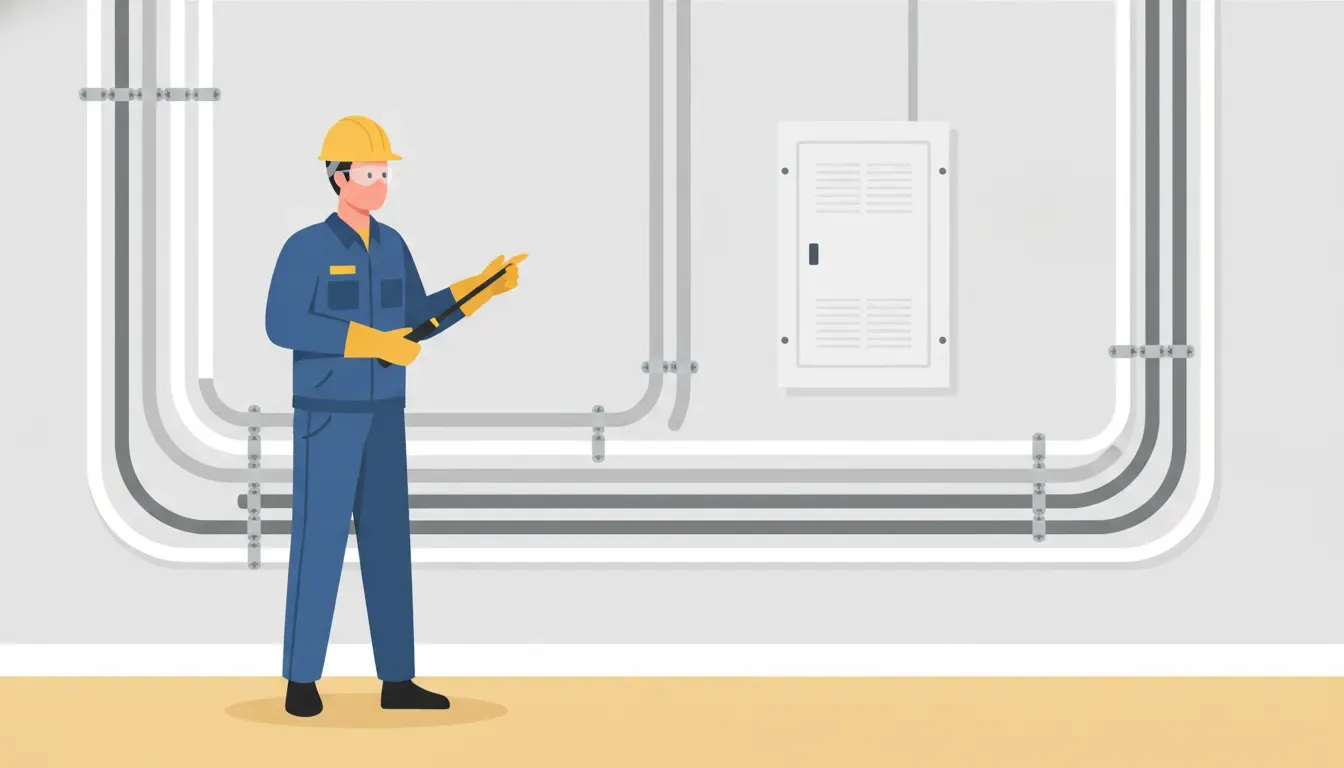
If you notice a loose tube near an electrical panel, rust around an outdoor connection, or wiring that appears exposed, you may be looking at electrical conduit that needs attention. Electrical conduit is the protective tubing or raceway that routes wires through a home or business. The material and fittings must match the location, moisture exposure, physical protection needs, and electrical design. This guide explains common conduit types, where they are used, and when a professional electrician should inspect or repair a run.
Schedule electrical repair service with My Electrician, Inc. for conduit concerns.
What is electrical conduit?
Electrical conduit is a dedicated pathway for electrical conductors and cables. It may be made from metal or a nonmetallic material, and it may be rigid or flexible. Conduit can protect wiring from impact, moisture, sunlight, abrasion, and contact with surrounding building materials. It can also keep wiring organized and make some installations easier to inspect or service.
Conduit is not the same thing as the wire inside it. The conduit provides the route and physical protection, while the conductors carry electrical power. A safe installation depends on both parts, along with properly matched connectors, couplings, boxes, supports, grounding and bonding provisions, and circuit protection.
For homeowners, the important point is that a conduit run is a complete system. Replacing a damaged tube without checking the fittings, conductors, entry points, and support can leave the underlying hazard in place. Electrical work also has to account for the installation environment and applicable requirements, so a visible problem deserves professional evaluation rather than a quick patch.
Which types of electrical conduit are common?
Electricians select conduit based on the project, the pathway, exposure to weather or moisture, the amount of physical protection needed, and the wiring method allowed for that installation. These are common categories homeowners may see.
Electrical metallic tubing, or EMT
EMT is thin-wall metal tubing with a smooth, rigid form. It is often used in exposed indoor locations, garages, utility spaces, commercial areas, and other places where a neat metal raceway can protect and organize conductors. EMT uses fittings rather than threaded ends, and its routing must be planned so bends, supports, boxes, and clearances work together.
EMT is not a universal replacement for every other wiring method. Its suitability depends on the space, the wiring inside it, the level of physical protection required, and the local rules for the installation. A bent, crushed, corroded, or poorly supported section can compromise the protection the raceway is meant to provide.
PVC conduit
PVC conduit is a nonmetallic option often used in underground, concrete, damp, or corrosion-prone applications when the installation is designed for it. It is lightweight and does not rust like steel. However, the correct product, fittings, burial depth, protection, and transition points matter. A PVC section that is exposed to conditions it was not selected for can become brittle, damaged, or unsuitable for the location.
Homeowners should not assume that gray plastic tubing is interchangeable with plumbing pipe or that any adhesive creates an acceptable electrical pathway. Electrical conduit has its own product ratings and fittings. An electrician can confirm whether the material is appropriate and whether the wiring inside it is protected from the conditions around it.
Rigid metal conduit and intermediate metal conduit
Rigid metal conduit, commonly called RMC, has a heavier wall and is selected when a wiring pathway needs substantial mechanical protection. Intermediate metal conduit, or IMC, is another rigid metal option with a thinner wall than RMC. These systems can be used in demanding indoor or outdoor locations, but they require the right connectors and installation methods.
Rigid metal conduit may appear near a service entrance, equipment connection, or exposed exterior pathway. If a vehicle, storm, falling branch, or other impact bends the conduit, the damage can affect both the raceway and the conductors inside it. Do not straighten or open a damaged service pathway yourself. Keep people away from the area and call for an electrical inspection.
Flexible metal conduit and liquid-tight flexible conduit
Flexible metal conduit, or FMC, can help connect equipment where vibration, movement, or a difficult final approach makes rigid tubing impractical. Liquid-tight flexible metal conduit, often used with equipment exposed to moisture, adds a jacket and appropriate fittings for the environment. Liquid-tight flexible nonmetallic conduit is another option for some wet or outdoor applications.
Flexible conduit is useful, but flexibility does not make an installation immune to damage. A section can be crushed, pulled away from a fitting, cut, cracked, or exposed to water. The connector and the seal are part of the protection system. If a flexible whip at an outdoor unit looks loose or damaged, do not tape it and put the issue out of mind.
Where is conduit used in a home or business?
Electrical conduit may be visible or concealed, indoors or outdoors. Common applications include:
- Garages and utility areas: exposed raceways can protect wiring from tools, storage, movement, and accidental impact.
- Outdoor equipment: conduit can route conductors to equipment while addressing weather, moisture, and physical exposure.
- Underground pathways: approved nonmetallic or metallic systems may protect wiring between buildings, equipment, or service points.
- Commercial spaces: raceways can keep wiring organized and accessible where the structure, occupancy, and equipment require them.
- Remodeling and additions: conduit can be part of a planned route when walls are finished, access is limited, or the wiring needs additional protection.
- Service and equipment connections: short flexible sections may connect stationary equipment while allowing for vibration and service access.
The visible tube is only one part of the installation. An electrical inspection should also consider terminations, boxes, grounding and bonding, support, conductor condition, water entry, and the way the pathway connects to the panel or equipment.
How do EMT, PVC, and flexible conduit compare?
The best conduit is not chosen by appearance alone. The same material may be appropriate in one location and wrong in another. This high-level comparison can help you understand why an electrician may recommend one option over another.
| Conduit type | Common strengths | Questions that affect selection |
|---|---|---|
| EMT | Neat rigid metal pathway, useful for many exposed indoor routes | Will the route, fittings, supports, and physical exposure suit thin-wall tubing? |
| PVC | Lightweight, nonmetallic, and useful in some underground or damp applications | Is the product rated for the location, sunlight, temperature, burial, and transition points? |
| RMC or IMC | Strong rigid metal protection for demanding pathways | Does the route need heavier protection, and can the fittings and connections be installed correctly? |
| FMC or liquid-tight flexible conduit | Adapts to equipment connections, movement, vibration, or moisture concerns | Are the jacket, fittings, seals, supports, and bend radius still intact? |
This is an orientation guide, not a substitute for an installation design. OSHA's wiring-method standards provide workplace requirements for wiring methods and equipment, while residential installations also involve the applicable electrical and local requirements for the project. You can review the general wiring-method references from OSHA's 1910.305 standard and OSHA's 1926.405 standard. A local electrician must evaluate the actual building and installation rather than applying a generic chart to every situation.
What warning signs mean conduit needs attention?
Electrical problems do not always announce themselves with a spark. Look for changes in the physical pathway and the electrical symptoms around it. These warning signs justify an inspection:
- Cracks, splits, holes, or crushed sections: physical damage can reduce protection for the conductors.
- Rust, flaking, or severe corrosion: corrosion can weaken metal conduit and affect fittings or connections.
- Loose fittings or separated joints: a gap can allow movement, moisture, debris, or accidental contact where the pathway should be closed.
- Water inside or around a conduit connection: moisture at an electrical pathway should be assessed, especially outdoors or near equipment.
- Conduit pulling away from a box, panel, wall, or equipment: movement can strain terminations and expose a route to additional damage.
- Scorch marks, melting, buzzing, or a burning odor: treat these as urgent electrical warning signs, not cosmetic defects.
- Breakers tripping after a pathway was damaged: repeated tripping can point to a fault, damaged conductor, overload, or another problem that needs diagnosis.
- Flickering lights, dead outlets, or intermittent power: symptoms can occur away from the visible conduit and still require a broader electrical evaluation.
If there is smoke, active sparking, a burning smell, heat at an electrical component, or an immediate fire concern, move away from the hazard and call emergency services when appropriate. Do not touch damaged conduit, exposed wiring, or a wet electrical area.
When should a professional replace or repair conduit?
Call a professional when conduit is damaged, corroded, loose, incorrectly routed, exposed to water, or no longer appropriate for the environment. An electrician can determine whether the repair is limited to a fitting, requires a new section, or involves damaged conductors and a larger wiring problem.
Professional evaluation is also important before a remodel, equipment installation, generator connection, outdoor project, or service upgrade. The new work may change the electrical load, pathway, protection needs, or panel connections. Planning the route before walls are closed or equipment is energized can reduce rework and reveal issues while access is available.
My Electrician, Inc. provides electrical troubleshooting, conduit replacement, wiring work, inspections, and emergency service for homeowners and businesses from Palm Beach Gardens through Vero Beach. The service process includes diagnosis, an upfront quote before work begins, professional installation, and testing. Schedule an electrical inspection when you need a qualified assessment of a conduit or wiring concern.
Request professional conduit and wiring guidance before a repair or remodel.
What should homeowners avoid doing with conduit?
Electrical conduit can look like a straightforward home improvement material, but the work involves energized systems, hidden conductors, grounding, fittings, supports, and code requirements. Avoid drilling into, cutting, bending, gluing, opening, or relocating a conduit run when you do not know what is inside it or how the system is energized.
Do not pull on a loose conduit, push damaged tubing back into place, cover a burning smell with paint, or use tape as a permanent repair. Do not assume that switching off a wall device makes a nearby pathway safe. If work is needed, a professional can identify the source, isolate the system using appropriate procedures, and verify the repair with the right testing equipment.
You can help by taking a photo from a safe distance, noting when the problem began, identifying any recent storm or construction activity, and keeping the area clear. Share those observations with the electrician. Do not remove covers or disturb the wiring to collect more information.
Frequently Asked Questions
Is electrical conduit required for every wire in a home?
No single wiring method is right for every part of a home. Whether conduit is used depends on the building design, location, exposure, wiring method, equipment, and applicable requirements. A concealed residential cable installation may use a different approved method than an exposed garage, outdoor pathway, or commercial space.
Can PVC conduit be used outdoors?
Some PVC conduit products are designed for outdoor or underground applications, but the product rating and installation details matter. Sunlight, temperature, impact, burial, water entry, transitions, and fittings all affect suitability. Have an electrician inspect the proposed route instead of assuming that any plastic tube can be used outside.
What is the difference between EMT and flexible conduit?
EMT is a rigid, thin-wall metal tubing used for many organized exposed routes. Flexible conduit can bend and adapt around equipment, movement, or vibration. Each type has different fittings, support needs, protection characteristics, and application limits. The right choice depends on the route and the environment, not only on how easy a material looks to handle.
Can damaged conduit be repaired without replacing the wire?
Sometimes a professional repair can address a section or fitting without replacing all of the conductors, but that cannot be determined from the outside. The electrician needs to check whether the wires were stretched, cut, overheated, wet, or otherwise damaged. Replacing only the visible tube without testing the wiring can leave a concealed problem behind.
Is a loose outdoor conduit connection an emergency?
It can be urgent, especially if water, exposed conductors, heat, sparking, burning odor, or loss of power is involved. Keep people away from the area and do not handle the connection. Contact an electrician for guidance, and use emergency services when there is an immediate threat to people or property.
Call My Electrician, Inc. at 877-762-7483 to schedule electrical conduit service.