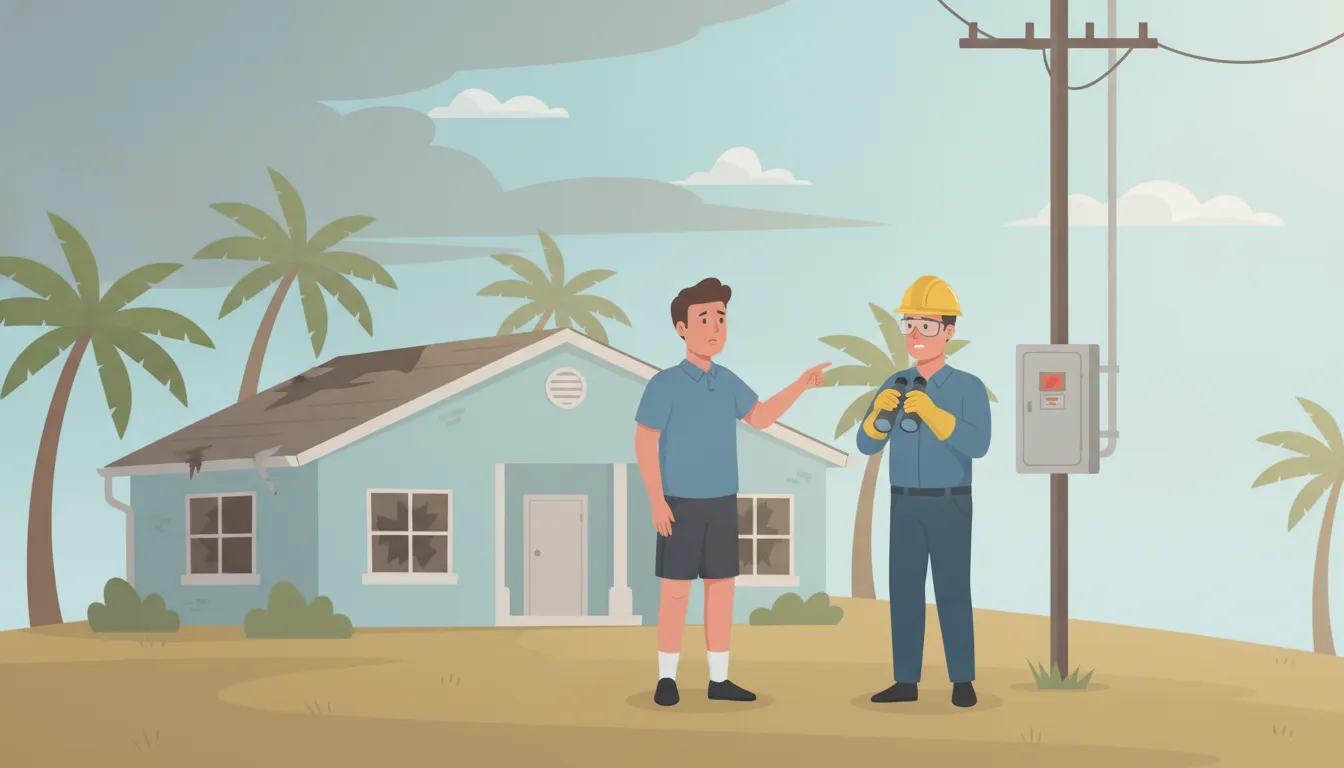
Florida storms can leave more than fallen branches behind. Floodwater, lightning, wind, and power surges may damage wiring or equipment before you see an obvious problem. Treat standing water, downed lines, sparks, burning smells, and unusual breaker activity as reasons to keep your distance and prioritize safety.
Schedule an electrical safety inspection after a Florida storm with My Electrician.
After a storm, an electrical safety inspection after storm damage can help identify hidden problems before power is restored or a small symptom becomes a serious hazard. Do not enter a flooded area or touch damaged electrical equipment, and contact the utility or a qualified electrician if you are unsure whether power is off. Schneider Electric's storm-response guidance warns that water near damaged wires or equipment can create an electrocution risk.
Start with the safest next step: assess the area from a dry location, keep people away from suspected hazards, and report fallen power lines to the utility. Then use the warning signs around your home to decide when professional help is needed.
What Should You Do Immediately After a Florida Storm?
Storm cleanup can wait when electricity and water may be involved. Use this sequence before checking appliances, resetting breakers, or entering a damaged area.
- Stay out of floodwater. Do not enter a home, business, or nearby area with standing floodwater until you know the main power is off. Water near damaged wiring or electrical equipment can create an electrocution risk, even when the damage is not obvious. Never walk through water to reach a panel, outlet, appliance, or switch.
- Create distance from downed lines. Treat every fallen power line as energized. Do not touch it, move it, drive over it, or approach equipment or puddles that may be connected to it. Report the line to your electric utility and keep people and pets away from the area. The CDC advises against driving through standing water when a downed line may be present.
- Do not use or repair damaged equipment. Leave wet panels, outlets, appliances, generators, and other storm-damaged equipment alone. Do not try to dry, clean, disconnect, or reset anything yourself. If you notice sparks, smoke, a burning smell, heat, or repeated breaker trips, move away and treat the condition as urgent.
- Have the power status confirmed safely. If you are unsure whether electricity has been shut off, stop. Ask the utility or a qualified electrician to disconnect power, especially if reaching the main switch would require entering water. A system can remain dangerous even when it appears to be off.
- Arrange a professional assessment before restoration. Keep power off after flooding or visible electrical damage until a qualified electrician inspects the system and identifies what must be repaired or replaced. For urgent hazards, 24/7 emergency electrical service can help establish a safe next step. Do not attempt an electrical safety inspection after storm damage as a DIY project.
Once the area is safe, document visible damage from a distance for your insurer and share those details with the utility or electrician.
Which Storm Damage Signs Mean You Need an Inspection?
Storm damage is not always dramatic. A home can look mostly normal while water, impact, or a power surge has affected wiring and electrical equipment behind the walls. Arrange an inspection when you notice signs such as:
- Water evidence: Standing water, damp-looking equipment, wall or floor stains, or fire and water damage near an outlet can point to hidden electrical damage. Do not touch wet equipment or enter standing water to investigate.
- Damaged outlets or equipment: Cracked covers, discolored receptacles, loose fixtures, or appliances that were exposed to water or storm impact should be left out of service until a professional assesses them. A dry surface does not prove that internal components are safe.
- Breaker problems: A breaker that trips after the storm, especially if it trips again when reset, may indicate damage that is not visible. Do not repeatedly reset it to restore power.
- Smoke, heat, or burning odor: A warm outlet, smoke odor, or smell of burning insulation calls for immediate caution. If there is no visible fire, shut off power only if you can do so safely without entering water, then call for professional help.
- Loose exterior service equipment: A bent or loose weatherhead or riser, or a damaged meter box, warrants an electrician's closer inspection. Keep your distance and do not attempt to straighten or secure the equipment yourself.
- Sparks or frayed wiring: Sparks during restoration, exposed or frayed conductors, and damaged cables are urgent warning signs. Keep people away from the area and do not handle the wiring.
These symptoms are different from routine post-storm cleanup. They indicate that an inspection should happen before you rely on the affected circuit or restore power. Guidance from Schneider Electric and the CDC recommends professional assessment when flooding, tripped breakers, heat, smoke, sparks, or damaged wiring may be involved. Review these Florida electrical safety tips for broader precautions, but treat visible damage or a burning odor as a reason to stop and get help promptly.
How Can You Stay Safe Around Water, Wires, and Generators?
Storm cleanup can make familiar parts of your home dangerous. Treat standing water, wet appliances, damaged wiring, and downed lines as electrical hazards, even if the lights are off or the equipment appears only slightly damp.
Keep water and electricity separate
Do not turn power on or off, use an appliance, or operate a tool while standing in water. Do not step into a flooded room to reach a panel, outlet, switch, or appliance. If you cannot safely reach the electrical equipment from dry ground, stop and contact the utility or a qualified electrician. The same boundary applies to wet appliances and extension cords. Do not handle them, move them, or assume they are safe because the water has receded.
Do not restore power until wet equipment is fully dry and has been inspected by a qualified electrician. Water can leave damage inside equipment that is not visible from the outside. The CDC's electrical hazard guidance recommends these precautions after flooding and other disasters.
Stay away from lines and overhead equipment
Never touch a fallen power line, and keep people and pets away from it. A line can remain energized even when nearby homes have lost power. Do not touch a fence, tree, vehicle, puddle, or other object that may be contacting the line. Report the hazard to the power company from a safe location. Also look up before using ladders, tools, or equipment outdoors. Stay clear of damaged overhead lines and service equipment, and do not attempt to move or secure them.
Use generators only within safe boundaries
Never connect a portable generator to home circuits yourself. A generator must not connect to household wiring without approved automatic-interrupt equipment, which helps prevent dangerous backfeed into utility lines. Keep the generator at least 20 feet from doors, windows, and vents, as the CDC guidance specifies, and operate it outdoors according to the manufacturer's instructions.
For prevention, learn how weatherproof outdoor GFCI outlets can help protect outdoor receptacles. If water, wiring, or generator equipment may be involved, leave the area and arrange an inspection rather than testing it yourself.
What Does an Electrical Safety Inspection After Storm Damage Include?
A professional inspection starts with a system review, not a guess based only on what is visible. The electrician looks for signs that lightning, flooding, wind, or a power surge affected the electrical system. The process can include testing, a code-compliance review, and a plain-English report that identifies hazards and explains recommended next steps.
Depending on the property and the storm symptoms, the inspection may cover the main panel, breakers, switches, outlets, grounding, and surge protection. A breaker that tripped once may be a clue worth investigating, while heat, burning odors, sparks, or water exposure can require a more urgent response. Homeowners should not open damaged equipment or handle wet electrical components to help with the inspection.
| Situation | What to do | Why it matters |
|---|---|---|
| Breakers tripped, lights behave unusually, or outlets stopped working | Arrange testing of the affected circuits and the panel. | The visible symptom may point to damage or an unsafe condition elsewhere in the system. |
| Water reached an outlet, panel, appliance, or other electrical equipment | Keep clear and request a professional assessment before restoring power. | Equipment can remain hazardous even after surfaces appear dry. |
| Lightning or a suspected surge affected electronics or appliances | Ask for an evaluation of grounding and surge-protection components. | Reviewing the protection system can help identify storm-related risks that are not obvious at a glance. |
| No obvious damage, but the property experienced a severe storm | Discuss whether a precautionary inspection is appropriate. | A structured review can document the system condition and identify concerns before they become an emergency. |
The electrician should explain findings in terms that make sense to the homeowner, including which issues need immediate attention and which recommendations can be planned. My Electrician describes its inspection service as covering system review, testing, code compliance, and a plain-English report with hazards and recommendations. Learn more about an electrical safety inspection.
The company knowledge base describes inspections as taking about 1 to 3 hours depending on property size and system complexity. That is a general estimate, not a guaranteed appointment length. The actual scope may change when the electrician finds concealed damage, inaccessible equipment, or additional safety concerns.
When Is It Safe to Restore Power After a Storm?
A room can look dry while electrical equipment behind walls, inside boxes, or beneath a panel remains wet or contaminated. After flooding or water exposure, do not treat dry floors, clear weather, or the return of utility service as proof that the system is safe. Hidden moisture can affect energized parts and create a shock, fire, or equipment-failure hazard.
Keep power off in a flooded or water-exposed area until a licensed electrician inspects the system and identifies damaged equipment. Schneider Electric recommends keeping power off after flooding until the electrical system has been evaluated. This inspection should cover the parts affected by water, not just the areas that are easiest to see.
Before power is restored, damaged equipment should be repaired. An electrician can assess the panel, breakers, outlets, switches, wiring, and other affected components, then explain what needs attention. Do not open wet equipment, remove covers, or attempt to dry and reuse components yourself.
Water-contact equipment does not always have the same repair path. Submerged or exposed components may need replacement, while a professional may determine that certain equipment can be safely reconditioned. That decision depends on the equipment, the extent of exposure, and its condition after evaluation. It should not be based on appearance alone.
If you notice a burning smell, heat, sparks, repeated breaker trips, visible corrosion, or water near electrical equipment, stay clear and arrange professional help. A qualified electrician can establish the inspection and repair gate needed before service is restored. Schedule Service when you need a careful post-storm evaluation.
How Can You Prepare Your Electrical System for the Next Storm?
Storm preparation is easier when you make decisions before the forecast becomes urgent. Walk around the home and note any loose outdoor electrical covers, damaged conduit, exposed wiring, or equipment located where floodwater could reach it. Do not open panels or attempt repairs yourself. Instead, ask an electrician to review concerns and explain which improvements make sense for your property.
A professional storm-planning visit can also help you prioritize work. The review may include the main panel, breakers, grounding, outlets, and existing surge protection. Ask for clear recommendations and an upfront quote before approving any work. If your home has experienced repeated outages, lightning activity, or damaged electronics, discuss whole-house surge protection as one possible part of a broader electrical plan. It can be evaluated alongside, not instead of, safe wiring and properly maintained equipment.
Plan for backup power safely
If you are considering a generator, decide in advance which essential systems need backup power, where equipment can be operated safely, and how it will be connected. A generator should never be connected to household circuits through an improvised cord or setup. Have a qualified professional review the installation requirements and explain how utility power and backup power are separated. You can learn more about generator installation and repair before the next storm.
Keep emergency contact information accessible, and schedule maintenance or an electrical review before hurricane season if your system has warning signs. Preparation does not guarantee uninterrupted power, but it can reduce rushed decisions when conditions are unsafe. If a storm leaves you with sparks, a burning smell, repeated breaker trips, or visible damage, treat the issue as an immediate safety concern and arrange professional help rather than testing the system yourself.
Why Schedule a Local Electrical Safety Inspection After a Florida Storm?
Storm damage is not always easy to see. A home may look dry and orderly while a breaker, outlet, panel, or other electrical component has been affected by water, lightning, wind, or a power surge. That is why an electrical safety inspection after storm damage can help you make a safer decision before returning everything to normal.
My Electrician serves homeowners across the Treasure Coast and Palm Beaches, with service based in Port St. Lucie. A professional visit can focus on the symptoms you noticed, such as repeated breaker trips, flickering lights, a burning smell, warm outlets, sparking, or equipment that stopped working after the storm. Do not touch damaged equipment or attempt to test wet components yourself.
During an inspection, the technician reviews and tests the system, checks code compliance, and explains findings in plain English. Depending on the property size and system complexity, the company describes inspections as generally taking one to three hours, but that is an estimate rather than a guarantee. Checks may include the panel, breakers, switches, outlets, grounding, and surge protection. You should receive clear information about hazards, recommended repairs, and the next safe step.
For immediate hazards, such as smoke, active sparking, exposed wiring, or a dangerous electrical smell, leave the area and seek urgent help. My Electrician provides 24/7 emergency electrical service, including storm-damage response. For non-urgent concerns, scheduling an inspection can help identify problems before they become a larger safety issue.
Schedule Service with My Electrician, or call 877-762-7483 for urgent electrical hazards.
Frequently Asked Questions
Should I get an electrical inspection after a hurricane?
Yes, especially after flooding, lightning, a surge, repeated breaker trips, smoke odor, or visible damage. Hidden problems may remain even when your home looks dry. Keep power off after flooding until a qualified electrician inspects the system and identifies any damaged equipment. CDC guidance also advises against restoring power before electrical equipment has been inspected.
What should I do if my home has electrical damage after a storm?
Stay away from damaged panels, outlets, wires, and standing water. Never touch a fallen power line, and report it to the power company. If you notice sparks, frayed wiring, heat, or a burning smell, leave the area if necessary and contact the utility or an electrician rather than attempting a repair. CDC storm-safety guidance recommends professional help when electrical equipment is wet or near water.
How do I know if my electrical system is safe after flooding?
You cannot confirm safety by appearance alone. Standing water, wall or floor stains, water near outlets, tripped breakers, or submerged-looking equipment can indicate hidden damage. Do not enter standing water to reach a main switch, and do not use wet appliances. Have a qualified electrician inspect the system before power is restored, as recommended by the CDC.
What are the warning signs of storm-related electrical damage?
Watch for repeated breaker trips, smoke odor, unusual heat, sparks, frayed wiring, damaged outlets, a bent weatherhead or riser, or a damaged meter box. Stop using affected equipment and arrange professional help. An inspection can review panels, breakers, switches, outlets, grounding, and surge protection, then explain hazards and recommendations in plain English.
Schedule Your Post-Storm Electrical Inspection
A professional inspection can help identify storm-related electrical hazards before they become a larger safety concern. If your home has visible damage, unusual smells, sparks, wet equipment, or other urgent warning signs, keep a safe distance and do not attempt repairs yourself.
Schedule Service or call 877-762-7483 for a professional electrical safety inspection.