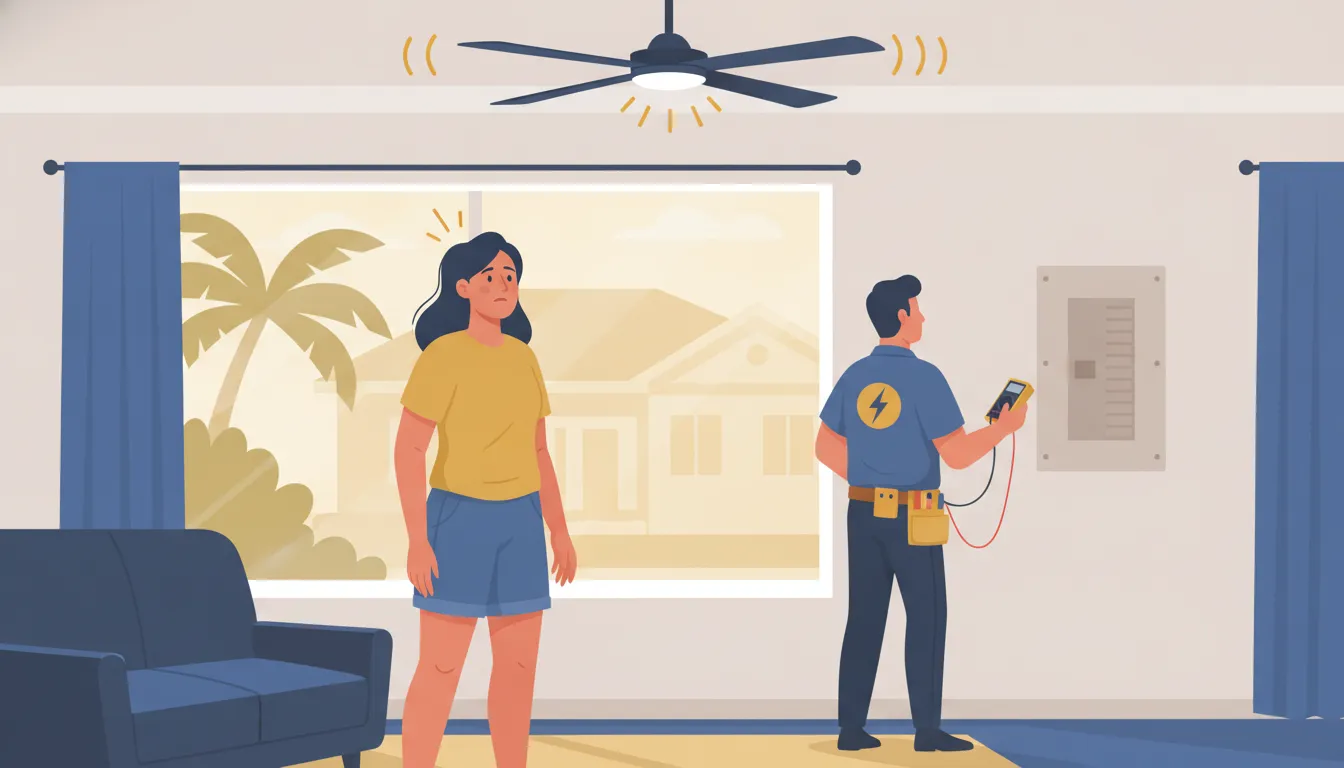
Flickering lights, a breaker that trips again, or an outlet that feels warm can turn an ordinary day into a safety question. In Port St. Lucie homes, the safest first step is not opening a panel or trying to trace wiring. Notice what changed, stop using equipment that shows heat, sparks, smoke, or burning odor, and decide whether the problem needs prompt professional attention.
Electrical troubleshooting port saint lucie fl helps homeowners connect visible symptoms with safe next steps, from a recurring breaker trip to a partial outage. A qualified electrician can test the system, identify conditions such as voltage drops or intermittent faults, and explain the repair options without asking you to handle exposed wiring.
Schedule Service for electrical repair and troubleshooting
The right response depends on the symptom, how often it returns, and whether there are signs of immediate danger. Understanding what a troubleshooting visit can cover makes it easier to describe the problem clearly and choose a safe next step.
What Does Electrical Troubleshooting Port Saint Lucie FL Cover for Homeowners?
Lights that flicker, an outlet that stops working, or a breaker that trips can leave a Port St. Lucie homeowner wondering whether the problem is isolated or part of a larger electrical issue. Troubleshooting starts with those visible symptoms and works toward a safer, evidence-based explanation.
Electrical troubleshooting is the diagnostic side of the process. A professional may use advanced meters and load tests to look for voltage drops, intermittent shorts, or nuisance tripping. That can help narrow down where the problem is occurring without automatically requiring wall openings. The goal is to identify the likely source and determine what needs attention.
Repair is the corrective work that follows when a defect is found. Depending on the symptoms and inspection results, the scope may involve damaged wiring, outlets, switches, panels, breakers, lighting, or smoke detectors. Troubleshooting does not always mean that every listed component needs replacement. It helps connect the homeowner's experience with the appropriate next step.
My Electrician, Inc. is headquartered in Port St. Lucie and serves residential and commercial customers across the Treasure Coast and Palm Beaches. Its electrical work includes troubleshooting, repairs, installations, and emergency service. If a recurring or unexplained problem is affecting your home, review the available electrical repair and troubleshooting service rather than attempting to investigate wiring yourself.
Which Electrical Symptoms Should Port St. Lucie Homeowners Notice First?
Start with what you can see, hear, or feel. Flickering lights that happen repeatedly, especially across multiple rooms, deserve more attention than a single bulb that is nearing the end of its life. You can learn more about when flickering lights need an electrician before deciding on the next step.
A breaker that trips once may have responded to a temporary condition, but repeated trips should not be treated as a nuisance. They can be associated with an overloaded circuit, a short, a ground fault, or a worn breaker. Do not keep resetting it if it trips again. A partial outage is another important clue. If one area of the home stays without power after a safe reset, or the breaker trips immediately, stop investigating and arrange professional help.
Pay close attention to outlets and switches that feel warm, look discolored, or show signs of sparking. Buzzing, crackling, or other unusual sounds can also indicate that an electrical component needs attention. A burning odor near an outlet, switch, light, breaker, or panel is more urgent, particularly if it comes with heat, smoke, or visible damage. Move away from the area and contact emergency services if there is an active fire, smoke, or immediate danger.
These symptoms do not establish a diagnosis by themselves. They tell you when continued use may be unsafe and when an electrician should evaluate the system.
What Can You Safely Check Before Calling an Electrician?
- Observe the symptom from a safe distance. Note which light, outlet, appliance, or room is affected, when the problem started, and whether it is intermittent. Check whether the issue is isolated or appears across multiple rooms. This information helps an electrician investigate voltage drops, intermittent shorts, or nuisance tripping without asking you to guess at the cause.
- Stop using anything that feels unsafe. Warm or discolored outlets, burning odors, buzzing, visible damage, or a device that causes repeated breaker trips are warning signs. Do not keep using the equipment to see whether the symptom returns. You can review these Florida electrical safety tips while arranging qualified help.
- Make only a basic, safe observation of the breaker. If part of the home has lost power, you may note whether a breaker appears out of position. Do not open the panel, remove its cover, touch wiring, bypass a breaker, or repeatedly reset one that trips again. If a reset does not restore power or the breaker trips immediately, stop and call an electrician rather than investigating the wiring yourself.
- Move away when there is an active hazard. Smoke, active sparking, fire, exposed wiring, strong burning odors, or immediate danger is not a troubleshooting exercise. Leave the area, keep others away, and contact emergency services as appropriate. For a sparking outlet, follow these safe steps for a sparking outlet instead of touching the outlet.
- Let a qualified professional handle testing and repair. The Electrical Safety Foundation International recommends hiring a qualified, licensed electrician for electrical work because untrained DIY work can increase injury and electrocution risks. A professional can use appropriate meters and load tests to locate the problem. ESFI explains when to call a professional, and the CPSC provides a home electrical safety checklist for additional guidance.
Why Does a Breaker Keep Tripping or Part of the Home Lose Power?
A breaker usually trips to interrupt power when a circuit detects a potentially unsafe condition. The cause may be an overloaded circuit, a short circuit, a ground fault, or a worn breaker. A partial outage can also happen when one circuit loses power while the rest of the home continues working.
If a breaker trips once after several high-demand appliances are operating, turn off or unplug the equipment that may be contributing. Reset the breaker one time only if there is no smoke, sparking, burning odor, heat, or visible damage. If it trips again, will not reset, or does not restore power to the affected area, stop resetting it. Do not open the panel or investigate wiring yourself.
| Symptom. | What it may suggest. | Safest next step. |
|---|---|---|
| Breaker trips repeatedly. | Overload, short circuit, ground fault, or worn breaker. | Stop resetting it and schedule professional inspection. |
| Part of the home stays without power after a reset. | A continuing circuit or connection problem. | Leave the circuit alone and call an electrician. |
| Breaker, panel, or nearby area is hot, buzzing, or smells burnt. | A potentially hazardous electrical condition. | Move away, avoid contact, and seek emergency help as appropriate. |
Repeated trips should be diagnosed rather than ignored because they can indicate heat and fire risks. A professional may use meters, load testing, or thermal imaging to narrow down the problem without asking you to open walls or handle wiring. If the symptom seems centered on the panel, review these signs your electrical panel needs attention before scheduling an inspection.
When Do Flickering Lights, Warm Outlets, or Burning Smells Need Urgent Help?
Some electrical symptoms can wait for a routine appointment, while others should change what you do immediately. Flickering that happens once with a single bulb may be less urgent than flickering that keeps returning or affects several rooms. Repeated patterns, especially alongside buzzing, heat, or an unusual odor, deserve professional attention.
Warm, discolored, or sparking outlets are not normal operating conditions. Stop using the affected outlet and keep people away from it. Do not remove the cover, touch exposed wiring, or continue testing the circuit. Burning smells near an outlet, switch, breaker, or panel can indicate overheating or a damaged connection. Damaged breakers, burnt wires, and panels that overheat, spark, or buzz should be treated as urgent electrical concerns.
Smoke, active sparking, fire, or immediate danger requires more than scheduling a standard visit. Move away from the area and contact emergency services as appropriate. If there is no immediate life-safety danger but the electrical hazard remains, contact an electrician for urgent guidance rather than repeatedly resetting a breaker or attempting a repair.
For a spark from an outlet, review these safe steps for a sparking outlet. For recurring flickering, use a routine troubleshooting appointment if the area is safe to leave unused, but explain every symptom when you call. My Electrician reports 24/7 emergency electrical service in Port St. Lucie and surrounding areas, with response timing depending on location and severity. A professional can determine whether the problem involves an outlet, wiring, breaker, or another part of the system.
How Does a Professional Electrical Diagnostic Visit Work?
When an outlet stops working, lights flicker, or a breaker trips without an obvious reason, a professional starts by listening to what you observed. The timing, affected rooms, recent storms, and equipment involved can help guide the inspection. The goal is to identify the source safely, not guess based on one symptom.
A visit may include several diagnostic steps, depending on the problem:
- Meter testing: Advanced meters may check voltage and help identify voltage drops, intermittent shorts, or nuisance tripping.
- Load testing: A technician may evaluate how a circuit responds when equipment is operating. This can help distinguish a circuit-capacity concern from a problem with a device or connection.
- Outlet and switch checks: The outlet, connected wiring, and nearby devices may be tested. If needed, wiring can be traced back toward the electrical panel.
- Thermal imaging: A thermal camera may reveal heat patterns or faulty connections that are not visible during a normal visual inspection.
- Panel and visible-wiring review: A safety-focused inspection may include accessible switches, outlets, breakers, the panel, and visible wiring.
These methods do not guarantee a particular finding or repair plan. The exact approach depends on the symptom, the home's electrical layout, and what the electrician observes. In Port St. Lucie, electrical repair and troubleshooting can address concerns involving wiring, outlets, switches, panels, breakers, and lighting. For broader prevention guidance, review these Florida electrical safety tips.
How Should You Choose the Next Electrical Service Step in Port St. Lucie?
Choose the response that matches the symptom and its level of risk. For a recurring but stable problem, such as intermittent power, nuisance trips, or lights that keep flickering, schedule routine troubleshooting rather than continuing to guess. A professional can evaluate the issue before it becomes more disruptive.
Routine service is also appropriate when one outlet, switch, fixture, or circuit is not working but there is no heat, smoke, sparking, or burning odor. My Electrician serves Port St. Lucie, Fort Pierce, Stuart, and the broader Treasure Coast, with service territory extending from Vero Beach to West Palm Beach. The company reports providing an upfront quote before work begins.
Seek urgent electrical help when warning signs include a warm or discolored outlet, buzzing, a damaged breaker, or a fault that returns after a safe basic check. Do not open the panel, touch exposed wiring, bypass a breaker, or repeatedly reset one that trips again. Repeated trips should be diagnosed instead of ignored because they may point to a heat or fire risk.
For smoke, active sparking, fire, or immediate danger, move away from the area and contact emergency services as appropriate. For an electrical hazard that needs professional attention, the company reports 24/7 emergency electrical service in Port St. Lucie and surrounding areas. Response timing depends on location and severity, so no fixed arrival time should be assumed.
Schedule Service for safe electrical troubleshooting in Port St. Lucie.
Frequently Asked Questions
What should I do if only part of my Port St. Lucie home loses power?
Check whether a breaker has tripped, but do not open the panel or investigate wiring. If a safe reset does not restore power, or the breaker trips again immediately, stop resetting it and contact an electrician for troubleshooting.
When do flickering lights need professional attention?
Recurring flickering, flickering across multiple rooms, or flickering combined with warm outlets, buzzing, burning odors, or discolored plates calls for professional assessment. These symptoms can involve a circuit, connection, switch, panel, or another part of the electrical system.
Why does my breaker keep tripping?
A repeated trip may relate to an overloaded circuit, short circuit, ground fault, or worn breaker. The cause should be diagnosed rather than ignored, and you should not bypass the breaker or keep resetting it after it trips again.
Is it safe to do electrical repairs myself?
Do not touch exposed wiring, open electrical panels, or attempt repairs beyond basic observation unless you have the appropriate training. ESFI recommends hiring a qualified, licensed electrician because untrained electrical work can increase the risk of injury, electrocution, and fire: ESFI electrical safety guidance.
When should I seek emergency electrical help?
Move away from the area and contact emergency services as appropriate if you see active sparking, smoke, fire, or another immediate danger. For burnt wires, damaged breakers, or panels that overheat, spark, or buzz, contact an electrical professional promptly for emergency service.
Ready to Schedule Electrical Troubleshooting?
If an electrical symptom is returning or affecting part of your Port St. Lucie home, professional troubleshooting can help identify the safest next step before the problem grows. Share what you have noticed, including when it started and whether you saw heat, sparks, smoke, or a burning odor.