
A breaker that trips once may need attention, but smoke, a burning odor, heat, sparking. Buzzing, visible damage, or a breaker that will not stay on calls for faster action. These signs can point to a problem in the breaker, circuit, or electrical panel, and repeated resets can increase risk.
Emergency circuit breaker replacement may be necessary when a breaker fails, overheats, sparks, buzzes, or repeatedly trips with warning signs such as flickering lights or a burning smell. Do not open the panel or attempt a replacement. Leave the area and call 911 if there is fire, smoke, or immediate danger, then contact a qualified electrician for urgent help.
Knowing which symptoms require immediate attention helps you respond safely without guessing at the cause. The next step is to separate genuine electrical emergencies from problems that still need prompt, but routine, professional evaluation.
Call for 24/7 emergency electrical service when your breaker shows dangerous warning signs.
When Is Emergency Circuit Breaker Replacement Necessary?
A breaker that trips once may be responding to a temporary electrical demand. The situation deserves more urgent attention when you notice visible warning signs around the panel or the same circuit keeps shutting off. Smoke, a burning odor, unusual heat, sparking, buzzing, or visible damage can indicate a dangerous electrical problem that should not be ignored.
Leave the area when there is smoke, fire, or immediate danger
If you see smoke or flames, smell active burning, or believe someone is in immediate danger, leave the area and call 911 from a safe location. Do not touch a hot, sparking, buzzing, or visibly damaged panel or breaker. Do not open the panel, handle wiring, or try to replace the breaker yourself. Electrical equipment can remain hazardous even when the problem appears limited to one switch.
Call for urgent professional evaluation
A strong burning odor, heat coming from the panel, crackling or buzzing sounds, scorch marks. Melted plastic, or a breaker that will not reset all warrant prompt evaluation by a qualified electrician. These symptoms do not identify the exact cause from a distance. The concern could involve the breaker, its connections, the circuit, or another part of the electrical system. A professional needs to inspect the equipment and determine whether replacement or another repair is appropriate.
Repeated trips are another important warning sign. Do not keep resetting a breaker to restore power when it trips again. Refuses to stay on, or is accompanied by flickering lights, dead outlets, heat, or unusual sounds. Repeated tripping can signal a problem that requires troubleshooting rather than another reset. My Electrician provides 24/7/365 emergency response for critical electrical failures, including circuit breaker failures.
For urgent symptoms such as overheating, sparking, or buzzing, emergency electrical service can provide an inspection and determine the safest next step. The goal is not simply to install a new breaker. It is to identify why the protection device is failing, address the underlying concern, and test the system before it is returned to service.
What Should You Do Before an Electrician Arrives?
When a breaker trips repeatedly, will not stay on, or is accompanied by heat, smoke, sparking, or a burning odor, focus on safety first. These steps help reduce exposure to a possible electrical hazard while you arrange professional help.
- Stop using the affected area. Turn off and unplug appliances only if you can do so without touching anything hot, wet, sparking, buzzing, or visibly damaged. Do not continue using outlets, switches, or equipment connected to the problem circuit.
- Keep people and pets away. Close off the area if practical, especially if there is a burning smell, unusual heat, crackling, or visible damage. Do not touch the panel, receptacles, switches, wiring, or appliances that may be involved.
- Leave immediately if there is fire, smoke, or immediate danger. Get everyone outside and call 911 from a safe location. Do not stay inside to investigate, collect belongings, or wait for an electrician. Fire and smoke require emergency services, even if the breaker has already tripped.
- Do not repeatedly reset the breaker. A trip is a warning that something needs evaluation. Repeated resets can leave an underlying problem unresolved. Never force a breaker to stay on, bypass its protection, or substitute a different device.
- Do not open the electrical panel. You do not need to remove the panel cover, inspect internal wiring, tighten connections, or attempt a breaker replacement. Even when the main power appears to be off, parts of an electrical panel can remain dangerous to touch.
- Call for qualified electrical help. For urgent but non-life-threatening concerns, contact emergency electrical service from a safe location. My Electrician provides verified 24/7/365 emergency availability for critical electrical failures, including circuit breaker problems. Describe what you observed, such as repeated trips, buzzing, heat, smoke, or visible damage.
- Wait safely for instructions. Follow directions from 911 or the electrician, and do not re-enter an area that emergency responders have identified as unsafe. If there is no immediate danger, keep the affected circuit and equipment out of use until it can be inspected.
There is no safe way to diagnose every breaker problem from symptoms alone. A professional can determine whether the concern involves the breaker, the circuit, connected equipment, or another part of the electrical system.
Why Does a Circuit Breaker Need Replacement Instead of Another Reset?
A breaker that trips is giving you a symptom, not a complete diagnosis. It may be reacting to a temporary overload, but repeated trips can also point to a defective breaker. A problem on the circuit, a loose connection, or a concern within the electrical panel. From the outside, these issues can look similar. That is why repeatedly resetting the breaker is not a substitute for finding the cause.
Pay attention to what you can safely observe. A breaker that will not stay on, trips again soon after resetting, or affects several outlets may need professional evaluation. Flickering lights, dead outlets, buzzing, heat, a burning odor, sparking, or visible damage raise the urgency. If you see smoke, fire, or an immediate danger, leave the area and call 911. Do not touch hot, sparking, buzzing, or visibly damaged equipment.
A breaker itself can wear out or become damaged, but replacing it does not automatically resolve every underlying problem. The circuit may be carrying a load it cannot safely support, or another component may be contributing to the repeated trips. A panel concern, damaged wiring, or a connection that needs attention can also require a broader repair. Only an on-site assessment can distinguish among these possibilities. So this is not a safe situation for a homeowner to diagnose by opening the panel or installing a replacement.
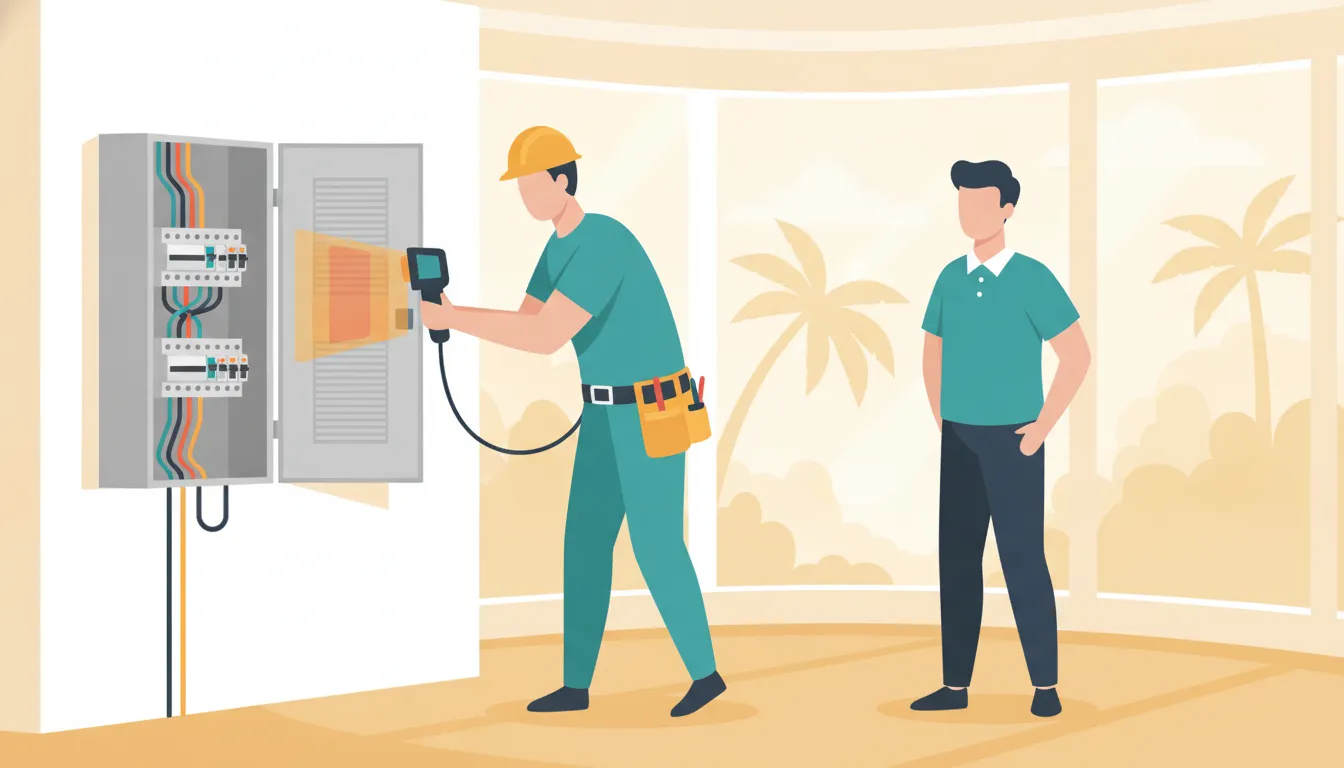
Professional electrical repair and troubleshooting focuses on the reason the protection device is responding. An electrician may inspect the breaker, circuit, and panel, then use diagnostic equipment such as an infrared camera or circuit analyzer when appropriate. The goal is not simply to make the breaker stay on. It is to identify the condition causing the trips and determine whether the right response is a breaker replacement. A circuit repair, a connection correction, load balancing, or another qualified repair.
Recurring nuisance tripping deserves attention even when there is no smoke or visible damage. A prompt evaluation can help separate a routine repair from a more urgent electrical problem. Until the system is assessed, avoid repeated resets and do not bypass the breaker's protection. If the panel is overheating, sparking, or buzzing, treat the situation as urgent and contact a qualified electrician.
How Does a Professional Emergency Breaker Repair Work?
When a breaker trips repeatedly, feels hot, buzzes, sparks, or will not stay reset, the first professional step is a careful inspection. An electrician looks at the symptoms, the breaker, the surrounding panel, and the affected circuit rather than assuming that replacing one component will solve the problem. This helps distinguish a defective breaker from a wiring issue, a loose connection, a load concern, or damage elsewhere in the electrical system.
For urgent problems, My Electrician provides verified 24/7/365 emergency availability. You can reach a 24/7 emergency electrician when a critical electrical failure needs attention outside normal business hours. Availability does not mean every situation has the same urgency, so describe what you see clearly when you call. If there is smoke, fire, or immediate danger, leave the area and call 911.
Inspection and diagnosis come before replacement
After reviewing the condition of the equipment, the electrician performs diagnostic testing to identify the source of the failure. Depending on the situation, documented tools may include an infrared camera or a circuit analyzer. These tools can help locate unusual heat patterns or evaluate circuit behavior. But they are part of a broader inspection, not a guarantee that the problem has one simple cause.
The electrician then explains the findings and provides an upfront quote before work begins. If the breaker is damaged and replacement is appropriate, the correct replacement is selected for the electrical system. If the inspection identifies a related concern, such as a connection or circuit problem, that issue must be addressed as part of a safe repair. A new breaker cannot make an unsafe underlying condition acceptable.
Safe work includes testing and clear next steps
Professional repair is completed according to applicable electrical requirements, including the National Electrical Code where relevant. Once the work is finished, the electrician tests the repaired circuit and performs safety checks. The goal is not simply to make the breaker turn on. The system should be evaluated for proper operation and signs that could point to another failure.
Before leaving, the electrician can explain what was found, what was repaired, and what warning signs deserve attention in the future. That education helps homeowners recognize recurring trips, heat, buzzing, or other changes before they become a larger concern. It also gives you a clear basis for deciding whether additional electrical work should be scheduled instead of repeatedly resetting a breaker and hoping the problem disappears.
When Is a Tripped Breaker a Routine Repair Instead of an Emergency?
A tripped breaker is a safety response, not a complete diagnosis. Sometimes a single trip happens without heat, odor, noise, visible damage, or other warning signs. That situation may be appropriate for a routine evaluation, especially when power remains stable afterward. However, a breaker that trips repeatedly or shows signs of overheating can point to a problem elsewhere in the circuit, panel, or connected equipment. Continuing to reset it does not identify or resolve the cause.
Use the comparison below as a guide for deciding how urgently to seek help. It cannot determine whether a breaker itself needs replacement. Only a qualified professional who inspects and tests the electrical system can make that diagnosis.
| What you notice | Lower-risk routine repair signal | Emergency red flag |
|---|---|---|
| One-time trip with no warning signs | A single trip with no heat, odor, buzzing, sparking, smoke, or visible damage may warrant a scheduled electrical evaluation if the issue does not return. | If any warning sign appears afterward, stop treating it as routine and seek urgent professional guidance. |
| Recurring trips | There is no truly routine pattern when the same breaker keeps tripping. Schedule professional electrical troubleshooting rather than repeatedly resetting it. | Urgency increases when repeated trips occur with flickering lights, dead outlets, heat, odor, noise, or signs of damage. |
| Breaker will not reset or stay on | Do not force it or continue trying to restore power. Arrange an electrician's evaluation to find the underlying issue. | A breaker that will not reset, especially with heat, smoke, odor, buzzing, or sparking, should be treated as an urgent electrical problem. |
| Heat or burning odor | None. Heat or a burning smell near a breaker or panel is not a normal repair condition. | Leave the area, avoid touching the equipment, and seek emergency help. These signs can indicate overheating or damaged components. |
| Buzzing or sparking | None. Unusual electrical sounds or visible sparks require more than routine observation. | Keep away from the equipment and contact a professional emergency electrician. Do not open the panel or handle the breaker. |
| Smoke or fire | None. Smoke or fire is an immediate danger, not a breaker-repair appointment. | Leave immediately and call 911. Once everyone is safe, emergency electrical service can address the electrical source. |
For a recurring trip without emergency warning signs, circuit breaker replacement service can begin with professional inspection and troubleshooting. If you see smoke, fire, heat, burning odor, buzzing, or sparks, prioritize safety and use 24/7 emergency electrician support. My Electrician provides verified 24/7/365 emergency availability, but the right level of urgency depends on what the inspection finds and the conditions at the property.
How Can Homeowners Prevent Repeat Breaker Problems?
After a breaker trips, the safest long-term response is to understand why it happened rather than treating the reset as a complete fix. A one-time trip can follow a temporary electrical demand, but repeated trips, flickering lights. Dead outlets, unusual heat, buzzing, or a breaker that will not stay on deserve professional attention. These symptoms can point to a problem with the breaker, the circuit, the connections, or the overall electrical load.
Start with an inspection, not repeated resets
A qualified electrician can inspect the affected circuit and panel, identify signs of damage, and determine whether the breaker itself needs replacement. The evaluation may also consider nuisance tripping, loose connections, and whether the load is appropriate for the circuit. Homeowners should not open the panel, handle wiring, bypass protection, or install a replacement breaker. Those steps can expose you to energized components and may leave the underlying problem unresolved.
If the issue involved smoke, sparking, a burning smell, visible damage, or unusual heat, leave the area and call 911 when there is fire or immediate danger. Do not touch hot, buzzing, sparking, or visibly damaged equipment. For a less urgent but recurring problem, professional electrical repairs can help you address the concern instead of waiting for another trip.
Consider storms, surges, and changing household loads
Storms and power surges can stress electrical components, particularly after lightning or an outage. Coastal Florida homes may also contend with humidity and salt air over time. After severe weather, pay attention to new tripping, flickering, dead outlets, or panel noises, and mention those changes when scheduling service. An electrician can assess whether surge-related damage or another electrical concern needs attention.
Safe prevention also means scheduling service when warning signs first appear, before the problem interrupts more of the home. My Electrician offers verified 24/7/365 emergency availability for critical electrical failures, while routine concerns can be handled by scheduling an inspection. Clear information about what happened, which appliances were operating, and whether the issue began after a storm can help the electrician evaluate the situation efficiently.
Call 877-762-7483 before the FAQ if you need 24/7 emergency circuit breaker help.
Frequently Asked Questions
Can I replace a circuit breaker myself?
No. Replacing a breaker can expose you to energized components and may not address the underlying problem. Do not open the panel, handle wiring, bypass protection, or install a replacement yourself. If the breaker trips repeatedly, will not stay on, or shows heat, sparking, or visible damage, contact a qualified electrician.
Do I need an electrician to replace a breaker?
Yes. An electrician can determine whether the breaker is defective or whether the circuit, connections, or panel also needs attention. Professional service may include inspection, troubleshooting, replacement, testing, and safety checks rather than simply swapping the switch.
Can a circuit breaker be replaced without turning off the main breaker?
Do not attempt to find out or perform this work yourself. A residential electrical panel can contain energized parts even when an individual circuit is off. Leave panel work and the required shutoff and testing procedures to a qualified electrician.
How much will emergency circuit breaker replacement cost?
The cost depends on what the inspection finds, such as a failed breaker, damaged connections, a circuit problem, or a panel concern. Ask for an upfront quote before work begins. If there is smoke, fire, or immediate danger, leave the area and call 911 rather than waiting to discuss repair cost.
Ready to Get Help With a Dangerous Breaker?
A breaker that sparks, overheats, smells like burning, or will not reset needs professional attention. If there is smoke, fire, or immediate danger, leave the area and call 911. For urgent electrical help, Call My Electrician at 877-762-7483 for verified 24/7 emergency service. For a non-immediate concern, you can also contact the team to schedule service.