
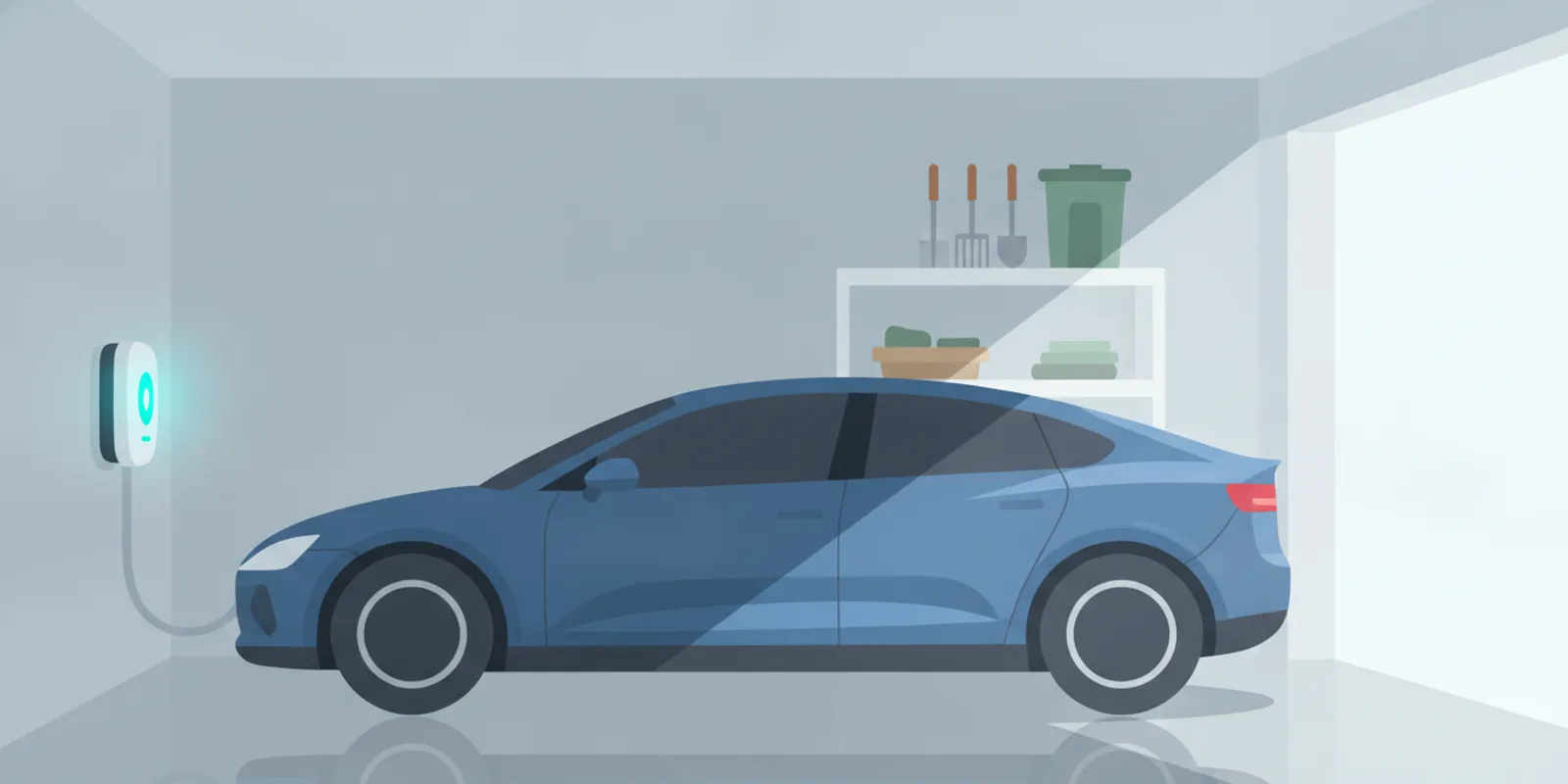
Planning an EV Level 2 charger installation? A home Level 2 charging setup can make regular charging more convenient, but the right solution depends on your vehicle, electrical system, parking layout, and daily routine. A little planning helps you ask useful questions before work begins and avoid choosing equipment or a location that does not fit your home.
Schedule Service to plan your home EV charger installation
What should you decide before an EV Level 2 charger installation?
Start with your everyday routine. Most drivers charge at home overnight, using either AC Level 1 or Level 2 equipment. Think about how far you typically drive, how long the vehicle sits at home, and whether your usual charging window is long enough for your needs. The U.S. Environmental Protection Agency notes that charger level choice depends on your driving habits, your home, and your budget. Level 2 equipment is 240-volt equipment, so the decision should account for more than the vehicle alone. The EPA's home charging guidance offers useful questions to review before selecting a setup.
Confirm compatibility before choosing a location. Check the vehicle owner's manual and the charger's manufacturer instructions for the equipment requirements. Then consider where the car is normally parked and where its charge port is located. The cable should reach comfortably without crossing a walkway or driveway, creating an avoidable obstruction, or requiring you to change how you park.
- Daily use: Note your typical driving distance and the hours available for charging.
- Parking position: Identify a practical wall or other location that keeps the cable route manageable.
- Household use: Consider whether another driver or vehicle may need access to the charger.
- Future needs: Mention plans for another EV or a different parking arrangement before installation begins.
These decisions give the electrician useful context, but they do not determine the installation design by themselves. An electrician should evaluate the actual home, the proposed equipment, the parking location, and the available electrical conditions together. Discussing your current routine and likely future needs early helps keep the installation practical for how you will use it.
Which home charging setup fits your routine?
Level 2 describes a charging category, not one single charger design. Homeowners generally compare a standard outlet-based approach for slower charging with a dedicated Level 2 unit, then consider whether the chosen unit is plug-in or hardwired. The correct arrangement depends on the equipment instructions, the electrical system, and the installation conditions.
| Option to compare | What it means | What to consider |
|---|---|---|
| Standard household outlet | Uses a typical household outlet and generally provides slower charging than Level 2. | May suit some charging routines, but confirm the vehicle's requirements and the outlet's condition. Do not use damaged outlets or extension cords as a workaround. |
| Level 2, plug-in unit | Connects to a compatible, correctly installed 240-volt receptacle. | Check the charger's plug type and installation instructions. The receptacle and circuit must be suitable for the equipment and its intended use. |
| Level 2, hardwired unit | Is connected directly to the electrical wiring rather than plugged into a receptacle. | Review the manufacturer's requirements, location, cable reach, and service access with the electrician. |
| One charger for a future second EV | Plans for changing household charging needs, which may require additional capacity or a different arrangement. | Discuss likely future use early. Do not assume one circuit or charger can serve multiple vehicles simultaneously. |
Use the table as a conversation starter, not as a substitute for an electrical assessment. Product ratings, circuit requirements, and installation instructions vary. An electrician can compare the equipment you are considering with the conditions at your home.
Where should a home EV charger go?
A convenient location should work with both the car and the home. Before choosing a wall, think through how you enter and park, where the charge port sits, and how the cable will reach. A cable stretched across a path can become a trip hazard or be exposed to damage. The charger should also remain accessible for everyday use and inspection, rather than hidden behind stored items.
Walk the proposed route with the vehicle parked in its usual position. Check whether the cable can reach with slack, without running under a tire, through a doorway, or across an area where people walk. Consider whether the charger will be indoors or outdoors and ask whether the selected equipment is rated for that location. Florida's heat, rain, and storms make it especially important to follow the equipment instructions and have the installation location evaluated rather than improvising a cover or enclosure.
Also consider the path between the electrical panel and charger location. The distance and route can affect installation planning. If a garage wall is finished, or the charger will be mounted on an exterior wall, tell the electrician before the visit. Do not open walls, move electrical equipment, or run wiring yourself to prepare for the installation.
Can your electrical system support Level 2 charging?
A Level 2 charger needs an appropriate electrical supply. Whether your existing panel and circuits can support it depends on the home's electrical demand and the charger's requirements. A panel's appearance or the number of spaces that look open does not, by itself, confirm that the system has enough capacity. Avoid relying on a neighbor's installation or an online rule of thumb to decide what your home can safely support.
An electrician may need to review the panel, identify existing electrical loads, and determine what circuit and wiring are appropriate for the specific equipment. If the panel has limited capacity or space, the next step might involve discussing options such as a different charger configuration, electrical panel work, or another solution. The recommendation should follow an evaluation of the actual system, not an assumption based only on the charger's advertised output.
If you have noticed breakers that repeatedly trip, lights that flicker when large appliances run, warm or damaged outlets, or a burning odor, mention it when arranging service. Those symptoms deserve attention on their own. Do not keep resetting a repeatedly tripping breaker or use a questionable outlet for charging. If you see smoke, sparks, or an active electrical fire, move away and contact emergency services.
For related electrical work, review the company's pages for electrical panel services and dedicated circuits. They provide starting points for a conversation if the evaluation identifies a need beyond the charger connection.
How can you prepare for EV Level 2 charger installation at home?
A few simple preparations can make an EV Level 2 charger installation visit more productive without exposing you to electrical hazards. Gather the vehicle owner's manual and the charger's documentation if you have already selected a unit. These materials can identify connector types, installation instructions, and location limits for the electrician to consider. If you have not purchased equipment, say so. The electrician can help you understand which specifications matter before you choose a model.
- Clear the parking area. Move vehicles, stored items, and other obstacles so the usual parking position and the proposed mounting area are visible and accessible.
- Describe your preferred route. Point out how you expect the cable to reach the vehicle. Mention doors, walkways, driveways, or other features that could affect access and everyday use.
- Share electrical symptoms. Tell the electrician about flickering lights, breakers that trip, warm or damaged outlets, or unusual odors. Note when each symptom occurs and which appliances are running. Do not reproduce a problem or repeatedly reset a breaker for the visit.
- Set out your priorities. Explain whether cable reach, indoor or outdoor placement, access for another driver, or future charging needs matters most to you.
- Use safe photo boundaries. If requested, a clear photo of the outside of a closed panel may provide useful context. Never remove a panel cover, open electrical equipment, or touch exposed conductors to take a picture.
These preparations explain how you plan to use the charger and give the electrician a clear view of the proposed location. They do not establish that the home has adequate electrical capacity or that a particular charger can be installed there. An electrician must evaluate the actual panel, relevant electrical demand, equipment instructions, parking position, and cable route before choosing an installation design. Wait for that assessment before purchasing equipment or agreeing to a specific arrangement.
What happens during a professional installation?
The details vary by home and charger, but a careful installation generally moves through a few practical decisions. Knowing what to expect helps you prepare without attempting electrical work yourself.
- Discuss the vehicle and equipment. Share the vehicle model, the charger make and model if selected, the manufacturer's installation instructions, and your normal parking routine.
- Review the proposed location. Show where the car parks and where you would like the charger. Confirm reach, access, exposure, and cable routing.
- Evaluate the electrical system. The electrician reviews the panel and relevant electrical demand to determine a suitable installation approach. If conditions require more work, ask for the reasons and options before proceeding.
- Confirm the scope and quote. Make sure you understand which equipment and electrical work are included, what assumptions the plan relies on, and whether any additional work would require a separate discussion.
- Install and check the equipment. The work should follow applicable requirements and the charger's instructions. Ask what was installed, how to operate it, and which warning signs should prompt you to stop using it and seek help.
Do not attempt to connect a charger to the panel, install a new 240-volt circuit, or alter wiring as a DIY shortcut. Electrical work can expose you to shock, fire, and equipment damage. If you are comparing service options, the company's electrical service overview lists its service areas of work.
What should you ask before scheduling?
A few direct questions can clarify whether the proposed work fits your needs and what the visit will cover. Have the charger information and a photo of the electrical panel available if requested, but do not remove the panel cover or handle wiring to take a picture.
- Will the charger I selected work with my vehicle and the proposed installation arrangement?
- How will you determine whether my existing electrical system can support it?
- Where will the charger be mounted, and how will the cable reach the vehicle?
- Does the proposed scope include the required circuit and connection, or are there conditions that could change the work?
- What should I do if the evaluation identifies limited panel capacity or another electrical issue?
- What operating instructions and equipment documentation should I keep after installation?
It is reasonable to ask for a clear explanation before authorizing work. My Electrician describes its electrical services and customer approach on its About page. If you want to arrange an assessment, use the contact page or ask about service-area availability.
What should you review after installation?
Before relying on the new setup, ask the installer to show you the normal operating steps and explain any controls or indicators on the unit. Confirm how the connector is stored, how the equipment is switched off according to its instructions, and where to find the manufacturer's guide. If the charger uses an app or schedule feature, use the model-specific instructions rather than assuming every control works the same way.
Keep the installation and product information somewhere you can find it later. Make a note of the charger model, any operating limits explained by the installer, and the appropriate contact if the unit displays a fault. If more than one person in the household will use it, make sure everyone knows how to connect and disconnect the cable without pulling or forcing the connector.
Check the equipment visually as part of normal use. Look for visible damage, a loose connector, unusual heat, or an error indicator, and respond according to the manufacturer's directions. Do not open the charger or attempt electrical repairs. If a problem appears, stop using the unit and request an assessment. These habits help you notice changes early without replacing the inspection or maintenance instructions provided for your specific equipment.
What should you do if charging equipment behaves unexpectedly?
Stop using the charger if you notice a burning smell, visible damage, unusual heat at a plug or receptacle, sparking, or repeated breaker trips. If the equipment has a warning indicator or error message, follow the charger's instructions and avoid repeatedly restarting it without understanding the cause. Do not touch damaged wiring or attempt a repair while the equipment is energized.
For a persistent problem, note what happened, when it occurred, and any warning displayed. If safe to do so, disconnect the vehicle using the normal controls and keep people away from visibly damaged equipment. Contact a qualified electrician to assess the issue. For an immediate fire or smoke emergency, leave the area and call emergency services rather than trying to troubleshoot.
Schedule Service to discuss a safe Level 2 charger setup for your home
Frequently asked questions
Is Level 2 charging right for every EV owner?
Not necessarily. It can be useful when your charging schedule, commute, or vehicle battery makes faster home charging valuable. If the car is parked for long periods and your current charging arrangement meets your needs, another setup may be sufficient. Compare your routine with the vehicle and charger instructions before choosing.
Do I need to replace my electrical panel for a Level 2 charger?
Not always. The answer depends on the panel, existing electrical demand, available capacity, and the charger's requirements. An electrician needs to evaluate the home's electrical system before determining whether existing equipment can support the installation or additional work should be discussed.
Should I choose a plug-in or hardwired charger?
There is no single best choice for every home. Compare the charger's installation instructions, the location, cable needs, and electrical conditions. Ask the electrician to explain the advantages and requirements of the options compatible with your equipment.
Can I use an extension cord to reach the car?
Do not treat an extension cord as a substitute for a properly located, compatible charging setup. Follow the vehicle and charger manufacturers' instructions, and ask an electrician to assess a safer location or arrangement if the cable does not reach comfortably.
What information should I have ready for an electrician?
Share the vehicle make and model, charger information if selected, the usual parking position, your preferred mounting location, and any symptoms such as tripping breakers or flickering lights. Photos may help when requested, but never remove a panel cover or handle wiring to prepare them.
What is the safest next step?
Choose a charger and location only after considering the vehicle's requirements and the electrical conditions at your home. A professional assessment can help you understand the appropriate installation approach, identify issues that need attention, and plan a convenient setup for everyday use.
Call (877) 762-7483 to schedule EV charger service
When you are ready, keep the vehicle and charger details handy so the conversation can focus on your home's needs.