
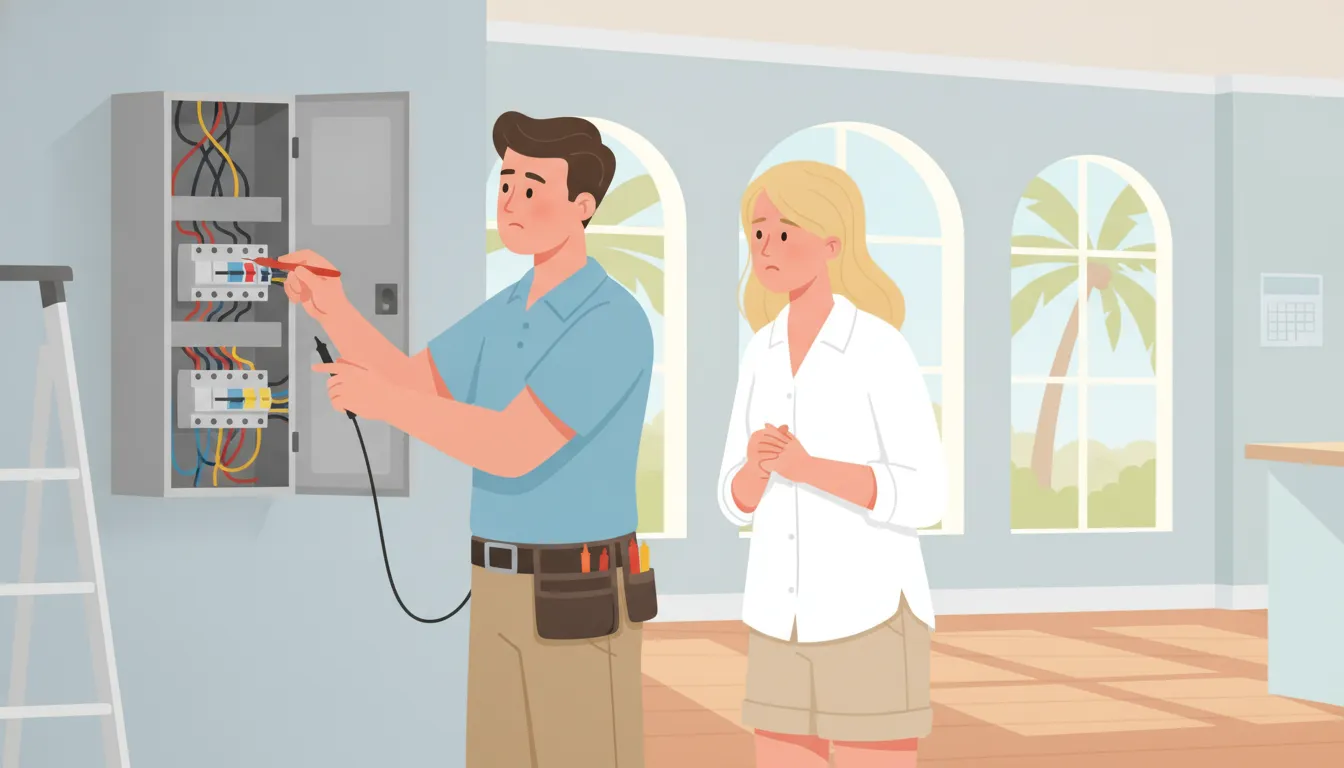
Flickering lights, warm outlets, buzzing sounds, or breakers that trip repeatedly are reasons to stop guessing and arrange an on-site review. An inspection can also be a smart step before buying or selling an older home, even when nothing seems wrong.
To find a qualified electrician to inspect my wiring, look for a professional who can explain the inspection scope, discuss relevant qualifications and insurance, and provide clear written findings. Share the symptoms, the home's age, and any prior electrical work so the visit answers your actual concerns.
Before the appointment, gather renovation records and note when each issue appears. Do not open the electrical panel or attempt repairs yourself. A careful hiring conversation should clarify what the electrician will evaluate, what the findings can and cannot establish, and what follow-up may be needed.
Schedule Service for a professional wiring inspection.
How Can I Find a Qualified Electrician to Inspect My Wiring?
When you need to find a qualified electrician to inspect my wiring, start by matching the professional to the job, not simply choosing the first available appointment. A wiring inspection may be prompted by flickering lights, buzzing outlets, repeated breaker trips, an older home, planned remodeling, or a real estate transaction. Tell each provider what you have noticed and what you need the inspection to answer.
Look for an electrical contractor who is prepared to explain qualifications, inspection experience, and the intended scope in plain language. You can ask whether the electrician is licensed and insured, how those credentials apply to the work being requested, and whether references from comparable projects are available. Requirements can vary by location and project, so ask the provider what documentation or permits may be relevant rather than assuming a generic checklist applies.
Ask what the inspection will actually cover
A useful quote or service description should identify the areas the electrician plans to evaluate. Ask whether the visit includes accessible wiring, the electrical panel, grounding and bonding, receptacles and switches, visible splices, and signs of heat or damage. If your concern is limited to one circuit, explain that clearly. If symptoms occur throughout the house, ask whether the inspection will consider broader patterns instead of looking at only one outlet.
It is also reasonable to ask about the tools and methods used. A professional may combine visual evaluation with electrical testing and diagnostic equipment when appropriate. The goal is not to request a particular tool simply because it sounds advanced. The goal is to understand how the electrician will investigate the symptoms you reported and what areas may remain inaccessible without opening finished surfaces.
Confirm what you will receive afterward
Before scheduling, ask whether the findings will be explained in writing. A helpful report should identify observed conditions, organize concerns by safety priority, and distinguish urgent attention from recommended follow-up. Ask whether photographs, test results, or a list of next steps will be included when relevant. An inspection identifies conditions at the time of the visit. It does not automatically mean the entire system needs replacement or guarantee a particular code or permit outcome.
Pay attention to the provider's communication before the appointment. Be cautious if someone dismisses your symptoms without asking questions, will not explain the scope, pressures you to authorize unrelated work, or promises a pass before seeing the property. A careful electrician should be willing to discuss what can and cannot be determined during an inspection, then explain repair or rewiring options separately if the findings support them.
For a documented evaluation of your home's electrical system, consider a professional electrical inspection. Bring your symptom history, records of prior electrical work, and any questions about follow-up so the electrician can focus the visit on the risks and decisions that matter most.
What Should an Electrical Wiring Inspection Include?
A professional wiring inspection is a structured, on-site review of the electrical system and the conditions a technician can safely access. The exact scope depends on the property's age, construction, visible wiring, reported symptoms, and the reason for the visit. A homeowner may be looking for reassurance before buying or selling, trying to understand recurring electrical problems, or planning work that could affect existing circuits.
The inspection should begin with your concerns and a visual review, then move through the system in a logical way. A useful inspection may include the following areas:
- Visible wiring condition: The electrician may look for damaged insulation, exposed conductors, signs of overheating, poor routing, moisture exposure, or wiring that appears inconsistent with the installation.
- Electrical panel: The panel, service equipment, labeling, breaker condition, signs of heat or arcing, and the apparent compatibility of breakers with the panel are important evaluation points. A panel cover should not be removed by a homeowner. The electrician can explain what can be observed safely and what requires additional work.
- Grounding and protection: The professional may evaluate accessible grounding and bonding components, as well as the presence and apparent condition of protective devices where relevant. These observations help identify concerns that deserve correction or further testing.
- Splices and junctions: Accessible junction boxes, wire connections, and splices should be checked for secure enclosure, visible damage, and workmanship concerns. Hidden conditions cannot be confirmed simply because they are not visible.
- Receptacles, switches, and fixtures: The electrician may check accessible outlets and switches for looseness, damage, unusual warmth, improper operation, or other signs that call for closer evaluation. Reported problems such as flickering lights or buzzing outlets should be matched to the locations where they occur.
- Access and limitations: The report should identify areas that were inspected, areas that were inaccessible, and any testing that was not performed. Moving furniture, opening finished walls, or entering restricted spaces may require separate authorization and planning.
Ask for findings in writing, using clear descriptions rather than a vague statement that the system is fine. A useful report can distinguish observed conditions from recommended next steps, identify safety concerns, and explain whether repair, replacement, monitoring, or additional diagnostic work should be considered. It should also separate urgent concerns from routine improvements.
Government safety guidance reinforces why this review belongs with a qualified professional. The U.S. Consumer Product Safety Commission's home electrical safety guidance discusses hazards associated with outdated wiring, while the NIOSH electrical safety checklist identifies warning signs that warrant attention. These resources provide safety context, not a remote assessment of your property.
An inspection is not a diagnosis made from photographs or a guarantee that every hidden condition has been found. It also does not automatically guarantee code compliance, a pass or fail result, or that replacement is required. Local requirements, permits, concealed wiring, and the purpose of the inspection may call for additional review. The electrician should explain those boundaries before work begins so you know what the visit can and cannot establish.
What Questions Should You Ask Before Hiring an Electrician?
A good phone call should help you understand who will visit, what the inspection will cover, and what you will receive afterward. Before you schedule, keep a short list of questions nearby and describe any symptoms you have noticed, such as flickering lights, warm outlets, buzzing, or breakers that trip repeatedly. Those details help the electrician understand your concern without attempting a remote diagnosis.
Who will perform the inspection?
Ask who is expected to perform the work and what qualifications, experience, and insurance the provider maintains. You can also ask whether the electrician has handled homes with similar wiring systems or concerns. A reputable provider should be willing to explain the team's qualifications and provide references from past work when requested. If the answer is vague, rushed, or difficult to verify, consider that a reason to keep comparing providers.
What will you inspect?
Ask for the planned scope in plain language. Will the visit include the service panel, accessible wiring, grounding and bonding, receptacles, switches, visible splices, and signs of heat or damage? If your concern involves one room, an older addition, or a previous renovation, explain that before the appointment. Ask whether the electrician can identify conditions that need attention now, issues that should be monitored, and areas that could not be accessed safely.
It is also useful to ask what testing may be performed and whether the inspection is visual, instrument-assisted, or both. The answer should make clear that an inspection identifies observable conditions and potential hazards. It does not guarantee that every concealed condition will be found, or that the property will receive a blanket compliance determination.
What report will you receive?
Ask whether the provider supplies written findings and how those findings are organized. A useful report should identify the areas reviewed, explain concerns in understandable terms, distinguish urgent hazards from recommended improvements, and include photographs or other supporting details when appropriate. Confirm when you can expect the report and whether someone will walk you through it.
What happens if a hazard is found?
Ask how the electrician will communicate an urgent issue and whether you can receive repair or rewiring recommendations separately from the inspection findings. You should be able to make an informed decision rather than feel pressured into immediate work. Finally, ask what follow-up is available if you have questions after reading the report, need help prioritizing repairs, or want a second visit after work is completed. Clear answers to these questions can make the inspection more useful and the next decision safer.
When Should You Schedule an Inspection for an Older Home?
An older home does not automatically need a complete rewiring project. However, its electrical history may be unclear, and systems installed for an earlier lifestyle may not fit today's appliances, technology, or planned renovations. A professional inspection can give you a clearer starting point before a small concern becomes a larger repair.
Before buying or selling
Schedule an inspection before purchasing an older property, especially when records are incomplete or the general home inspection identifies electrical concerns. Outdated wiring can create fire and safety hazards when it is not suited to current conditions, according to the U.S. Consumer Product Safety Commission. An electrician can evaluate observable conditions and explain which findings may need attention. That information can help a buyer ask informed questions and help a seller address concerns transparently. It should not be treated as a guaranteed pass, code approval, or promise that no future work will be needed.
Before remodeling or adding major loads
Call for an inspection before opening walls, converting a room, or adding equipment that will place new demands on the electrical system. Examples may include a large kitchen renovation, an electric water heater, an air-conditioning upgrade, a generator, or an electric vehicle charger. The electrician can review whether the existing wiring, panel, grounding, and available circuits appear appropriate for the planned work. The inspection does not replace any design, permit, or approval process that may apply to your project, but it can identify questions early.
When the home shows unexplained symptoms
Do not wait for a convenient renovation milestone if lights flicker or dim, breakers trip repeatedly, or outlets feel warm or buzz. These are recognized warning signs of electrical problems, and the CDC and NIOSH electrical safety checklist recommends treating them seriously. Smoke, sparking, a burning odor, or water near electrical equipment calls for faster attention. If there is immediate danger, move away from the affected area and contact emergency services as appropriate. Do not open the panel or attempt a repair yourself.
Even without visible symptoms, an inspection can be worthwhile when age-related wear, past DIY work, repeated ownership changes, or additions have left the wiring history uncertain. Ask for findings organized by safety priority and clarify what is observed, what should be monitored, and what repairs may be appropriate. If the evaluation points to outdated or unsafe wiring, review house wiring and rewiring services as a possible next step, based on the electrician's on-site recommendations.
What Warning Signs Need Faster Electrical Help?
Some electrical symptoms can wait for a scheduled inspection. Others call for prompt professional attention because the problem may be active, worsening, or unsafe to investigate yourself. Smoke, a burning odor, visible sparks, or a hot electrical component should be treated as urgent, especially when the symptom is new or getting worse.
Leave the area if there is smoke, fire, or a strong burning smell. Keep people away, do not touch the affected outlet, appliance, wiring, or water, and call 911 if there is an immediate fire or life-safety threat. If water has reached outlets, appliances, wiring, or electrical equipment, avoid the area until it is safe. Do not open the electrical panel or remove covers to look for the cause.
Symptoms that should not be ignored
- Burning odor or smoke: A smell like melting plastic, scorched insulation, or smoke near an outlet, switch, light, or panel needs immediate attention.
- Sparking or unusual heat: Sparks, crackling, discoloration, or an outlet, switch, cord, or wall that feels hot are not normal operating conditions.
- Water exposure: Flooding, leaks, storm damage, or dampness near electrical equipment can create hazards that are not safe to assess by trial and error.
- Buzzing or popping: Persistent buzzing, sizzling, or popping from an outlet, switch, fixture, or panel deserves a professional inspection.
- Repeated breaker trips or failed resets: A breaker that trips again, will not reset, or shuts off when a particular appliance runs is signaling a problem that needs diagnosis rather than repeated resetting.
- Flickering or dimming lights: Repeated flicker, especially across more than one fixture or when equipment starts, should be documented and reported.
These signs are consistent with recognized electrical warning indicators, including flickering or dimming lights, frequently tripped breakers, and warm or buzzing outlets, as outlined by the CDC and NIOSH electrical safety checklist. The symptom alone does not establish the cause, so avoid guessing or replacing parts without an evaluation.
For an urgent issue, My Electrician FL offers 24/7 emergency service. For a non-emergency concern, document what happened, which rooms or devices are affected, and whether the symptom returned. Then schedule electrical repair services so a qualified professional can inspect the condition and recommend the appropriate next step.
How Should You Prepare for the Electrician's Visit?
A little preparation helps the electrician understand what is happening and focus the visit on your concerns. You do not need to diagnose the problem or open an electrical panel. Instead, gather information, make the work area accessible, and decide what you want explained.
- Record the symptoms and timing. Note what you have noticed, such as flickering lights, buzzing, warm outlets, a burning odor, or breakers that trip. Write down when it happens, which rooms or appliances are involved, and whether the issue appears during rain, heavy appliance use, or at a particular time of day. If it is safe, a photo or short video of a visible symptom may also help.
- Gather prior records. Set aside inspection reports, repair invoices, permits, warranty information, and notes about when the home or major electrical equipment was installed. Include details about recent renovations, additions, generator work, electric vehicle charging equipment, or other projects that may affect the system.
- Clear access without touching the panel. Move boxes, furniture, stored items, or outdoor debris away from the electrical panel, outlets, fixtures, and other areas you want reviewed. Keep pets and children clear of the work area. Do not remove panel covers, pull receptacles from walls, or attempt a test yourself.
- List your priorities. Write down the problems that concern you most, along with any planned projects or rooms you hope to update. If you are buying or selling a home, mention that before the visit so the electrician can understand the inspection's purpose and discuss what findings you need documented.
- Prepare your questions. Ask what the visit will cover, what information the electrician needs, whether additional access will be necessary, and what follow-up options may be available. You can review the scope of a professional electrical inspection before the appointment.
- Request written findings. Ask for a clear record of observed conditions, safety priorities, recommended next steps, and items that could not be evaluated. A written report can help you compare options and plan repairs without relying on memory.
If the visit identifies a concern that needs further attention, ask the electrician to explain it in plain language and separate urgent safety steps from improvements that can be planned. When you are ready, Schedule Service for a professional review.
Schedule Service for a professional electrical inspection before you make a safety decision.
| Ask about | A useful answer should explain |
|---|---|
| Qualifications | Who will perform the inspection, what credentials and experience apply, and what documentation is available. |
| Inspection scope | Which accessible wiring, panels, devices, grounding components, and visible connections will be reviewed. |
| Testing and limits | Whether visual or instrument-assisted checks are planned and which concealed areas cannot be confirmed. |
| Written findings | When you will receive the report and how urgent concerns, recommendations, and inaccessible areas will be described. |
| Follow-up | How questions, repairs, rewiring recommendations, or additional evaluation will be handled after the inspection. |
Frequently Asked Questions
Is a wiring inspection worth it?
For many homeowners, yes. An inspection can turn uncertainty into a prioritized list of observed conditions, safety concerns, and recommended next steps. It is especially useful when lights flicker, outlets buzz or feel warm, breakers trip repeatedly, or you are considering an older home. The U.S. Consumer Product Safety Commission notes that outdated wiring in older homes can create fire and safety hazards if it is not brought up to current standards. An inspection does not automatically mean your home needs a full rewire, and it is not a guarantee of code compliance. It gives you professional information for making a safer decision.
How often should home wiring be inspected?
There is no single interval that fits every property. Consider an inspection when you buy or sell a home, before a major renovation, after extensive electrical work, or when the system begins showing unfamiliar symptoms. Older homes and properties with incomplete work records deserve particular attention. You should also schedule a review sooner if the electrical system has experienced water exposure, storm damage, repeated outages, or ongoing breaker trips. Ask the electrician what follow-up timing makes sense after the on-site evaluation rather than relying on a calendar rule alone.
What does an electrician check during a wiring inspection?
The scope depends on the property and the service requested, but a professional may evaluate accessible wiring, the electrical panel, breakers, grounding and bonding, receptacles, switches, visible splices, and signs of overheating or damage. They may use diagnostic tools in addition to visual checks. Before the appointment, confirm whether you will receive a written report, photographs, safety priorities, and recommendations for repairs or additional investigation. An inspection is limited by what can be safely and reasonably accessed, so it may not reveal concealed conditions behind finished walls.
What affects the cost of an electrical inspection?
Ask for the inspection scope and pricing method before work begins. Factors can include the home's size, age, number of electrical panels, accessibility of wiring and devices, the level of testing requested, travel distance, and whether a written report is included. A symptom that requires additional troubleshooting can also change the scope from a general inspection to targeted diagnostic work. A reputable provider should explain what is included, identify any possible follow-up work separately, and avoid pressuring you into authorizing repairs before you understand the findings.
Is a certified electrician the same as a licensed electrician?
Not necessarily. "Licensed" generally refers to authorization issued by a relevant licensing authority, while "certified" may describe training, an examination, or a credential from a professional organization or manufacturer. The terms can vary by location and provider, so do not choose based on a label alone. Ask who will perform the inspection, what license or credentials they hold, whether the company carries insurance, what experience they have with similar homes, and what documentation they can provide. Verify details through the appropriate authority when needed, and make sure the written scope matches the inspection you want.
Schedule a Professional Wiring Inspection
A professional wiring inspection can help you understand the condition of your home's electrical system and plan sensible next steps, whether you are preparing for a purchase, sale, renovation, or ongoing maintenance. Share any symptoms, prior work, and questions so the visit can focus on your concerns. When you are ready to schedule service, call My Electrician FL.
Call 877-762-7483 to schedule a professional wiring inspection.