
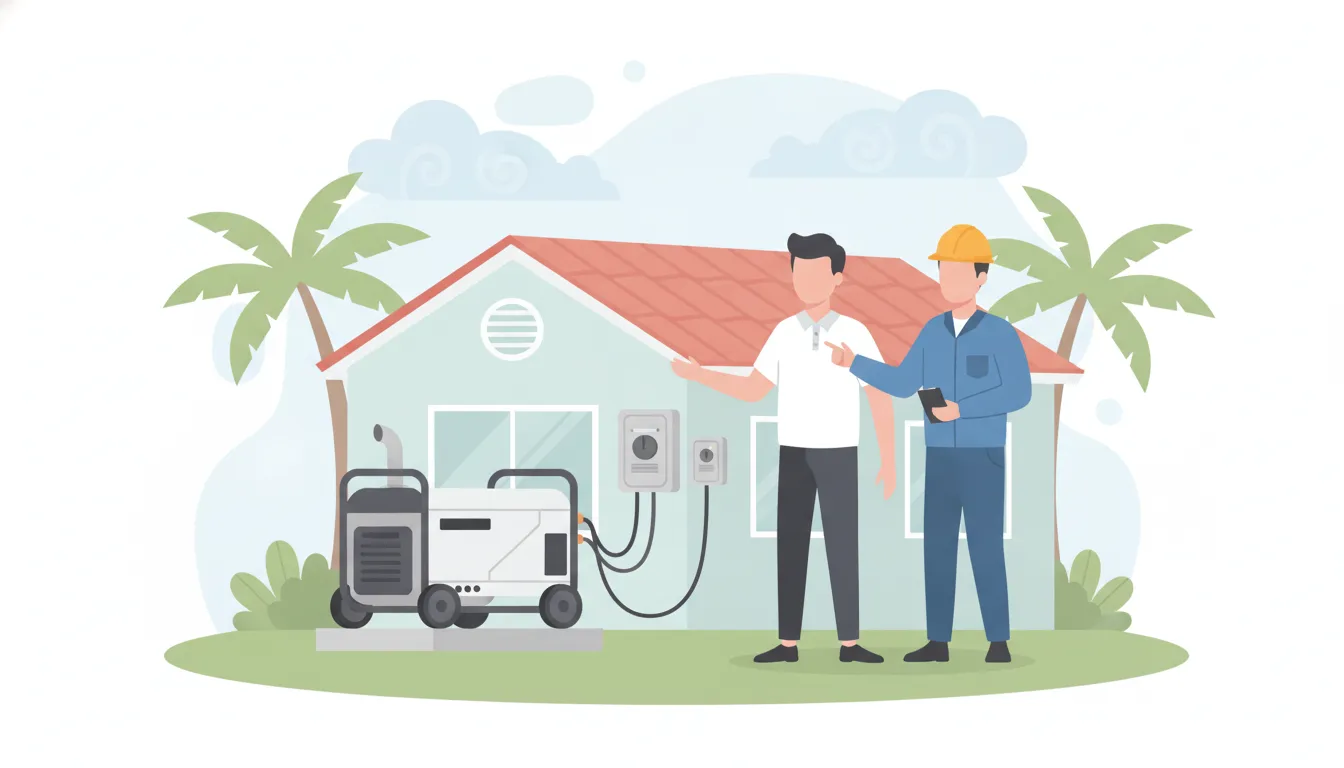
A Port St. Lucie power outage can make a portable generator seem like a quick solution, until extension cords run across rooms and essential appliances compete for limited power. Generator transfer switch installation in Port Saint Lucie creates a planned connection between a compatible generator and selected home circuits. That preparation can make backup power safer and easier to manage when storms interrupt utility service.
Schedule generator transfer switch service with My Electrician FL
Generator transfer switch installation in Port Saint Lucie connects a compatible generator to selected household circuits while keeping generator power separated from utility power. My Electrician FL plans the setup around the electrical panel, generator output, transfer switch type, circuit priorities, and local requirements, then installs, grounds, and tests the system before an outage.
What Does a Transfer Switch Do During a Port St. Lucie Power Outage?
A transfer switch gives backup electricity a controlled route to the circuits your household has chosen in advance. It also prevents the generator and utility from feeding the same wiring at the same time. That source separation is the central safety purpose of the equipment. It protects the home, the generator, and utility workers during restoration.
When utility power is available, the selected circuits operate normally. During an outage, the transfer switch changes those circuits to generator power according to the equipment design. With a manual system, someone follows the operating procedure. With an automatic system, compatible standby equipment can detect the outage and change sources without the same hands-on step.
How does a transfer switch prevent backfeed?
Backfeed occurs when generator electricity travels backward through the utility connection. That can energize lines that utility workers believe are disconnected while they repair storm damage. It can also damage equipment when utility service returns. Utility guidance explains that a suitable transfer switch disconnects electric loads from the utility grid and prevents current from flowing back into utility lines. Read generator safety guidance from Ouachita Electric Cooperative Corporation.
A transfer switch is not simply a larger outlet. It is part of the home's electrical distribution system. The switch, inlet, conductors, grounding, overcurrent protection, and generator connection must work together. A qualified electrician evaluates those pieces instead of treating one product as a universal fit.
How does the generator connect to the house?
A portable generator setup may use an outdoor inlet connected to an indoor transfer switch. The generator stays outside, while the inlet provides a defined connection point. The transfer switch directs power to the selected circuits. This arrangement reduces the need to run multiple extension cords through doors, windows, and walkways.
Extension cords may still have limited uses for properly rated equipment, but they do not replace a correctly installed transfer switch. A cord can be overloaded, damaged, or exposed to moisture. A planned connection also gives the household a clear list of what can run and what must remain off during an outage.
Manual or Automatic: Which Transfer Switch Fits Your Home?
A manual transfer switch requires a homeowner to start the generator, move the switch, and follow the shutdown procedure when utility service returns. An automatic transfer switch works with a compatible standby generator and manages the changeover as part of that system. The right choice depends on the generator, panel, circuit plan, and the level of hands-on operation your household can manage.
| Consideration | Manual transfer switch | Automatic transfer switch |
|---|---|---|
| Typical generator | Often paired with a portable generator and selected essential circuits. | Often paired with a compatible standby generator system. |
| Changeover | A homeowner follows the system's operating procedure during an outage. | The compatible system detects an outage and manages the changeover. |
| Household involvement | Someone needs to be present and able to operate the equipment safely. | Can reduce hands-on operation after the system is commissioned. |
| Planning requirement | Connected loads must fit the generator's output and backup priorities. | Automatic operation still requires compatible equipment and load planning. |
Manual does not mean unsafe, and automatic does not mean every circuit can run at once. Both systems need source separation, compatible ratings, clear operating instructions, and a circuit plan. The switch should be selected after reviewing the panel and generator together.
For Port St. Lucie homeowners, convenience is only one part of the decision. Consider whether someone will be home during an outage, which loads matter most, whether the generator is portable or standby, and how the equipment will be maintained. An electrician can explain the tradeoffs without forcing a one-size-fits-all solution.
What Happens During Generator Transfer Switch Installation?
A professional installation is a planning and testing process, not just a switch replacement. The electrician reviews the home's electrical system, confirms generator compatibility, identifies essential circuits, installs the connection equipment, and tests both sources. Local permitting or inspection requirements may apply, so the project should be reviewed against the property and equipment involved.
- Review the existing panel and generator. The electrician checks the main panel, available space, service configuration, generator type, rated output, connection method, and proposed inlet location. This confirms whether the planned equipment can work with the home.
- Build an essential-circuit plan. The homeowner and electrician identify the loads that matter during an outage. The final list must fit the generator's capacity and account for equipment that draws more power when it starts.
- Select compatible equipment. The transfer switch, inlet, conductors, breakers, and other components must have appropriate ratings. A switch that looks similar to another model may not be correct for the home's service or generator.
- Install the switch and inlet. The electrician mounts the equipment in a suitable location, routes the conductors, secures connections, and keeps the generator connection accessible. A portable generator inlet is normally located outdoors so the generator can operate outside.
- Complete grounding and source separation. Grounding, bonding, disconnects, overcurrent protection, and switching requirements are checked against applicable electrical rules and manufacturer instructions. The electrician confirms that utility and generator sources cannot energize the same circuit at the same time.
- Test utility and generator operation. The completed system is tested on utility power and generator power. The electrician confirms that the intended circuits receive power, the changeover operates correctly, and the system returns safely to utility service.
- Explain operation and maintenance. The homeowner should receive practical instructions for starting, connecting, monitoring, and shutting down the system. The demonstration should also cover which loads to avoid running together and what maintenance the generator requires.
Industry safety guidance also recommends having standby generator equipment installed by a licensed electrician and notifying the electric power supplier when appropriate. Review the utility's transfer-switch and generator notification guidance. The applicable process can vary by equipment, property, and local authority.
Which Circuits Should You Connect to a Generator Transfer Switch?
The best circuit plan supports health, food, water, communication, and basic comfort without asking the generator to do more than it can safely provide. The goal is not to energize every outlet by default. It is to identify the loads that matter most, then connect a practical group that matches generator capacity.
Start with food, water, and comfort
Refrigerators and freezers are common priorities during an extended outage. Depending on the home, water equipment, selected cooling equipment, or a well pump may also matter. These loads do not all have the same starting and running demands. The electrician should account for those demands before placing them on the same backup plan.
Florida heat can make cooling a serious household concern during storm season. However, connecting an air conditioner does not mean the generator can run every large appliance at the same time. A circuit list that looks reasonable on paper can still overload the generator when multiple motors start together.
Account for medical, communication, and security needs
Discuss medical equipment early. Identify the circuit or outlet involved, review the equipment's electrical needs, and follow the instructions from the manufacturer or care provider. Do not assume that a general-purpose outlet or a small portable unit provides the same protection as a planned household circuit.
Communications and security can also be important. A circuit serving internet equipment, selected lighting, phone charging, or a security system may help the household stay informed and move safely. Choose a focused list rather than adding every room without checking the available output.
Match the list to generator capacity
Generator capacity must guide circuit selection. Your electrician can review the nameplate information, estimate starting demand, and discuss which loads should not operate together. In some homes, a smaller group of priority circuits is more useful than a larger list that repeatedly overloads the generator.
Before an appointment, write down the equipment your household considers essential. Include refrigeration, cooling, water, medical needs, communications, security, and lighting. Bring that list to the assessment. The final plan should be documented clearly enough that everyone knows what the transfer switch supports during an outage.
How Much Does Generator Transfer Switch Installation in Port Saint Lucie Cost?
There is no reliable one-size-fits-all price for transfer switch installation. The estimate depends on the panel, generator, switch type, circuits, wiring route, inlet location, site access, and any permit or inspection requirements. A useful proposal explains those factors so a homeowner can compare the scope of work rather than comparing incomplete numbers.
What factors affect the estimate?
- Transfer switch type: Manual and automatic equipment serve different generator systems and operating preferences.
- Panel compatibility: The existing panel's configuration, condition, space, and service arrangement affect the work.
- Number of circuits: A short essential-load list requires a different plan from a broad backup design.
- Generator output: The generator must support the selected circuits, including startup demand from motors and compressors.
- Wiring route: The distance between the panel, switch, and outdoor inlet can change material and access needs.
- Site conditions: Finished walls, crowded panels, difficult access, and outdoor placement constraints can add preparation.
- Approvals: Local permits, inspections, utility notification, or property requirements may affect the project.
- Generator readiness: Existing equipment may need preparation before the transfer switch can be tested.
What should a professional estimate include?
Ask whether the estimate identifies the switch type, generator connection, circuits to be supported, inlet location, wiring route, panel work, grounding, testing, and responsibilities for permits or inspections. It should also state what is included and what would require separate approval.
My Electrician uses upfront, flat-rate pricing based on the scope of work. That approach gives homeowners a clearer decision point before installation begins. The final recommendation should still be based on an evaluation of the actual home and generator, not a generic online figure.
Schedule Service to review your generator connection and receive a clear plan
How Can You Prepare for a Safe Generator Installation?
Preparation helps the electrician design a system around how your household uses power. Gather the generator's make, model, and rated output. If you are still comparing equipment, list the models under consideration. Also write down which circuits or appliances you want available during an outage.
Bring information about the electrical system
A clear photo of the outside of the main panel can help with an initial discussion, especially when labels are visible. Do not remove the panel cover or handle wiring to identify circuits. The electrician can inspect the system safely and confirm the panel's condition, available space, and compatible connection points.
Discuss placement and fuel considerations
Talk through where the generator will operate, how it will be accessed for maintenance, and where fuel will be stored. Portable generators must operate outdoors in a safe location away from doors, windows, and other openings. Keep the area clear and follow the generator manufacturer's instructions. A transfer switch does not make indoor generator operation safe.
Ask about operation, approvals, and testing
Before work begins, ask which permits, inspections, utility notifications, or property rules may apply. Requirements can depend on the equipment and property. At completion, ask the electrician to demonstrate the changeover, identify supported circuits, explain startup and shutdown, and describe maintenance expectations.
My Electrician serves Port St. Lucie and communities across the Treasure Coast. Learn more about the company's electrical services, review the service areas, or learn about the team's local experience on the About page.
Frequently Asked Questions
Why is a transfer switch important for a portable generator?
A transfer switch connects a portable generator to selected home circuits while separating generator power from utility power. This helps prevent backfeed, reduces dependence on extension cords, and gives the household a defined operating plan. The equipment must match the generator, panel, circuit list, and applicable installation requirements.
Should I choose a manual or automatic transfer switch?
A manual switch can fit a portable generator when someone can safely start the unit and operate the changeover. An automatic switch is designed for a compatible standby generator system and can manage the changeover with less hands-on operation. The best choice depends on equipment compatibility, circuit needs, and household priorities.
Do I need an electrician to install a transfer switch?
Yes. A transfer switch connects to the home's electrical distribution system and must keep generator and utility sources separated. An electrician can select compatible equipment, plan circuits, complete grounding and code checks, test both sources, and explain safe operation. Consumer Reports also recommends hiring an electrician for this work. Read Consumer Reports' transfer switch guidance.
Which circuits should a transfer switch power?
Start with circuits that support health, food, water, communication, security, and basic comfort. Refrigeration, selected cooling, water equipment, medical needs, internet equipment, and essential lighting may be priorities. The final list must match the generator's available output and account for starting demand from motors and compressors.
How much does installation cost in Port Saint Lucie?
Installation cost depends on the switch type, panel compatibility, generator output, number of circuits, wiring distance, inlet location, access, and any applicable approvals. Ask for an upfront proposal that explains the scope, equipment, testing, and responsibilities. A generic online price cannot account for the conditions in your home.
Ready to Plan Your Generator Connection?
A properly planned transfer switch can help your household use backup power without improvising during a storm. My Electrician can review your generator, panel, essential circuits, and installation needs in Port St. Lucie. The team has served the area since 2000 and provides upfront pricing before approved work begins.
Schedule Service for generator transfer switch installation in Port Saint Lucie at 877-762-7483