
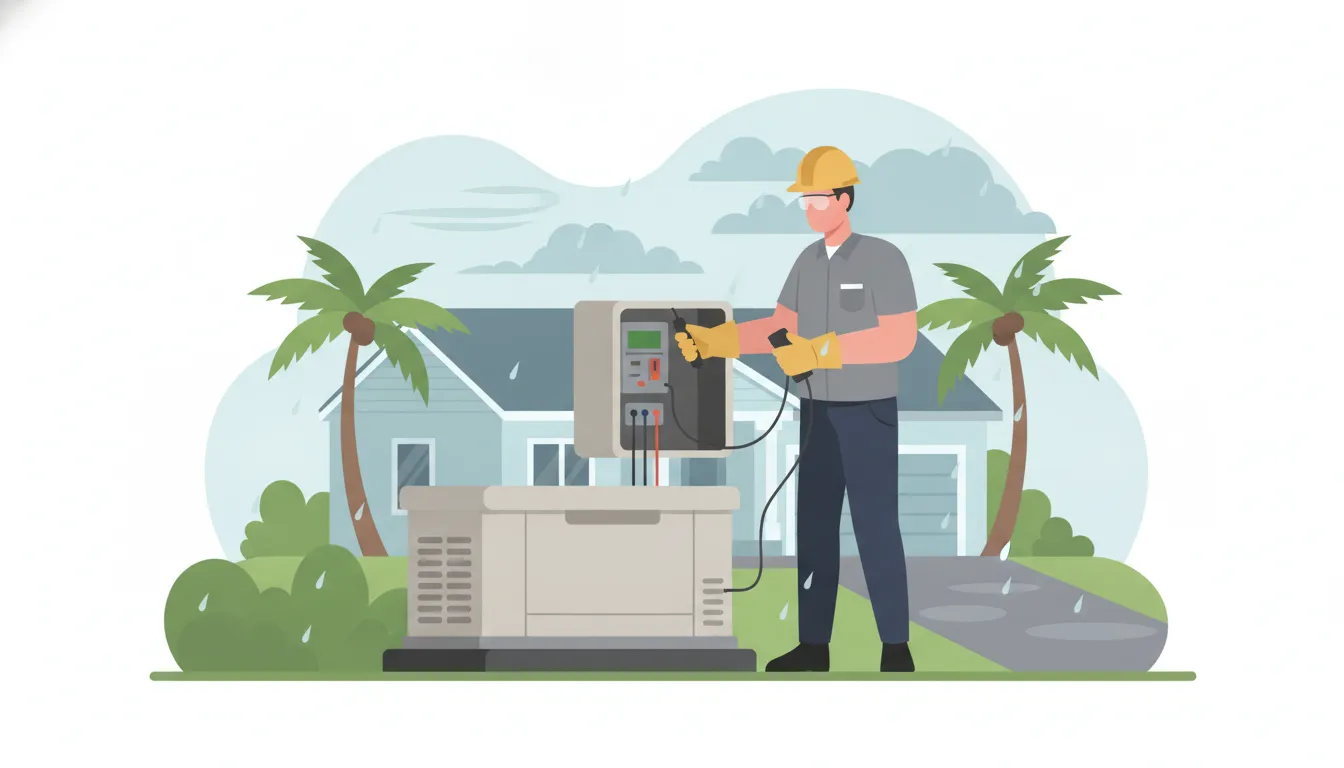
When the power goes out, a standby generator may start normally while the home still stays dark. That often points to a problem with the handoff between utility power and generator power, not necessarily a failed engine. Knowing what to observe can help you describe the issue clearly without taking a dangerous look inside the equipment.
Get generator repair and transfer-switch service from a qualified professional.
Generator transfer switch troubleshooting starts with safe observations: note whether the generator starts, whether only some circuits lose power, and whether the problem occurs when utility power returns. Do not open the transfer-switch enclosure, touch terminals, or bypass its controls. If you notice heat, a burning odor, arcing, exposed wiring, or repeated failed transfers, stop and contact a qualified electrician.
Before discussing symptoms, it helps to understand the transfer switch's role in directing electricity between two power sources and protecting the home from an unsafe connection.
What Does a Generator Transfer Switch Do?
An automatic transfer switch, often called an ATS, manages the connection between your home and two power sources: the utility grid and a standby generator. During an outage, it detects that primary power has been interrupted and begins the transfer process.
Depending on the system, the switch can signal the generator to start, wait for stable voltage and frequency, and connect selected household circuits to generator power.
When utility power returns, the transfer switch reverses the process. It moves the load back to the utility source and allows the generator to shut down according to the equipment's controls. Some systems use an open-transition design, which briefly interrupts power while the connection changes. That short interruption is part of the transfer sequence, not necessarily evidence that the generator has failed.
The safety role is just as important as the convenience. The switch helps keep utility and generator power from connecting in a way that sends electricity onto utility lines. This dangerous condition, called backfeed, can threaten utility workers and damage equipment.
Pacific Northwest National Laboratory explains that an ATS provides generator power without the possibility of backfeeding the utility grid: learn more about automatic transfer switches.
- Normal conditions: The home's connected load receives utility power.
- During an outage: The ATS detects the disruption and coordinates generator startup and transfer.
- After restoration: The ATS returns the load to utility power when the system confirms that source is available.
If the generator runs but the home does not receive power, or if the system repeatedly fails while changing sources, the transfer switch may be part of the problem. Generator transfer switch troubleshooting should stay at the observation level for homeowners.
Do not open the enclosure, touch terminals, bypass an interlock, or attempt wiring changes. A qualified electrician can identify whether the issue involves the switch, generator, controls, or the home's electrical system.
What Symptoms Point to a Transfer-Switch Problem?
A generator can start and run normally while the home remains without power. That often means the problem is somewhere in the handoff between the utility, generator, and household circuits, rather than with the engine alone. Transfer issues can happen as power moves to the generator during an outage or returns to utility service afterward. The symptoms below can help you describe what is happening, but they do not identify the failed component by themselves.
- The generator runs, but the home stays dark. If the generator is operating and none of the expected circuits receive backup power, the transfer may not have completed.
- Only part of the home has power. A few lights or outlets may work while other expected circuits remain off. Do not assume this is limited to a tripped breaker. A qualified technician should determine whether the issue involves the transfer equipment, the generator output, or the home's electrical system.
- Power comes back slowly or not at all. A brief interruption can occur with some transfer arrangements, but repeated delays, failed transfers, or unusual behavior when utility power returns deserve professional attention.
- Warning lights, alarms, or unusual sounds appear. Record the exact indicator or message if it is visible from the outside. A buzzing, chattering, or repeated clicking sound is useful information for the technician.
- You notice heat, a burning odor, smoke, arcing, or visible damage. Stay away from the equipment, keep people clear, and treat the condition as urgent. Do not open the enclosure, remove a cover, tighten terminals, or attempt to force the switch into position.
From a safe distance, note whether utility power is available, whether the generator is running, which circuits are affected, and when the symptom began. Photos of an external warning display can also help if you can take them without approaching a hot, damaged, or smoking enclosure. For dependable generator repair and transfer-switch service, have a qualified electrician diagnose the system instead of attempting energized testing.
What Causes Transfer-Switch Problems?
| Possible factor | What a homeowner may notice | Safe next step |
|---|---|---|
| Dust or moisture | Unreliable operation after harsh conditions | Record the timing and request professional inspection |
| Lightning or surge event | Transfer failure after a storm | Keep the equipment closed and report the event |
| Repeated transfers or aging parts | Delayed, partial, or failed handoff | Have the complete system assessed |
A transfer switch can develop problems for several reasons, and the visible symptom does not always identify the underlying cause. A switch that fails to move power cleanly between utility and generator supply should be assessed as a system, not treated as a problem to solve by opening the enclosure.
Maintenance, dust, and moisture
Routine maintenance matters because dust, dirt, and moisture can affect the switch's operating components over time. The U.S. Department of Energy cites poor maintenance and dusty or moist environments as possible causes of automatic transfer-switch failure. Its guidance also notes that cleaning and adjustment may be needed at least annually, depending on the equipment's condition and environment, with the switch de-energized during that work. That is a job for a qualified professional, not a reason to remove the cover yourself.
Lightning, surges, grounding, and repeated transfers
Florida storms can place additional stress on electrical equipment. The same federal guidance identifies utility reliability, lightning and surge protection, grounding issues, and excessive transfers over time as possible contributors to ATS failure. Frequent outages, testing problems, or repeated switching between sources may therefore be useful details to share with the technician. Do not bypass an interlock or attempt to force a transfer to restore power.
Aging parts and model-specific defects
Mechanical and electrical components can wear as equipment ages, especially when a switch has experienced many operating cycles or harsh environmental conditions. Some failures may also be specific to a particular model or production run. For example, the U.S. Consumer Product Safety Commission reported a recall involving certain Kohler 100-amp automatic transfer switches that could fail and overheat, creating a fire hazard. Check the exact manufacturer, model, and serial information, and compare it with official recall notices rather than assuming every transfer switch has the same issue.
If you notice heat, a burning odor, visible damage, or repeated failure to transfer, stop testing the system and arrange residential electrical repair service. A professional can evaluate the switch and the connected generator without turning a troubleshooting question into an electrical hazard.
What Can You Safely Check Before Calling?
Before attempting generator transfer switch troubleshooting, limit your checks to observations you can make without removing covers, touching wiring, or opening an electrical enclosure. An automatic transfer switch may involve utility power and generator power, even when one source appears to be off. The goal is to give the technician useful information, not to diagnose energized equipment yourself.
- Note what happened. Write down whether the issue began during an outage, when utility power returned, or while utility power was available. Record which parts of the home lost power and whether the generator started, stopped, or continued running without restoring those loads.
- Check the generator's exterior controls. From a safe position, observe the displayed operating status or error message using the normal user controls. Do not remove a panel or reset an unfamiliar alarm repeatedly. Record the exact wording, indicator color, or error code if one is shown.
- Observe whether any load transfers. If the generator starts, notice whether lights or other expected circuits come back on. A running generator does not necessarily mean the home has safely received backup power. Do not test this by switching breakers, bypassing an interlock, or operating transfer-switch controls.
- Look for visible damage from a safe distance. Check only what is plainly visible without opening anything. Look for signs such as a damaged cabinet, impact, water intrusion, scorching, or loose exterior components. Do not touch the equipment or attempt to tighten terminals.
- Stop immediately if anything seems unsafe. Burning odor, unusual heat, smoke, buzzing, arcing, exposed wiring, or uncertainty about what you are seeing are reasons to step away and call an electrician. Keep people away from the equipment and do not continue testing. Internal electrical testing and transfer-switch repairs require trained professionals.
Share your notes, the generator and transfer-switch model information, and any recent storm, outage, or service history with the technician. These details can help guide a safer, more efficient assessment.
When Should You Call an Electrician Immediately?
Some generator transfer-switch problems are not appropriate for extended troubleshooting at home. Stop checking the system and call an electrician if you notice a burning smell, unusual heat, smoke, sizzling, popping, visible arcing, or exposed wiring near the generator, transfer switch, panel, or connected equipment. Keep people away from the area, and do not remove covers or touch conductors.
Prompt help is also warranted when the switch repeatedly fails to transfer between utility and generator power, remains in an uncertain position, or leaves the home without power while the generator is running. These symptoms can involve the transfer equipment, generator controls, wiring, or the home's electrical system. Repeatedly cycling controls or attempting to force a transfer can make the situation less safe.
Do not wait when the generator is running but the home has no power
A running generator does not necessarily mean the home's circuits are receiving power. If the generator starts but essential circuits remain off, leave the system alone unless the manufacturer's normal user controls clearly identify a safe status check. Do not bypass an interlock, alter wiring, or open an energized enclosure. If there is smoke, heat, arcing, or a strong electrical odor, move away and treat the situation as urgent.
My Electrician serves homeowners and businesses across the Treasure Coast and Northern Palm Beach County. For urgent symptoms, contact the 24-hour emergency electrical service. For less urgent but recurring failures, a professional assessment can identify the cause before the next outage. Bring the technician any error messages, timing details, and observations you recorded from a safe distance.
How Is Professional Troubleshooting Handled?
A qualified electrician starts by listening to what happened, when the problem began, and whether the generator starts, runs, or fails during the handoff between power sources. The technician may review the generator and transfer-switch model information, recent outage behavior, maintenance history, and visible warning messages. These details help separate a control problem from an issue involving the switching equipment, wiring, utility supply, or generator integration.
The next step is a safety-focused assessment of the complete system. The electrician evaluates utility power and generator operation, then inspects the relevant equipment using procedures appropriate for the installation. Internal inspection and testing should be performed with the transfer-switch equipment de-energized when required, not by a homeowner opening the enclosure or tightening terminals. An automatic transfer switch manages the connection between utility and standby power, so improper work can create shock, equipment, or backfeed hazards. A professional electrical safety inspection may also be appropriate when the condition of the wiring or installation needs a broader review.
Once the cause is identified, My Electrician explains the recommended repair and provides an upfront quote before work begins. The company handles generator installation and integration, diagnosis of failed standby generators, and repair needs through its generator repair and transfer-switch service. Repairs are performed to NEC standards and followed by quality testing so the system can be evaluated under the appropriate operating conditions.
Schedule Service and share the symptoms, generator model, and any safe observations you recorded.
Frequently Asked Questions
Why is my generator running but not powering the house?
The generator may be operating while the transfer switch has not completed the handoff, or the system may have detected a voltage, frequency, control, or safety issue. You can note the generator status and whether utility power is available, but do not open the switch enclosure. A professional can diagnose the generator and transfer equipment together.
What should I check when an automatic transfer switch does not transfer?
From a safe distance, check whether the utility outage is confirmed, whether the generator shows an alarm, and whether any exterior control displays an error. Do not reset unfamiliar controls repeatedly or tighten terminals. If the home remains without power or the switch cycles, stop troubleshooting and arrange an electrical assessment.
Can I troubleshoot a generator transfer switch myself?
Homeowners can record symptoms, alarms, outage timing, and visible damage without touching the equipment. Do not remove covers, handle conductors, bypass interlocks, or work inside an energized enclosure. Transfer switches help prevent generator power from backfeeding the utility grid, so internal testing and repairs require appropriate training and de-energized procedures.
When is a transfer switch problem an electrical emergency?
Call for urgent help if you notice a burning odor, unusual heat, smoke, arcing, exposed wiring, or repeated failed transfers. Keep people away from the equipment and, if there is immediate danger, contact emergency services. A running generator with no home power also deserves prompt professional attention, especially during an outage.
How often should a generator transfer switch be inspected?
Inspection and maintenance depend on the equipment, condition, and environment. A federal utility partnership presentation lists annual cleaning and adjustment at minimum, with the ATS de-energized. It also identifies dusty or moist conditions, surges, grounding issues, and excessive transfers as possible failure factors. Follow the equipment manufacturer's schedule and use a qualified professional for service.
Schedule Generator Transfer Switch Troubleshooting
A professional assessment can help identify why your generator is not transferring power as expected while keeping unsafe electrical work out of your hands.