
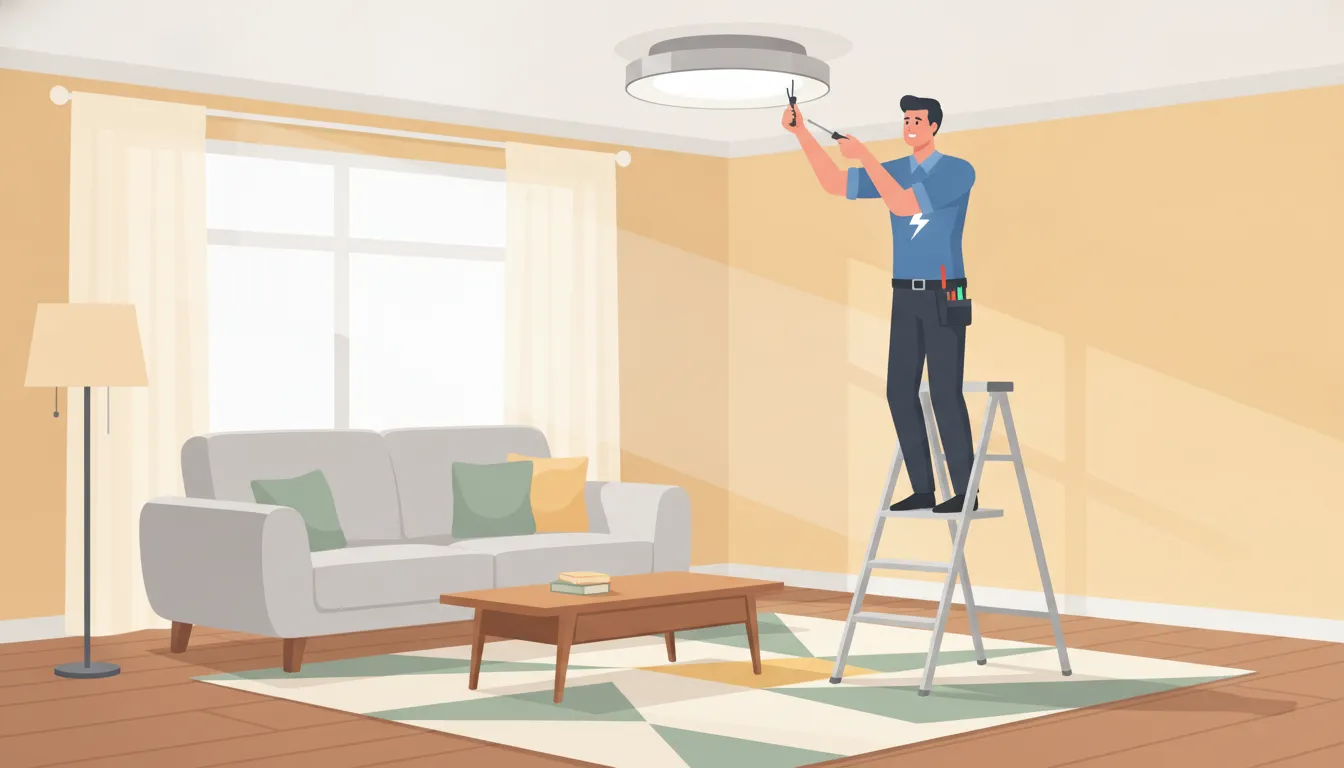
A new light fixture can change a room quickly, but installation is not always a simple swap. Flickering, a hot fixture, a breaker that trips, or wiring that looks old can point to a problem beyond the fixture itself. High ceilings, heavy chandeliers, and older homes add further safety and mounting concerns.
You should hire an electrician for light fixture installation when you are unsure how to shut off and test the circuit. See damaged wiring, need a new ceiling box, or are installing a heavy fixture. A qualified professional can assess the wiring, mounting, compatibility, and safe operation before energizing the circuit.
Electrical safety guidance recommends de-energizing and thoroughly testing circuits before work begins, while electrical injuries can include shock, burns, electrocution, and falls. Understanding what the installation involves helps you recognize when professional help is the safest choice.
Schedule professional light fixture installation today.
Why Light Fixture Installation Is More Than Just a Swap
A new light fixture may look like a simple hardware update, but the work often involves the home's wiring, electrical box, grounding, and circuit load. The visible fixture is only one part of the installation. If a replacement light leaves the ceiling hot, flickers after installation, or causes the breaker to trip, the problem may be more serious than a loose decorative piece.
Before touching wiring, the circuit must be de-energized and thoroughly tested. The CDC safety guidance specifically emphasizes testing circuits before electrical work begins. Turning off a wall switch is not the same as confirming that the wires are no longer energized. A professional knows how to identify the correct circuit, verify the absence of voltage, and work within appropriate safety procedures.
The wiring behind the fixture matters
Ceiling wires can be old, damaged, frayed, poorly connected, or incompatible with the new fixture. A qualified electrician can inspect those connections instead of assuming that the existing wiring is ready for another device. This matters especially when the fixture is being installed in an older home or when the existing light has shown warning signs. Such as flickering, a hot canopy, buzzing, or discoloration around the ceiling box.
The mounting box also has to support the fixture safely. A lightweight fixture and a heavy chandelier do not place the same demands on the ceiling. If the box is plastic, loose, or not properly anchored, it may need to be replaced or reinforced before the new light is mounted. A fixture that shifts, pulls away from the ceiling, or strains its wires can create both a structural and electrical hazard.
Heat, bulbs, and controls affect safety
Using the wrong bulb or exceeding the fixture's wattage rating can cause overheating and potentially start a fire. The bulb, fixture, and wiring need to work together within their listed limits. An electrician can also help match LED bulbs and dimmer switches so the controls operate correctly without flickering or premature failure. Professional installation may include dimmer compatibility checks and an energy-efficient LED upgrade when those improvements fit the homeowner's goals.
These risks are not merely technical inconveniences. The CDC and NIOSH explain that electrical injuries can include electrocution, shock, burns, arc blast, and falls, and some can be fatal. If a light installation produces sparks or a burning smell, stop using it and seek immediate electrical help. For homeowners who are unsure how to identify and test the correct circuit, choosing to hire an electrician for light fixture work is a practical safety decision, not an unnecessary upgrade.
When DIY Light Fixture Replacement Is Safe
A light fixture replacement may be reasonable for a homeowner who has basic electrical knowledge and is making a straightforward, one-for-one swap. That means the new fixture is a similar size and weight, the existing mounting box is secure. The wiring looks intact, and the replacement connects in the same location without changing the circuit. The work should also be within easy reach, not on a high ceiling or over a stairwell.
What a simple swap looks like
Before deciding to proceed, look at the situation as a whole. A simple project is more than taking down an old light and attaching a new one. You should know which circuit supplies the fixture, know how to shut off that power, and be able to confirm the circuit is de-energized before touching any wiring. The CDC and NIOSH advise that electrical circuits be de-energized and thoroughly tested before work begins. This is a basic safety boundary, not a step to skip because the wall switch is off: review the CDC electrical safety guidance.
If you are unsure how to shut off power to the correct circuit, stop and hire an electrician for light fixture installation. Do not use uncertainty as a reason to experiment. The same applies if the existing wires are brittle, damaged, frayed, unusually short, or difficult to identify. A fixture that does not sit securely, a ceiling box that shifts when touched. Or a new fixture that is substantially heavier than the old one can turn a basic replacement into a mounting or wiring repair.
When the project is no longer a DIY job
Some homeowner symptoms point to a larger electrical issue rather than a fixture that simply needs updating. Flickering that continues after the replacement, a breaker that trips when the light is switched on, a burning smell, or visible sparking requires professional attention. Leave the circuit off and seek help if any of these signs appear. Electrical work can involve shock, burns, electrocution, and falls, and CDC and NIOSH state that only qualified persons should perform electrical work: see the qualified-person safety standard.
Older homes require extra caution. If you see or suspect knob-and-tube wiring, always consult an electrician before attempting a lighting change. That wiring system can require an evaluation beyond a one-for-one fixture swap. High ceilings, ceiling fans, heavy chandeliers, loose or unanchored boxes, and any need to extend, reroute, or modify wiring are also clear reasons to bring in a professional. When the job stops matching the existing setup, the safest decision is to stop rather than force the project to fit a DIY plan.
Signs You Should Hire an Electrician for a Light Fixture Job
A light fixture can seem like a simple replacement until the symptoms point to a larger electrical problem. If the light flickers, the switch feels hot, or the breaker trips when you turn it on, stop treating the fixture as a cosmetic upgrade. These signs can indicate wiring, circuit, or mounting concerns that deserve professional attention. Knowing when to hire an electrician for a light fixture can help you avoid electrical shock, property damage, or a fixture that is unsafe to use.
The light flickers or behaves unpredictably
Flickering is more than an annoyance, especially when it continues after you replace the bulb. The problem may involve a loose connection or loose neutral somewhere in the fixture or circuit. Because the source may not be visible at the ceiling, repeated flickering should be evaluated by an electrician rather than repeatedly tightened or ignored. Turn the light off and arrange an inspection if it flickers, dims suddenly, or changes brightness when another appliance starts.
The breaker trips when you turn on the light
A breaker that trips once may respond to a temporary issue, but repeated trips are a warning. The circuit may be overloaded, or the fixture, wiring, or switch may have a fault. Resetting the breaker again without finding the cause does not resolve the risk. Leave the fixture off and request electrical service if the breaker trips each time you use the light. Particularly if you also notice buzzing, heat, or a burning odor.
The switch or fixture feels hot
Switches and fixtures should not become unusually hot during normal use. Heat can be associated with a poor connection, incompatible components, excessive load, or a fixture being used beyond its intended rating. If the switch plate, canopy, or fixture body feels hot, turn off the circuit if you can do so safely and contact a qualified electrician. Do not continue operating it while waiting for the problem to disappear.
You see damaged wires or an unstable ceiling box
Exposed, frayed, brittle, or visibly old wires are a clear reason to stop the installation or use of the light. Damaged insulation can leave energized conductors exposed and should not be covered with a quick cosmetic fix. An electrician can assess the wiring and determine whether the connection needs repair or replacement.
The ceiling box also has to support the fixture securely. A plastic box that flexes, appears unanchored, or pulls away from the ceiling may need to be replaced. Heavy chandeliers and ceiling fans require a mounting box rated for their weight and movement. If the box shifts when you handle the fixture, do not hang the light from it. Professional installation can address the support and wiring together, leaving the fixture secure and ready for regular use.
What an Electrician Checks Before Installing Your Light Fixture
A professional installation starts before the new fixture comes out of its box. An electrician first evaluates the existing electrical and structural conditions so the finished installation is secure, properly connected, and appropriate for the home. This matters especially when a fixture replaces an older one, weighs more than the original. Or is being installed where homeowners have noticed flickering, movement, or other unusual symptoms.
A typical pre-installation inspection includes the following checks:
- The ceiling box and its support: The electrician checks whether the existing electrical box is firmly anchored and suitable for the new fixture. A loose or improperly supported box can allow the fixture to wobble, place stress on the wiring, or pull away from the ceiling. Plastic or unanchored boxes may need to be replaced when they do not meet the fixture's structural requirements. Heavy chandeliers and ceiling fans require mounting hardware and an electrical box rated for their weight. Learn more about box support and fixture mounting requirements.
- The condition of the wiring: Before making connections, the electrician looks for damaged, frayed, brittle, or visibly outdated wires. Older wiring systems, including knob-and-tube wiring, require particular caution and should be evaluated by a professional before lighting changes are attempted. The electrician also considers whether the home's existing electrical infrastructure can safely support the fixture's requirements.
- Power and circuit safety: The circuit is shut off, then tested to confirm it is actually de-energized before work begins. A wall switch alone is not a substitute for verifying the circuit. The CDC and NIOSH advise that electrical circuits be de-energized and thoroughly tested before work starts. Read their electrical safety guidance at CDC Stacks.
- Grounding and connections: The electrician checks that the fixture can be grounded correctly and that each connection is secure. Proper grounding helps reduce the risk of shock. Connections are arranged so wires are not pinched, strained, or left exposed inside the box.
- Code compliance: The installation is reviewed against applicable local requirements and National Electrical Code standards. Code compliance is not just paperwork. It helps ensure the box, conductors, connections, and mounting method are appropriate for safe, dependable use.
If an inspection reveals an outdated wiring system, inadequate support, or a circuit concern, the safest choice is to address that issue before installing the fixture. That extra step can prevent a loose fixture, recurring electrical problems, or a hazardous connection later.
The Cost of Hiring an Electrician for Light Fixture Installation
The cost of a light fixture installation depends on more than the fixture itself. A simple replacement may involve an existing, properly supported box and usable wiring. A larger chandelier, ceiling fan, recessed light, or upgraded LED system can require additional mounting, wiring, controls, or circuit work. The electrician will assess the job before giving you a clear recommendation.
Fixture weight and design are important cost factors. Heavy fixtures may need a properly rated ceiling box or additional support so the fixture does not loosen over time. Specialty fixtures can also take more time to assemble, level, secure, and connect. If the existing box is damaged, loose, or not suitable for the fixture, replacing it is part of a safe installation rather than an optional add-on.
The condition of the wiring can affect the work as well. Older homes may have brittle insulation, crowded connections, or wiring that needs attention before a new fixture is installed. Flickering, heat around the fixture, exposed wire, or a breaker that trips after installation should not be treated as routine installation issues. These symptoms can indicate a broader electrical problem that deserves professional evaluation.
Controls and efficiency upgrades may also change the scope. A dimmer must be compatible with the fixture and the bulbs, especially when installing LEDs. An electrician can help confirm compatibility and complete the connection correctly instead of leaving you with flickering, buzzing, or unreliable operation.
| Consideration | DIY replacement | Professional installation |
|---|---|---|
| Upfront cost | May appear lower, but unexpected wiring, mounting, or tool needs can change the total. | Includes an assessment of the installation requirements and, with My Electrician, upfront flat-rate pricing before work begins. |
| Safety | Errors can expose you to energized wiring, unstable mounting, falls, or fixture damage. | Licensed technicians handle the electrical connections and mounting with safety in mind. |
| Code and wiring | It can be difficult to recognize an unsuitable box, outdated wiring, or an incompatible dimmer. | The installation can account for the wiring condition, support requirements, and applicable electrical standards. |
| Long-run value | A mistake may lead to repeat work, damage, or a larger repair later. | My Electrician backs parts and labor with a 2-year written workmanship guarantee. |
When you hire an electrician for light fixture installation, you are paying for safe planning and dependable workmanship, not just time at the ceiling. My Electrician uses licensed technicians and explains the work before proceeding, helping you compare the immediate expense with the value of a secure, reliable result.
What Can Happen When Wiring Goes Wrong
A light fixture problem often announces itself before the damage is visible. You may notice a burning smell near the canopy, sparks when the switch is used. A switch plate that feels hot, or a fixture that flickers instead of producing steady light. These are warning signs, not inconveniences to monitor indefinitely. Turn off the circuit if you can do so safely, keep away from damaged components, and arrange a professional evaluation.
Incorrect wiring or mounting can create several hazards at once. A connection that is loose, improperly matched, or left exposed can produce heat and arcing. The CDC and NIOSH identify fire from faulty electrical equipment or installations as an electrical safety hazard: review their electrical safety guidance for additional context. An incorrectly installed fixture may also energize parts that should be protected, increasing the risk of shock, burns, or electrocution.
Fire hazards can develop behind the fixture
Problems do not always begin with visible flames. A poor connection can heat wiring inside the ceiling box or fixture canopy, while an overloaded circuit can place additional stress on the installation. The fixture may continue working for a time, which can make the situation easy to dismiss. Persistent warmth, discoloration, a scorched odor, or crackling sounds should be treated as urgent signs that something needs attention.
Mounting matters as much as the electrical connection. A ceiling box that is not properly anchored may shift under the fixture's weight. That movement can pull on conductors, loosen connections, or allow the fixture to fall. Heavy fixtures and high-ceiling installations deserve particular care because a visually acceptable installation can still be structurally unsafe.
Ladders add another risk during high-ceiling work
Replacing a fixture several feet overhead can require a ladder, awkward reaching, and the use of both hands. The CDC has documented fall risk associated with installing ceiling lighting from a ladder: its safety material describes this type of work. A fall can cause serious injury even when the electrical portion of the job appears simple. Professional equipment, preparation, and a safe working position help reduce that risk.
Respond quickly to burning smells or sparks
If you smell burning or see sparks after a fixture installation, stop using the light and call emergency services or an emergency electrician immediately. Do not touch the fixture, wiring, or switch if any part appears damaged or energized. If there is active smoke or fire, leave the area and call 911. Once the immediate danger is addressed, a licensed electrician can inspect the circuit, connections, box, and mounting hardware and correct the underlying problem.
Careful professional installation helps prevent these outcomes by treating the fixture as part of the home's complete electrical system, not just a decorative replacement. That approach protects your household, your property, and the people working overhead.
How to Choose the Right Electrician for Your Light Fixture
The right electrician should make the installation safer, clearer, and easier to budget. Before you agree to the work, use these steps to compare professionals and confirm that their service matches your home's needs.
Verify licensing and insurance. Ask who will perform the work and confirm that the company uses licensed technicians. Insurance is also important because it helps protect you and your property if an accident or unexpected damage occurs during the installation. Be cautious of anyone who avoids straightforward questions about credentials or cannot explain how the work will be handled safely.
Look for relevant experience. A simple fixture swap is not always simple when the ceiling box is loose, the wiring is older, or the fixture is heavy. Ask whether the electrician has handled installations similar to yours, including chandeliers, ceiling fixtures, dimmers, or lighting in older homes. My Electrician's technicians have at least 10 years of experience and continue their National Electrical Code training. Which helps them account for current safety requirements and changing electrical equipment.
Ask what the inspection will include. A careful electrician should assess the existing box, wiring, mounting support, switch, and circuit before attaching the new fixture. If you have noticed flickering, a hot fixture, a burning smell, exposed wire, or a breaker that trips, mention it before work begins. Those symptoms may point to a broader electrical problem rather than a fixture that only needs replacing.
Get pricing in writing before the work starts. Request a clear explanation of the total price, what it includes, and whether additional repairs require your approval. Transparent flat-rate pricing can make it easier to plan without guessing how long the visit will take or watching an hourly charge grow. A reputable company should explain the recommendation in plain language instead of using pressure or vague estimates.
Review the workmanship warranty. Ask how long labor is covered, what the warranty includes, and who to contact if a problem appears after installation. My Electrician backs parts and labor with a written 2-year workmanship warranty. Written terms are more useful than a general promise because you can review exactly what is covered.
Read local reviews and confirm service coverage. Look for consistent comments about punctuality, communication, cleanup, safety, and completed lighting work. Local experience matters in coastal Florida, where older homes, humidity, salt air, and storm-related concerns can affect electrical systems. Choose a company that regularly serves your area, from Palm Beach Gardens through Vero Beach. And ask whether emergency help is available if the fixture problem involves sparks, smoke, or loss of power. My Electrician provides 24/7 emergency availability for urgent electrical issues.
Taking a few minutes to check these details can help you hire an electrician for a light fixture with confidence. For installation or related electrical concerns, review the company's electrical services and ask for a clear recommendation based on your home's existing setup.
Do not let an uncertain light fixture installation become a safety risk. Call 877-762-7483 to schedule professional light fixture installation today.
Frequently Asked Questions
When should you hire a professional electrician for light fixture installation?
Hire an electrician when you are unsure how to shut off and test the circuit, the existing wiring looks damaged or outdated, or the fixture is heavy. Professional installation can also address an unanchored ceiling box, grounding concerns, and compatibility with dimmers or LED components.
Is it safe to install a light fixture yourself?
Some basic replacements may be manageable for a homeowner with electrical knowledge. But the work is not safe if you do not understand circuits, grounding, or how to verify that power is off. Stop and call an electrician if anything about the wiring or mounting is unclear.
What are the risks of DIY light fixture installation?
Incorrect connections can cause shock, create a fire hazard, damage the fixture, or leave it loose overhead. A ceiling fixture may also require a properly rated mounting box, especially when it is heavy or subject to movement.
How much does it cost to hire an electrician to install a light fixture?
The cost depends on the fixture, its location, the mounting requirements, and the condition of the existing wiring. An electrician can inspect the job and explain the work needed before installation, so you know what the service includes.
Does a new light fixture require a permit?
Permit requirements depend on the scope of the work and local rules. A simple replacement may be treated differently from a project that changes wiring, adds a new circuit, or involves a larger lighting installation. An electrician can help determine what applies to your project.
Ready to schedule your light fixture installation?
Professional installation can help you address wiring, mounting, and compatibility concerns before they become larger safety problems. My Electrician FL can help you choose a practical next step for your home and installation needs. Schedule professional light fixture installation service by calling 877-762-7483.