
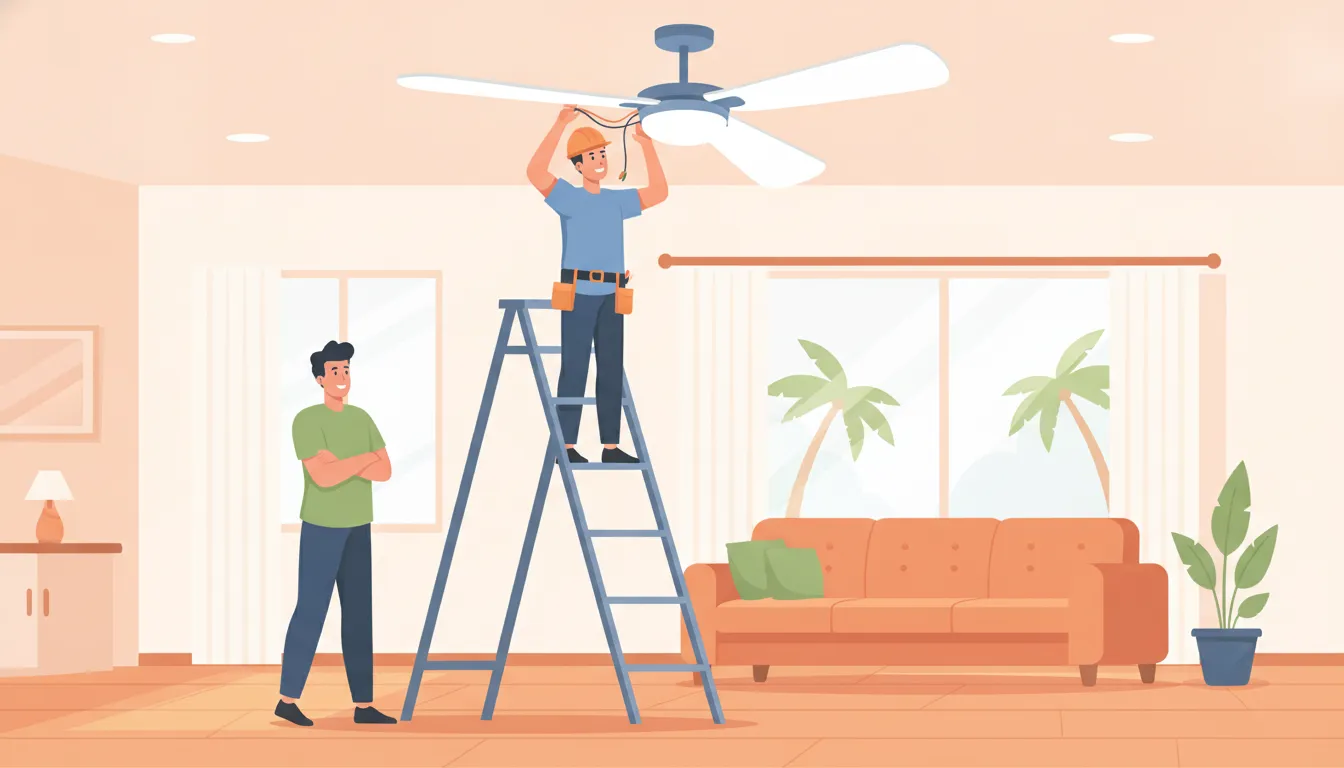
Hire Electrician to Install Ceiling Fan: A Homeowner Guide
A ceiling fan can improve comfort, but installation involves more than attaching blades and connecting a switch. The ceiling box must support a moving fixture, the circuit and wiring must be suitable, and the controls must match the fan. When those details are uncertain, it is safer to hire electrician to install ceiling fan than to treat the project as a basic light-fixture swap.
Schedule professional ceiling fan installation with My Electrician FL.
My Electrician FL recommends hiring an electrician when a ceiling fan installation needs new wiring, a fan-rated support box, a switch or control change, or work on a high or vaulted ceiling. A professional can also troubleshoot an existing fan, inspect the circuit, secure the mounting, connect compatible controls, test operation, and explain the work before it begins.
Why Should You Hire an Electrician to Install a Ceiling Fan?
Short answer: My Electrician FL treats ceiling fan installation as both an electrical and a mounting project. A ceiling fan is a moving electrical fixture, so safe installation requires proper electrical connections and reliable physical support. An electrician can evaluate the box, wiring, circuit, controls, clearance, and mounting before the fan is energized. That reduces the chance of wobbling, overheating, faulty operation, or ceiling damage.
A standard electrical box is not automatically designed to carry a fan's weight and vibration. A fan should be attached to a box or support system rated for that purpose. If the existing box is unsuitable, the installer may need to reinforce the mounting or replace the box before connecting the fan.
Wiring also deserves attention. A light fixture may use wiring that is not arranged for separate fan and light controls. Older wiring may have damaged insulation, loose connections, or other conditions that should be corrected before a new motor is added. The installer should verify the circuit rather than assume that an existing light connection is ready for a fan.
Electrical safety guidance from the Occupational Safety and Health Administration addresses hazards such as shock, electrocution, and fire. The U.S. Consumer Product Safety Commission's home electrical safety guidance also warns that electrical hazards can cause serious injury or death. Turning off a wall switch is not the same as safely verifying that a circuit is de-energized.
Professional installation also creates a clear testing step. After mounting and wiring, the electrician can check the fan, light kit, wall control, remote receiver, and direction or speed settings. That final check helps identify unusual noise, vibration, heat, or intermittent operation before the problem becomes a larger repair.
What can go wrong with an unsupported ceiling fan?
An unsuitable box or loose mounting can allow the fan to wobble and transmit vibration into the ceiling. Over time, that movement can damage drywall, loosen hardware, stress the motor, or create a risk that the fixture will pull away from its mounting point. A fan that shifts, rattles heavily, or leaves cracks around the ceiling opening should be turned off until it can be inspected.
What Homeowner Symptoms Mean You Need Professional Help?
Short answer: My Electrician FL advises homeowners to stop using a ceiling fan when it wobbles severely, rattles, hums unusually, heats a switch, smells hot, sparks, trips a breaker, or operates intermittently. These symptoms may involve mounting, wiring, controls, or circuit issues that are not solved by repeatedly tightening visible screws.
A small amount of movement can sometimes relate to blade alignment, but significant or worsening vibration deserves attention. Watch the fan at different speeds. If the housing moves, the downrod appears unstable, or the ceiling flexes around the mounting point, switch the fan off. Avoid standing directly beneath it while it is operating.
Electrical symptoms require even more caution. Turn the fan off if you notice a burning odor, discoloration, buzzing at the switch, sparking, warmth around the control, repeated breaker trips, or lights that flicker when the fan runs. Do not open the ceiling box or attempt a wiring repair unless you are qualified to do so.
High and vaulted ceilings create another clear reason to call a professional. Safe access, fan height, extension components, blade clearance, and mounting position all need to be considered. A ladder placed on an uneven surface or an improvised reach from furniture can turn a routine project into a fall risk.
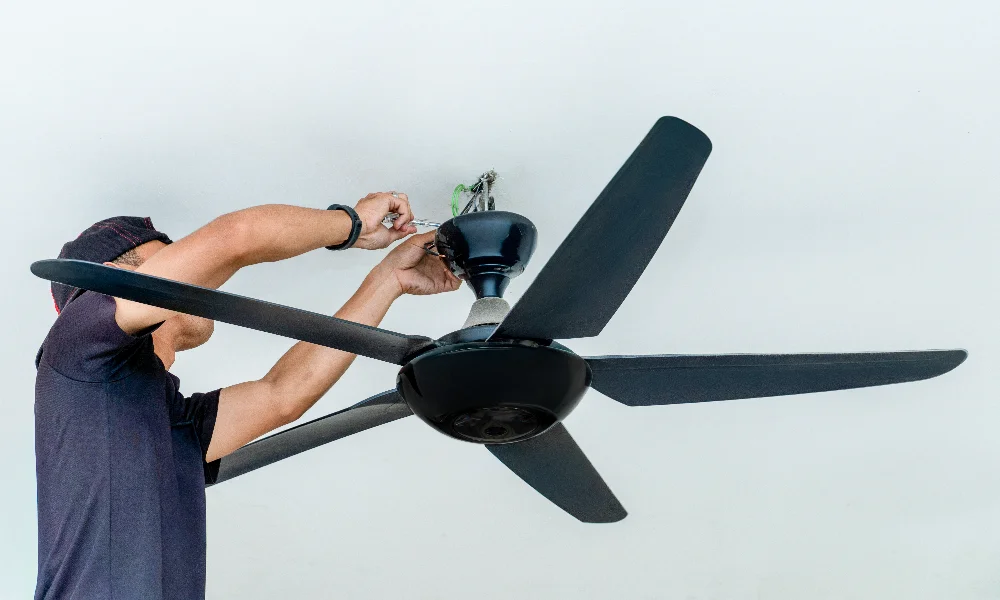
When should you stop using the fan immediately?
Stop using the fan immediately when it sparks, smells hot, trips a breaker, shows damaged wiring, pulls away from the ceiling, or shakes severely. If there is smoke or an active electrical fire, leave the area and call emergency services. For less urgent symptoms, arrange an electrical inspection before using the fixture again.
What Does Professional Ceiling Fan Installation Include?
Short answer: A professional ceiling fan installation from My Electrician FL includes an inspection of the existing box and wiring, confirmation of clearance, fan-rated support when needed, compatible controls, secure mounting, blade alignment, and testing. The exact scope depends on the home's condition, the fan model, and whether wiring already exists.
A qualified installer generally works through the following steps:
- Inspect the ceiling opening and support. The electrician checks the existing box, surrounding structure, mounting hardware, and the ceiling's condition. A standard box may need to be replaced or reinforced if it is not rated for fan use.
- Review the circuit and wiring. The installer verifies that the circuit is de-energized before working, checks the wiring condition, and determines whether the circuit and connections are suitable for the fan and light kit.
- Confirm clearance and placement. The fan location is reviewed in relation to walls, beams, light fixtures, ceiling height, and intended room use. High or vaulted ceilings may need an appropriate downrod or other mounting solution.
- Install fan-rated support. When the existing support is not suitable, the electrician installs the correct support rather than hanging the fan from a box intended only for a light.
- Connect compatible controls. The fan, light kit, wall control, remote receiver, and speed controller must work together. The electrician can identify mismatches that cause poor speed control, flicker, or failed operation.
- Secure and align the fixture. The motor assembly, downrod, canopy, and blades are installed according to the equipment requirements. Proper alignment helps reduce unnecessary movement and noise.
- Test the finished fan. The electrician operates the fan and controls, checks for unusual movement or sound, and confirms that the installation is ready for normal use.
The process may also include removal of an old fixture, wiring changes, a switch replacement, or correction of an issue discovered during the inspection. Ask for the complete scope before work begins so you understand what is included and what would be considered additional work.
For broader electrical concerns discovered during installation, the electrical inspection service can help evaluate wiring, connections, and other safety concerns. A fan project does not replace a whole-home inspection, but it can reveal conditions that deserve a closer look.
How Much Does It Cost to Hire Electrician to Install Ceiling Fan?
Short answer: A practical published-market expectation is roughly $100 to $300 for labor on a straightforward ceiling fan installation, while broader projects can range from about $85 to $605 or more. These are third-party estimates, not My Electrician FL pricing. The actual quote depends on whether suitable wiring and support exist, the fan's size and controls, ceiling access, and any repairs needed before installation.
Home Depot's service guidance reports typical labor of $100 to $300 for ceiling fan installation, while Angi reports an average near $250 and a broader range of $85 to $605 or more. Those sources describe market estimates, not a guaranteed price for a specific Florida home. A job-specific assessment is more useful than selecting a contractor from a generic online range alone.
| Cost factor | Why it matters |
|---|---|
| Existing wiring | Suitable wiring in the right location can simplify the connection. Older, damaged, or missing wiring may require updates. |
| Support box | A fan needs support rated for its weight and vibration. Replacing an ordinary light box adds work when the existing support is not suitable. |
| Fan size and features | Weight, motor type, light kits, remotes, wall controls, and smart features affect compatibility and installation steps. |
| Ceiling access | High, vaulted, or difficult-to-reach ceilings may need additional setup and specialized mounting considerations. |
| Switch or circuit changes | Separate controls, a new switch location, or circuit concerns can expand the work beyond a direct replacement. |
| Repairs found during inspection | Loose connections, damaged wiring, or a faulty box should be addressed before the fan is mounted. |
My Electrician FL uses an upfront pricing approach, with the scope and cost explained before repairs begin. That makes it reasonable to ask whether the estimate includes fixture removal, support, wiring changes, controls, testing, and cleanup. If an inspection reveals a different issue, ask for an explanation of the change before approving additional work.
Schedule service for a clear ceiling fan installation assessment and upfront scope.
How Do You Choose the Right Electrician for Ceiling Fan Installation?
Short answer: Choose an electrical contractor who can explain the support, wiring, controls, testing, and total scope in plain language. Confirm that the contractor is appropriately licensed and insured, ask about relevant ceiling fan experience, and request the work details before scheduling. Availability alone should not be the deciding factor.
What should you ask before scheduling?
- Will you inspect the existing electrical box and wiring before mounting the fan?
- Is the existing box rated for a ceiling fan, or will support need to be replaced?
- Does the scope include removal of an old fixture, wiring, controls, testing, and cleanup?
- How will you handle a high or vaulted ceiling?
- Can you explain what would change the estimate if an electrical issue is found?
- Do you serve my location in the Treasure Coast or Palm Beaches?
- Who should I contact if the fan later develops a wiring, noise, or stability problem?
Licensing and insurance are important because the work involves the home's electrical system and overhead mounting. The electrician should also be able to explain the equipment requirements and the local considerations that apply to the installation. Avoid a vague promise that the fan will simply be attached to the existing light box.
My Electrician FL serves homeowners from Palm Beach Gardens through Vero Beach, including Port St. Lucie, Stuart, Jensen Beach, Fort Pierce, and nearby communities. The company provides residential electrical services with safety-focused explanations and a clear scope before work begins. Review the residential electrical services available for your home. You can also compare this project with ceiling fan installation cost factors and installation options without existing wiring.
How Do You Choose and Maintain the Right Ceiling Fan?
Short answer: Choose a ceiling fan that fits the room, ceiling height, mounting location, and electrical controls. After installation, watch for new wobbling, unusual noise, heat, odors, breaker trips, or intermittent operation. Keep the fan clean according to the manufacturer's instructions, but call an electrician for electrical or mounting symptoms instead of improvising a repair.
Before buying a fan, consider the room's size, ceiling height, intended location, and desired controls. A standard flat ceiling may have different mounting needs from a vaulted ceiling. The fan's weight and installation requirements should be compatible with the support available in the room.
Controls matter as well. A wall control, remote receiver, or speed controller must be compatible with the fan motor and light kit. The wrong controller can produce poor speed regulation, flicker, or unreliable operation. If you are replacing a light fixture or changing the control arrangement, have the setup evaluated before purchasing parts.
After installation, blades should remain aligned and the housing should stay stable. Dust the blades and housing as recommended by the manufacturer. Do not continue operating a fan that shakes heavily, smells hot, trips a breaker, sparks, or shows damaged wiring. Those symptoms call for inspection, not repeated tightening or an improvised connection.
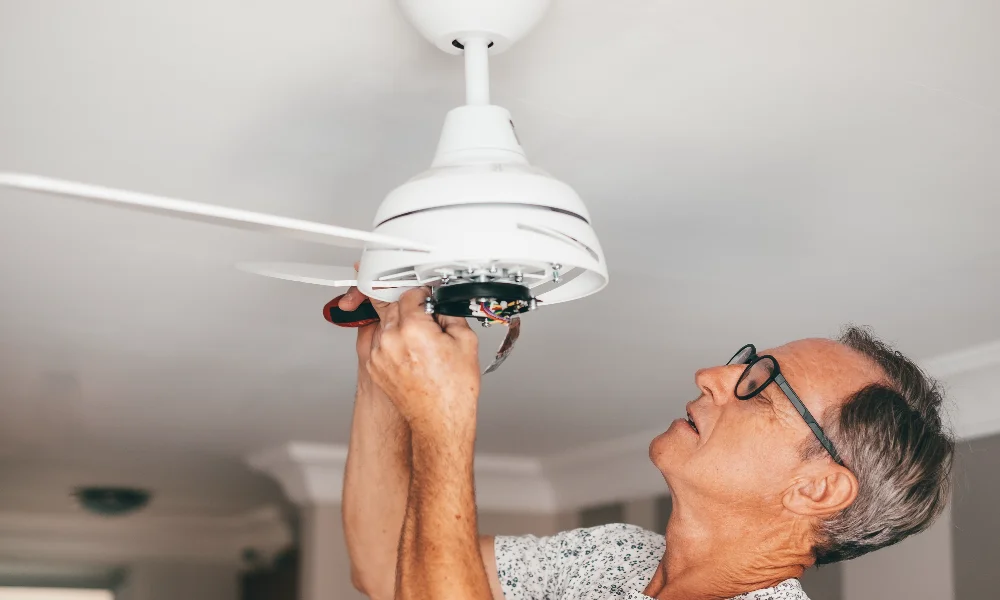
If the project also involves another light fixture or a broader lighting upgrade, review the lighting installation service. If the fan is part of a larger electrical concern, the electrical repair service may be the more appropriate starting point.
Schedule Service for a safe ceiling fan installation assessment before the FAQ.
Frequently Asked Questions
Why should I hire an electrician to install a ceiling fan?
A ceiling fan needs both safe wiring and reliable overhead support. An electrician can verify that the box is rated for fan weight and vibration, inspect the circuit, connect compatible controls, and test the finished fixture. Professional installation is especially useful when wiring is missing or outdated, the ceiling is high, or the fan shows unsafe symptoms.
Can I install a ceiling fan if a light fixture is already there?
Existing light wiring does not prove that the ceiling box can support a fan. A standard light box may not be rated for vibration, and the wiring may not support separate fan and light controls. Have the box, wiring, circuit, clearance, and intended controls evaluated before replacing the light with a fan.
Does a ceiling fan always need a new electrical box?
No. The existing box may be suitable if it is specifically rated and securely mounted for a ceiling fan. If it is not, an electrician can install an appropriate fan-rated support system. The answer depends on the box, mounting, ceiling structure, fan specifications, and condition of the existing wiring.
What affects the cost of ceiling fan installation?
The main factors include existing wiring, fan-rated support, ceiling access, fan size, light-kit or control requirements, switch changes, and repairs discovered during inspection. Third-party market estimates commonly range from about $100 to $300 for straightforward labor, with broader projects costing more. Ask for an upfront scope that explains what is included.
What should I do if my ceiling fan wobbles or smells hot?
Turn the fan off and do not keep testing it if it wobbles severely, smells hot, sparks, trips a breaker, or shows damaged wiring. These symptoms can involve the support, motor, controls, or electrical connections. Arrange an inspection, and call emergency services if there is smoke or an active electrical fire.
Call 877-762-7483 to schedule safe ceiling fan installation with My Electrician FL.