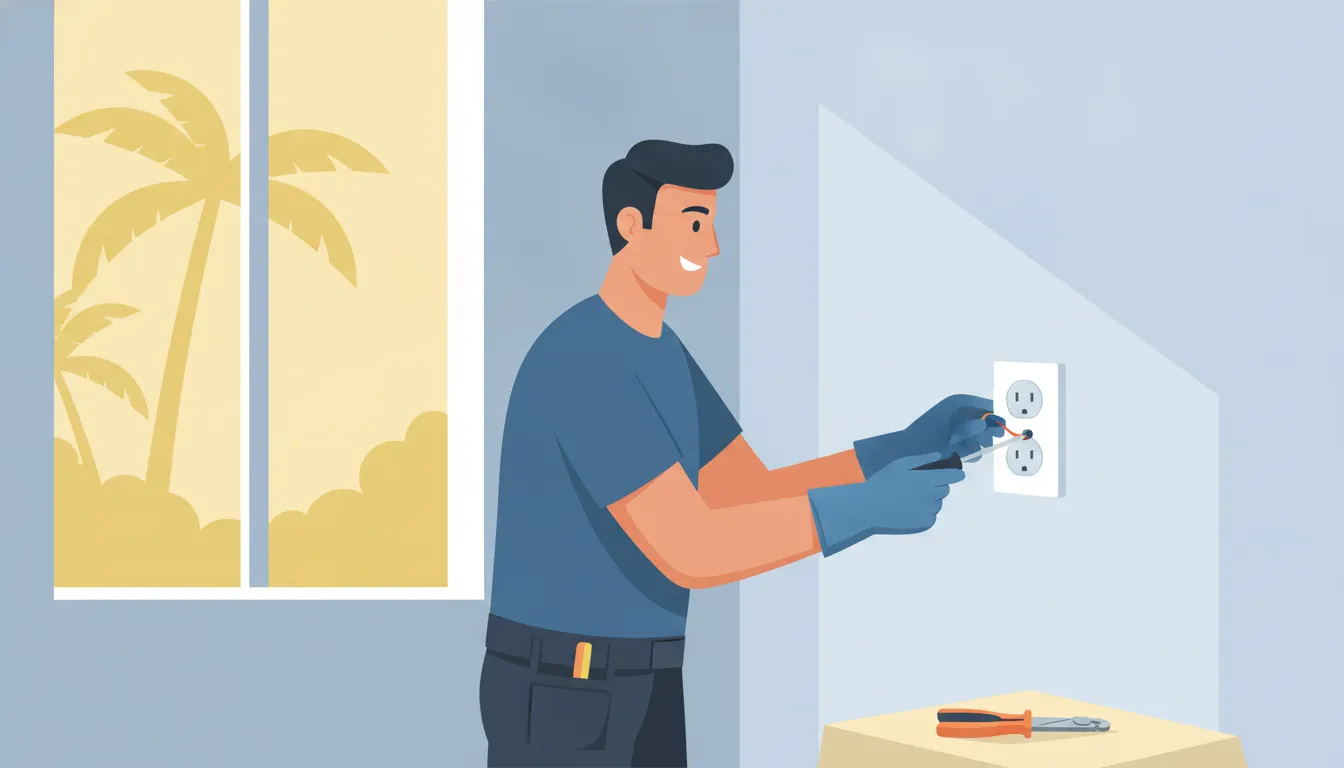
A single warm outlet or sudden spark when you plug in a cord is a major fire hazard. These small warning signs show that your home electrical system needs professional help.
Choosing to hire an electrician to install an outlet ensures your home's electrical system is safe, functional, and fully up to code. While changing a plastic cover plate is a simple task, adding a new electrical box or running new wiring requires specialized skills and local permits. Licensed professionals understand how to handle complex circuit calculations, proper grounding, and panel capacity. Their expertise prevents common mistakes like overloaded circuits, short circuits, and severe shock hazards. According to cost data from Angi, professional installation protects your home from fires and keeps your system reliable. Working with a licensed team also gives you a solid two-year warranty and total peace of mind.
You might wonder if you can handle this project on your own or when you really need a professional. We will guide you through the process step by step. Let's look at When Should You Hire an Electrician to Install an Outlet, which begins with
Ready for a safer home? Schedule a safe outlet installation today.
When Should You Hire an Electrician to Install an Outlet?
Many homeowners ignore the warning signs of a failing electrical system. You might notice outlets that feel warm to the touch. You may see sparks when plugging in a cord. You might also smell a faint burning odor near your walls.
In other cases, your rooms may be full of power strips. This happens when you do not have enough plugs. If you notice these problems, you need a pro.
Common outlet warning signs
An outlet that stops working or trips your breaker is a serious safety risk. It is not just a minor hassle. Bad electrical work can cause severe damage.
Faulty wiring often leads to arcing, heating, or short circuits. These hazards can spark a dangerous house fire. You should never risk your safety with a DIY job.
The cost of professional work
Many homeowners worry about the cost to hire a pro. A professional job costs $100 to $450 per outlet. This price depends on your home's wiring and panel access.
You can find detailed rate info on Angi. This rate is a small price to pay for your peace of mind. Our team offers professional outlet installation services to keep your home safe.
Panel and wiring issues
Adding a new outlet is rarely just about the plug itself. An electrician must manage the complex wiring behind your walls. This work requires safe access to your home's main electrical panel.
A trained expert knows how to work with these systems safely. They can also check if your panel has enough space for the new load. Our team serves homeowners from Palm Beach Gardens through Vero Beach. We bring the licensed expertise needed for a safe, reliable setup.
When to call a pro immediately
Some electrical symptoms are urgent. You should not wait to address them. If you see any of the following issues, call a licensed electrician right away:
- Outlets that spark or smoke when you plug in a device.
- A burning plastic smell near your switches or walls.
- Plugs that feel hot to the touch or look charred.
- Outlets that no longer hold a plug securely in place.
Our team offers upfront, flat-rate pricing so you know the cost before we start. All of our repair and installation work is backed by a solid two-year warranty. We also provide 24/7 emergency service for urgent issues that cannot wait. Do not let a small outlet problem turn into a major hazard.
Why Do Most DIY Projects Miss Electrical Code Rules?
Adding a new outlet seems simple to many homeowners. But a major issue that most DIY projects miss is meeting safety codes. Every wire, box, and outlet in your home must follow strict safety rules. These rules protect your family from shock and fire risks.
Why the National Electrical Code Matters
Electrical safety is a shared industry goal that began in the late 1800s. Back then, a group formed the Joint Conference of Electrical and Allied Interests to create a single safety standard. Their efforts led to the National Electrical Code (NEC).
Today, the NEC serves as the benchmark for safe electrical design, installation, and inspection across the country. You can learn more about these standards in the official National Electrical Code guide published by the National Fire Protection Association (NFPA).
Many people think that putting in an outlet is just about connecting colored wires. But the NEC covers many specific details that DIYers often do not know. For example, a pro must check wire-bending and connection space inside the outlet box. If the box is too small or crowded, the wires can pinch, overheat, or short circuit.
Keeping Up with Code Updates
Electrical standards are not static. The NFPA updates the NEC every three years to reflect the latest safety research and home technologies. Because of this, rules for outlets change often. For example, newer rules call for special ground-fault and arc-fault protection in many areas of the home.
Keeping up with these updates is hard for DIYers, but it is standard for pros. When you hire an electrician to install an outlet, they make sure the work meets the very latest standards.
Protecting Your Home and Insurance
Failing to follow code is more than a safety risk. It can also cause legal and financial trouble. If you do unpermitted work, you may face issues when you sell your home. Even worse, if a DIY outlet causes a fire, your insurance company might deny your claim.
Hiring a licensed pro to handle professional electrical services keeps your home safe and compliant. Federal rules from the Occupational Safety and Health Administration also show that proper installation is key to keeping electrical gear free from recognized hazards. Our team knows how to get local permits and pass inspections with ease.
Local building codes in Florida may also have their own strict rules that go beyond the national guidelines. A local town or county might require specific permits for any new circuit work. If you do not get these permits, you could face fines from your local city board. A licensed local expert knows these local rules and will handle all the paperwork for you.
Electrical Safety Risks of Installing an Outlet Yourself
Adding a new plug to a wall might look like a simple job. Many homeowners think they can save cash by doing it themselves. But working with live wires comes with real dangers. To keep your family safe, you must avoid DIY risks like fires and shock. If you run into power issues, you should seek expert electrical repair from a licensed pro.
Shock and fire hazards
Your home electrical system carries high voltage. This level of power can quickly cause grave harm. Federal safety rules say power systems must be safe. Under OSHA electrical standards, equipment must be free from known hazards that can cause death or grave harm. When you install an outlet yourself, you might leave wires bare. You might also choose the wrong type of wire. These simple mistakes can lead to instant shocks or severe burns.
Homeowners often notice small signs before a major failure. You might feel that an outlet cover is warm to the touch. Lights might flicker when you plug in a tool. A strange buzzing noise or a mild burning smell are also clear warnings. These symptoms show that something is wrong behind the drywall. If you notice any of these signs, do not wait for a fire to start.
How improper wiring causes arcing
When an outlet is not set up the right way, it can heat up fast. Loose screws or poorly wrapped wires can let the power jump across gaps. This jump of power is called an arc. Electrical arcing creates extreme heat that can quickly start a fire behind your drywall. Under safety codes, a finished setup must have no short circuits. If a hot wire touches a ground wire, the circuit will short. This short can melt the plastic box and spark a blaze.
Why homeowners miss these risks
A big reason DIY outlet jobs are unsafe is that power hazards are hard to see. To an untrained eye, a newly installed outlet may look perfect. It might power your phone or lamp with no clear issues at all. But you cannot see the slow buildup of heat inside the wall. You cannot see if the wires are pinched. Without proper testing tools and training, you might leave a ticking time bomb in your home. A licensed expert has the right gear to test every circuit. They inspect connections to make sure they are tight and safe. Hiring a licensed pro ensures your work meets local codes. This step protects your family and keeps your home insurance valid.
In South Florida, the wet and humid climate makes these risks even higher. Moisture in the air can corrode loose wire connections over time. This corrosion leads to higher resistance, which makes more heat. Our local climate from Port St. Lucie to Palm Beach Gardens demands that electrical work be perfect. A certified pro knows how to protect your outlets from moisture and salt air.
What a Licensed Electrician Handles Behind the Wall
When you see an outlet on your wall, you only see a small plastic plate. But behind that drywall is a complex network of wires, boxes, and connections. A licensed pro understands how to manage these hidden parts safely to protect your home. If you want to expand your system, you can view our full electrical services to see how we help.
Following manufacturer listings and instructions
Every switch, outlet, and wire has clear rules for how to put it in. Federal safety guidelines on the OSHA electrical standards site require proper use of listed parts. You must install and use each labeled item in line with the instructions that come with it. Skipping these steps risks a bad fit, which can lead to loose wires, hot joints, or house fires.
A pro knows how to read these labels and match each part to the right use. They make sure the wire size matches the outlet amp rating. They also ensure the box has enough room for all the connections. You can read more about our company to see how our team puts safety first on every job.
Proper wire routing and safety
Running cable through wood and studs is not a simple task. A licensed electrician drills holes in the center of each stud. This keeps screws and drywall nails from hitting the wire later. If a wire is close to the edge, a metal plate shields it from nails that could cause a short circuit.
They also check wire-bending space and box sizes behind the wall. Packing too many wires into a small space leads to heat buildup and damaged jackets. Pro installers figure out the exact box volume needed based on the number of wires and devices. This keeps your walls safe from high heat and future electrical failures.
Overcurrent protection and panel safety
When a fault occurs on a circuit, the system must shut off power right away. This is where overcurrent protection coordination comes into play. According to safety codes on the OSHA website, you must choose and match these protective parts with care. This helps the system clear a fault before it causes big damage to other parts of your home.
An expert makes sure your new outlet links to a breaker that can handle the load. If the breaker is too large for the wire, the wire will overheat and melt before the breaker trips. Licensed experts check your panel to make sure it can support any new load. This technical skill keeps your family safe and ensures your system works without any issues.
Is Hiring an Electrician Cheaper Than Doing It Yourself?
Many people think they can save money by doing electrical work themselves. It is true that buying parts at a local store is cheap. But a small mistake can lead to massive costs down the road. Florida homeowners often try to add outlets to fit new needs. But they soon find that the task is harder than it looks.
Upfront parts versus professional labor
Standard 120V outlets cost $3 to $5 each, while GFCI units run from $7 to $25. According to cost data from Angi, these low upfront prices make a DIY job look cheap. But in contrast, you should expect to pay about $100 to $450 per outlet for a professional install. Our professional outlet installation services cover expert labor, trip fees, and the correct tools to do the job safely. This pro fee gives you an outlet that works without overloading your home panel.
Hidden fees and extra repair work
A simple DIY plan can quickly grow in scope. If you need new wires, wall permits, or drywall repairs, costs can spike fast. These extra tasks can add $150 to $1,000 or more to your final bill. If you run into any of these issues, you will still need to hire an expert. Paying a pro to fix a bad DIY job often costs far more than hiring them first. It is always better to get upfront, flat-rate pricing from the start.
Safety issues and warranty value
Using the wrong outlet type can put your home at risk. For example, wet areas need special GFCI units to prevent shocks. Safety standards from the Occupational Safety and Health Administration require electrical equipment to be free from recognized hazards. A certified pro knows how to find these issues and keep your home safe. Our work also comes with a solid two-year warranty on parts and labor. This warranty ensures your system stays safe for years to come.
| Feature | DIY Installation | Professional Electrician |
|---|---|---|
| Upfront Cost | $3 to $25 for parts only | $100 to $450 per outlet |
| Time and Effort | Hours of research and labor | Typically under one hour |
| Electrical Safety | High risk of shock or fire | Safe, expert installation |
| Code Compliance | Prone to code violations | Fully meets NEC standards |
| Work Warranty | No protection for mistakes | Two-year warranty included |
While DIY parts are cheap, a single mistake can cause major damage to your home. Doing the job wrong can result in active fire risks or ruined electrical panels. Failed projects often need emergency repairs and wall fixes. These extra bills make the true cost of a bad DIY attempt much higher than hiring a pro first. In the end, taking a risk on DIY electrical work is simply not worth it.
How to Hire an Electrician to Install an Outlet
There are many reasons to hire an electrician, but safety remains the key factor. Adding a new outlet may seem like a simple task, but home wiring carries high risks of shock. Working with live currents can lead to major damage if you make a mistake. To keep your family safe, you must find a pro who knows how to do the job right.
Federal guidelines from OSHA safety standards state that electrical parts must be free from known hazards that cause harm. Safe installations require proper wire-bending space and correct voltage ratings. Certified electricians know how to review your circuit panel before they run any new lines.
Signs you need a new outlet
If you are running out of plugs, you may need professional outlet installation services to expand your power. Relying on extension cords can cause wire-heating issues and spark hazards. Adding a wall plug helps protect your home from sudden surges and overloaded circuits. A pro can also help you choose between standard or GFCI models.
Steps to hire the best team
To hire electrician to install outlet setups safely, follow these key steps:
- Find your power needs. Look at where you need the plug and what you will plug into it. A new heavy appliance or workshop tool might require a dedicated line and circuit breaker.
- Search for licensed pros. Check local reviews for certified experts who serve the region from Palm Beach Gardens through Vero Beach. Make sure they carry proper state license and insurance to protect your home.
- Request a flat-rate quote. Ask for clear, upfront pricing with no hidden fees. A flat-rate fee ensures you know the exact cost of the job before the work starts.
- Prepare for the install. The expert will run the wiring, mount the box, and hook up the new outlet. They must follow local electrical codes to keep your home safe from fire.
- Verify the warranty. Ensure the company stands behind their work. A reliable team should offer a solid two-year warranty so you have peace of mind if any issues occur.
Why licensing and warranty matter
Hiring a licensed and insured pro gives you long-term protection. Certified electrical work meets state and local codes to prevent future hazards. If you are ready to upgrade your home, you can contact our team to get started today.
Don't risk a DIY outlet job. Schedule service now or get an outlet installed by a licensed electrician.
Frequently Asked Questions
How much does it cost to hire an electrician to install an outlet?
Based on cost data from Angi, hiring an electrician to install an outlet mostly costs between $100 and $450. The total price depends on your home wiring and how easy it is to reach the panel. If you need new wires, permits, or drywall repairs, the cost can range from $150 to over $1,000. It is best to get a clear quote first.
Do you need a permit to add an electrical outlet?
Yes, you often need a building permit to add a new outlet or run new wire. Local building codes are in place to keep your home safe from fire. According to the NFPA, all electrical work must meet strict safety rules. A licensed electrician knows these local rules and will get the permits you need.
When is it unsafe to install an outlet yourself?
It is unsafe to DIY an outlet if you are not sure how to turn off the power. Working with live wires can cause severe shocks or fires. Under OSHA safety standards, electrical systems must be kept free of known hazards. If you see signs of damaged wiring, hot faceplates, or a crowded electrical box, stop and call a professional.
Are GFCI outlets required for home safety?
Yes, you must have ground fault circuit interrupter, or GFCI, outlets in wet areas like kitchens, bathrooms, and garages. The National Electrical Code rules say you must have these safety outlets because they stop electrical shocks. They cut off the power instantly when they detect a short circuit. A licensed electrician can check your home to make sure your wet areas have the right protection.
Ready to Hire an Electrician to Install Your Outlet?
DIY electrical projects look simple, but leaving a broken or poorly wired outlet alone can lead to high shock risks or a sudden house fire. Working with high voltage requires proper training, so you should trust a licensed local electrician to handle the job safely and protect your property. Booking an expert right now ensures your home meets local building and safety codes. This fast service gives you immediate peace of mind, reliable power, and a full two-year warranty on all parts and labor. You can read about our expert outlet repair services to see how our team protects your home from hazards.
Ready to secure your home? Schedule service or call (877) 762-7483 today.
Call (877) 762-7483 to schedule your outlet installation now.