
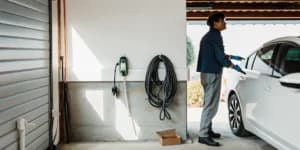
If your EV is still charging slowly overnight, every unplanned trip can bring the same question: will you have enough range by morning? A Level 2 charger can make home charging far more practical, but the installation price depends on your house, not just the charger you choose.
Schedule Service for your Level 2 EV charger installation
For most homeowners, how much to install a Level 2 charger depends on the existing electrical service, the distance from the panel, the charger hardware, and local permit requirements. A realistic project range is often about $700 to $2,750. Simpler installations may fall near the lower end, while panel work, long wiring runs, or trenching can push the total higher. The U.S. Department of Energy confirms that home installation costs range from several hundred to several thousand dollars based on electrical and site conditions: U.S. Department of Energy.
Installing a Level 2 unit is more than mounting a box on the garage wall. The work typically includes evaluating panel capacity, selecting compatible equipment, installing a dedicated 240-volt circuit, matching the breaker and wire size, routing conduit, and completing any required inspection. A charger close to the panel may need less material and labor, while a detached garage or outdoor location can require weather-rated equipment and buried conduit.
Because those details can change the price substantially, an accurate quote should be based on an inspection of your home rather than a generic online estimate. The first step is understanding which parts of the installation create the biggest cost differences.
How Much Does It Cost to Install a Level 2 Charger at Home?
For many homeowners, a realistic planning range for a Level 2 charger installation is about $700 to $2,750, including the charger and standard installation. A straightforward project near an existing electrical panel may fall toward the lower end. A longer wire run, a more capable charger, additional permitting needs, or limited electrical capacity can push the total higher.
Some published cost guides place simpler installations around $500 to $2,000, while broader estimates for charger hardware, labor, materials, and permits reach approximately $1,500 to $2,750. These ranges are useful for budgeting, but they are not a flat price list. The condition and layout of your home determine what the electrician must install.
The charger itself is only one part of the project. Level 2 equipment commonly requires a dedicated 240-volt circuit, similar to the circuit used by a clothes dryer. The circuit breaker, wire, conduit, mounting hardware, and labor all contribute to the final cost. A qualified electrician should evaluate the home's capacity before recommending equipment or promising a price. Level 2 EV charger installation should be sized for both the vehicle and the home's electrical system.
What is included in a typical installation?
- Charger hardware: The model you choose affects equipment cost. Smart features, higher power output, and hardwired installation can change the scope.
- Dedicated circuit: The breaker and correctly sized wiring must match the charger's power requirements. This is a safety requirement, not an optional upgrade.
- Routing and mounting: A charger close to the service panel generally needs less conduit and wire. A detached garage or distant outdoor location may require trenching or buried conduit.
- Permits and inspection: Local electrical requirements can add administrative steps and fees. Your electrician should explain what applies to your address.
- Testing: The completed circuit and charger should be tested before the installation is considered complete.
What Drives the Price Before a Single Wire Is Run?
Two homeowners can buy the same charger and receive very different installation quotes. That is usually because the electrical path and service capacity differ. A professional quote should explain these factors rather than giving you one unexplained number.
Charger location affects labor and materials
The distance from the electrical panel to the charger is one of the clearest cost drivers. A garage wall on the other side of the panel may need a short, direct run. A charger at the far end of a garage, on an exterior wall, or in a detached garage may require much more wire and conduit. Florida weather also makes appropriate outdoor-rated equipment and protected routing important.
In some properties, the electrician must route conductors through finished areas or install underground conduit. Those conditions can add labor without changing the charger model. Ask whether the quote includes the complete route, mounting, connection, and testing.
The charger and circuit set the electrical requirements
Level 2 chargers vary in power and features. Some are connected to a receptacle, while others are hardwired. The selected equipment determines the circuit rating, breaker, conductor size, and installation method. Your electrician should follow the manufacturer's instructions and applicable electrical requirements rather than using a one-size-fits-all circuit.
The U.S. Department of Energy's EV charging infrastructure guidance is a useful starting point for understanding charger types. A local inspection is still needed to determine what your home can safely support.
Your home's available capacity matters
Existing air conditioning, electric water heating, pool equipment, ranges, dryers, and other high-demand appliances all use part of a home's electrical capacity. A panel can have an open breaker space and still lack enough capacity for a new continuous load. That is why a load calculation matters.
If the existing service cannot support the charger, options may include a panel upgrade, load management equipment, a lower charging setting, or a different charger location. The right option depends on the home's service, the vehicle, and how you plan to charge.
Level 1 vs. Level 2: Is the Upgrade Worth the Cost?
Level 1 charging uses a standard household receptacle and is often enough for drivers who travel short distances and have many hours to charge. Level 2 charging uses 240 volts and can add substantially more range during an overnight session. The convenience can be valuable for households that drive daily, have more than one EV, or need predictable morning range.
| Consideration | Level 1 | Level 2 |
|---|---|---|
| Typical power source | Standard 120-volt receptacle | Dedicated 240-volt circuit |
| Installation scope | May use an existing suitable receptacle | Usually requires electrician-installed circuit and equipment |
| Charging speed | Slower overnight charging | Faster home charging, depending on the vehicle and charger |
| Best fit | Lower daily mileage and flexible schedules | Frequent driving and predictable overnight charging |
A Level 2 upgrade is not automatically the best choice for every driver. Compare the installation cost with your daily mileage, utility plan, parking setup, and expected time in the home. If the upgrade makes sense, professional installation protects the equipment and the home electrical system.
Do You Need an Electrical Panel Upgrade for a Level 2 Charger?
Not necessarily. Homes with adequate service capacity and a suitable panel may be able to add the dedicated circuit without replacing the panel. Older homes, homes with smaller services, or homes already carrying several large electrical loads may need additional work.
An electrical safety inspection and load calculation can identify the panel's condition, available capacity, breaker compatibility, grounding, and the best route to the charger. The inspection should also look for heat, corrosion, damaged wiring, or other conditions that should be corrected before adding a high-demand circuit.
What does the electrical assessment look at?
- The service rating and main disconnect.
- The panel brand, condition, and available breaker spaces.
- The existing loads serving air conditioning, water heating, cooking, laundry, and pool equipment.
- The proposed charger amperage and installation method.
- The distance and route between the panel and charger.
Can an adjustable-power charger avoid a panel upgrade?
In some homes, a charger with adjustable output or a load-management approach may reduce the need for a service upgrade. That decision should be made only after an electrician evaluates the actual load and confirms that the equipment is compatible. Reducing the setting is not a substitute for correctly sizing the circuit or ignoring an unsafe panel.
Schedule Service for an electrical panel assessment before you install a Level 2 charger
Can You Install a Level 2 Charger Yourself, or Should You Hire an Electrician?
Homeowners can compare charger models and choose a convenient mounting location, but the electrical installation normally involves panel work, a dedicated 240-volt circuit, and code requirements. A mistake in breaker sizing, conductor termination, grounding, or weather protection can create shock, overheating, or fire risks.
Professional installation also provides a documented scope, appropriate equipment selection, testing, and guidance on permits and inspections. If you notice burning smells, buzzing, heat, sparking, or a breaker that trips while charging, stop using the equipment and seek prompt electrical help.
Do You Need a Permit to Install a Level 2 Charger in Florida?
Permit and inspection requirements vary by local authority and project details. Electrical work that adds a new circuit or modifies a panel may require permitting. A qualified electrician should confirm what applies in your city or county instead of assuming that a charger installation is exempt.
Permitting helps create a record of the work and gives an inspector an opportunity to review the installation. It can also matter later when you sell the home, make an insurance claim, or troubleshoot the system. Ask for a quote that clearly states whether permit coordination and inspection-related work are included.
What does the inspection check?
An inspection may review the circuit, panel connection, conductor protection, grounding, equipment location, disconnecting means, and weather protection. The exact checklist depends on the authority having jurisdiction and the project. The electrician should correct any issue identified by the inspector before the work is closed out.
Why permitting matters when you sell
Unpermitted electrical work can create questions during a sale or inspection. Keeping the permit and completion records with your home documents gives future owners useful information about the charger and its circuit.
How Can Rebates and Incentives Lower Your Installation Cost?
Rebates and tax incentives can change over time, and eligibility can depend on your address, equipment, income, installation date, and other conditions. Check current federal, state, utility, and local programs before you finalize the project. Do not treat an old online incentive summary as a promise that your installation qualifies.
Check for utility rebates before scheduling the work
Your utility may offer a rebate, time-of-use program, or other EV charging incentive. Look for the current program rules and required documents. Some programs require preapproval, an approved charger, a specific contractor, or proof of inspection.
Use off-peak charging to reduce ongoing energy costs
Installation cost is only one part of owning an EV charger. If your utility offers lower off-peak rates, scheduling charging during those hours may reduce ongoing energy costs. Ask the utility for current rate details and confirm that your charger and vehicle support the required schedule.
Ask for a complete cost review
A useful quote should separate equipment, electrical work, materials, permit coordination, and possible upgrades. It should also identify assumptions about the charger location and circuit. This makes it easier to compare quotes that may otherwise look similar.
How Do You Get an Accurate Level 2 Charger Cost for Your Treasure Coast Home?
For homeowners in Port St. Lucie, Stuart, Palm City, Jensen Beach, Fort Pierce, Vero Beach, Jupiter, Hobe Sound, Tequesta, and nearby communities, the most reliable next step is an on-site evaluation. The electrician can inspect the panel, calculate the available capacity, measure the route, discuss the best charger location, and explain permit requirements.
Before the visit, gather the vehicle make and model, the charger you are considering, your preferred parking location, and any information you have about the home's electrical service. Tell the electrician about any breaker trips, flickering lights, heat, or unusual sounds. These details help the assessment focus on both the new charger and the safety of the existing system.
My Electrician provides upfront pricing based on the scope of work. A complete quote should tell you what is included before the installation begins, so you can make a confident decision without relying on a generic national average. For related planning, review this guide to the best home EV chargers, our guide to hiring an electrician for EV charger installation, and information about dedicated electrical circuits.
Schedule Service for a safe, code-conscious Level 2 EV charger installation
Frequently Asked Questions
How much does it cost to install a Level 2 EV charger?
A realistic planning range for many home installations is about $700 to $2,750, including the charger and standard installation. The final price depends on the panel, circuit, wire run, charger location, permits, and any required upgrades.
Does installing a Level 2 charger require a permit?
Requirements depend on the local authority and project scope. A qualified electrician should confirm whether a permit and inspection are needed for your address and coordinate those steps when applicable.
Can I install a Level 2 charger myself?
A Level 2 charger normally requires a dedicated 240-volt circuit and work inside the electrical panel. Because incorrect wiring can create shock and fire hazards, homeowners should use a qualified electrician for the electrical installation.
How long does a Level 2 EV charger take to charge?
Charging time depends on the vehicle battery, charger output, and the vehicle's onboard charger. Level 2 charging is substantially faster than a standard Level 1 cord, but the exact range added per hour varies by vehicle and equipment.
Does my home electrical panel need an upgrade?
Not always. A load calculation and panel inspection can determine whether the existing service has enough capacity. Some homes can add the dedicated circuit without a panel upgrade, while others need panel work or a different charging strategy.
Schedule Your Level 2 EV Charger Installation
Ready to stop guessing how much to install a Level 2 charger? My Electrician can evaluate your panel, explain the installation scope, and provide an upfront quote for your Treasure Coast home.
Call My Electrician at 877-762-7483 to schedule your Level 2 EV charger installation.