

Finding an electrician in West Palm Beach is easier when you compare safety practices, licensing, emergency availability, communication, and the exact scope of work instead of choosing from a name and a low price alone. This guide explains what to verify before you invite an electrician into your home or business, how to prepare for a quote, and which questions can help you make a confident decision.
Short answer: Choose a contractor who can explain who will perform the work, show current credentials, describe the repair or installation in writing, communicate the price before work begins, and follow safe practices. For urgent hazards, prioritize a qualified electrician who offers a clear emergency response process.
Schedule Service for electrical repairs and get a clear plan for the work before it begins.
What should you check first when choosing an electrician in West Palm Beach?
Start with the fundamentals: the type of work you need, the contractor's service area, licensing information, insurance, availability, and the way the company communicates. A short call should help you determine whether the electrician is equipped for your situation, not pressure you into approving work you do not understand.
West Palm Beach homes and businesses can have very different electrical needs. A homeowner may need help with flickering lights, outlets, a breaker, a panel, a dedicated circuit, or an inspection. A business may need troubleshooting, lighting, equipment circuits, power restoration, maintenance, or work planned around operating hours. Ask whether the company regularly handles your kind of property and project.
It is also useful to confirm the service boundary before you schedule. My Electrician's company information describes residential and commercial service across the Treasure Coast and Palm Beaches. Its service areas page currently lists coverage from Vero Beach to Palm Beach Gardens, so confirm West Palm Beach availability with the company before requesting service.
How can you verify an electrician's license and insurance?
Ask for the legal business name, the name of the qualifying license holder, and the applicable Florida license number. You can use the Florida Department of Business and Professional Regulation license search to look up regulated businesses and professionals by name, license number, city or county, or license type. The record should be consistent with the company you are considering and the work you are asking it to perform.
A license check is one part of due diligence, not the entire decision. Ask whether the person coming to the property works for the licensed contractor or is being hired through another company. If a subcontractor will be involved, ask who is responsible for the work, permits, inspections, and warranty communication.
For insurance, ask what coverage the company carries and whether it can provide confirmation when appropriate. Insurance and bonding help clarify how the contractor protects customers, workers, and property. You do not need to become an insurance expert, but you should be comfortable asking what happens if someone is injured or property is damaged during the job.
Be cautious if a contractor will not identify the business responsible for the work, avoids questions about credentials, or tells you that permits and inspections never matter. A professional should be able to explain the process in plain language and tell you when a local permit or inspection may apply. Do not accept a suggestion to conceal work or bypass a required review.
Which electrician is qualified for residential or commercial work?
Match the contractor to the setting and the scope. Residential work may involve troubleshooting, outlets and switches, lighting, ceiling fans, smoke detectors, panels, generators, surge protection, or rewiring. Commercial work can add operating-hour constraints, larger loads, equipment circuits, lighting systems, documentation, and coordination with a property owner, manager, or other trades.
For a home, describe the symptom in everyday terms. Tell the electrician if lights flicker, an outlet feels warm, a breaker keeps tripping, you smell burning, or part of the home loses power. You do not have to diagnose the cause. A good contractor will use the symptoms, inspection, and testing to determine the next safe step.
For a business, prepare a short project brief. Include the affected area, equipment, hours of operation, known outages, access restrictions, and any deadline. Ask whether the work can be phased to reduce disruption and what documentation you will receive afterward. My Electrician's commercial electrician service information describes support for business electrical needs, including repairs and maintenance planning.
For either setting, ask whether the electrician has experience with the specific installation or repair. A contractor who is excellent at small residential repairs may not be the right fit for a commercial load, a complex panel project, or a larger renovation. Scope fit protects both safety and the quality of the final result.
When should you look for 24/7 emergency electrical service?
Some electrical problems should not wait for a convenient appointment. Call for prompt help when you see sparks, smell burning from an outlet or panel, hear persistent buzzing, find heat or discoloration, lose power in only part of a property, or have a breaker that trips repeatedly and will not stay reset. Water intrusion, storm damage, exposed conductors, and a damaged service entrance also deserve urgent attention.
Do not touch damaged wiring, open a panel to investigate, or keep resetting a breaker that trips again. If there is smoke or fire, leave the area and contact emergency services. If the situation is not an active fire but the electrical system appears unsafe, keep people away from the hazard and call a qualified professional. The goal is to reduce exposure until the system can be assessed.
Ask an emergency electrician what its response process includes. Useful questions include whether calls are answered after hours, how the company prioritizes hazards, whether the technician can make the area safe before a permanent repair, and how the quote will be communicated. Availability should not replace qualifications, but a clear 24/7 process matters when an electrical problem happens at night, on a weekend, or during a storm.
My Electrician provides 24/7 emergency electrical service information for urgent repairs. Review the service details and contact process before an emergency occurs so you are not making every decision under pressure.
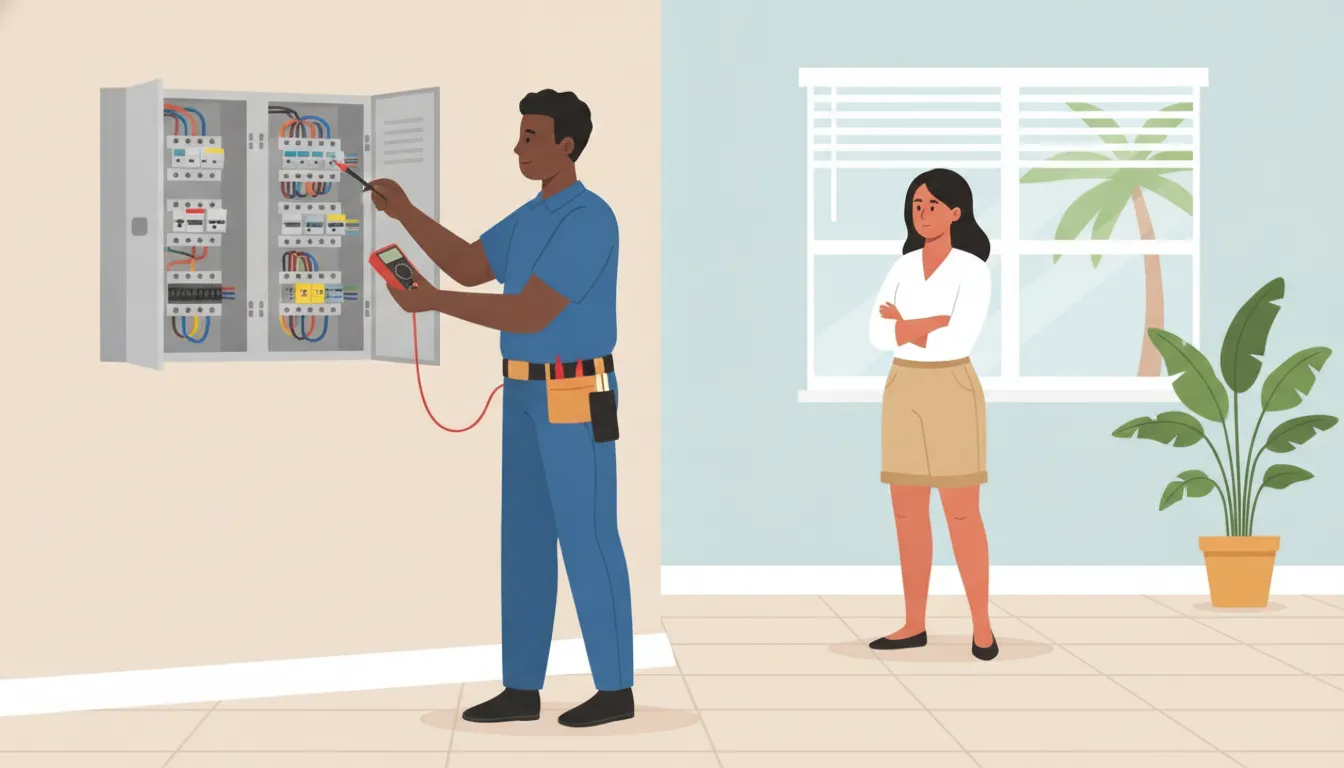
A qualified electrician should explain the testing and safety steps before work begins.
What should a clear electrical estimate include?
A useful estimate connects the price to a defined scope. It should explain what the electrician inspected, what work is recommended, which materials or equipment are included, and what is excluded. For a repair, ask whether the quote covers diagnosis, labor, parts, testing, cleanup, and any follow-up visit. For an installation, ask about equipment specifications, mounting, wiring, connections, testing, permits, inspection coordination, and removal of old materials when applicable.
Ask whether the estimate is fixed for the stated scope or may change if hidden conditions are found. If the scope changes, ask how approval will be handled before additional work begins. A written change process prevents confusion and gives you a chance to decide whether to continue, pause, or request another option.
Transparent pricing does not mean a contractor can quote every job without inspecting it. It means the company explains how it arrived at the quote and what the quote covers. My Electrician's company information describes upfront pricing before work begins. When comparing contractors, ask each one to put the same core details in writing so you are comparing the work, not just a headline number.
Also ask about payment timing, financing if relevant, the warranty or workmanship coverage, and the documents you will receive. Do not infer that a warranty covers every future electrical issue. Ask what is covered, for how long, and what conditions apply.
Which safety practices should you expect on the job?
Electrical work should begin with a safe assessment, not a guess. The electrician should identify the affected circuit or equipment, use appropriate testing, protect people in the work area, and explain any immediate safety concern. The work should leave the system tested, secured, and reasonably clear for the next person who needs to service it.
The Occupational Safety and Health Administration identifies electrical hazards such as shock, electrocution, fire, and explosion, and points to protections including insulation, guarding, grounding, protective devices, and safe work practices. Its electrical safety overview is a useful general reference, especially for business owners and property managers responsible for workplace safety.
Ask how the electrician will de-energize or isolate the equipment when needed, protect nearby finishes, label changes, test the completed work, and handle debris. The exact process varies by job, but the answers should be specific enough to show that safety is part of the work plan rather than an afterthought.
Watch for red flags such as exposed conductors left unsecured, a rushed explanation, improvised materials, a request to work around a known hazard without a safety plan, or pressure to approve unrelated upgrades. A professional may recommend additional work after an inspection, but should explain why the recommendation matters and distinguish an urgent hazard from a future improvement.
What questions should you ask before hiring?
Write down your questions before the first appointment. Clear questions make it easier to compare answers from more than one contractor and help you identify missing information early.
- What license or credential covers this work, and what legal business name should I verify?
- Who will perform the work, and will any subcontractor be involved?
- Have you handled this type of residential or commercial project before?
- What do you believe is causing the symptom, and what testing will confirm it?
- Is this an emergency response, a temporary safety measure, or a permanent repair?
- What does the written estimate include, and what could cause the scope to change?
- Will a permit or inspection be needed, and who will coordinate it?
- How will you protect the property, shut down equipment, and test the completed work?
- What warranty or workmanship coverage applies, and what is excluded?
- What documents will I receive when the job is complete?
- For a business, how will the work affect operating hours, tenants, customers, or equipment?
- How do I reach the company if the same problem returns after the visit?
A trustworthy contractor should welcome reasonable questions. You are not looking for a perfect sales pitch. You are looking for a clear process, accurate expectations, and a professional who treats safety and communication as part of the service.
How can you compare electrician quotes fairly?
Compare equivalent scopes before comparing totals. One quote may include testing, permits, cleanup, and a warranty while another covers only a component replacement. Ask each contractor to clarify the same items and identify assumptions.
| Compare | What to confirm |
|---|---|
| Diagnosis | What was inspected, what was found, and whether further testing is needed. |
| Scope | Which circuits, rooms, equipment, or fixtures are included and what is excluded. |
| Materials | What equipment or parts will be used and whether comparable options are available. |
| Safety and code process | How the work will be isolated, tested, documented, permitted, or inspected when applicable. |
| Schedule | Expected start, likely duration, access needs, and any outage or business interruption. |
| Price and changes | When payment is due, what the quote covers, and how additions require approval. |
| Follow-up | Warranty terms, completion documents, and who handles questions afterward. |
Price still matters, but an unusually low quote may omit work that another contractor included. The safest comparison is the one that lets you see what you are buying and why the recommendation is appropriate. If two contractors propose different solutions, ask each to explain the tradeoffs in plain language.
For an inspection, purchase, remodel, or commercial project, keep the written scope and supporting documents with your property records. This creates a useful history for future electricians, property managers, buyers, and maintenance decisions.
Frequently Asked Questions
How do I find a reliable electrician in West Palm Beach?
Verify the contractor's legal identity and Florida license information, ask about insurance, confirm experience with your project, request a written scope, and make sure the company explains pricing and change approvals before work begins. Reviews can add context, but they should support rather than replace credential and scope checks.
What should I do if I have an electrical emergency?
Keep people away from sparks, smoke, exposed wiring, water-damaged equipment, or hot electrical components. Do not open the panel or repeatedly reset a tripping breaker. Leave the property and contact emergency services if there is fire or immediate danger. Otherwise, contact a qualified electrician with a clear emergency response process.
Should an electrician provide a written estimate?
For most planned work, a written estimate or proposal is the clearest way to define the scope, materials, schedule, price, exclusions, and approval process for changes. Emergency work may begin with a safety assessment, but you can still ask what the initial visit covers and how permanent repairs will be quoted.
Can a business use the same electrician as a homeowner?
Sometimes, but the contractor should be equipped for the property's size, equipment, operating schedule, documentation needs, and safety requirements. Ask about commercial experience, outage planning, maintenance support, and coordination with your property manager or other contractors.
What is the best way to describe an electrical problem?
Describe what you see, hear, smell, or feel, when it started, what changed before it started, and which rooms or equipment are affected. Examples include flickering lights, a warm outlet, a breaker that trips, buzzing, burning odor, or partial power loss. Do not diagnose or alter the wiring yourself.
Choosing an electrician in West Palm Beach is ultimately a safety and communication decision. Verify the contractor, explain the project, compare complete scopes, and choose a professional who can show you what will happen before the work begins.
Call My Electrician at (877) 762-7483 to schedule electrical service.