
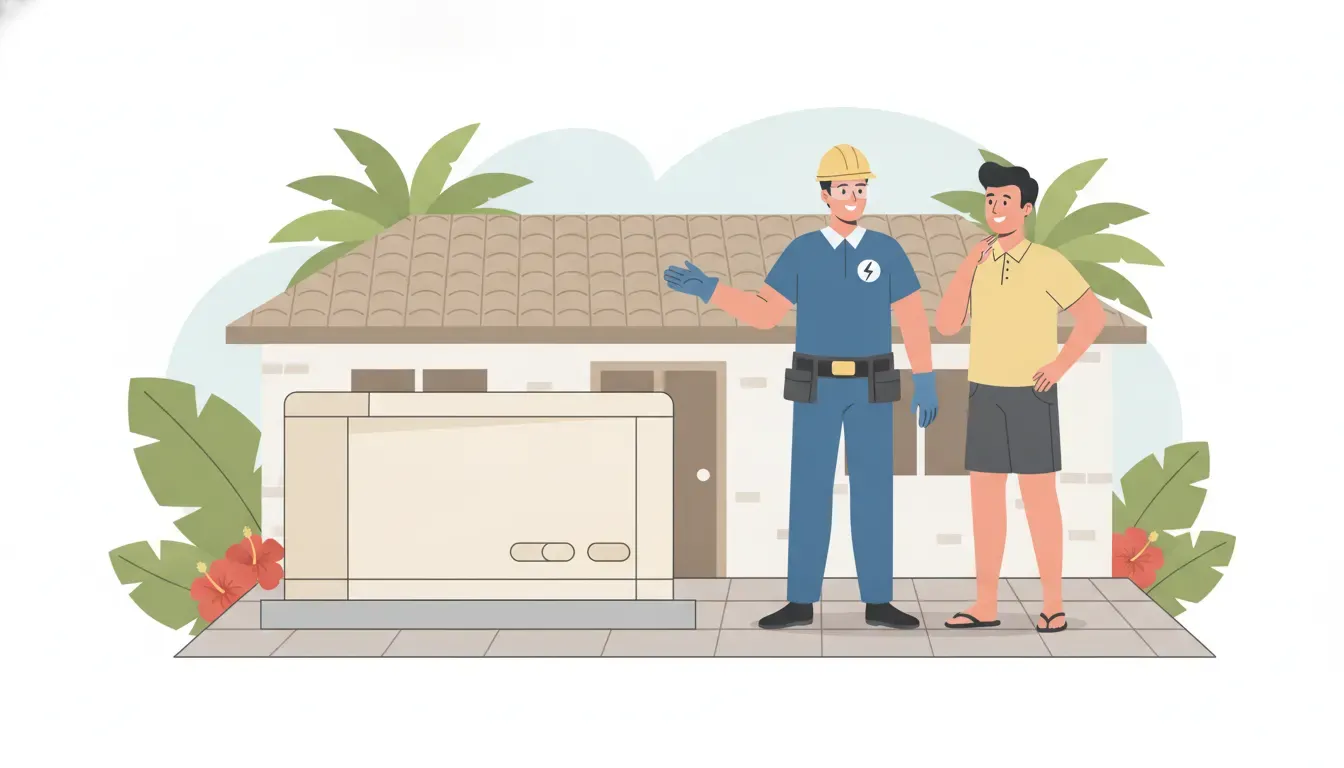
If you are searching for how to repair generator problems, start with safety rather than disassembly. A generator can involve fuel, exhaust, stored electrical energy, hot surfaces, and connections that can energize a home or utility line. You can make a few low-risk observations from the outside, but internal repairs, transfer equipment, wiring, and live testing belong to a qualified professional.
Schedule generator repair service with My Electrician for safe, professional troubleshooting.
What Should You Do Before Troubleshooting a Generator?
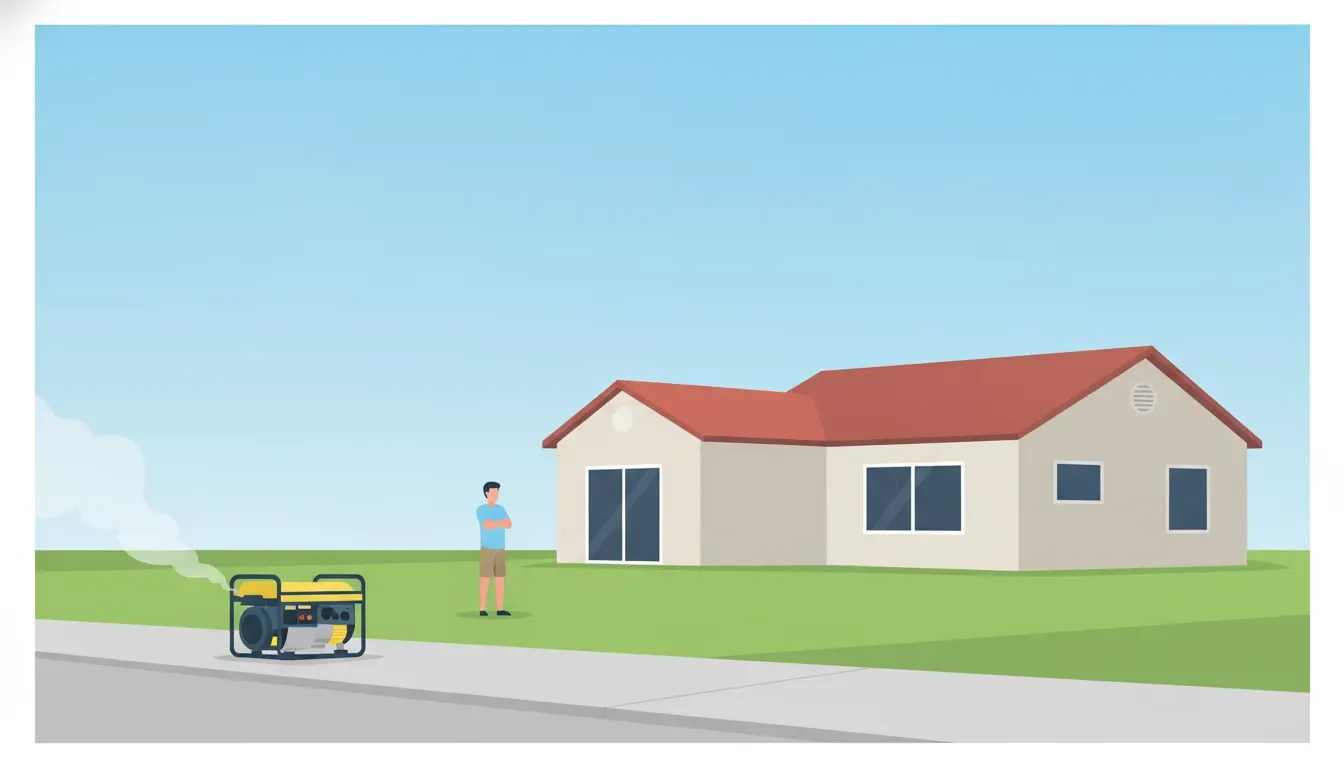
Before troubleshooting a generator, disconnect unnecessary loads, shut the unit down if it is running abnormally, let hot parts cool, and keep people away from the equipment. Do not work on a generator in a home, garage, shed, crawlspace, or other enclosed area. Carbon monoxide is odorless and colorless, and the CDC generator safety fact sheet warns that fuel-burning generators can cause sudden illness or death.
A safe first check is an outside inspection in a well-ventilated location, without removing covers or touching wiring. If anyone feels dizzy, weak, nauseated, confused, or has a headache while a generator is running, leave for fresh air immediately and call emergency services. Do not return to the area until it has been evaluated.
Make the area safe
- Turn off appliances and other connected loads before stopping or restarting the unit.
- Keep the generator outdoors, away from doors, windows, and vents, and follow the manufacturer's placement instructions.
- Keep the unit dry. Never operate or touch electrical equipment while standing in water or when connections are wet.
- Allow the engine and exhaust to cool before any visual inspection near the enclosure.
- Keep children, pets, and anyone unfamiliar with the equipment away from the generator.
Know what not to open
Do not remove a generator cover, open a fuel line, drain fuel, remove a spark plug, or clean a carburetor. Do not bypass a safety switch or take apart a transfer switch as a first troubleshooting step. These actions can expose you to fuel vapors, hot components, moving parts, or dangerous voltage. The U.S. Consumer Product Safety Commission portable generator safety alert identifies carbon monoxide, electric shock, electrocution, fire, and burns as major hazards.
How Do You Troubleshoot a Generator That Will Not Start?
When a generator will not start, begin with the control position, visible warning indicators, the fuel or utility supply, and the owner's manual. Check only items designed for routine user access. If the unit shows an alarm, smells like fuel, has damaged wiring, or has recently been exposed to water or flooding, stop the check and arrange professional service.
- Read the warning indicator. Look at the control panel from a safe position and note any displayed alarm or status light. Record the message or take a photo for the technician, but do not reset a recurring fault repeatedly.
- Confirm the operating mode. A standby generator may be set to Off or Manual instead of Auto. Follow the manufacturer's instructions for checking the control mode. Never reach into an open enclosure to change a control.
- Check for obvious external damage. Look for impact damage, standing water, heavy corrosion, animal nesting, loose exterior covers, or visible cable damage. Do not touch damaged parts or attempt to make a temporary repair with tape.
- Check the approved supply. For a portable unit, confirm that the fuel supply is present without opening the fuel system. For a permanently installed unit, do not adjust a gas valve or fuel connection. A technician should investigate a suspected fuel restriction, leak, or supply problem.
- Review recent conditions. Note whether the failure followed a storm, long outage, flooding, a low-fuel event, unusual noise, or a recent service visit. This history can help a professional identify the correct repair faster.
Low oil, a weak starting battery, an interrupted fuel supply, a control alarm, or a failed starting component can all produce a no-start symptom. The same symptom can also indicate a larger mechanical or electrical failure. Avoid guessing based on one indicator. A safe observation gives a technician useful information; it does not confirm which part needs replacement.
What If the Generator Starts and Then Stops?
A generator that starts and then stops may be responding to a low-fluid protection sensor, fuel problem, overheating condition, overload, battery or control fault, or another safety shutdown. Let the unit cool, record the warning message, and follow the owner's manual for one normal restart attempt if the area is safe. A repeated shutdown needs professional diagnosis.
Common symptom clues
| What you notice | What you can safely observe | When to stop |
|---|---|---|
| The engine does not turn over | Control mode, warning lights, battery, or fuel status shown by the normal user controls. | Any need to remove a cover, handle terminals, or work around fuel. |
| The unit starts, then shuts off | Alarm message, timing of the shutdown, recent load, or weather conditions. | The shutdown repeats, the engine overheats, or smoke or fuel odor appears. |
| The generator runs unevenly | Unusual sound, vibration, visible exhaust change, or warning indicator from a safe distance. | The unit shakes, backfires, smokes heavily, or sounds mechanically damaged. |
| The unit runs but the home has no power | Whether the utility is out, the generator is in the correct mode, and the home panel shows a normal status. | Any need to open the panel, test voltage, reset a transfer switch, or change wiring. |
Do not keep restarting a generator that shuts down. Repeated attempts can worsen a mechanical fault and can create additional risk if the original cause is overheating, an overload, a fuel issue, or a damaged electrical component.
Why Is a Generator Running Without Supplying Power?
If a generator runs but the home remains without power, the problem may involve a tripped breaker, an incorrect operating mode, a transfer switch, a wiring connection, a load-management control, or the generator's power-producing components. You can check the normal status display and note which circuits are affected, but do not open an electrical panel or transfer-switch enclosure to test voltage.
Portable generators must never be connected to a home by plugging the generator into a wall outlet. That practice can backfeed electricity through the home's wiring and create a lethal hazard for utility workers and anyone nearby. Use only a properly installed connection method designed for the generator and the home. If you are unsure whether your equipment has a transfer switch or inlet, do not connect it.
For a standby generator, a dark home with a running unit is a reason to call an electrician. The transfer equipment may not be switching correctly, the panel may have a fault, or the generator may not be producing usable power. These conditions require testing with professional equipment and a repair plan that protects the home and the electrical grid.
When Is Generator Repair an Emergency?
Generator repair is urgent when the equipment creates an immediate risk to people, property, or the electrical system. Shut it down from a safe location when possible. Move away from the hazard and call for help if you notice smoke, fire, a fuel leak, sparking, severe overheating, flooding, exposed wiring, or a burning smell.
- Carbon monoxide concern: Anyone has symptoms, a CO alarm sounds, or exhaust may be entering the home.
- Fire or fuel hazard: You see flames, smoke, liquid fuel, a strong fuel odor, or a rapidly overheating enclosure.
- Electrical damage: You see arcing, exposed conductors, melted insulation, water around electrical equipment, or repeated breaker trips.
- Storm or flood damage: The generator or its connections were submerged, struck, or damaged by wind-borne debris.
- Unsafe power behavior: The generator runs unpredictably, the home lights flicker severely, or power returns and drops repeatedly.
Do not use a generator to power critical medical equipment until the system has been checked if its output is unstable or its transfer equipment is not operating as expected. Follow the equipment manufacturer's emergency instructions and contact the appropriate emergency service for immediate hazards.
Which Generator Repairs Should a Professional Handle?
A licensed electrician or qualified generator technician should handle any repair involving internal wiring, a transfer switch, a service panel, voltage output, grounding, fuel connections, safety sensors, or components that require energized testing. These systems must work together. Replacing one part without finding the underlying fault can leave a generator unreliable or unsafe.
Repairs that need professional testing
- Diagnosing a failed starting battery, starter circuit, control board, or safety shutdown.
- Testing voltage regulation, alternator output, grounding, and connections.
- Inspecting or repairing a manual or automatic transfer switch.
- Correcting damaged wiring, loose terminations, corrosion, or water intrusion.
- Investigating fuel-supply problems, leaks, or combustion concerns.
- Evaluating repeated overloads, nuisance trips, or load-management failures.
My Electrician, Inc. provides generator installation and repair for homes in Port St. Lucie and nearby areas. The company's service process includes diagnosis, an upfront quote before work begins, repair to applicable standards, and testing after the work. Ask the technician to explain the failed symptom, the recommended repair, and any safety steps needed before the next outage.
How Does Professional Generator Repair Work?
Professional generator repair starts with the symptom and operating history, not a guess at a replacement part. The technician inspects the equipment, confirms the failure under controlled conditions, isolates the unsafe portion of the system, and explains the recommended repair before work begins. Afterward, the system is tested to confirm safe operation.
- Document the complaint. Share the alarm message, timing, sounds, weather, fuel status, and what happened to the home power.
- Inspect the system. The technician checks the enclosure, connections, controls, fuel supply, transfer equipment, and visible signs of heat or water damage.
- Test the failure. Professional instruments help identify whether the issue is in the starting system, engine operation, output, transfer equipment, or connected load.
- Review the quote. My Electrician uses upfront pricing, so the repair scope and cost can be discussed before work starts.
- Repair and verify. The technician completes the approved work, tests the generator and related equipment, and explains what to watch for next.
How Can You Reduce the Risk of Another Generator Failure?
Use the generator only as directed by its manufacturer and arrange routine service before storm season or other periods when backup power matters. Keep records of alarms, repairs, battery changes, and unusual behavior. Do not wait for an outage to discover that a standby system is in the wrong mode or that a portable unit lacks a safe connection plan.
Routine care is different from emergency troubleshooting. The generator maintenance guide for Florida homeowners covers scheduled readiness work and coastal conditions. This guide focuses on the decision a homeowner faces after the generator fails: what can be observed from a safe distance, what should not be touched, and when a professional needs to respond.
- Keep the owner's manual, model information, and service records easy to find.
- Test the normal operating mode according to the manufacturer's instructions, without opening the enclosure.
- Keep CO alarms installed and tested according to their instructions.
- Have a professional review placement, transfer equipment, and connections if the system was recently installed or changed.
- Schedule generator service when you notice a new alarm, unusual sound, hard starting, or unstable power.
Frequently Asked Questions
Can I repair a generator myself?
You can make limited outside observations, such as checking the operating mode, reading a warning indicator, and noting visible damage. Do not disassemble the generator, open fuel or electrical systems, bypass safety controls, or perform live-voltage tests. A qualified professional should diagnose internal mechanical, fuel, control, transfer-switch, and wiring problems.
Why will my generator not start?
A generator may not start because of a control setting, low fuel, a starting-battery problem, a safety shutdown, an alarm, or a mechanical or electrical fault. Check only the normal user controls and the owner's manual. If the issue repeats or involves fuel, wiring, water, smoke, or heat, stop and call for generator repair.
Why does my generator run but not power my house?
A running generator may fail to power the home because of a breaker, transfer-switch, wiring, output, or load-management problem. Do not plug a portable generator into a wall outlet or open the electrical panel. A licensed electrician should test the generator output and connection equipment safely.
Is it safe to run a generator in a garage with the door open?
No. Never run a generator in a garage, even when the door is open. Exhaust can contain carbon monoxide, an odorless and colorless gas that can build up quickly. Operate the unit outdoors and away from doors, windows, and vents according to the manufacturer's instructions.
When should I call an emergency electrician for generator trouble?
Call for urgent help when you see smoke, fire, sparks, a fuel leak, exposed wiring, severe overheating, water damage, repeated power instability, or a CO alarm or poisoning symptom. Leave the hazardous area and contact emergency services for immediate danger. Do not keep restarting a malfunctioning generator.
How often should a generator be serviced?
Service intervals depend on the generator model, operating hours, fuel system, and manufacturer's schedule. Follow the manual and arrange professional maintenance before the periods when you rely on backup power. Scheduled maintenance is different from repair after a failure, so a new alarm or symptom should be evaluated promptly.
Call My Electrician at 877-762-7483 for safe generator repair and electrical help.