
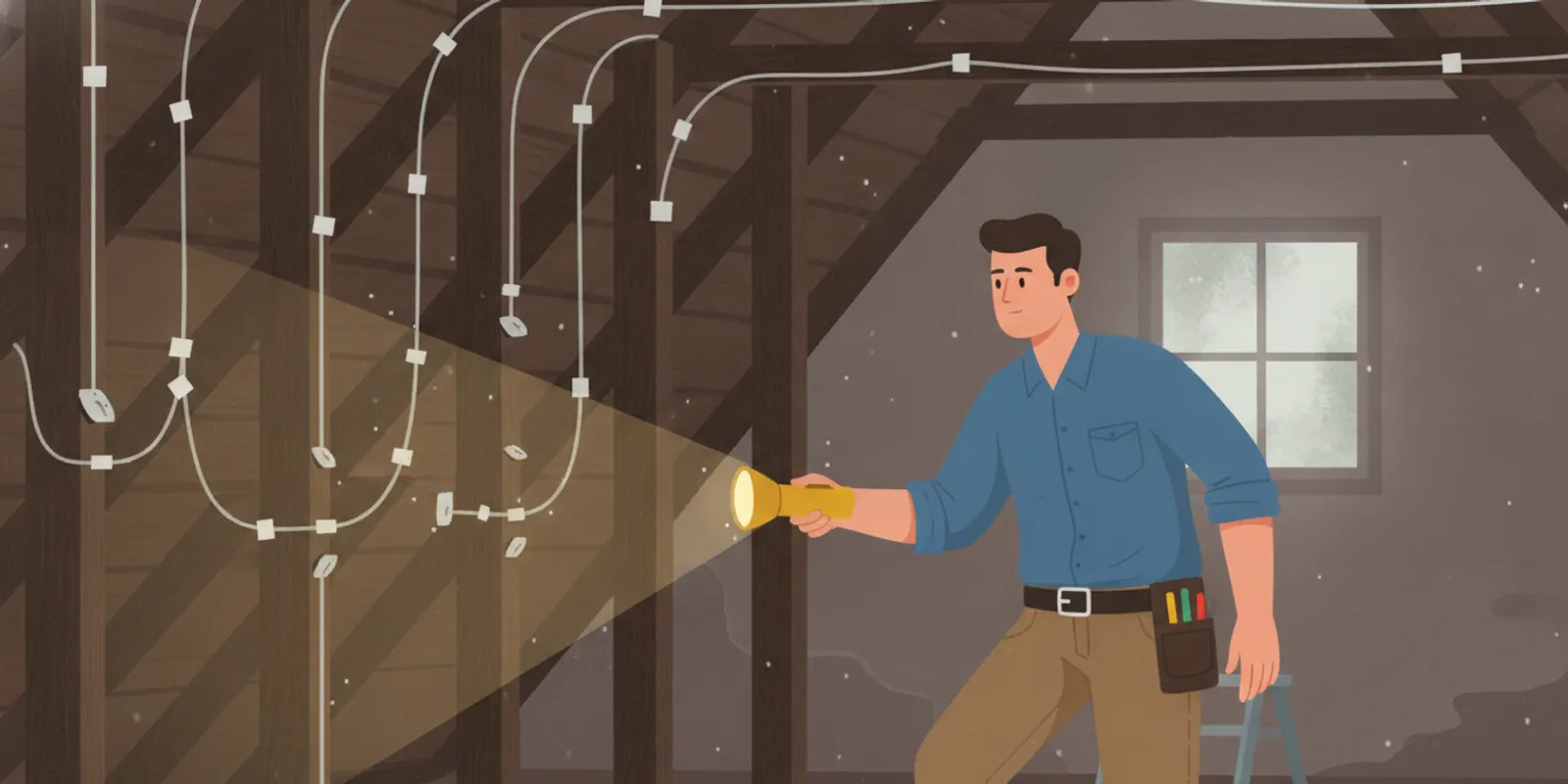
Knob and tube wiring can be difficult to evaluate from a homeowner’s point of view. You may have found old ceramic pieces in an attic, noticed exposed wires during a renovation, or heard that a house may still have an early wiring system. The right response is not to guess from one visible part: knob and tube wiring should be assessed in context, including its condition, alterations, insulation around it, and the electrical needs of the home.
Schedule an electrical assessment for your home
What is knob and tube wiring?
Knob and tube wiring is an older wiring method that used individual conductors supported by porcelain knobs and routed through protective tubes where they passed through framing. It was used in homes before modern cable systems became common. A local government overview describes it as an early standardized wiring method used in buildings until the 1940s. (Menlo Park’s knob-and-tube wiring information.)
Finding a porcelain knob or tube does not, by itself, tell you whether an entire home is wired this way or whether a particular circuit is active. Older wiring may have been partly removed, extended, or altered over time. Wiring can also be hidden behind walls and ceilings. A visual clue is a reason to arrange a professional inspection, not a reliable diagnosis on its own.
What should you look for if you suspect knob and tube wiring?
Homeowners usually notice the surroundings or a symptom before they know the wiring type. In an unfinished attic, basement, or wall opened for other work, look for separated dark conductors running individually, small white or cream-colored ceramic supports, and ceramic sleeves where conductors pass through wood. These clues may point to an older installation, but do not touch or move them to confirm.
Pay attention to conditions such as:
- Old conductors visible in an attic, crawl space, basement, or open wall.
- Wiring that appears cracked, frayed, sagging, scorched, or spliced in an improvised way.
- New insulation or stored items touching or covering exposed old wiring.
- Recent renovations where someone may have added wiring or connected new equipment to an older circuit.
- Electrical symptoms such as recurring breaker trips, flickering lights, warm outlets, or a burning odor.
These symptoms can have many causes and do not prove that knob and tube wiring is present. But heat, smoke, a burning smell, sparking, or a shock is urgent. If there is smoke or fire, leave the area and call emergency services. For an immediate electrical hazard, avoid the affected equipment and seek qualified help. Do not handle exposed wires or attempt to disconnect old wiring yourself.
Why does the wiring’s condition and setting matter?
Age alone does not reveal the safety of an electrical installation. The condition of the conductors and connections matters, as does whether the system has been modified, overloaded, damaged, or left exposed. Older wiring may not include a modern equipment grounding conductor, and that can affect what appliances or replacement devices can be safely connected. An electrician needs to assess the actual circuit and the intended use rather than infer safety from a single feature.
Insulation is an important part of the evaluation. Older wiring relied on air around conductors to help dissipate heat; covering it with insulation can change that condition. The U.S. Department of Energy’s weatherization program guidance identifies insulating homes with knob and tube wiring and identifying overloaded wiring as electrical safety concerns. (U.S. Department of Energy weatherization guidance.) Do not add, move, or pack insulation around suspected wiring until it has been assessed. The specific installation and applicable requirements matter.
Renovations can also change the picture. A new light, outlet, air conditioner, or other load may have been attached to an older circuit. Concealed splices, damaged insulation, and connections between old and newer wiring can be hard to see without a proper inspection. That is one reason a home’s wiring history and any permits or repair records are useful to share with the electrician.
What should you do when old wiring is visible?
- Keep your distance. Do not pull, bend, tape, cut, or cover the wiring. Keep children and stored belongings away from the area.
- Note what you observed. Write down the room or area, any symptoms, and when you first noticed them. If it is safe to do so from a distance, a photo can help explain the location, but do not climb or reach into an unsafe space.
- Pause nearby renovation work. Tell anyone working in the area that old wiring may be present. Do not let demolition or insulation work proceed through an unknown electrical installation.
- Arrange an electrical evaluation. Ask the electrician to determine whether the wiring is active, how much of the home it serves, whether it has been altered, and what needs attention now versus later.
- Discuss the home’s intended use. Explain planned renovations, new appliances, additions, or comfort upgrades. The right scope depends partly on the loads and changes you are planning.
If you are also seeing an electrical symptom, describe it clearly when you contact an electrician. Different symptoms call for different levels of urgency. A light that flickers only when a particular appliance starts may be different from a burning odor, buzzing, visible scorching, or an outlet that feels hot. Do not diagnose the cause based on the pattern alone. Note whether the symptom affects one fixture or several, whether it is recurring, and what was running at the time. That information helps an electrician investigate without asking you to open a device or test exposed wiring. It can also help to separate what you know from what you suspect. For example, write “ceramic pieces visible beside two wires in the attic” rather than concluding that every circuit is knob and tube. If another contractor found the material during work, ask them to identify the area and pause disturbance until an electrician has assessed it. Clear observations support a more focused visit and reduce the chance of an assumption driving the scope. My Electrician provides electrical repair service and electrical inspections. For a serious hazard that cannot wait, the company lists 24-hour emergency electrical service.
How can an electrician assess knob and tube wiring?
An electrician can inspect accessible wiring, identify whether it appears energized, look for signs of damage or unsuitable alterations, and consider where conductors run in relation to insulation and building materials. The inspection can also help determine which parts of the home still rely on the older system and whether newer additions were connected appropriately. The exact work depends on access and the condition of the home; an attic glance is not always enough to trace a circuit.
Expect to discuss what is known about prior electrical work, the home’s renovation history, and current problems. If you can provide past inspection reports, repair invoices, or plans, those records may help frame the evaluation. If the home has been remodeled in stages, mention which areas were updated and whether you know who performed the work. Even an approximate timeline can help distinguish documented upgrades from sections that have not been evaluated. The electrician may also ask which appliances or rooms experience symptoms, whether they share a circuit, and whether a breaker or fuse has been changed. You do not need to trace circuits or open an electrical panel to answer; share only what you know from ordinary use. Ask the electrician to explain any immediate safety concerns separately from recommended upgrades, and to identify what the proposed work will include. My Electrician’s electrical services overview is a starting point for understanding the kinds of electrical work available.
An inspection is also a chance to ask about local permitting and code requirements for the specific scope. Requirements depend on the work and jurisdiction, so a general online description cannot determine what applies to a particular property. A professional assessment should clarify what is observed, what remains concealed or uncertain, and what steps are recommended.
Should you repair, monitor, or replace knob and tube wiring?
There is no one answer for every home. Some situations call for prompt corrective work; others require a broader discussion about replacement, especially when the wiring is deteriorated, altered, or conflicts with planned insulation or renovation. A qualified electrician can explain the practical options after examining the installation. Use this comparison to organize that conversation, not as a do-it-yourself decision rule.
| Option | When it may be discussed | What to clarify |
|---|---|---|
| Inspection and monitoring | When the visible system appears intact and there is no immediate symptom, but its extent or condition needs confirmation. | Which circuits remain, what areas are inaccessible, what conditions to watch for, and when a follow-up is appropriate. |
| Targeted repair or correction | When an electrician identifies a specific damaged connection, unsafe alteration, or problem that can be addressed within the existing installation. | Whether the proposed fix addresses the cause, whether adjacent wiring also needs evaluation, and whether the work meets applicable requirements. |
| Replacement or rewiring plan | When the wiring is in poor condition, the home’s needs have changed, or renovation and insulation plans make a larger scope appropriate. | Which rooms and circuits are included, access and finish work, sequencing, permits, and how future upgrades may affect the plan. |
A repair should not be treated as a guarantee that every hidden section is suitable for continued use. Similarly, the presence of older wiring does not let anyone determine the scope of a whole-house replacement without an evaluation. Ask for a clear explanation of the inspected areas, limitations, recommended work, and any options. If replacement is recommended, an electrician can discuss house wiring and rewiring in the context of your property.
What should you consider before planning replacement?
Start with priorities. If you are remodeling a kitchen, finishing an attic, or adding equipment, tell the electrician before work is scoped. Coordinating wiring with other planned work may affect access and sequencing. If no renovation is planned, ask what needs attention now, what can be scheduled, and what conditions would make the project more urgent.
Discuss these practical details before approving a project:
- Scope: Which circuits, rooms, or devices are included? Is the proposal for a particular area or a broader rewiring project?
- Access: Which walls, ceilings, attic spaces, or other areas must be opened? Who will handle patching and finish work?
- Electrical needs: Which existing and planned appliances, lighting, outlets, or other loads should the replacement support?
- Permits and inspections: What approvals and inspection steps apply to the proposed work in your location?
- Work sequence: How will power availability and other household activities be affected while work is underway?
- Written proposal: What work, materials, exclusions, and follow-up are included? Ask for the price and scope before work begins.
These questions help compare proposals on more than a bottom-line number. A price cannot be evaluated fairly if one scope includes different rooms, access work, or inspection steps than another. Request that unclear items be explained in writing. You can make the discussion more useful by asking the electrician to walk you through the proposed sequence. Which parts of the old wiring will be removed or left in place? What will be done to keep circuits safe while the work is underway? Are there areas the crew cannot inspect without opening finishes, and how would that affect the scope? The answers should match the condition and accessibility of your home, not a generic promise made before anyone sees the wiring.
Also ask how the project handles discoveries that were not visible during the initial assessment. Hidden wiring may be found once a wall or ceiling is opened. Clarify how additional work would be documented, priced, and approved before it proceeds. If you are planning other renovations, coordinate with those contractors so the electrical work is not covered up or disturbed before inspection. Consider keeping the final proposal, permit and inspection records, and any notes about circuits for future owners or future projects.
Do not assume that the most extensive project is automatically the right one, or that a small repair eliminates the need to address other concerns. Ask for the reasoning behind the recommendation and which findings support it. If you are unsure about a proposed scope, ask for the inspected areas, known limitations, and alternatives to be stated clearly. A transparent discussion makes it easier to decide what to do now and what, if anything, can be planned for later.
How can you prepare for a service visit?
Make a short list of symptoms and locations. Include when flickering, trips, unusual warmth, or other changes occur, and whether they began after a renovation or new appliance was added. Do not repeatedly reset a breaker that keeps tripping; explain the pattern to the electrician. Keep the path to an accessible attic, panel, or other inspection area clear if it is safe to do so.
Gather any available records, but do not delay getting help to find them. Before the appointment, make a list of what you want answered: whether the old wiring is active, what parts of the home it serves, whether it is safe to proceed with a planned renovation, and what should be addressed first. If you are concerned about cost or disruption, say so and ask the electrician to explain any options in phases, if appropriate for the condition. A phased approach should not leave an urgent hazard unaddressed, so ask which items are safety-related and which are longer-term improvements. You can also ask whether you need to move stored items away from an access point. Do not clear a cramped or unsafe area yourself if doing so means contacting wires, climbing into a dangerous space, or moving materials that may be covering them. A little preparation helps the electrician focus on the wiring rather than sorting through an uncertain history, while keeping safety ahead of convenience. Let the electrician know if insulation was recently installed or disturbed, or if another contractor is planning work nearby. In a South Florida home, the same practical preparation applies whether you are in Port St. Lucie, Stuart, Jupiter, or elsewhere in the service region. You can check the company’s service area information or read more about My Electrician.
For an initial conversation, describe what you have found and ask what type of appointment is appropriate. My Electrician uses upfront, flat-rate pricing according to its company information, with the work and price discussed before it begins. Ask for the written scope and any applicable terms for your specific project.
Contact My Electrician to discuss an inspection or rewiring plan
Frequently asked questions
Is knob and tube wiring always unsafe?
Age alone cannot establish the condition of a specific installation. Damage, improper alterations, overloading, and insulation or renovation around the conductors can affect the evaluation. Have a qualified electrician inspect accessible wiring and explain any limits to what can be confirmed.
Can I cover old wiring with attic insulation?
Do not cover suspected knob and tube wiring before it has been evaluated. Insulation can change heat dissipation around older conductors, and the appropriate response depends on the wiring and applicable requirements. The Department of Energy identifies insulating homes with knob and tube wiring as a safety concern in its weatherization guidance.
Can I remove or disconnect it myself?
No. A visible conductor may still be energized, and cutting, moving, or disconnecting wiring can create shock or fire risk and affect other circuits. Keep clear of it and arrange a professional assessment.
Does finding one ceramic knob mean the entire home needs rewiring?
Not necessarily. A ceramic part is a clue, not a complete map of the home’s electrical system. The electrician can determine whether the wiring is active, where it runs, and whether repair, monitoring, or replacement is appropriate.
What should I do if I smell burning near an outlet or wire?
Stop using the affected area and do not touch exposed wiring. If there is smoke, flame, or immediate danger, leave and call emergency services. Otherwise, contact an electrician promptly and describe the odor and any related symptoms.
Call My Electrician at (877) 762-7483 to discuss the next safe step
Knob and tube wiring calls for a careful, property-specific assessment rather than assumptions based on age or appearance. Keep clear of exposed conductors, share what you have observed, and use an electrician’s findings to decide whether inspection, repair, or replacement is the right next step.