
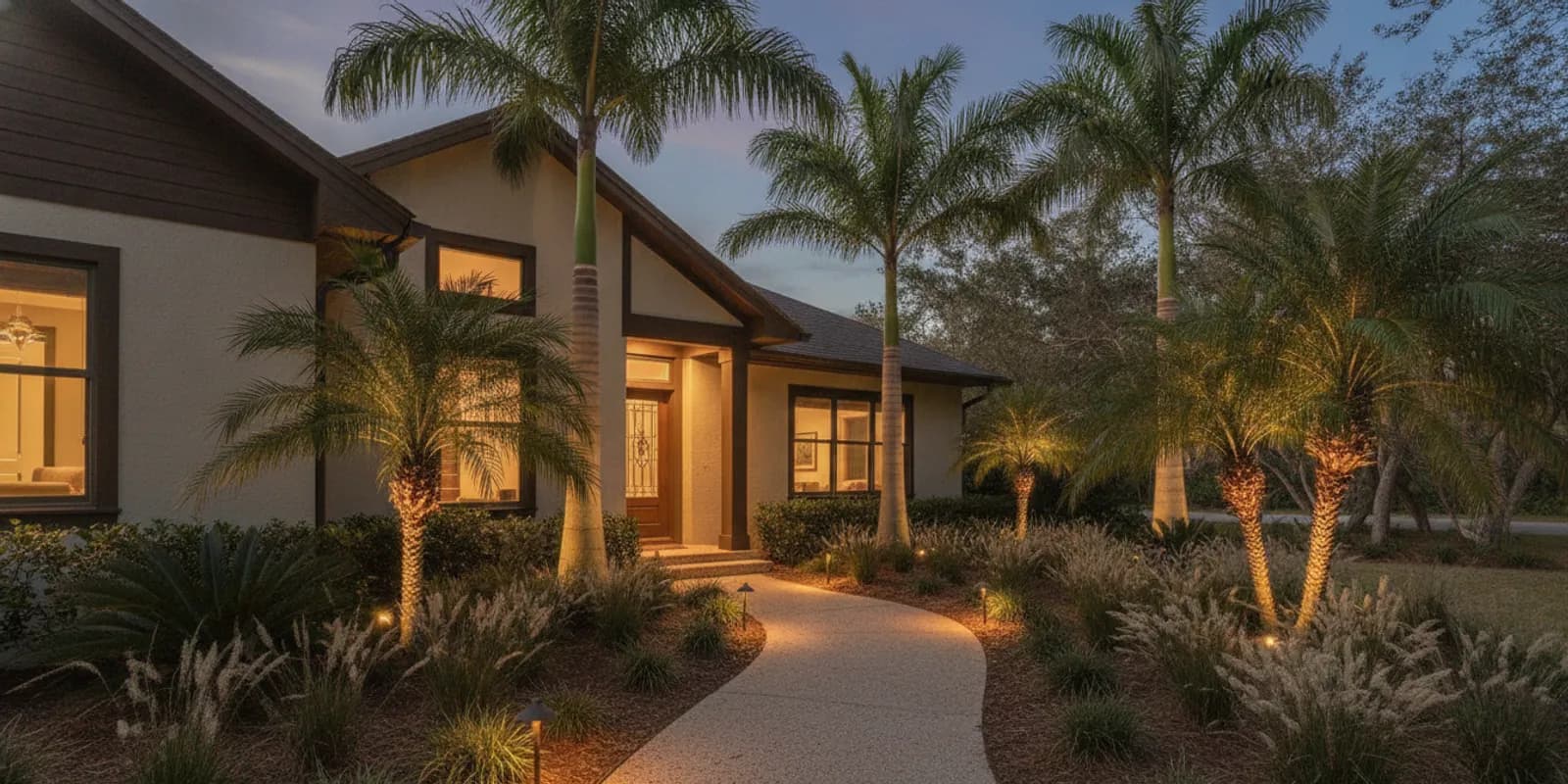
Searching for landscape lighting installation near me usually starts with a dark walk from the driveway, a dim front door, or a patio that sits unused after sunset. On the Treasure Coast, a useful plan also has to handle humidity, salt air, growing plants, and the electrical setup already serving the property.
Schedule Service to plan landscape lighting for your home
What should landscape lighting installation near me include?
A local search should lead to a site visit, not a generic fixture list emailed from a catalog. The electrician needs to see how you use the yard, where people walk after dark, and how power already reaches the outdoors.
Ask a Treasure Coast installer to cover these points before any work starts:
- A night walk of the property. Note the path, steps, gate, driveway edge, and door that feel dark.
- A short priority list. Pick the one or two areas that matter most before lighting the whole yard.
- A look at existing outdoor power. Point out switches, outdoor receptacles, and controls without opening covers.
- A plan for weather and plants. Coastal sun, rain, and irrigation can hide or damage fixtures that sit too low or too close to beds.
My Electrician serves homeowners from Palm Beach Gardens through Vero Beach, including Port St. Lucie, Stuart, Jupiter, and Fort Pierce. You can review the service areas and the outdoor lighting installation and repair page before you call.
A nearby installer should also explain what happens after the lights are on. That includes aiming, a simple way to turn zones on and off, and how you will reach fixtures later for cleaning. If the conversation jumps straight to a product catalog, ask them to walk the yard with you first.
How do you choose landscape lighting installation near me?
The phrase landscape lighting installation near me is easy to type and hard to judge. Use the visit itself as the test. A good electrician describes the walking route, the entrance, and any glare toward windows or a neighbor before naming fixtures.
Bring three things to that conversation:
- Day and night photos. Show the landscaping, dark spots, and any light that shines into a window.
- A note about symptoms. Mention flicker, a light that fails after rain, or a breaker that trips. Say when it happens. Do not guess the cause.
- Practical limits. Point out where people walk, where pets play, and where a gardener mows or digs.
Compare that local visit with pages that answer a different question. Cost to install landscape lighting covers price drivers. Low voltage lighting installation explains that system. Outdoor lighting ideas is the place for fixture styles. This page is about choosing and preparing a local install, not those topics.
City pages can also confirm the company works where you live. Start with Port St. Lucie, Stuart, Jupiter, or Vero Beach.
What should you decide before the first site visit?
Decide what the light has to accomplish before you pick a look. A clear purpose keeps the yard from filling up with bright points that miss the path you actually use.
- See where you walk. Mark a path, step, gate, or driveway edge.
- Use an outdoor room. Note a patio or seating area that should stay comfortable after dark.
- Show one feature. Choose a tree, wall, or planting bed, not every plant.
- Welcome people in. Light the route from parking to the door.
Walk the property after dark if you can do it safely. Notice dark patches, glare, and branches that block light. A short list in order of importance is more useful than trying to light every corner.
Plants grow and outdoor furniture moves. Leave room to reach each fixture for cleaning and aiming. A light that works today can disappear behind new growth next season.
How should you map paths, doors, and one focal point?
Sketch the house, driveway, walks, steps, gates, trees, patio, and any outdoor outlet you already know about. Mark where light is needed. Do not drop a fixture at every equal space by default.
For a path, aim a low, shielded light toward the walking surface so edges and level changes are easier to see. At a door, light the approach without shining into eyes or nearby windows. Keep fixtures out of the swing of a gate and out of the mowing path.
For one tree or wall, test a single light before you repeat it. Upward light, a side wash, and a tight spot each create a different look. The beam, the distance, and the surrounding darkness all change the result.
Decorative light is not the same as light you can walk by. A bright tree can still leave the path dark. Plan walking light and accent light as two jobs. If the sketch starts to need new wiring or changes to existing outdoor fixtures, that is a reason to talk with the electrical services team rather than to open equipment yourself.
Which approach fits each part of the yard?
Use the table as a planning aid. It is not a product recommendation. The right choice depends on the location, the power available, and how you use the space.
| Area or goal. | Common approach. | What to weigh. |
|---|---|---|
| Walkway or garden path. | Low fixtures aimed at the walking surface. | Glare, spacing, and plants that will grow in front of the light. |
| Front or side door. | Light on the approach and the door area. | Door swing, shadows, and light entering windows. |
| One tree or wall. | A single directional accent. | Aim, plant growth, and spill toward a neighbor. |
| Patio or seating area. | A separate, controllable zone. | Comfort at seated eye level and a simple on-off control. |
| An area that is already dark. | Fix placement or the existing control first. | Whether the cause is aim, a blocked fixture, or power. |
Some landscape systems use low-voltage equipment. Other outdoor fixtures connect to a household circuit. Those are not swap-in choices. The power source, wiring, controls, and fixture ratings have to match the location. If you are not sure which setup you have, do not open equipment to find out.
Brightness and color should sit comfortably next to porch lights and indoor windows. Shielding and aim often matter more than a brighter lamp. Light pointed the wrong way can glare while the path stays dim.
Think in layers. Light the walk and the door first. Then add one or two accents if they still help. Dark space between lit zones can make those accents easier to see. Look at the plan from inside the house as well as from the yard.
Controls belong in the plan, not as an afterthought. A walkway and a patio may need separate switches. A timer can help, but only if it works with the fixtures you choose. Keep the controls simple enough for everyone in the home.
How does outdoor lighting relate to the power you already have?
Before you add several fixtures, note how the current outdoor lights behave. A homeowner might see lights go out when another device runs, a switch that does nothing, or an outlet that is too far from the new layout. Share those notes. They are not a reason to keep resetting a breaker or to open the panel.
The breaker box is only one part of that check, and it is a different topic from this lighting plan. Read the breaker box guide if you want a plain explanation of the panel itself. For this project, an electrician looks at the existing outdoor circuit, what else is on it, the equipment you want, and where any new supply would sit. An empty-looking space in a panel does not mean a circuit can be added.
Write down when a problem shows up. Examples help: the path lights turn off when the patio outlet is used, or a breaker trips after rain. If you smell something burning, hear buzzing, or feel heat at equipment, stop using that equipment when it is safe to do so and get help promptly. If there is immediate danger, move away and call emergency services. The NFPA home fire safety guidance is a useful general reference. Follow the instructions that come with your own equipment.
Landscape lighting by itself does not mean the panel must be replaced. If the visit shows a wider electrical issue, the electrician can say whether electrical panel services belong in a separate conversation.
What does coastal weather change about the plan?
Outdoor gear has to match the spot where it will live. On the Treasure Coast, fixtures face sun, humidity, rain, and routine landscape work. A fixture made for a sheltered porch may be a poor fit in an open bed. Use products rated for that exposure and follow the maker's instructions.
Plan for maintenance while you still have the sketch. Photograph known wire routes before anyone digs, and tell that person where the system runs. Do not drive stakes or edging into an area that may hide a wire. Leave room between new plants and the fixtures so trimming and irrigation do not knock them over.
After the lights are in, look now and then for tilted heads, cracked housings, water inside a fixture, and plants covering the beam. Turn the system off before ordinary cleaning the instructions allow. If a connection looks damaged, do not touch exposed wire. Arrange a qualified inspection.
Storms and heavy landscaping are good times for that look. A fixture that shifted can glare into a window even when the lamp still works. Aim and cleanliness are part of keeping the original plan useful.
What can you prepare before the electrician arrives?
You do not need a finished electrical design before the visit. Describe the result you want and what you have already noticed around the yard.
- List the priority spots. Name the path, door, patio, or single feature that matters most.
- Take day and night photos. Include existing fixtures and any glare.
- Point out what is already there. Show switches, outdoor outlets, and controls. Do not remove covers.
- Describe symptoms in time order. Note flicker, trips, or failure after rain, and what else was running.
- Share how the yard is used. Include pets, guests, mowing, and irrigation.
- Ask what the visit includes. Clarify fixtures, wiring, power, controls, and what will be tested.
If you want a second local page for context, the Fort Pierce and about pages explain where the company works and who you are hiring. Current offers, when they apply, are on coupons and deals.
Which questions should you ask before you approve the work?
Ask for a plain explanation that ties the proposed work back to your list. A useful plan names the areas and the job each light is meant to do.
- Which spots will be lit, and what should a person be able to see there?
- What power source is proposed, and why does it fit this yard?
- Will existing outdoor lights stay, change, or stay on their own control?
- How will glare toward windows and neighboring yards be limited?
- How will the layout leave room for plants, irrigation, and later cleaning?
- What is included, and what gets tested when the work is done?
- What should you do later if a light stops or a breaker trips?
It is reasonable to ask for a written description before you approve the work. If the plan changes after the assessment, ask what changed and why. Keep the product notes you receive so the household can run the system as intended.
Schedule Service for landscape lighting installation near you
Frequently asked questions
Can I install landscape lights myself?
Some kits are sold for homeowner setup. The safe choice still depends on the system, the wiring, and local rules. Do not work on live wiring or open a panel. If the job needs new wiring, an unknown power source, or a repair, call a licensed electrician.
Does landscape lighting always need its own breaker?
No. An existing circuit may or may not be suitable. That depends on what is already connected and on the equipment you want. An electrician should check the real installation instead of assuming a new breaker is required.
How many path lights does a walkway need?
There is no fixed count. Length, steps, beam shape, and plants all change the spacing. Aim for even visibility and low glare, then review the spacing on site.
What if outdoor lights flicker or a breaker trips?
Do not treat repeat trips as normal. Note when it happens, avoid resetting the breaker over and over, and schedule an assessment. If you see smoke, smell burning, or face immediate danger, move away and call emergency services.
Can the project be done in stages?
Often the first visit can light the path and the door, then add a patio later. Say so up front so the power and controls can allow that next step.
What is the safest next step?
Write down the outdoor spots you want to improve and any symptoms you have seen. A licensed electrician can check the existing outdoor power and turn that list into a practical plan for your Treasure Coast home.
Call 877-762-7483 to Schedule Service for your outdoor lighting project