
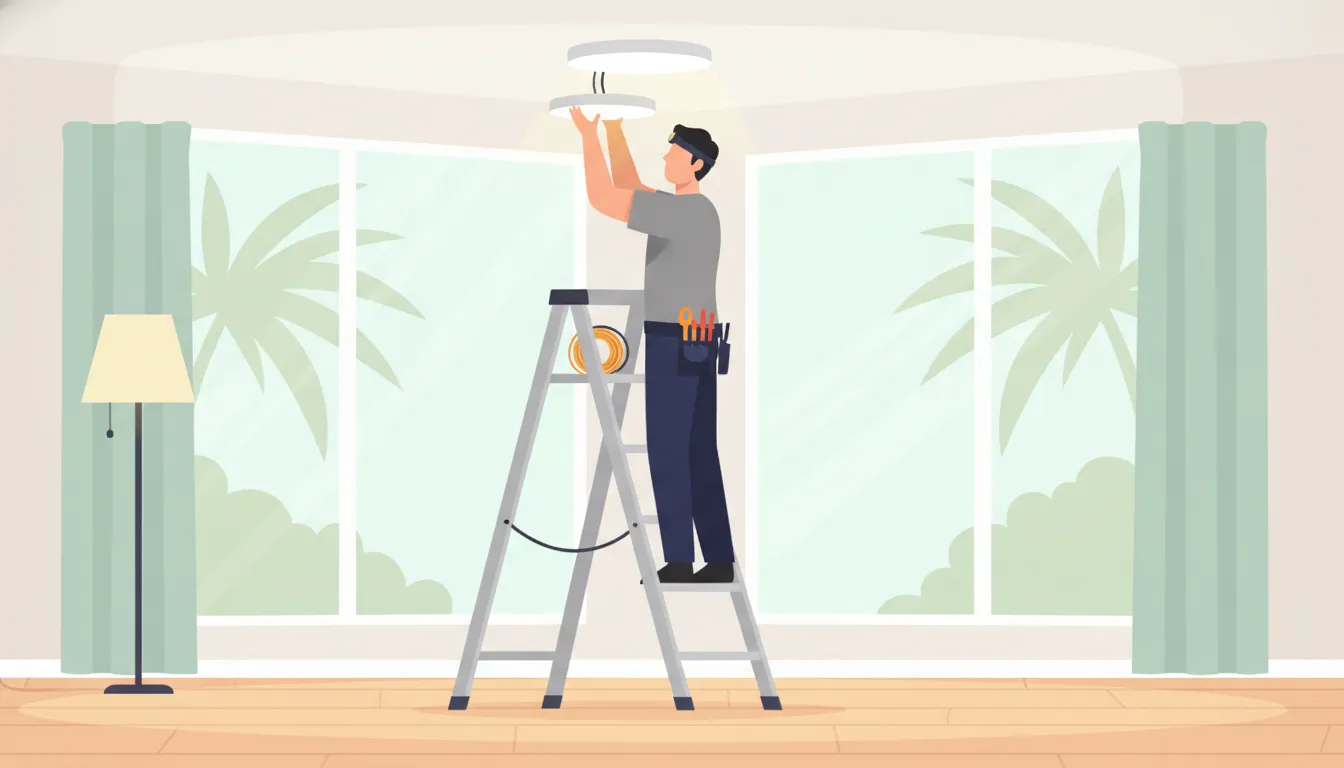
Lighting Installation Guide for Treasure Coast Homes
A new light can make a room safer, more comfortable, and easier to use. The best lighting installation plan also accounts for the existing electrical box, wiring, switch location, ceiling height, fixture weight, and the way your family uses the space. This guide explains the choices that matter before you schedule work in Port St. Lucie or elsewhere along the Treasure Coast.
Schedule professional lighting installation service when your project involves new wiring, an electrical box, controls, a high ceiling, or uncertainty about the existing circuit.
What Does Lighting Installation Include?
Lighting installation can include replacing a compatible fixture, adding new wiring or an electrical box. It can also include installing recessed or pendant lights, changing switches or dimmers, and connecting indoor or outdoor fixtures. The scope depends on the existing electrical system, the fixture location, access, and the controls you want to use.
From a homeowner's perspective, installation is not only the moment a fixture is attached to the ceiling. It is the process of choosing a useful location, confirming that the electrical components can support the project, completing the connections safely, and testing the finished system. A simple replacement may use an existing box and switch. A new light in a location without wiring can require a larger plan.
Fixture replacement and new connections
Replacing an outdated or damaged light may involve removing the old fixture, checking the box and connections, securing the replacement, and confirming that the fixture operates correctly. The replacement still needs to match the box, wiring, mounting method, bulb or LED requirements, and location. A heavier fixture or a different mounting style may require reinforcement instead of a direct swap.
A related lighting repair issue can affect whether replacement is the right first step. Review the guide to common lighting problems when the fixture flickers, buzzes, overheats, or stops working before choosing new hardware.
When there is no suitable fixture in the desired location, the work may include a new electrical box, wiring access, a switch, and a review of circuit capacity. My Electrician's lighting installation service covers indoor lighting options such as kitchen, bathroom, living room, bedroom, hallway, recessed, pendant, and art lighting. The published service information says standard installations often take a few hours, depending on the number of fixtures and wiring complexity.
Switches, dimmers, and other controls
Controls are part of the project because a fixture and its switch must work together. Options can include a standard switch, dimmer, timer, motion control, or smart switch. Each option has compatibility and wiring considerations. A dimmer that is not designed for the fixture can cause flickering or poor performance. A control placed in an inconvenient location can make a good lighting plan frustrating to use.
Indoor projects may cover kitchens, bathrooms, bedrooms, living spaces, hallways, and stairways. Outdoor projects may cover entries, patios, driveways, paths, and landscape features. For exterior work, review the separate outdoor lighting installation service so the plan accounts for the location and exposure.
How Should You Choose Lighting for Each Room?
Start with the activity that needs better visibility, then decide how much general light and control the room needs. Most rooms benefit from a combination of ambient, task, and accent lighting instead of one fixture trying to do every job.
| Lighting type | Useful locations | Planning question |
|---|---|---|
| Ambient ceiling light | Living rooms, bedrooms, hallways | Will the placement provide even light without glare? |
| Recessed lighting | Kitchens, family rooms, corridors | Is there adequate ceiling access and room for the planned layout? |
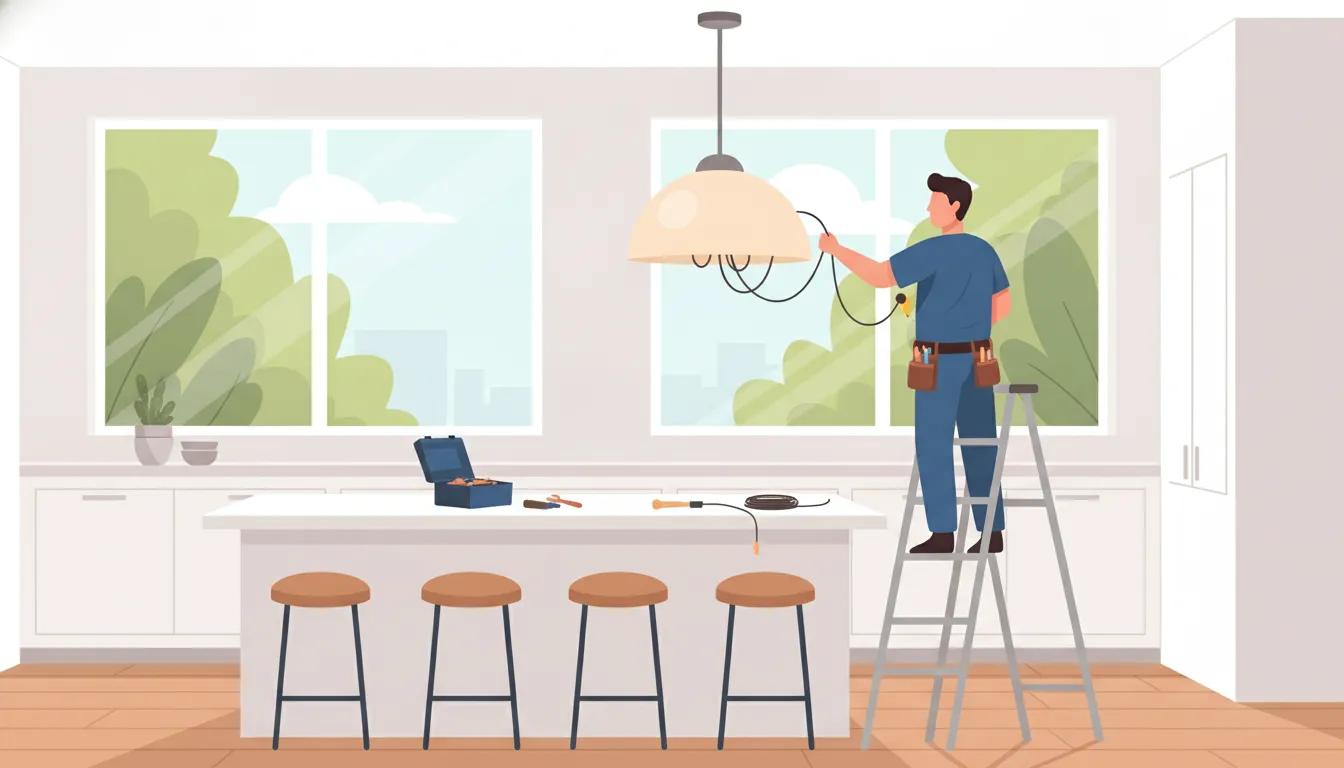
| Pendant lighting | Kitchen islands, dining areas, entries | Are the height, clearance, scale, and mounting point appropriate? |
| Task lighting | Counters, desks, vanities, work areas | Where will shadows or glare interfere with the activity? |
| Accent lighting | Artwork, shelving, walls, landscaping | What feature should stand out, and from which viewing angle? |
| Outdoor lighting | Paths, doors, patios, driveways | Can the fixture and connection handle the exterior location? |
Plan kitchens, bathrooms, and living areas around use
Kitchens often need bright task lighting at counters, islands, and food preparation areas. Bathrooms need useful light at mirrors and other grooming locations, with fixtures suited to the room. Living rooms and bedrooms may need softer ambient light plus dimming or accent options for different times of day. Hallways and stairs need practical visibility without creating harsh glare.
LED fixtures and compatible controls may support efficient, flexible lighting. The U.S. Department of Energy explains that lighting controls can help optimize energy use and lighting performance. That does not mean every home needs a complicated smart system. A compatible dimmer, timer, or motion control may be enough for the way your household uses a room.
Use outdoor lighting for visibility first
Exterior lighting should begin with safe movement and useful visibility around entrances, walkways, patios, and driveways. Landscape accents can be added where they serve a clear purpose. Consider weather exposure, mounting surfaces, cable routing, controls, and the condition of existing connections before selecting fixtures by appearance alone.
My Electrician serves homeowners from Palm Beach Gardens through Vero Beach. If an outdoor project includes new wiring, a difficult access point, or a connection near a wet location, have the setup reviewed before work begins.

When Is Lighting Installation a Safety Issue?
A lighting project deserves professional help when it involves new wiring, an unsupported or damaged box, unexpected conductors, a high ceiling, moisture, or signs of heat. Stop work if you see scorched insulation, loose connections, a cracked fixture, a burning smell, buzzing, sparks, or a switch that feels hot. Do not guess at wire functions or continue handling components that may still be energized.
Know when a fixture or circuit needs diagnosis
A light that flickers, trips a breaker, or behaves differently after installation may have a problem beyond the bulb. Repeatedly resetting the breaker can leave the underlying condition unresolved. My Electrician's electrical repair service includes lighting repair, wiring troubleshooting, switch work, and diagnosis of electrical problems.
The U.S. Consumer Product Safety Commission warns that using a bulb with a higher wattage than a fixture allows can create a fire hazard. Follow the fixture's marked requirements. The CPSC also provides an electrical safety checklist with warning signs to inspect around the home.
Take extra care with height and wet locations
A tall ceiling creates a fall risk as well as an electrical risk. If reaching the fixture requires an unstable ladder, stretching, moving between levels, or working close to energized parts, stop and arrange qualified help. Bathroom, kitchen, and exterior projects also need fixtures and protection appropriate for damp or wet conditions.
Ground-fault circuit interrupter, or GFCI, protection helps reduce shock risk in locations where electricity may come near water. Arc-fault circuit interrupters, or AFCIs, are designed to help reduce fire risk from arc faults. The CPSC explains the fire-prevention role of AFCIs in its AFCI safety guide. Do not improvise protection or continue a project after water reaches a fixture or enclosure.
For homeowners in Port St. Lucie and across the Treasure Coast, the safest decision is to pause when the work becomes uncertain, damaged, elevated, wet, or connected to energized parts. A qualified electrician can identify the condition and explain the next step.
How Much Does Lighting Installation Cost?
There is no reliable one-size-fits-all price for lighting installation. Replacing a compatible fixture where a safe electrical box already exists is different from adding recessed lights, running new wiring, installing a dimmer, or correcting an outdoor connection. The fixture is only one part of the estimate.
What changes the estimate?
- Number and type of fixtures: Pendant, recessed, ceiling, landscape, and specialty fixtures can involve different mounting and connection work.
- Existing electrical components: A missing, damaged, or poorly supported box may need attention before the fixture is installed.
- Access: Vaulted ceilings, finished walls, tight attic areas, and difficult exterior locations can increase labor and preparation.
- Controls: Dimmers, timers, motion controls, and smart switches require compatible fixtures and wiring.
- Circuit capacity: New lighting may require a circuit review or additional electrical work when the existing setup is not suitable.
- Location: Bathrooms, kitchens, and outdoor spaces may require equipment and protection appropriate to the environment.
Permits, inspections, code-related updates, repairs, and cleanup may also affect the scope. These items should be explained before work begins. My Electrician describes its pricing as upfront and flat-rate, with the quote provided before repairs begin. For a larger project, ask the electrician to separate required safety work from optional design upgrades. Flexible financing is also listed for indoor lighting projects, subject to the applicable program terms.
What should a clear estimate include?
A useful estimate identifies the fixtures and quantity, labor, materials, switches or controls, wiring and box work, access requirements, testing, cleanup, and any expected permit or code considerations. It should also explain what happens if an unexpected condition is found. A responsible professional does not promise an exact total without seeing conditions that affect the work.
What Happens During a Professional Lighting Project?
A well-planned project should move from goals and site conditions to a clearly explained scope, safe installation, testing, and closeout. The exact sequence varies, but these steps help homeowners know what to expect.
- Discuss the goal and location. Explain which areas feel dark, where glare is a problem, how the room is used, and whether you want ambient, task, accent, or outdoor visibility.
- Review the existing setup. The electrician should consider the box, wiring, switch, circuit, ceiling or wall access, fixture weight, and any visible damage.
- Confirm the scope and price. The plan should identify the fixtures, controls, wiring work, testing, cleanup, and any necessary repairs before work begins.
- Prepare the work area safely. Power should be handled appropriately, floors and furniture protected, and unexpected wiring evaluated instead of guessed at.
- Install and test the system. Testing should include the light, switch, dimmer, sensor, or smart control included in the project. The electrician should also check the finished connections and relevant safety features.
- Review the closeout. Confirm how to use the controls and what maintenance is appropriate. Review what work was completed and what to watch for if the light flickers, buzzes, overheats, or trips a breaker.
My Electrician's published information states that its technicians are employed directly rather than subcontracted and that lighting installations are backed by a 2-year guarantee on parts and labor. Review the terms with the company so you understand how the guarantee applies to your project.
Schedule lighting installation with My Electrician FL for a clear plan covering fixture placement, wiring, controls, safety checks, and the final test.
How Can Treasure Coast Homeowners Prepare?
Walk through the home before the appointment and list the rooms, fixtures, switches, and outdoor areas you want to discuss. Note flickering, heat, buzzing, damaged covers, or breaker trips. Take photos from a safe distance, clear stored items from the work area, and identify furniture or landscaping that may limit access. If you are planning several changes, rank the rooms so the electrician can help you decide whether to complete the work in phases.
Homeowners can also compare fixture dimensions, bulb or LED requirements, desired control types, and the purpose of each location. Avoid buying a fixture solely because it looks right. Confirm that it can be mounted safely and used in the intended environment. For a broader evaluation of switches, outlets, breakers, and visible wiring, an electrical inspection may help identify concerns before a renovation grows.
My Electrician provides electrical service throughout the Treasure Coast and Palm Beaches, including Palm Beach Gardens, Jupiter, Tequesta, Hobe Sound, Palm City, Stuart, Jensen Beach, Port St. Lucie, Fort Pierce, White City, and Vero Beach. The service areas page can help you confirm coverage before scheduling.
Schedule lighting installation service with My Electrician FL through the contact page.
Frequently Asked Questions
Do I need an electrician for every lighting installation?
Not necessarily. A compatible fixture replacement may be straightforward for some homeowners. New wiring, electrical boxes, recessed lights, switches, controls, high ceilings, outdoor connections, or uncertain wiring should be reviewed by a qualified professional.
How much does a lighting installation cost?
The total depends on the fixture, number of lights, access, existing box and wiring, controls, circuit capacity, location, and any repairs or code-related work. Ask for a clear estimate that separates the planned installation from additional work that may be needed.
Can an electrician install dimmers or smart lighting controls?
Yes, a lighting project can include dimmers, timers, motion controls, or smart switches when the selected controls are compatible with the fixture and wiring. A professional can help identify a practical control location and address compatibility questions.
What should I do if a new light flickers or trips the breaker?
Turn off the affected light and stop resetting the breaker repeatedly. Flickering, heat, buzzing, or repeated trips can indicate a wiring, connection, fixture, or circuit problem. Arrange an electrical evaluation instead of continuing to troubleshoot energized components.
What is different about outdoor lighting installation?
Outdoor lighting must suit weather exposure, mounting conditions, cable routing, controls, and the protection required for the location. An electrician should evaluate outdoor connections and existing wiring before assuming an indoor fixture or connection is suitable outside.