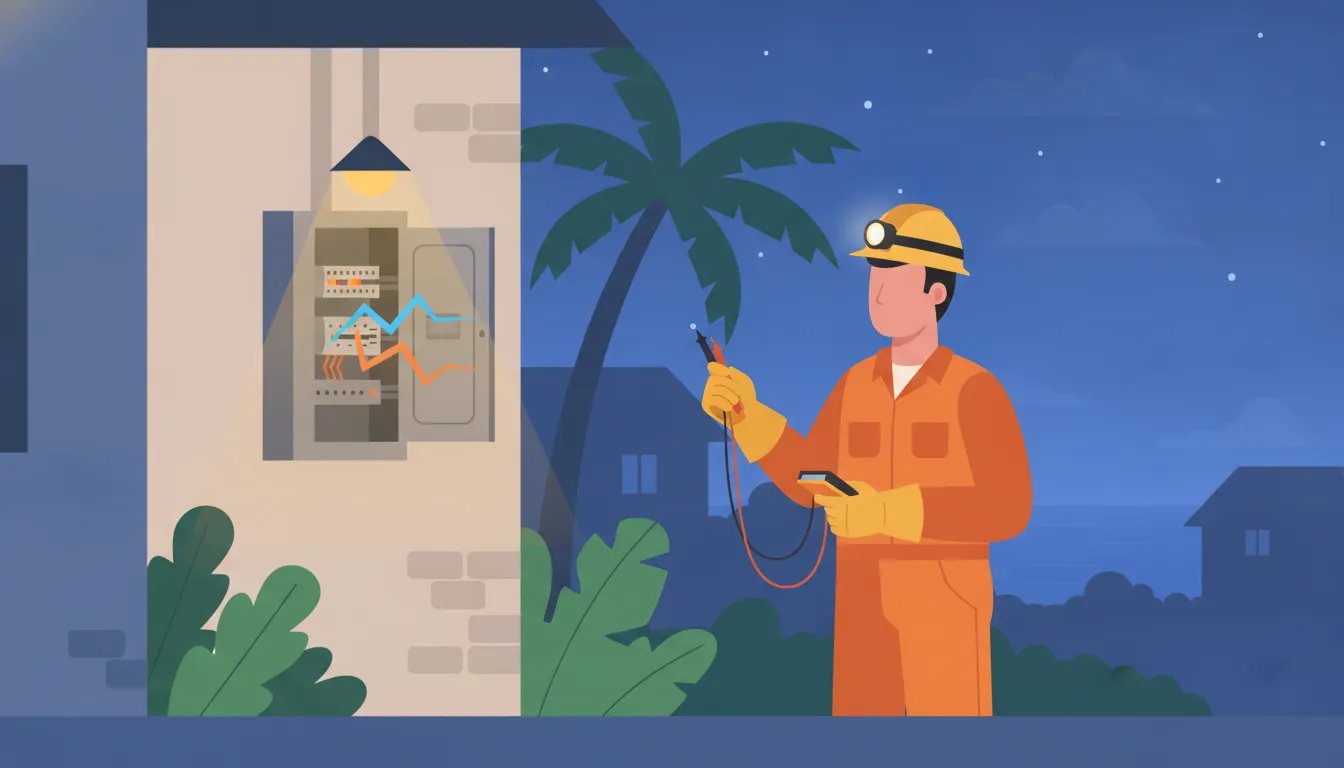
Flickering lights, a breaker that keeps tripping, a burning smell, or an outlet that suddenly sparks can feel especially alarming after dark. If you need local after hours electrical repair, first decide whether the symptom creates an immediate safety risk or can wait for a scheduled visit.
Local after hours electrical repair is appropriate when you notice smoke, active sparks, a hot or buzzing panel, burnt wiring, storm damage, an unexplained outage, or another symptom that could threaten people or property. Move away from the hazard, avoid touching energized equipment, and call for professional help. If someone has been shocked, call 911 or emergency medical help first, as the CDC advises: CDC electrical hazard guidance.
My Electrician provides 24/7/365 emergency response across the Treasure Coast and Northern Palm Beach County, including Port St. Lucie, Stuart, Jupiter, Palm Beach Gardens, Fort Pierce, and Vero Beach. Use the service page for urgent electrical assistance, then separate immediate hazards from problems that can safely wait.
When Is Local After Hours Electrical Repair Necessary?
Not every electrical inconvenience requires a late-night call. A dead outlet in one room may be able to wait for a scheduled repair if there are no other warning signs. The situation changes when your home has lost power unexpectedly, an outlet or switch is sparking, breakers fail repeatedly, or a panel appears to be malfunctioning. These symptoms can indicate a condition that needs professional attention rather than another reset or a DIY investigation.
My Electrician's emergency response covers power outages and restoration, sparking outlets and switches, circuit breaker failures, storm damage, and generator emergencies. It also addresses burnt wires, faulty circuits, and dangerous shorts. If you are facing one of those critical failures, contact a 24-hour emergency electrician instead of waiting until morning.
Call promptly when the problem may be a hazard
Pay attention to what you can see, hear, and smell. Flickering lights, repeated breaker trips, dead outlets, faulty switches, unexplained outages, storm damage, and panel failures are all warning symptoms worth taking seriously. A panel that is overheating, sparking, or buzzing is especially concerning. Do not open the panel or remove an outlet cover to look for the cause. A professional can assess the condition and determine whether the circuit, wiring, or equipment needs repair.
Emergency service is also appropriate when the issue affects more than convenience. A single lamp that will not turn on is different from an unexplained loss of power throughout the home. A switch that feels inconvenient is different from one associated with sparks or a burning electrical smell. When the symptom suggests heat, arcing, a failed protective device, storm-related damage, or an unsafe short, prompt evaluation can help prevent the problem from becoming more serious.
When can a repair wait?
If one nonessential outlet or light is not working, and there is no smell, smoke, heat, or sparking, the issue may be a non-emergency inconvenience. The same is true when there is no storm damage or repeated breaker activity, and the rest of the home operates normally. Leave the affected equipment alone and arrange professional electrical repair during normal scheduling hours. Do not keep resetting a breaker that trips again, and do not use a damaged outlet or switch while waiting.
My Electrician provides emergency response 24 hours a day, 365 days a year for critical electrical failures. Emergency calls receive priority dispatch, with response timing dependent on location and severity. During the visit, the workflow includes a professional assessment, an upfront quote before work begins, code-compliant work, testing, safety checks, and an explanation of the work performed.
Which Electrical Symptoms Should Not Wait Until Morning?
Some electrical problems are inconvenient, while others can signal an immediate safety concern. Do not wait for regular business hours when you notice visible smoke, a burning smell, brown or dark marks around an outlet, or a panel that feels hot. Sparking from an outlet, switch, or appliance also deserves prompt attention, especially if the sparking continues or is accompanied by heat or odor.
Buzzing, humming, or a singing sound from an electrical box or panel is another reason to request an evaluation rather than ignoring the noise. A breaker that keeps tripping should not simply be reset over and over. Repeated trips, flickering lights, dead outlets, and faulty switches can all be homeowner warning symptoms that need professional attention. These signs do not identify the cause from a distance, but they do provide enough information to treat the problem seriously. Review these warning signs of electrical issues for additional context.
Signs that call for urgent help
- Burning smells, smoke, or brown marks: Stop using the affected outlet or switch. Smoke or an active fire is an immediate danger.
- Heat or buzzing: A hot service panel, buzzing breaker box, or unusual electrical sound should not be dismissed as normal household noise.
- Sparks: Sparking outlets and switches are listed among the failures that may require emergency response.
- Flickering or unexplained outages: Flickering lights, a sudden loss of power, or a home that is unexpectedly the only property without power can require prompt evaluation.
- Repeated breaker trips or dead outlets: Repeated tripping, dead outlets, and faulty switches can indicate a problem that should be assessed before normal use continues.
If there is an active fire, visible smoke that is increasing, an immediate threat to people, or any other life-safety emergency, leave the area and call 911. Do not touch a person who may still be in contact with an electrical source, and do not open a panel or attempt an energized repair. Once people are safe and emergency responders have been contacted when needed, seek 24-hour emergency electrical help for the electrical problem. Share exactly what you saw, smelled, heard, or felt, without trying to diagnose the issue yourself.
What Should You Do Before an Electrician Arrives?
When an electrical problem feels unsafe, your priority is to create distance and protect everyone in the home. You do not need to diagnose the fault, open a panel, test a circuit, or move equipment. Follow these steps while you wait for professional help.
- Move people and pets away from the danger. Leave the room if you see smoke, active sparking, fire, a damaged panel, or exposed wiring. Keep children and pets away from outlets, switches, appliances, and any area affected by water. If the situation presents an immediate threat, leave the home and call 911 from a safe location.
- Never touch a fallen power line. Stay well away from the line itself and from trees, fences, vehicles, or other objects it may be touching. The CDC says to report fallen power lines to the power company, and you should treat the area as energized until utility professionals make it safe. Do not drive through standing water when downed lines may be present. CDC electrical hazard guidance
- Do not touch someone who may still be in contact with electricity. Touching the person could allow the current to pass through you. Look first, keep away from the electrical source, and call 911 or emergency medical help. If you can safely shut off the source without entering a hazard, follow the next step. CDC shock safety guidance
- Turn off power only if the shutoff is safely accessible. If you smell burning, see frayed wiring, or notice sparks, the CDC advises shutting off the electrical system at the main breaker. Do this only from a dry, unobstructed location where you do not need to step through water, approach damaged equipment, or touch anything exposed. Never enter standing water to reach a panel or main switch.
- Keep wet electrical equipment off. If an appliance, circuit, or other electrical equipment has been wet or is near water, do not handle it or turn it back on. The CDC recommends waiting for inspection by a qualified electrician before re-energizing wet equipment. Do not use a generator by connecting it directly to home circuits without approved automatic-interrupt devices.
- Share useful details without investigating. From a safe place, note what you observed, such as flickering lights, a burning odor, smoke, a tripped breaker, or storm damage. Tell the electrician whether water, a fallen line, or a person may have been shocked. Do not return to the area to take photos or confirm what happened.
- Call for professional electrical repair. Once everyone is safe, provide the electrician with the address, symptoms, and any safe-access limitations. A professional can assess the condition and determine the right repair without putting you at risk. For urgent help, contact professional electrical repair rather than attempting a temporary fix.
How Do Storms and Coastal Conditions Change the Risk?
Living along the Treasure Coast or in Northern Palm Beach County means electrical problems can take a different shape after severe weather. Lightning and hurricanes can disrupt power and damage outdoor or service equipment. High humidity and salt air can also make electrical safety and surge protection especially important for coastal properties. These concerns apply across local communities from Vero Beach and Fort Pierce through Port St. Lucie, Stuart, Jupiter, and Palm Beach Gardens. You can review the company's full service areas for coverage.
Why lightning, hurricanes, humidity, and salt air matter
A storm does not have to cause a complete outage to create a serious electrical concern. You may notice flickering lights, unexpected breaker trips, damaged wiring, or equipment that no longer operates normally after lightning or wind. Storm damage is included among the critical failures addressed through My Electrician's emergency response. If a storm leaves you with an outage, sparking equipment, or another possible fire or shock hazard, treat it as an electrical safety issue. Do not assume it will resolve on its own.
Moisture and salt air deserve attention even when there is no visible storm damage. Coastal conditions can affect exposed electrical components over time, while humidity and water intrusion may create unsafe conditions around panels, outlets, generators, and other equipment. Do not open a panel or attempt to inspect internal components yourself. A qualified electrician can determine whether equipment is safe to repair, test, or replace.
What should you do if electrical equipment gets wet?
Follow a simple rule: keep people away from wet electrical equipment and standing water. The CDC advises turning off power at the main breaker when circuits or equipment are wet or near water. Never enter standing water to reach it. If the breaker is not safely accessible, leave it alone and call for professional help. The CDC also says not to restore power until a qualified electrician has inspected the equipment. CDC electrical-hazard guidance provides the same precautions for storm conditions.
Never touch a fallen power line, and report it to the power company. Do not drive through standing water when downed lines may be present. If you use a generator after an outage, do not connect it to household circuits without approved automatic-interrupt devices. Safe distance and professional evaluation matter more than getting power back quickly.
What Happens During After-Hours Electrical Repair?
The process should bring structure to a stressful situation. When you call for local after hours electrical repair, be ready to describe what you noticed, when it started, and whether you see smoke, sparks, heat, water, or damage. Mention if the issue affects one outlet, part of the home, or the entire property. These details help the team understand the urgency and prepare for the visit.
First, the call is prioritized
Emergency calls receive priority dispatch. Response depends on your location and the severity of the problem, so no electrician can responsibly guarantee an arrival time. A complete outage, sparking outlet, burning odor, storm damage, or a hot or buzzing panel may require faster attention than a non-urgent inconvenience. If there is an active fire, electric shock, or immediate danger, leave the area and contact 911 when appropriate.
Next, the electrician assesses the problem
At the property, the electrician evaluates the symptoms and identifies the affected equipment or circuit. Do not open a panel, remove an outlet cover, or attempt to trace energized wiring while waiting. A homeowner may only need to share observations, such as a breaker that keeps tripping or an outlet that stopped working. For issues involving repeated trips, circuit breaker repair may be part of the assessment, but the cause still needs professional evaluation.
Work begins after you understand the scope
Before work starts, the technician explains the recommended repair and provides an upfront quote based on the scope. This gives you an opportunity to ask what is failing, what work is necessary, and whether a temporary condition requires follow-up. The goal is to resolve the immediate hazard without leaving you guessing about the next step.
Testing confirms the repair
Approved work is performed to NEC and local-code standards. Afterward, the electrician tests the repaired circuit or equipment and completes safety checks. The technician then explains what was found, what was repaired, and any practical precautions or follow-up needs. That final explanation matters because it helps you recognize a returning warning sign before it becomes a larger problem.
How Can You Choose a Local Emergency Electrician?
When an electrical problem happens after hours, the first choice is not always the company with the most urgent-sounding advertisement. Look for a provider that can explain what to do next, distinguish a dangerous condition from a repair that can wait, and serve your community. A clear phone conversation should help you describe what you see without opening a panel, removing an outlet cover, or attempting a diagnosis around energized equipment.
Start by asking whether the company handles the specific situation, such as sparking outlets, a burning smell, repeated breaker trips, storm damage, an outage affecting only your property, or a hot or buzzing panel. Also confirm local coverage for your community before relying on the service. My Electrician's 24-hour emergency electrician service is intended for urgent electrical problems, while less urgent issues may be better suited to a scheduled appointment.
| Situation. | What to look for. | Safe next action. |
|---|---|---|
| Sparking, smoke, a burning smell, or visible fire risk. | A provider that treats the call as a safety issue and gives clear instructions before dispatch. | Move away from the hazard. Leave if needed, contact 911 for immediate danger, and do not touch the equipment. |
| Power outage, repeated breaker trips, dead outlets, or failed switches. | Experience with emergency diagnosis and a process for identifying whether the problem is limited to your property. | Describe the symptoms and what changed. Do not repeatedly reset a breaker that keeps tripping. |
| Storm damage, wet equipment, or a fallen line nearby. | Local familiarity with storm-related electrical hazards and careful instructions for staying clear. | Stay away from fallen lines and water near electrical equipment. Report downed lines and wait for professional guidance. |
| Non-urgent lighting, outlet, or installation concern. | A clear explanation of whether after-hours service is necessary and what a scheduled visit would involve. | Keep the affected item out of use when appropriate, document the symptoms, and schedule service if there is no immediate hazard. |
Before work begins, ask how the electrician will assess the problem, explain the recommended scope, and communicate the next steps. A professional process should include an evaluation and safety checks rather than pressure to approve work you do not understand. Choosing local after hours electrical repair should leave you with a safer next decision, not more uncertainty.
Frequently Asked Questions
Should I call an electrician for flickering lights or a breaker that keeps tripping?
Yes, especially when the problem repeats, affects several fixtures, or happens with a burning smell, buzzing, heat, smoke, or visible damage. Stop using the affected circuit and arrange professional evaluation rather than repeatedly resetting the breaker or opening an outlet, switch, or panel.
What should I do if an outlet is smoking or smells like burning wires?
Move people away from the area and call for emergency help. If you can safely shut off power from a dry, accessible location without entering danger, do so. Do not touch the outlet, remove its cover, or investigate inside the panel. If there is fire or immediate danger, leave and call 911 first.
Is a power outage always an after-hours electrical emergency?
Not always. First check whether nearby homes or the utility are also without power. But do not delay help when the outage is limited to your home or comes with sparks, smoke, burning odors, storm damage, or a failed panel. My Electrician lists power outages and restoration among its 24/7/365 emergency response services.
What if storm damage leaves a power line or electrical equipment in water?
Stay away and never touch a fallen power line. Report it to the power company, and do not drive or walk through standing water where a line may be present. The CDC also advises not entering standing water to reach a main switch and keeping wet equipment off until a qualified electrician inspects it. CDC electrical-hazard guidance provides additional safety steps.
What should I do if someone receives an electrical shock?
Do not touch the person if they may still be connected to the electrical source. Call 911 or emergency medical help, and get professional assistance after the immediate medical emergency is addressed. The CDC recommends calling 911 for suspected electric shock.
Ready to Call for After-Hours Electrical Help?
Electrical hazards can change quickly, especially when you notice smoke, a burning smell, sparks, or a hot and buzzing panel. If the problem cannot safely wait, keep away from the affected equipment and get professional guidance. Call My Electrician FL at 877-762-7483 for 24/7 emergency electrical help.