
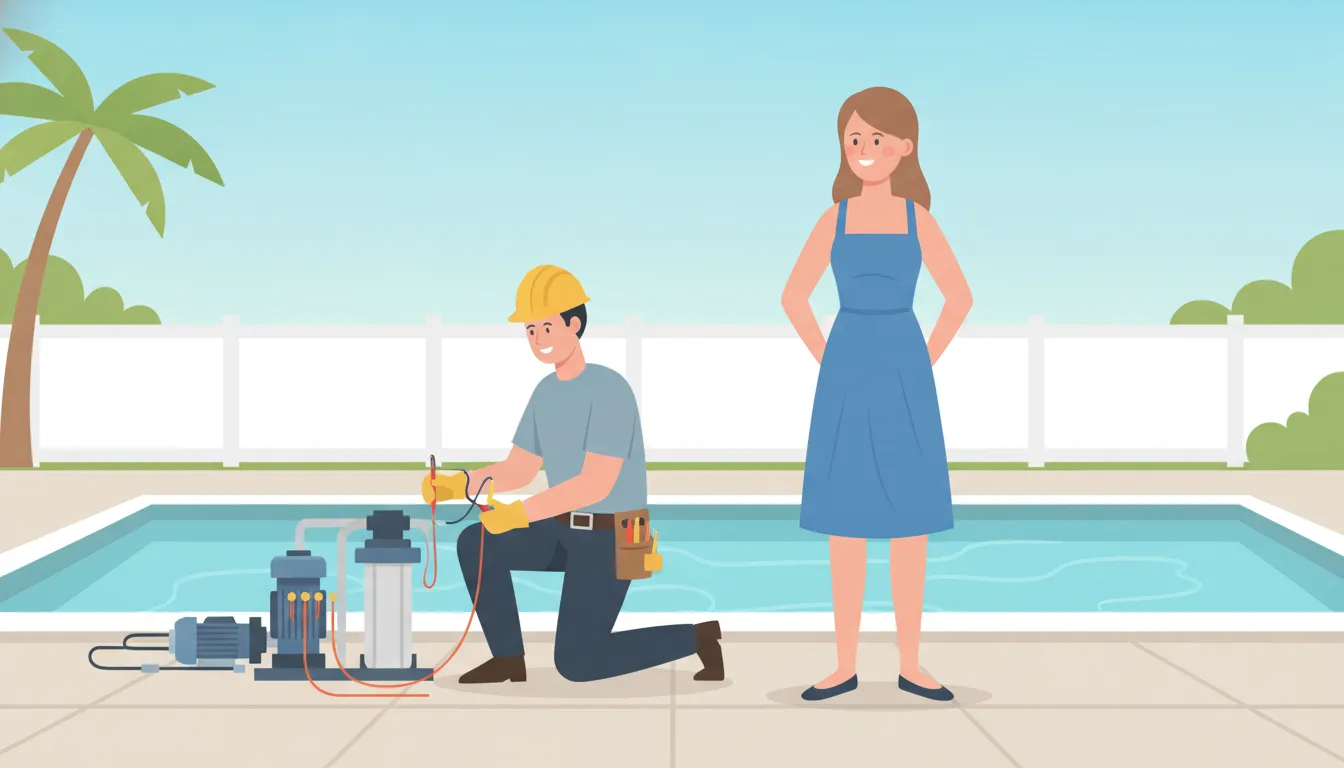
A pool can look normal while an electrical safety problem remains hidden below the deck, inside concrete, or near equipment terminals. A quick visual check cannot confirm whether the system is working as intended.
Pool bonding connects conductive parts around the pool to help reduce voltage differences between surfaces a person may touch. It is different from grounding, and a GFCI does not replace it. Because key connections may be concealed, evaluation belongs with a qualified electrician rather than a homeowner attempting to test or alter the system.
In Florida, coastal humidity, salt air, storms, and changing pool equipment can add practical reasons to pay attention to the system. First, understand what the connection does. Then learn which symptoms deserve urgent attention and how a professional evaluates it.
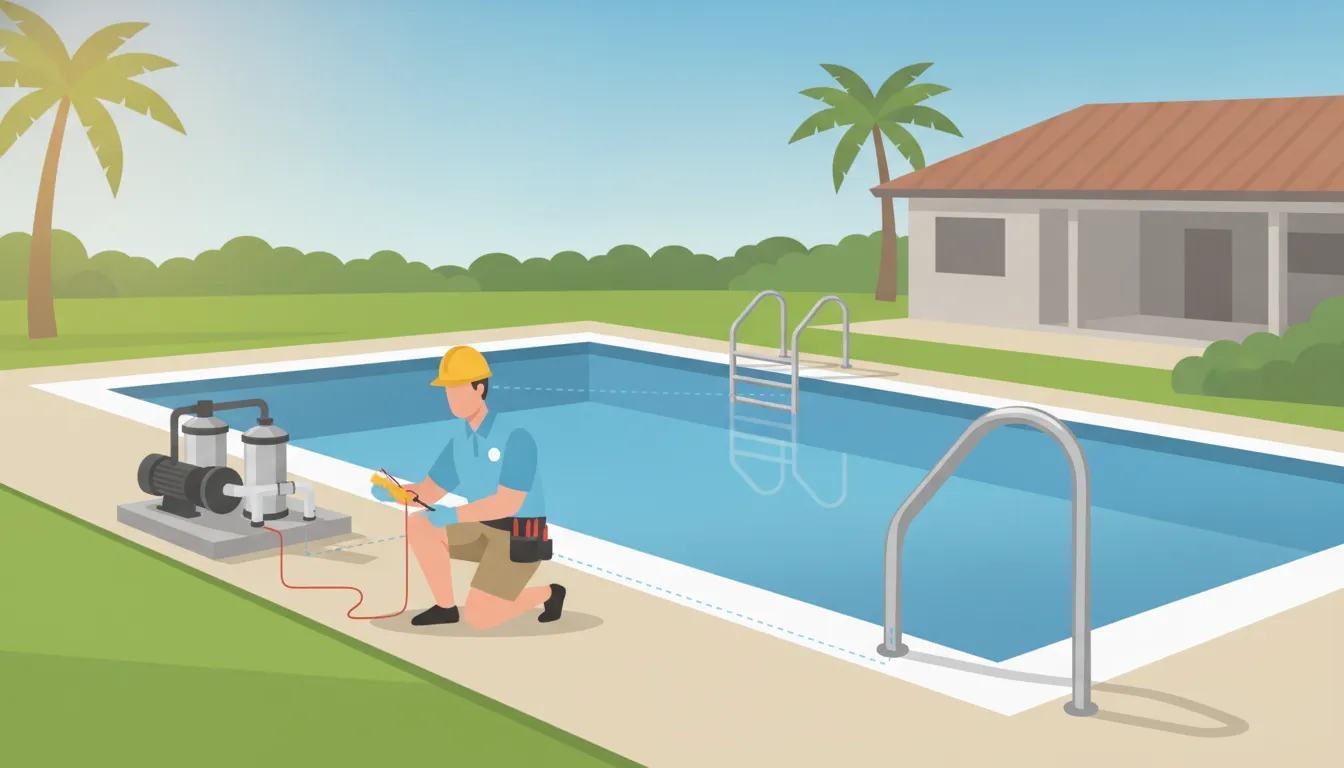
Schedule a pool electrical safety evaluation with My Electrician for clear next steps for your pool, spa, or related equipment.
What Is Pool Bonding?
Pool bonding is an intentional electrical connection between conductive parts in and around a swimming pool. Those parts can include metal components associated with the pool structure, equipment, or nearby surfaces. The purpose is to help reduce voltage differences between surfaces a person may touch at the same time. In plain language, bonding helps keep accessible conductive parts at a more similar electrical potential, rather than allowing one part to become noticeably different from another.
This is also called equipotential bonding. "Equipotential" means maintaining a similar electrical potential across connected conductive parts. It does not mean that every component becomes harmless under every possible fault. Instead, it describes an important part of the pool electrical safety system that is designed to reduce the chance of a dangerous voltage difference developing around the water.
How Is Bonding Different From Grounding?
Bonding and grounding are related, but they are not interchangeable terms. According to the Florida Building Commission's pool electrical safety guidance, bonding establishes electrical continuity between conductive parts. Grounding connects electrical equipment to ground and helps provide a path for fault current. Each function supports safety in a different way, and grounding does not replace the need for proper bonding.
A simple way to think about the distinction is that bonding connects the conductive parts to one another, while grounding connects equipment to the grounding system. A pool may have properly functioning protective devices and still require its bonding network to be evaluated separately. A GFCI also does not replace pool bonding, and pressing its test button does not inspect every part of the pool electrical system.
Why Cannot You Confirm Pool Bonding With a Quick Look?
Many bonding connections are concealed in concrete, located underground, or made at equipment terminals. That means a homeowner may not be able to see the condition, continuity, or completeness of the system by looking at the pool deck or equipment pad. A recent renovation, equipment replacement, corrosion, storm exposure, or an older installation can all justify a professional evaluation. But none of those circumstances alone proves that bonding is defective.
Because the system can include concealed connections, pool bonding should be assessed by a qualified electrician rather than altered or tested as a DIY project. If you need a broader review, My Electrician provides pool and spa electrical services for homeowners and businesses across the region. The right evaluation can clarify what is present, what requires attention, and which recommendations apply to the specific pool, equipment, and property.
Why Does Pool Bonding Matter Around a Pool?
A pool combines people, water, metal surfaces, and electrical equipment in one small area. That combination makes unintended voltage differences especially important. Bonding creates electrical continuity between conductive parts around the pool, helping reduce the voltage difference between surfaces a person might touch at the same time. The goal is to make the surrounding environment more electrically consistent, not to make electrical equipment operate more efficiently.
This protection matters because hazards may involve more than the pool light itself. The U.S. Consumer Product Safety Commission identifies underwater lights, pumps, filters, outlets, switches, extension cords, and other electrical products as possible sources of electrical hazards around pools and spas. A bonding problem may not produce an obvious visual clue, particularly when connections are concealed in concrete, underground, or at equipment terminals. A quick glance at the deck or equipment pad cannot confirm that the system is safe.
| Safety measure | Primary purpose | What it does not replace |
|---|---|---|
| Bonding | Establishes electrical continuity between conductive parts around the pool, helping reduce voltage differences between touchable surfaces. | It is not the same as grounding or GFCI protection. |
| Grounding | Connects electrical equipment to ground and helps provide a path for fault current. | It does not perform the same function as bonding. |
| GFCI protection | Helps respond to certain electrical current imbalances in a circuit. | The CPSC explains that a GFCI does not replace pool bonding, and its test button does not inspect the entire pool system. |
These distinctions are why pressing a GFCI test button cannot answer every pool safety question. Bonding, grounding, and GFCI protection address different parts of the electrical safety system. The Florida Building Commission also notes that requirements can depend on the pool or spa type, construction, equipment, applicable code edition, local authority, and project scope. In coastal Florida, salt air corrosion, humidity, storms, and lightning can add stress to outdoor electrical components.
If anyone in the water notices tingling, muscle cramps, difficulty moving, or a feeling of being held in place, leave the water immediately. Treat it as an urgent electrical safety concern. Do not alter or test pool bonding components yourself. Have a qualified electrician evaluate the system.
Sources: Florida Building Commission pool electrical safety fact sheet; U.S. Consumer Product Safety Commission pool and spa electrical safety guidance.
What Are the Warning Signs of a Pool Bonding Problem?
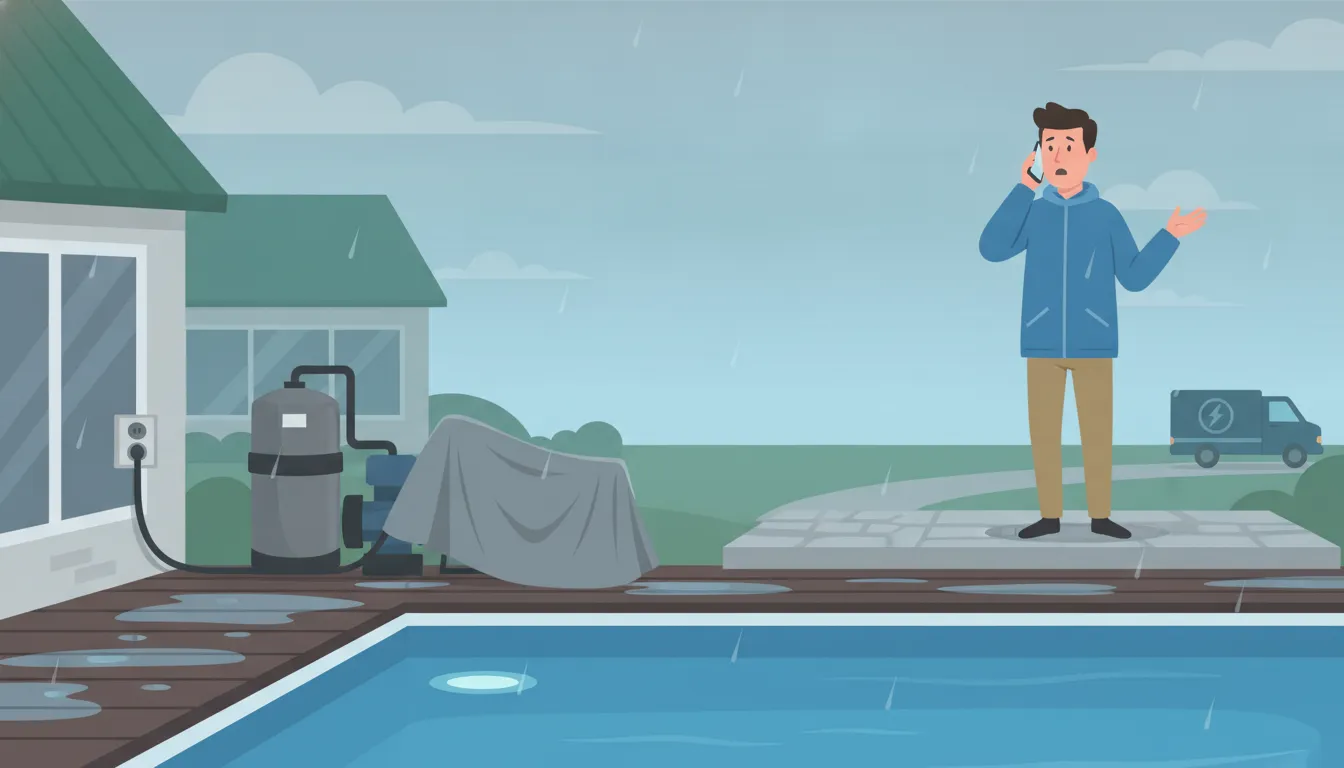
Some pool electrical symptoms deserve immediate attention, even when they do not prove that bonding is the cause. A bonding problem can be hidden in concrete, underground, or at equipment terminals, so the visible condition of the pool area may not tell the whole story. If you notice an electrical warning sign, keep people out of the pool until a qualified electrician can evaluate the system.
Pay Attention to Sensations in or Near the Water
Tingling, stinging, muscle cramps, difficulty moving, or a sensation of being held in place while swimming are urgent warning signs. The U.S. Consumer Product Safety Commission identifies these symptoms as possible signs of electrical shock hazards around pools and spas. Do not enter the water to investigate, and do not allow anyone else to test whether the sensation is still present. Move away from the pool area and seek professional help. If someone is in immediate danger, call 911.
A noticeable shock when touching a ladder, handrail, light trim, metal fence, pump equipment, or another conductive surface is also a reason to stop using the pool. A shock can involve an underwater light, pump, filter, outlet, switch, extension cord, or another electrical product around the pool. It may relate to bonding, grounding, damaged equipment, wiring, or another fault. A GFCI can help protect against certain electrical faults, but its test button does not inspect the entire pool system and does not replace bonding.
Notice Changes in the Equipment or Surrounding Property
Nuisance breaker or GFCI trips, flickering pool or landscape lights, unexplained equipment shutdowns, buzzing, or unusual heat can indicate an electrical issue that needs investigation. Corrosion around pool equipment, conduit, connections, or metal components is another reason to schedule an evaluation. In coastal Florida, salt air, humidity, storms, and lightning can expose outdoor electrical components to conditions that accelerate deterioration.
Arrange an inspection promptly after pool renovations, deck work, equipment replacement, landscaping changes, or other construction near the pool. Recent work can disturb concealed wiring or bonding connections, even when the finished surface looks normal. Storms and lightning also justify a careful review if equipment behaves differently afterward.
These signs cannot identify the failed component from observation alone. Because important connections may be concealed, visual inspection and a GFCI button test are not enough to confirm that the pool is safe. Stop using the pool when a shock or severe symptom occurs, avoid touching or altering electrical components, and schedule professional pool and spa electrical services for a qualified evaluation.
How Is Pool Bonding Evaluated?
A pool bonding evaluation is more than a quick look at the equipment pad. Many bonding connections are concealed in concrete, underground, or at equipment terminals, so a system can appear orderly while still needing professional review. A qualified electrician evaluates the pool's accessible electrical components, considers the property's history, and uses appropriate testing methods without asking the homeowner to handle electrical parts.
The exact scope can vary. In Florida, requirements may depend on the pool or spa type, construction, equipment, applicable code edition, local authority, and project scope. A professional can explain which factors apply to your property without promising a blanket code-compliance result before the evaluation. Florida Building Commission guidance also emphasizes that pool electrical safety depends on the details of the installation.
- Discuss the pool's history. The electrician may ask when the pool or spa was installed, whether it has been remodeled, and whether equipment, lighting, decking, fencing, or other surrounding features have changed. Information about recurring breaker trips, equipment replacements, storm damage, corrosion, or previous electrical work can help identify areas that deserve closer attention. If you have permits, inspection records, or equipment documentation, make them available for review.
- Inspect accessible components. The evaluation may include the equipment area and other accessible parts of the pool electrical system, such as pumps, filters, heaters, lights, outlets, switches, and visible connections. The electrician looks for conditions that may affect safety, including damaged components, exposed wiring, corrosion, improper enclosures, or signs of previous alterations. This visual review is useful, but it cannot by itself confirm concealed bonding connections.
- Evaluate related protection. Pool bonding works as part of a broader electrical safety system. The electrician may review related grounding and ground-fault protection, equipment connections, and the relationship between pool components and nearby conductive parts. A GFCI does not replace bonding, and its test button does not inspect the entire pool system. The goal is to understand how the protective measures work together, not to treat one device as proof that every part is safe.
- Test under safe conditions. Where appropriate, the electrician uses professional instruments and controlled procedures to evaluate continuity or other relevant electrical conditions. Testing should account for the property's configuration and the technician's ability to access components safely. Homeowners should not test, disconnect, alter, or repair pool bonding or electrical equipment themselves.
- Explain the next steps. After the evaluation, the electrician can describe observed conditions, identify limitations caused by concealed or inaccessible connections, and outline recommended repairs or additional investigation. For help reviewing a pool or spa electrical system, see our electrical inspection services.
A professional evaluation gives you a clearer understanding of the system without turning a serious electrical concern into a do-it-yourself project.
When Should You Schedule a Pool Electrical Evaluation?
Schedule a pool electrical or pool bonding evaluation when something around the pool changes, behaves unexpectedly, or has been exposed to conditions that can damage outdoor electrical components. A qualified electrician can assess the visible equipment and the less-visible connections that may run through concrete, underground areas, or equipment terminals. A quick look, or pressing the GFCI test button, cannot confirm that the entire pool electrical system is safe.
Some situations deserve prompt attention:
- Someone feels a shock, tingling, muscle cramps, or difficulty moving in the water. Keep people out of the pool and seek urgent professional help. These symptoms can signal an electrical hazard, according to the U.S. Consumer Product Safety Commission. For an immediate concern, contact emergency electrical help.
- The GFCI or breaker trips repeatedly. Do not keep resetting it or assume the protection device replaces bonding. Repeated trips can indicate a problem that needs professional diagnosis.
- Lights flicker, equipment behaves inconsistently, or you notice corrosion. Salt air, humidity, storms, and lightning can affect outdoor electrical components in coastal Florida. Corrosion near pool equipment should be evaluated rather than brushed aside.
- Pool equipment is being replaced or added. A new pump, heater, automation system, underwater light, or other equipment can change the electrical setup. Have the system reviewed before or during the project so the surrounding safety components are considered.
- The property has experienced a storm, flooding, or water intrusion. Arrange an evaluation before using affected equipment if electrical components, wiring, or connections may have been exposed to water.
- You are planning a renovation, building a pool, or buying a property with one. An evaluation can identify questions to address before work begins or before a purchase is finalized. It can also provide useful context when records are incomplete.
Florida requirements are not identical for every pool. The applicable expectations can depend on the pool or spa type, construction, equipment, code edition, local authority, and project scope. An evaluation should be based on the actual property rather than a generic checklist.
If you are unsure where to start, review the available electrical safety evaluation options and ask what applies to your situation. My Electrician serves homeowners and businesses from Port St. Lucie across the Treasure Coast and Northern Palm Beach County, with evaluations focused on safe, informed next steps.
Schedule Service with My Electrician for a pool electrical safety evaluation.
Frequently Asked Questions
Is Pool Bonding the Same as Grounding?
No. Bonding creates electrical continuity between conductive parts around the pool, helping keep accessible surfaces at a similar electrical potential. Grounding connects electrical equipment to earth and helps provide a path for fault current. They work together, but one does not replace the other. Florida pool electrical safety guidance distinguishes these functions.
Does a GFCI Replace Pool Bonding?
No. A ground-fault circuit interrupter can help disconnect power when it detects a fault, but it does not replace bonding or confirm that every pool bonding connection is intact. Its test button also does not inspect the entire pool electrical system. CPSC safety guidance explains this limitation.
What Should I Do If I Feel Tingling in the Pool?
Stop swimming and keep others out of the water. Tingling, muscle cramps, difficulty moving, or feeling held in place can indicate an electrical hazard. Do not touch pool equipment, disconnect wires, or try to test the system yourself. Seek urgent help from a qualified electrician, and contact emergency services if anyone is in immediate danger. CPSC guidance identifies these symptoms as warning signs.
Do Florida Pool Bonding Requirements Apply the Same Way to Every Pool?
Not necessarily. Requirements can vary with the pool or spa type, construction, equipment, applicable code edition, local authority, and project scope. A professional evaluation is the safer way to understand what applies to your property, especially after remodeling, equipment changes, storm damage, or corrosion. Florida Building Commission guidance notes these factors.
Schedule Service with My Electrician for a pool electrical safety evaluation before a concern becomes a larger risk.
Ready to Schedule a Pool Electrical Safety Evaluation?
A professional evaluation can help identify pool electrical concerns that are not obvious from the surface, giving you clearer next steps for your home. Schedule Service with My Electrician for an evaluation or urgent electrical help. You can also call 877-762-7483.