
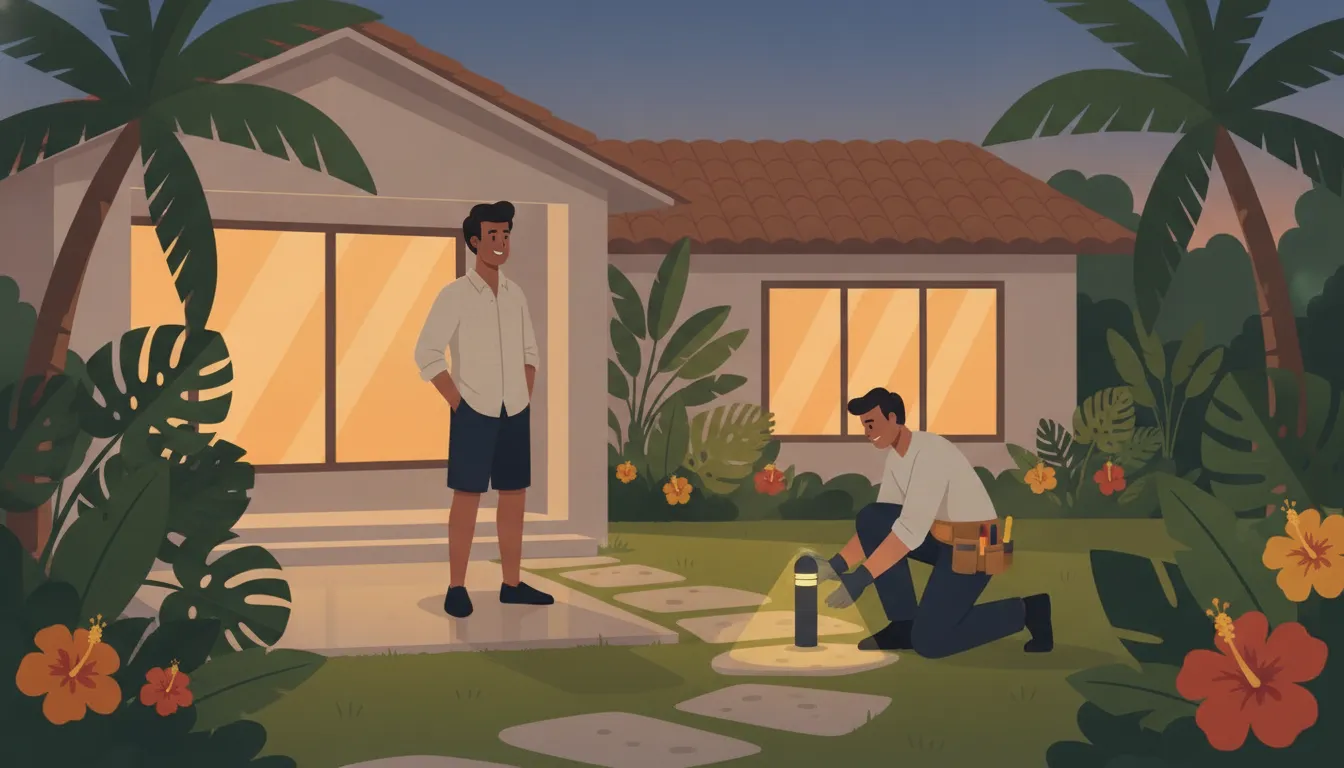
Professional Landscape Lighting for Florida Homes
A dark walkway, harsh glare, or a patio that becomes uncomfortable after sunset can make a well-kept Florida home feel less welcoming. Professional landscape lighting should do more than add brightness. It should help people move safely, highlight the home's best features, and make outdoor areas more comfortable without shining into windows or neighboring yards.
Schedule Service for professional landscape lighting installation and repair.
For homeowners in Port St. Lucie, Stuart, Jensen Beach, Fort Pierce, Vero Beach, and the Palm Beaches, a successful plan starts with the property and the way people use it. A professional assessment can account for walkways, steps, driveways, patios, palms, planting beds, exterior walls, irrigation, rain, and storm exposure. It can also separate the electrical work from decorative choices, so you understand what the project needs before buying fixtures.
Professional landscape lighting is a planned outdoor lighting system that combines suitable fixtures, controlled light direction, weather-aware installation, protected connections, and practical controls. The goal is a balanced yard with useful illumination where people walk and gather, plus carefully aimed accent light where it improves the home's appearance.
What Does Professional Landscape Lighting Include?
Professional landscape lighting is not simply a row of identical lights along a sidewalk. It is a system designed around several purposes. A walkway may need even visibility, while a mature palm may need a narrow accent beam. A patio may need soft ambient light, while an entry may need clearer illumination for visitors. Treating every location the same can create bright spots, dark gaps, and glare.
Property assessment and lighting zones
An electrician begins by looking at how the property is used after dark. The assessment may cover the route from the driveway to the door, steps and changes in elevation, gates, patios, pool-adjacent areas, gardens, trees, walls, and architectural details. These spaces can be divided into zones with different jobs.
- Path and step zones support movement and help reveal changes in grade.
- Entry zones improve visibility where residents and guests arrive.
- Living zones add comfortable light to patios, porches, and outdoor seating areas.
- Accent zones draw attention to trees, planting beds, walls, or other features.
- Security and visibility zones address areas that feel hidden without turning the entire yard into a glare source.
Zoning gives homeowners more control. Path lights can operate on a different schedule from garden accents, and a small area can be upgraded without committing to a full-yard installation. It also keeps the design focused on what matters instead of adding fixtures simply because an empty spot is available.
Fixtures, wiring, and controls
A complete installation may include path lights, area lights, spotlights, wall washers, step lights, timers, transformers, and other outdoor-rated components. The right fixture depends on its position, beam direction, mounting surface, exposure, and purpose. LED equipment can offer targeted distributions, but a brighter lamp is not automatically a better choice.
The electrical scope can include selecting suitable equipment, routing and protecting wiring, connecting the system to its power source, organizing zones, securing connections, and testing the finished installation. Florida conditions matter. Rain, irrigation, soil movement, plant growth, heat, and landscaping work can all affect an outdoor system over time. The final design should leave access for maintenance and avoid placing wiring where routine digging or mowing is likely to damage it.
The National Park Service's outdoor lighting principles recommend considering whether light is needed before choosing how to distribute it. They also describe how shielded fixtures can direct light toward the intended area instead of into the sky. Those ideas are useful for residential landscape lighting because they support visibility while reducing glare and unnecessary spill.
Is Professional Landscape Lighting Worth It?
Professional landscape lighting is worth considering when it solves a specific problem, fits the way your household uses the yard, and is installed for Florida weather conditions. The value may come from safer steps, a more comfortable patio, clearer visibility at an entry, or a carefully designed appearance that avoids glare instead of simply making the yard brighter.
For many homeowners, professional landscape lighting is worthwhile when the system solves a real problem and fits the property. The value may come from a safer route to the front door, a more comfortable patio, or a landscape that looks intentional from the street. The best result is not the brightest yard. It is a yard where light appears in the right places and does not distract from the home.
How lighting improves outdoor use
Thoughtful lighting can make steps and walkways easier to read, define the edge of a seating area, and help guests find an entrance. It can bring out the shape of a mature tree or the texture of a wall without flooding the entire facade. In a Treasure Coast home, it may help an outdoor area stay useful through more of the year when residents want to spend time outside after dinner or host visitors.
Good lighting also respects the people around the property. A fixture aimed toward a bedroom window can be irritating every night. A bright unshielded light can create glare for someone walking or driving nearby. A design that uses lower, directed, and appropriately spaced light can improve the property without creating a new nuisance.
When a smaller project may be the better choice
You do not have to light every tree, border, and wall at once. A phased plan may start with the front walk, steps, entry, or patio. This approach lets you evaluate how the light feels in actual use before expanding to garden accents or a side yard. It can also make future maintenance easier because the system grows in deliberate zones rather than as a collection of unrelated additions.
Schedule Service to review your outdoor lighting goals and plan the right scope for your property.
How Should You Plan a Landscape Lighting Design?
Start a landscape lighting plan by identifying the places people use, separating safety from decorative goals, checking light direction from normal viewpoints, and planning around irrigation, plant growth, rain, and storms. This process helps homeowners choose the right zones and avoid glare, scattered fixtures, and wiring that becomes difficult to maintain.
- List the places people use. Walk the property during the day and mark the driveway, front walk, steps, side gates, pool access, patio, outdoor kitchen, and any path to a detached structure. Note changes in surface, irrigation areas, and landscaping that has grown into the walking route.
- Separate safety, function, and appearance. Decide which locations need dependable visibility, which should support outdoor activities, and which are accent areas. This keeps a decorative feature from receiving more light than a step or entry that people use every night.
- Review fixture direction and glare. Look at the yard from sitting, walking, and driving positions. A fixture that looks attractive when viewed from the ground can be uncomfortable from a patio chair or visible through a nearby window. Shielding and careful aiming can solve many of these problems.
- Plan for Florida growth and weather. Leave room for palms, shrubs, roots, mulch, irrigation, soil movement, and routine landscaping. Outdoor connections and equipment should be suited to the exposure, and the layout should be checked after major storms or landscape changes.
Think about controls before installation
Timers, schedules, photocells, and zone controls affect how useful the system will be. Some homeowners want path and entry lighting to come on reliably at dusk, while accent lighting may be limited to the hours when the family is outside. Discussing these preferences early helps match the wiring and equipment to the way the yard is used.
It is also useful to decide whether the design should support future additions. A plan that leaves accessible routes and sensible capacity can make it easier to extend from an entry and patio to a side gate or planting bed later. A professional electrician can explain which parts of the existing system can be reused and which need correction before expansion.
Is Low-Voltage or Solar Lighting Better for a Florida Home?
Low-voltage and solar landscape lighting can both work in Florida, but they solve different needs. Low-voltage systems generally offer more consistent control and placement when connected to an appropriate power source. Solar fixtures can suit small, sunny areas where simple installation is the priority. Shade, storms, battery performance, wiring, and desired brightness should guide the choice.
When low-voltage lighting is the better choice
Low-voltage lighting is often a practical choice for a planned system with several zones, dependable schedules, and fixtures placed under trees or near structures. It can provide more flexibility than a solar-only approach because fixtures do not each need to collect enough sunlight to operate. The installation still needs suitable equipment, protected connections, correct wiring, and testing.
Low-voltage does not mean the work is automatically risk-free. A transformer, outdoor receptacle, branch circuit, wiring route, or connection may need inspection. Water, irrigation, damaged insulation, loose connections, and landscaping activity can create problems over time. An electrician can evaluate the complete setup rather than treating each dark fixture as an isolated bulb replacement.
When solar lighting can make sense
Solar fixtures may suit a small area with consistent sun and modest lighting expectations. They can be useful where running wiring would be disproportionate to the goal. But their performance can vary with shade, cloud cover, dirt on the panel, battery condition, and storm debris. They may not provide the same predictable schedule or light level as a properly planned wired system.
For a larger yard, shaded planting beds, covered walkways, or lighting that needs to operate consistently for guests, compare the whole-system result rather than the purchase price of one fixture. The best option depends on the property, the desired use, and the work needed to install or repair it safely.
How Much Does Professional Landscape Lighting Cost?
Professional landscape lighting cost depends on the number and type of fixtures, the size of the property, the distance to the power source, existing wiring, controls, access, and any repairs needed. A small walkway project is not comparable to a complete yard system, so a responsible estimate should be based on the actual property and scope.
There is no responsible one-size-fits-all price for professional landscape lighting. A small entry walkway is a different project from a complete system covering trees, patios, gardens, driveways, and walls. A useful estimate should be based on the actual property and work required, not a generic online number that may assume a different layout or equipment level.
What affects the project price?
| Project factor | Why it affects the estimate |
|---|---|
| Fixtures and zones | More paths, steps, trees, patios, and controls require more equipment and testing. |
| Power and wiring | Distance, existing wiring, connections, and needed repairs affect installation work. |
| Property conditions | Soil, irrigation, planting beds, hardscape, and access affect routing and protection. |
| Controls and future needs | Timers, schedules, aiming, cleanup, and expansion planning affect the finished scope. |
- The number and type of fixtures, including path, accent, wall, area, and step lighting.
- The size of the property and the distance between the power source and lighting zones.
- Existing wiring, transformers, timers, connections, or damaged fixtures that need testing or replacement.
- Access conditions, soil, planting beds, hardscape, irrigation, and the need to protect finished surfaces.
- Controls, scheduling, fixture aiming, cleanup, testing, and future expansion needs.
Ask what the estimate includes, which parts are new, what can be reused, how the system will be tested, and what maintenance access will remain. My Electrician uses upfront pricing for electrical work, so homeowners can review the proposed scope and cost before work begins. Visit the electrical services page to review related residential installation and repair options.
When Should You Hire an Electrician for Landscape Lighting?
Hire an electrician when landscape lighting involves a new power connection, outdoor wiring, a transformer or control change, repeated breaker trips, exposed or damaged connections, burning smells, sparking, or lights that fail after rain. Professional troubleshooting can identify whether the problem is a fixture, connection, wiring route, control, or power source.
A homeowner can replace a compatible lamp or clean an accessible fixture, but electrical work deserves more caution. Call an electrician when a project involves new wiring, a power connection, outdoor-rated equipment, changes to a circuit, or troubleshooting that goes beyond a simple lamp replacement.
Warning signs that need professional troubleshooting
- Several fixtures go dark at the same time.
- Lights flicker, pulse, or shut off when other equipment starts.
- A breaker trips after the lighting operates or after rain.
- Connections are exposed, loose, corroded, or sitting in an area that stays wet.
- You notice heat, a burning odor, buzzing, sparks, or damaged insulation.
- A system has been altered repeatedly and no longer has clear zone or control behavior.
Do not keep resetting a tripped breaker or bypass a damaged connection to keep outdoor lights operating. Turn off the affected equipment if it is safe to do so and request an inspection. My Electrician provides electrical repair and troubleshooting for homeowners across the Treasure Coast and Palm Beaches, with 24/7 emergency service for urgent electrical concerns. Learn more about the electrical repair service before your visit.
How Do You Maintain Landscape Lighting in Florida?
Maintain landscape lighting by keeping fixtures visible, clearing leaves and plant growth, checking for shifted aiming, watching for water or corrosion, and reviewing the system after storms or landscaping work. Schedule professional troubleshooting when multiple fixtures fail, connections are damaged, a breaker trips, or the system no longer operates consistently.
Keep fixtures clear and visible
Trim back growth that blocks a lens or changes the intended beam. Remove leaves, mulch, and dirt that collect around fixtures, but do not pull on buried wiring or disturb a connection to reposition a light. If a fixture shifts because of soil movement, erosion, or routine yard work, note the issue and have it reset safely.
Review the system after storms and landscaping work
Florida storms can move soil, break branches, flood planting areas, and send debris into fixtures. Irrigation repairs, new plants, fence work, and digging can also affect buried wiring. After this work, look for dark zones, exposed components, new glare, water inside housings, or lights that operate differently. Stop using equipment that shows obvious damage until it can be evaluated.
Plan periodic adjustments
Landscape lighting is part of a living yard. Palms grow, shrubs spread, mulch is added, and outdoor furniture moves. A design that worked at installation may need small aiming, timing, or fixture adjustments later. Keeping a record of zones and controls makes troubleshooting easier and helps you explain changes to a service professional.

Homeowners can also review the company's about page to learn more about My Electrician's local service approach. For another perspective on planning, read this guide to outdoor lighting installation for curb appeal and safety. You can also check available coupons and deals before scheduling eligible work.
Frequently Asked Questions About Professional Landscape Lighting
Does professional landscape lighting improve safety?
It can improve visibility on walkways, steps, entries, and other areas where people move after dark. The result depends on even placement, appropriate brightness, controlled direction, and proper installation. Landscape lighting should reduce dark gaps without creating glare that makes it harder to see.
Can professional landscape lighting be added to an existing yard?
Yes. A lighting plan can begin with an existing walkway, entry, patio, tree, or planting bed. An electrician should check available power, wiring, connections, controls, irrigation, and access before adding fixtures. A phased approach can expand the system as the homeowner's needs change.
Is solar landscape lighting reliable in Florida?
Solar landscape lighting can work well in small, sunny areas, but shade, cloud cover, dirty panels, battery condition, and storms can affect performance. Compare those factors with your desired schedule and brightness. Wired low-voltage lighting may offer more consistent control for larger or shaded areas.
How should I prepare for a landscape lighting estimate?
List the paths, steps, entries, patios, trees, and other areas you want to use or highlight after dark. Note irrigation, recent landscaping, storm damage, dark zones, glare, and fixtures that already fail. Photos and a short description of your goals can help the electrician understand the requested scope.
Can an electrician repair landscape lighting after a storm?
Yes. An electrician can inspect fixtures, connections, wiring, controls, and the power source after a storm. Do not keep resetting a tripped breaker or use visibly damaged equipment. Turn off the affected system if safe and request professional troubleshooting, especially when you notice heat, sparking, or a burning smell.
Ready to Plan Better Outdoor Lighting?
A thoughtful outdoor lighting plan can make a Florida home easier to navigate, more comfortable after sunset, and more welcoming to guests. My Electrician can help review the property, clarify the electrical scope, and identify practical next steps for homeowners in Port St. Lucie and surrounding Treasure Coast and Palm Beaches communities.
If you are comparing a whole-home lighting project with outdoor improvements, review this lighting installation guide for Treasure Coast homes for room-by-room planning, safety questions, and cost factors.
Contact My Electrician to Schedule Service for professional landscape lighting.