
Residential Electrician in Port Saint Lucie Guide
Flickering lights, a breaker that keeps tripping, or an outlet that suddenly stops working can turn an ordinary home problem into a safety concern. A residential electrician in Port Saint Lucie can help you understand what is happening, identify the right repair, and explain what should happen next. You do not need to diagnose the wiring before you call. Note the symptoms, keep away from damaged equipment, and ask for a clear scope of work.
Schedule Service for safe, professional electrical help in Port Saint Lucie.
A residential electrician in Port Saint Lucie can diagnose and repair electrical problems in a home, including unsafe outlets, switches, lighting, circuits, panels, and wiring. Electricians can also install dedicated circuits, GFCI protection, whole-house surge protection, and other improvements. The right service depends on the symptoms, the condition of the system, and the work you want completed.
My Electrician serves homeowners throughout Port St. Lucie and the surrounding Treasure Coast. The company provides residential repairs, installations, inspections, panel services, and emergency response. This guide explains when to call, what to ask, how estimates are shaped, and how to prepare for a safe visit.
What Problems Should a Residential Electrician in Port Saint Lucie Handle?
A residential electrician can troubleshoot unsafe outlets, switches, circuits, panels, lighting, wiring, and other home electrical systems. My Electrician, Inc. matches the service to your symptoms, equipment, and system condition, then explains the recommended repair in plain language before work begins.
Many service calls begin with a symptom a homeowner can see, hear, or feel. One room may lose power while the rest of the home works normally. Lights may dim when an appliance starts. A switch may feel loose, or an outlet may stop working after a breaker reset. These problems can have different causes, so replacing the visible component without checking the circuit may not solve the issue.
Everyday electrical repairs
Electrical repair service can address outlets, switches, lighting, breakers, wiring connections, and circuit problems. A professional can inspect the affected area, test the circuit, and explain whether the recommended work is a focused repair or part of a broader safety improvement. Request electrical repair services when a problem returns, affects more than one device, or does not improve after a normal breaker reset.
Do not repeatedly reset a breaker to keep a failing circuit in use. Do not use an extension cord as a permanent substitute for a needed circuit. Repeated trips and recurring power loss are useful information for the electrician, not problems to hide.
Panel and circuit work
Homes often gain appliances, air-conditioning equipment, pool equipment, generators, or other high-demand loads over time. A professional can evaluate the available capacity and existing circuits. The condition of the equipment also matters if the panel or service was not designed for the way the home is now used. Explore electrical panel services when you notice panel concerns, plan a remodel, or need to discuss a new high-demand appliance.
An older home does not automatically need a panel replacement. The correct recommendation depends on inspection and testing. A qualified electrician should explain what is unsafe, what is required for the planned work, and which improvements are optional.
Outlets, switches, and GFCI protection
Kitchens, bathrooms, garages, laundry areas, patios, and other damp locations deserve careful electrical attention. A ground-fault circuit interrupter, or GFCI, can help interrupt power when it detects an imbalance. An electrician can install, replace, or test GFCI protection and investigate why a device will not reset. See outlet and switch installation and repair for related residential work.
Stop using an outlet that is warm, loose, discolored, cracked, or damaged. Do not remove its cover or attempt to tighten the wiring. Keep people away from the area and describe the symptom when requesting help.
Lighting, inspections, and surge protection
Lighting projects can include fixture installation, indoor lighting repair, outdoor lighting, and troubleshooting a fixture that flickers or fails. Professional installation helps ensure the fixture, wiring, switch, and circuit are considered together. Homeowners buying a property, remodeling, or reviewing an older system can ask about an electrical inspection.
Whole-house surge protection is another improvement to discuss when you want to protect appliances, electronics, and other connected equipment from electrical surges. Review whole-house surge protection to understand the service option. For a broader overview, the residential electrical services page lists the types of work the company provides.
How Does a Residential Electrician in Port Saint Lucie Respond to Warning Signs?
Call an electrician promptly for burning odors, sparks, hot or discolored outlets, buzzing, sizzling, recurring flickering, or repeated breaker trips. If you see smoke or an active electrical fire, leave the home and call 911. Do not touch the affected equipment.
Electrical warning signs should be judged by what you observe, not by an attempted technical diagnosis. A problem that stops for a few minutes can still require attention. If a device is smoking, sparking, or hot, move people and pets away from the area. If it is safe to do so without approaching the hazard, turn off the relevant power. Never approach exposed conductors or a damaged panel.
Burning smells, sparks, and heat
A burning odor near an outlet, switch, cord, appliance, or electrical panel is not normal. Sparking from an outlet is also an urgent warning sign. Do not keep testing the outlet, plug in another appliance, or repeatedly reset the breaker. Leave the area if conditions worsen. If there is smoke or fire, exit and call 911. For an electrical problem that needs attention outside normal scheduling, contact a 24-hour emergency electrician.
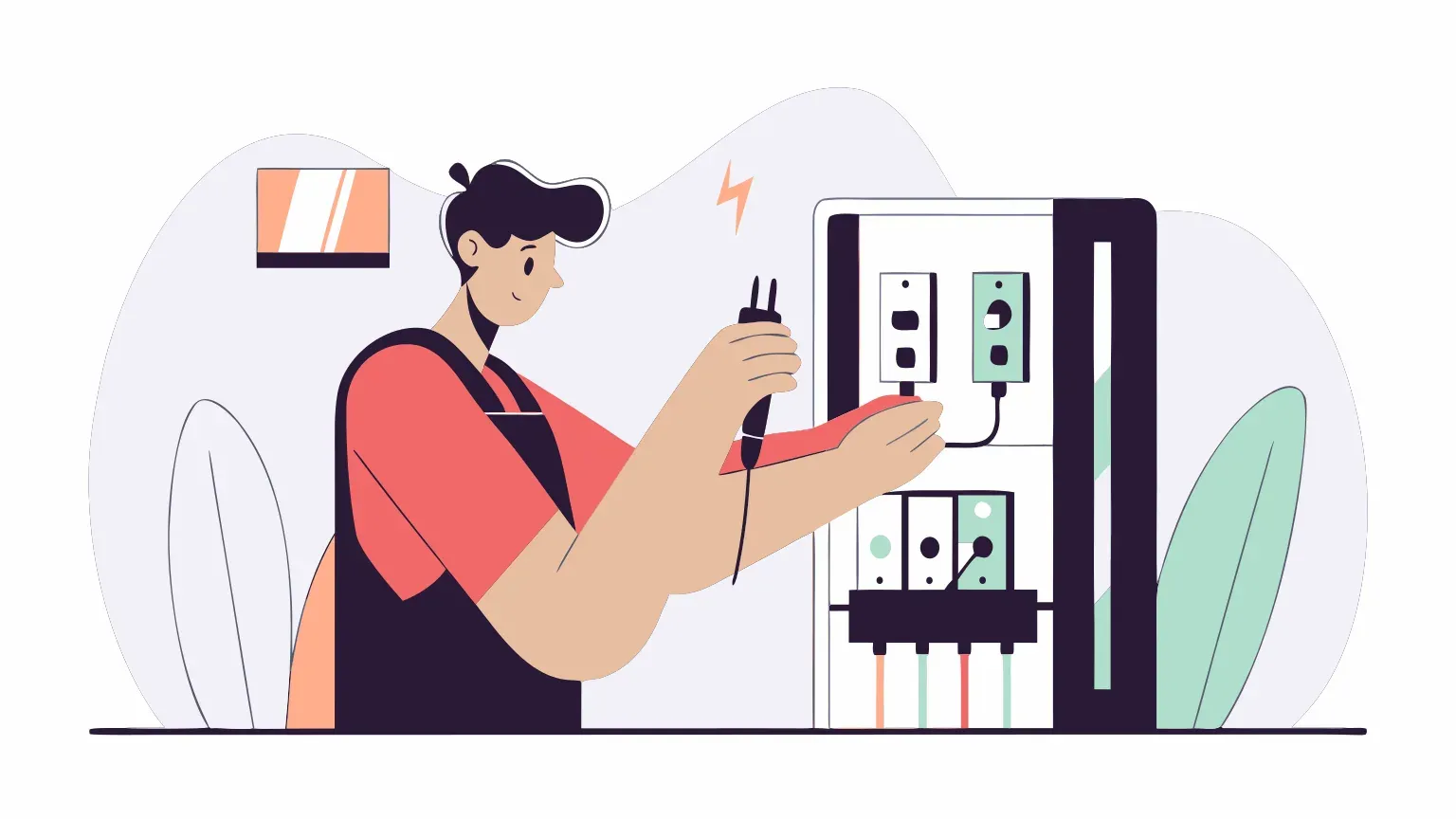
A warm or discolored outlet deserves attention even when it is not actively sparking. Brown or black marks, a melted-looking faceplate, or an unusual odor can indicate heat. Stop using the outlet and arrange professional service. A homeowner should not remove the cover to look for the cause.
Flickering lights and repeated breaker trips
Flickering can affect one fixture, several rooms, or the entire home. Note when it happens and whether an appliance starts at the same time. Repeated flickering needs professional diagnosis because the visible symptom does not identify the source.
A breaker that trips again and again is also a reason to request service. The breaker is designed to interrupt power when a circuit has a fault or when the connected load creates a problem. Do not replace it with a higher-rated breaker, bypass it, or continue resetting it until it stays on. Those actions can allow a hazardous condition to continue.
Buzzing, cracking, or sizzling
Buzzing, cracking, and sizzling near an outlet, switch, fixture, or panel should not be ignored. Stop using the area if you can do so without approaching a hot or damaged component. Tell the electrician what you heard, which room was affected, and whether the sound changed when an appliance was turned on.
Need help with a serious electrical warning sign? Schedule Service with My Electrician FL.
How Do You Choose the Right Electrician for Your Port Saint Lucie Home?
Choose an electrician by confirming qualifications, insurance, a clear written scope, pricing terms, permit responsibilities, and a communication process you understand. My Electrician, Inc. can explain the service approach and expected work so you can compare safety, clarity, and fit, not only the lowest advertised price.
The right contractor should make the work understandable from the first conversation through the final test. Ask who will perform the work, how the issue will be diagnosed, what the estimate includes, and how unexpected conditions will be handled. A professional answer should be specific to your home and the service you need.
Confirm qualifications and experience
Ask which company will be responsible for the work and who will perform it. The contractor should be able to explain the qualifications that apply to the project and the type of residential work the team handles. Consumer guidance from the Washington State Department of Labor and Industries recommends checking contractor licensing and electrician certification. That is general consumer guidance, not a statement of Florida law, so ask the contractor to confirm the requirements that apply to your Port Saint Lucie project.
Experience should match the problem. Troubleshooting an intermittent circuit, evaluating an older panel, installing a dedicated appliance circuit, and replacing a damaged outlet are different jobs. Ask how the electrician approaches the specific symptom instead of accepting a general promise to handle everything.
Request a written scope and pricing terms
A written scope should describe the reported problem, recommended work, materials or equipment, testing, warranty terms when applicable, and exclusions. It should also explain what happens if the electrician finds concealed damage or an unsafe condition after testing begins.
My Electrician uses upfront, flat-rate pricing so homeowners can review the recommended work and expected price before authorizing service. Ask when payment is due and whether additional work requires approval. No homeowner should feel pressured to approve work that has not been explained.
Ask about permits and communication
Permit and inspection requirements depend on the project and local authority. Ask whether your work may require a permit, who will handle the process, and whether related charges are included in the proposal. The Washington consumer resource also explains why permit responsibility matters, but its rules do not replace confirmation of the requirements in Port Saint Lucie.
Good communication is part of safe service. The electrician should explain the finding in plain language, identify immediate risks, discuss reasonable options, and tell you what will be tested when the work is complete. If you are comparing providers, save each written scope so you can compare the actual work rather than only the first advertised price.
What Should Residential Electrical Service Cost?
Residential electrical service does not have one responsible price for every home. The estimate depends on urgency, job scope, access, parts, system condition, and permit or inspection requirements. My Electrician, Inc. uses upfront, scope-based pricing so you can review the work and price before approving service.
| Estimate factor | Why it matters |
|---|---|
| Urgency | An emergency safety problem may require a different response and scheduling approach than planned work. |
| Scope | Replacing one component differs from troubleshooting several rooms, adding a circuit, or completing panel work. |
| Access | Concealed wiring, crowded panels, and difficult locations can require additional labor and care. |
| Parts and equipment | The correct outlet, breaker, wiring, protective device, fixture, or other part must match the system and load. |
| System condition | An older or damaged circuit may need work beyond the visible component to create a safe repair. |
| Permits and inspections | Local requirements vary by project and can add administrative steps or costs. |
A simple replacement can involve a different level of labor and materials than tracing an intermittent power problem. A panel-related project may also require an evaluation of circuits, service capacity, and equipment condition. This is why a one-size-fits-all online price can be misleading for electrical work.
When you request an estimate, ask whether the quote includes diagnosis, parts, labor, testing, permits, inspections, cleanup, and warranty documentation. Ask which findings could change the scope. My Electrician's upfront pricing model allows homeowners to discuss the recommended work and expected price before authorizing service.
Which questions should you ask about an estimate?
- What problem did the testing identify? Ask whether the recommendation addresses the cause or only the visible symptom.
- What work is included? Confirm the components, locations, testing, cleanup, and any follow-up included in the scope.
- What could change the price? Ask about concealed damage, access, parts, panel condition, and permit or inspection requirements.
- Is the work urgent? A safety concern may need prompt attention, while an improvement may be planned around your schedule.
- What happens after completion? Ask how the system will be tested and what documentation or warranty information you will receive.
Use the contact page to start a conversation about the symptoms, property, and service you are considering. A clear description helps the company route the request and set appropriate expectations.
How Can You Prepare for an Electrician's Visit?
Prepare by recording the symptoms, clearing safe access, gathering appliance and panel information, and writing down questions. Bring prior inspection notes if useful, but do not remove covers, handle exposed wiring, replace breakers, or attempt repairs before the appointment. Safety comes first.
- Record what you observe. Note when the issue began, which rooms are affected, and whether it happens when a particular appliance operates. Record flickering, power loss, buzzing, heat, odors, or breaker trips. Take a photo only from a safe distance. Never approach a sparking or exposed component for a better image.
- Keep the area accessible. Move boxes, furniture, and stored items away from the electrical panel, affected outlets, switches, fixtures, and appliances. The electrician may need space for testing and may need to protect floors or furnishings while working.
- Gather useful equipment details. Make a list of appliances or systems recently added, replaced, or moved. Include information you already have about a generator, electric vehicle charger, air conditioner, pool equipment, or other high-demand load. Do not open the panel to find a model number.
- Collect prior reports. If the visit relates to a home purchase, remodel, insurance question, or recurring issue, gather inspection notes, prior estimates, and photos that were taken safely. These records can help the electrician understand what has already been observed.
- Prepare questions. Ask what the electrician found, what options are appropriate, which work is needed for safety, whether permits may apply, and how the system will be tested. Ask what is included in the price and what would require additional approval.
- Leave electrical work to the professional. Do not remove a panel cover, tighten connections, replace a breaker, splice wires, or install a device before the appointment. If the condition becomes more dangerous, keep people away and follow emergency guidance.

These steps give a residential electrician in Port Saint Lucie useful context without asking you to make a risky diagnosis. For a related look at urgent business needs, read this emergency electrical service guide. Clear information helps, but safety comes first whenever electrical equipment is damaged, hot, sparking, or producing unusual sounds.
Schedule Service for a professional electrical evaluation in your Port Saint Lucie home.
Frequently Asked Questions
How do I choose a residential electrician in Port Saint Lucie?
Look for a qualified professional who explains the recommended work, expected cost, and permit or inspection questions before starting. Ask who will perform the work, what is included, and how safety concerns will be handled. Written details and clear communication help you compare providers without relying only on the lowest advertised price.
What services does a residential electrician typically provide?
Residential electricians commonly handle electrical repairs, outlet and switch work, panel services, lighting installation, inspections, dedicated circuits, wiring projects, and whole-house surge protection. They can also investigate flickering lights, repeated breaker trips, buzzing, and outlets that stop working. The appropriate service depends on the home's wiring, panel, circuits, and the observed problem.
What are the common signs that I need a professional electrician?
Call for professional help when lights flicker repeatedly, breakers trip again and again, or you hear buzzing, cracking, or sizzling near an outlet or switch. A warm, discolored, sparking, or burning-smelling outlet is more urgent. Do not use questionable equipment or attempt panel work. If there is smoke or an active electrical fire, leave and call 911.
How much do residential electrical services cost in Port Saint Lucie?
There is no single price for every residential electrical job. The total depends on the scope, urgency, access, required parts, system condition, and any permit or inspection requirements. My Electrician provides upfront, flat-rate pricing so homeowners can review the expected cost before authorizing service.