If your home has growing electrical demands, you may wonder whether it is time to upgrade electrical panel 200 amp service. Lights that dim, breakers that trip, or plans for an EV charger can raise reasonable questions. Those symptoms do not prove that a larger service is needed, but they do justify a professional evaluation before you add equipment or change the panel.
Schedule a professional electrical panel assessment with My Electrician FL or call 877-762-7483.
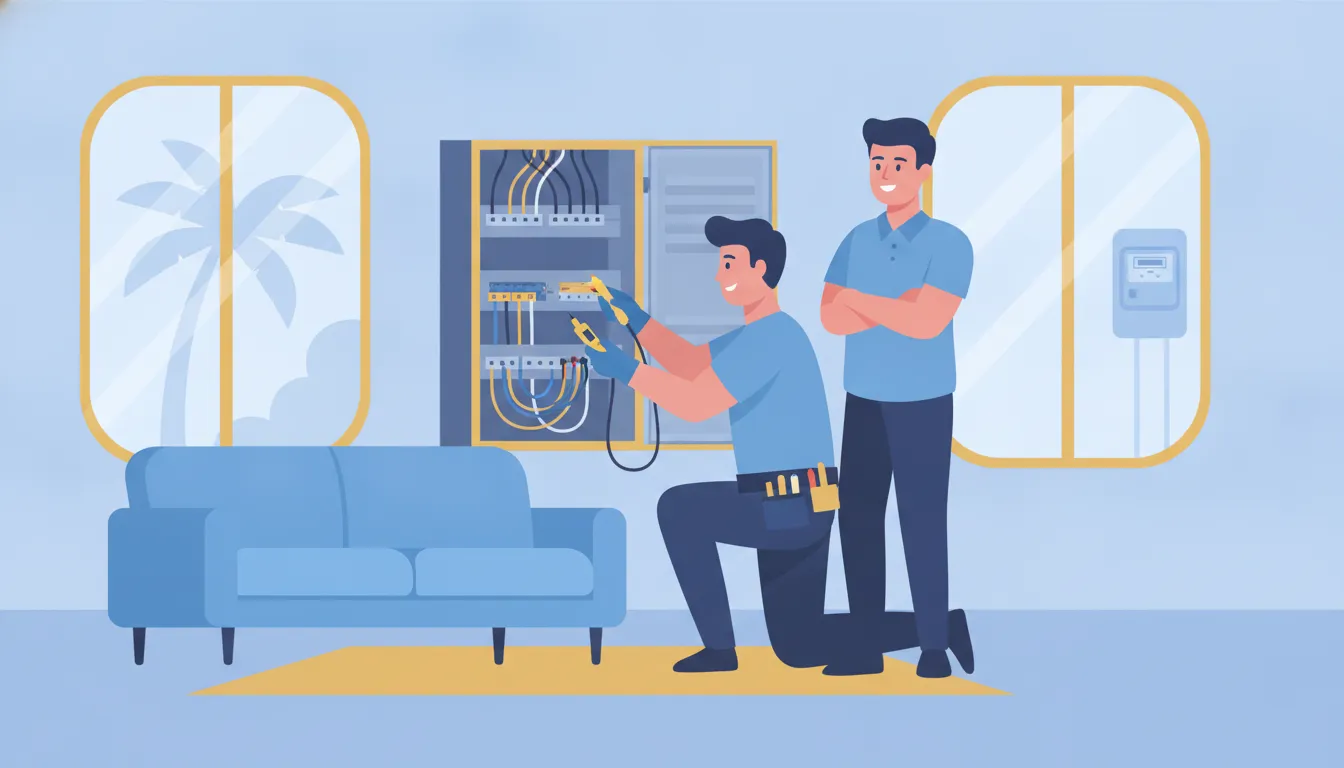
To determine whether a home should upgrade electrical panel 200 amp service, My Electrician FL first reviews the existing service, major appliances, circuits, and planned additions. A load calculation helps show whether 200 amp service fits the home's demand or whether another repair or capacity solution is more appropriate.
A 200 amp upgrade is not simply a larger box on the wall. Depending on the property, the work may involve the main panel, service entrance conductors, meter equipment, grounding, bonding, utility coordination, permits, and inspection. This guide explains what to evaluate and which questions to ask before work begins.
What does it mean to upgrade electrical panel 200 amp service?
The 200 amp rating describes the capacity of the home's electrical service. It is not a guarantee that the home will use 200 amps at once. And it is not the same as the number of breaker spaces in a panel. A panel can have many spaces without providing 200 amp service. The service rating must be confirmed from the equipment and service components, not guessed from the panel's size or appearance.
Think of service capacity as the size of the path that delivers electricity to the home. A larger path can support more demand, but every part of the system still has to be matched correctly. The service conductors, disconnect, panel, breakers, grounding and bonding, and branch circuits all matter. Installing a higher-rated panel without addressing the rest of the service does not create a safe, complete upgrade.
For a homeowner, 200 amp service describes the capacity of the complete electrical service, not just the number of breaker spaces. The panel, disconnect, conductors, meter equipment, grounding, and bonding must work together. A qualified electrician must confirm the rating and condition of those components.
Why older homes need an individual evaluation
Many older homes were built around lower electrical demand. A system that was adequate when a home had fewer appliances may need review after a renovation or equipment addition. Central air conditioning, heat pumps, electric ranges, water heaters, pool equipment, workshops, hot tubs, and EV chargers can change the expected load.
Age alone does not prove that an electrical service is unsafe or that 200 amps are required. The condition of the equipment and the home's actual and planned demand should guide the decision. A qualified electrician can identify whether the concern is service capacity, one overloaded branch circuit, damaged equipment, or a different issue.
How a load calculation guides the recommendation
A load calculation estimates the electrical demand created by existing equipment and planned additions. It gives the electrician a basis for discussing service size rather than relying on a guess. The review should include the current main service, major appliances, heating and cooling equipment, existing circuits, and projects you expect to complete later.
Share the complete plan during the assessment. If you mention only today's appliances but add an EV charger or remodel later, the initial recommendation may not reflect the home's future needs. The best service plan accounts for realistic demand without promising that every home needs the same capacity.
When should you upgrade electrical panel 200 amp service?
A service upgrade may be worth evaluating when the current system cannot comfortably support the home's existing or planned demand. It may also be appropriate when the service equipment is damaged, outdated, or no longer suitable for the home's use. The recommendation should follow an inspection and load calculation, not a sales assumption based only on the panel's age.
Consider an evaluation before a major renovation or a high-demand addition, such as an EV charger, heat pump, electric range, pool equipment, or workshop. Repeated trips and dimming also deserve attention, but those symptoms can have several causes and do not automatically mean a 200 amp upgrade is required.
New equipment or a major renovation
Contact an electrician before adding equipment with a substantial electrical demand. Examples include an EV charger, electric range, heat pump, water heater, pool pump, spa, workshop tools, or a new HVAC system. A whole-home renovation can also add circuits and appliances that change the service calculation.
If an EV charger is part of the plan, review the related guide to panel upgrades for EV charging. The charger is only one part of the decision. The electrician should consider the home's service, available capacity, charger requirements, and any other equipment you expect to use at the same time.
Repeated trips, dimming, or limited usable circuits
Frequent breaker trips can indicate an overloaded circuit, a faulty appliance, damaged wiring, or limited service capacity. Lights that dim when a large appliance starts may have more than one possible cause. These symptoms should prompt an evaluation, but they do not identify the remedy by themselves.
A shortage of convenient outlets can also lead to unsafe workarounds. If extension cords have become part of your daily setup, ask whether additional circuits or outlets would solve the problem. Do not assume that a 200 amp upgrade is the only answer.
When a fuse-to-breaker change is not the same project
Replacing a fuse box with a breaker panel can improve how circuits are protected and managed, but it does not automatically create 200 amp service. The service rating, meter equipment, conductors, and main disconnect still need to support the selected capacity. Ask the electrician to explain whether the project is a panel replacement, a service-capacity upgrade, or both.
What warning signs should a homeowner treat seriously?
Some electrical symptoms call for prompt attention regardless of whether the eventual recommendation is a 200 amp upgrade. A new panel will not make a burning outlet safe, and repeatedly resetting a breaker is not a repair. If a condition appears dangerous, stop using the affected equipment and seek professional help.
- Repeated breaker trips: Note which appliance or activity was running when the breaker opened. Do not keep resetting it without finding the cause.
- Dimming or flickering lights: Record when the symptom occurs and whether a large appliance starts at the same time. UL Solutions identifies flickering and other wiring symptoms as reasons to investigate the system.
- Burning odors, buzzing, or heat: A hot, discolored, melted, or buzzing outlet, switch, or panel needs prompt evaluation. Do not remove the panel cover or touch damaged wiring.
- Smoke, flames, or sparks: Leave the area and contact emergency services when there is an immediate fire or life-safety threat. Do not attempt an electrical repair while the condition is active.
- Extension cords used as permanent wiring: Ongoing reliance on cords may indicate that the home's circuit or outlet layout needs attention.
UL Solutions explains that high-demand appliances sharing a circuit can contribute to dimming and other warning symptoms. That is why a symptom should be investigated rather than treated as proof that the entire service must be replaced. The inspection should determine what is happening and which remedy fits the property.
How is a 200 amp service upgrade planned?
A careful project begins with the home's actual conditions and ends with testing, labeling, and inspection. The exact scope varies by property. A typical planning sequence includes the following steps:
- Inspect the existing system. The electrician reviews the service rating, panel, main disconnect, meter equipment, service entrance, grounding and bonding, accessible branch circuits, and visible signs of heat or damage. Tell the electrician about flickering, trips, unusual odors, renovations, and planned equipment.
- Complete a load calculation. The calculation considers present demand and planned additions. It helps determine whether 200 amp service is appropriate or whether a different circuit, equipment, or repair plan better matches the home's needs.
- Define the written scope. The scope should identify what will be replaced and what will remain. It should state which circuits require changes and whether the work includes the meter base, service conductors, grounding, bonding, labeling, or related repairs. Ask about exclusions and conditions that could change the work.
- Confirm utility and permit requirements. The electrician should explain whether the utility must disconnect or reconnect service and which local authority handles the permit and inspection. Requirements depend on the address and project scope.
- Install the approved equipment. The electrician completes the work described in the scope, including any required service components and circuit transfers. Equipment ratings, conductor sizing, terminations, clearances, and grounding must be matched to the design.
- Test, label, and document the work. Before completion, the electrician should check breaker operation, circuit labeling, covers, clearances, grounding and bonding, and the condition of the work area. Ask what permit or inspection information you will receive.
Technical conductor requirements can depend on installation conditions. The National Institutes of Health ampacity guidance illustrates why conductor selection involves more than choosing a number printed on a panel. This work belongs with a qualified electrician who can evaluate the complete service.
What permit and utility questions should you ask?
Permitting and utility coordination are important parts of a service upgrade. The responsible authority, inspection sequence, and utility process can vary by address. A homeowner should receive a clear explanation of what is known, what depends on another party, and what could require additional work.
Questions about permits and inspections
- Which authority has jurisdiction for this address?
- Who prepares and manages the permit application?
- Who schedules the inspection, and what must remain accessible?
- What happens if the inspection identifies an existing condition that needs correction?
- What records will be provided after approval?
Questions about utility coordination
- Will the utility need to disconnect or reconnect service?
- Which portions of the service equipment belong to the utility?
- What information or site access will the utility require?
- Which scheduling steps depend on the utility rather than the electrician?
Do not accept a universal timeline without understanding these dependencies. A responsible plan identifies the next milestone and explains how schedule changes will be communicated. It should also distinguish the electrician's work from utility-controlled infrastructure.
My Electrician FL can help homeowners discuss panel and service needs across the Treasure Coast and Palm Beaches service area. For related service information, see the electrical services overview or request an assessment before selecting equipment.
What affects the cost of a 200 amp upgrade?
There is no responsible one-size-fits-all price for a service upgrade. The written scope should be based on the home's equipment, calculated demand, site conditions, utility requirements, and local inspection process. A professional assessment helps identify the variables before you compare proposals. For more context, read the related guide to electrical panel upgrade cost factors in Florida.
| Project factor | Why it matters | Question to ask |
|---|---|---|
| Existing panel and service equipment | The panel, main disconnect, meter base, and service entrance may not all have the same condition or rating. | Which components are included in the proposed scope? |
| Load and equipment changes | Planned HVAC equipment, EV charging, renovations, and other large loads affect the design. | Was the recommendation based on a load calculation? |
| Conductor and grounding work | Conductor sizing, terminations, grounding, and bonding must match the equipment and installation conditions. | Will the proposal identify related conductor and grounding work? |
| Access and property conditions | Equipment location, wall access, service routing, and existing conditions influence the work sequence. | What site conditions could change the scope? |
| Permits, inspection, and utility steps | Local approvals and utility coordination can affect scheduling and required documentation. | Who handles each approval and coordination step? |
Ask for a written, scope-based proposal rather than selecting a service size from a generic price claim. If an inspection reveals a separate issue, the electrician should explain its safety significance and obtain approval before adding work. A clear proposal makes it easier to compare what each contractor is actually including.
Frequently Asked Questions
Does every older home need a 200 amp service upgrade?
No. Age alone does not determine the correct service size. An electrician should review the existing equipment, electrical demand, planned additions, and system condition. Some homes may need a service upgrade, while others may need a circuit repair, panel replacement, or different solution.
Will a new panel automatically provide 200 amp service?
No. The service rating depends on the complete service configuration, including the panel, main disconnect, conductors, meter equipment, and other components. Replacing only the interior panel does not automatically increase the capacity delivered to the home.
Can I add an EV charger before upgrading the panel?
Ask an electrician to evaluate the service before installing the charger. The decision depends on the existing capacity, charger requirements, other equipment, and the home's calculated demand. A load review can show whether the service can support the charger or whether another change is needed first.
Should a homeowner open the panel to investigate a problem?
No. Homeowners should not remove a panel cover, touch exposed wiring, tighten connections, or work inside energized equipment. If you see smoke, sparks, burning odors, unusual heat, or damaged parts, move away from the hazard and seek professional assistance.
Ready to plan your panel upgrade?
A safe decision starts with the home's actual electrical demand, not a guess based on panel appearance. My Electrician FL can discuss the symptoms you have noticed, planned equipment, load considerations, permits, and the scope of an evaluation.
Schedule your electrical panel assessment with My Electrician FL or call 877-762-7483.