
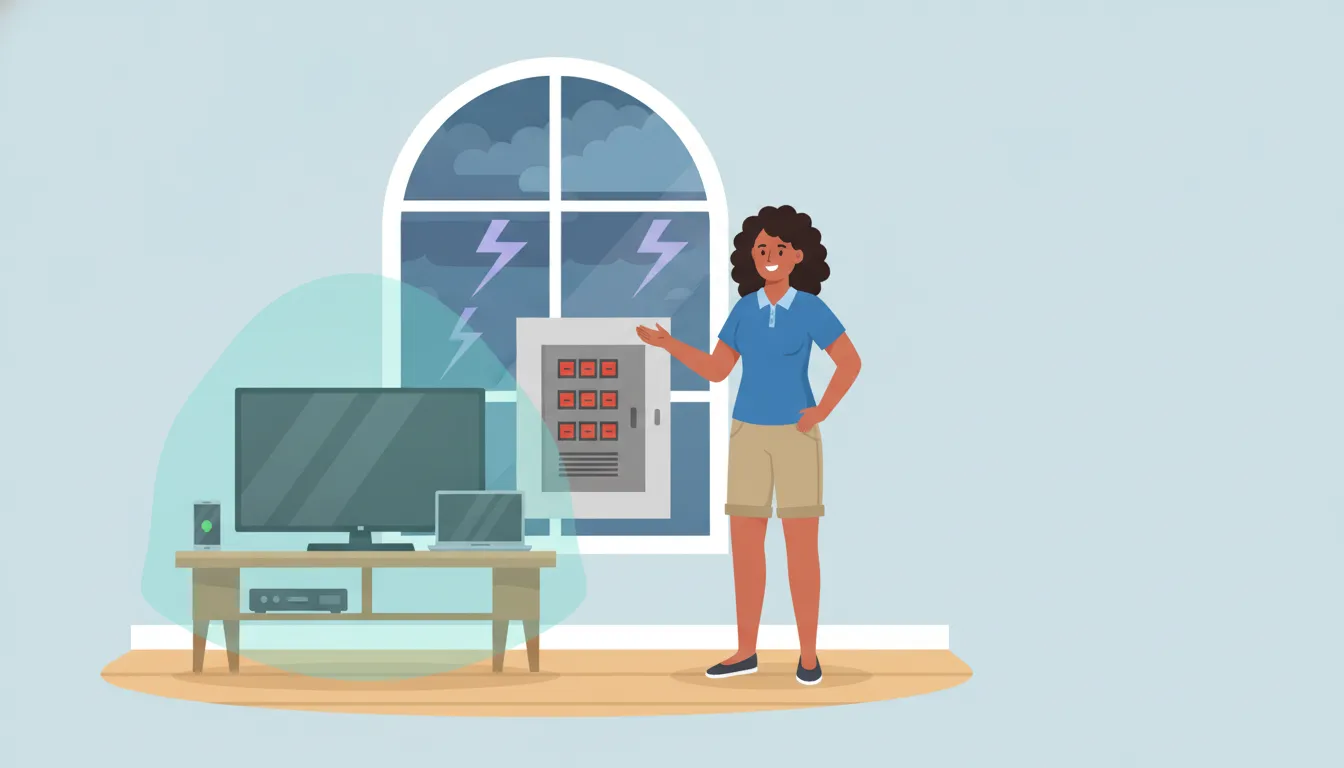
When lights flicker after a storm, a voltage spike may be involved.
Schedule Service to discuss practical surge protection for your home.
What is a surge protector? It is a device designed to protect electrical equipment from voltage spikes or dips. It can reduce the effects of some electrical events, but it cannot promise complete protection from every surge, including every lightning event. NIST defines surge protectors in similar terms.
For homeowners, the useful question is not simply whether to buy a plug-in device. It is how outlet-level protection and whole-house protection fit together, what warning signs deserve attention, and when electrical work should be left to a qualified professional. Start with the basic difference between these approaches and how each one fits into a safer home protection plan.
What Is a Surge Protector?
A surge protector is a device designed to protect electrical equipment from sudden voltage spikes or dips. In plain English, it helps manage a brief burst of electrical energy before that burst can damage the sensitive controls inside a television, computer, refrigerator, HVAC system, or other appliance. The National Institute of Standards and Technology (NIST) describes surge protectors as devices intended to protect electrical devices from these abnormal changes in voltage.
These events can happen for several reasons. Lightning is one possibility, but a short circuit, damage to utility equipment, or another electrical accident can also make voltage jump to hundreds or even thousands of volts. A surge may last only a few millionths of a second, yet that can be enough to disrupt an appliance or destroy an electronic control. Most household equipment is built for normal 120-volt AC power, with some tolerance above or below that level. A sharp spike can exceed that tolerance before you notice anything unusual.
Protection does not mean a device can stop every electrical event or guarantee that no equipment will ever be damaged. Its purpose is to reduce the amount of abnormal energy that reaches connected equipment. That distinction matters in coastal Florida, where homeowners may be especially alert to storm-related electrical concerns. A point-of-use protector can help protect equipment plugged into it, while whole-house surge protection addresses protection at the electrical system level.
If lights flicker, electronics fail after a storm, or an appliance behaves unexpectedly, do not assume the cause is a surge. Burning odors, buzzing, heat, sparking, or repeated breaker trips call for a qualified electrical assessment. A professional can explain which type of protection fits your home without asking you to open or modify an electrical panel.
How Does a Surge Protector Work?
A surge protector is designed to help protect electrical devices from sudden voltage spikes or dips. Your appliances expect a normal household supply of about 120 volts AC, with some tolerance above or below that level. When voltage rises sharply beyond what their components can handle, sensitive controls and electronics may be damaged or disrupted. The National Institute of Standards and Technology defines a surge protector by this basic protective purpose.
Lightning is one possible cause, but it is not the only one. A lightning strike or another electrical accident can make voltage jump to hundreds or even thousands of volts. The surge itself may last only a few millionths of a second, yet that brief event can be enough to destroy or upset an appliance, according to NIST's home surge protection guide.
Outlet protection for connected devices
Point-of-use protection works near the equipment it serves. A properly identified surge-protective device at an outlet can help manage a surge reaching connected electronics such as a television, computer, or entertainment system. However, a basic power strip does not necessarily include surge protection. Look for the device's protected indicator, and remember that protective components can wear down after handling an electrical event.
Avoid connecting power strips or surge protectors to one another. The University of California, Irvine electrical safety guide warns against daisy-chaining them because of overload and fire risk. High-current-draw equipment should be connected as recommended by its manufacturer, and damaged cords or plugs should not be used.
Whole-house protection at the electrical system
Whole-house protection addresses the electrical system at a broader level rather than protecting only one outlet. It can complement point-of-use devices, but neither approach should be treated as a promise that every lightning event or electrical problem will be prevented. In coastal Florida, homeowners concerned about storms, flickering lights, or damaged electronics can ask a qualified electrician to assess which combination fits their home. Do not open or modify an electrical panel yourself.
Surge Protector vs. Power Strip: What Is the Difference?
A power strip gives you additional outlets, but the name alone does not mean it protects connected equipment. A surge protector is designed to help protect electrical devices from voltage spikes or dips. For a homeowner asking what is a surge protector, the practical answer is this: it is a protective device, not simply a longer extension of the wall outlet.
| Option | What it does | Where it helps | Important limit |
|---|---|---|---|
| Ordinary power strip | Adds outlets for low-demand equipment. | Organizing plugs at a desk or entertainment area. | It does not necessarily provide surge protection. |
| Point-of-use surge protector | Combines multiple outlets with protection intended to reduce the effect of some voltage events. | Plug-in electronics and other suitable equipment near the protector. | It does not guarantee protection from every surge, and it can wear down after an electrical load. |
| Whole-house surge protection | Provides protection at the home electrical system level when properly selected and installed. | Supports a broader, layered approach for equipment throughout the home. | Panel-level work is not a do-it-yourself project. A qualified electrician should assess the system. |
These options are not interchangeable. NIST distinguishes protection at the outlet from protection for the whole house. So a plug-in device should not be treated as a complete substitute for a professionally evaluated system. In coastal Florida, homeowners may also consider the broader storm and lightning risk when discussing electrical services and layered protection.
How to use a power strip or surge protector safely
- Never plug one power strip, surge protector, or extension cord into another. Daisy-chaining can overload a circuit and create a fire hazard.
- Plug high-current-draw equipment directly into a wall outlet, and check the manufacturer's amperage requirements before connecting equipment.
- Check a surge protector's protected indicator periodically. If the indicator is off, or the device is cracked, hot, discolored, or damaged, stop using it and replace it.
- Keep cords away from water and walking paths. Do not use a strip or protector as a substitute for an extension cord or as a way to add outlets indefinitely.
If lights flicker, breakers trip repeatedly, or an outlet smells burnt or feels hot. Unplug equipment only if it is safe to do so and arrange for electrical evaluation. Those symptoms call for diagnosis, not another power strip.
What Appliances and Electronics Need Surge Protection?
Think about the equipment that would be costly or disruptive to replace: televisions, computers, internet equipment, gaming systems, smart-home hubs, and appliances with electronic controls. A surge can last only a few millionths of a second, yet it may destroy an appliance or upset its controls. Household appliances are designed for normal 120-volt AC power with some tolerance above or below that level, not every sudden voltage event. NIST explains how surges can affect household equipment.
That does not mean every device needs the same product. Point-of-use protection can help with electronics plugged into a nearby outlet, while whole-house protection addresses surges entering through the home's electrical system. These approaches can work as layers, but neither should be treated as a promise that every appliance will be protected from every event.
Prioritize sensitive electronics first
Start with devices that contain delicate electronic controls or store important data. A quality, properly approved surge protector may be appropriate for a computer workstation, television and streaming equipment, or networking gear. A basic power strip is not automatically a surge protector, so check the product labeling and approval information before relying on it.
Use these devices safely. High-current-draw equipment should be plugged directly into the wall rather than into a surge protector or power strip. Do not daisy-chain strips, surge protectors, or extension cords. That can overload a circuit and create a fire hazard. Avoid damaged cords and plugs, too.
Remember that protectors have limits
Check the protected indicator periodically. Surge protectors can wear down and become less effective after handling an electrical load. Replace a protector when its indicator or instructions show that protection is no longer active. If you notice flickering lights, repeated breaker trips, buzzing, burning odors, or hot or discolored equipment. Stop using the affected equipment and arrange for a qualified electrician to assess the problem. Do not open or modify an electrical panel yourself.
What Homeowner Symptoms Mean You Should Call an Electrician
A surge protector can help manage certain voltage events, but it is not a substitute for investigating an electrical warning sign. If your lights flicker repeatedly, a breaker trips again and again, or an outlet, switch, cord, or appliance feels warm, stop and pay attention. These symptoms can indicate an unsafe condition that a device alone will not correct.
Call an electrician promptly if you notice any of the following:
- A burning odor, cracking sound, or buzzing near an outlet, switch, panel, or appliance.
- Warm or hot equipment, an outlet cover that feels unusually hot, or discoloration around an electrical connection.
- Repeatedly tripped breakers or lights that flicker when appliances operate.
- A shock or tingling sensation from an appliance, receptacle, or switch.
- Damage after a storm, outage, lightning event, or visible sparking.
These signs are commonly listed as electrical warning signs in the University of California Irvine electrical safety guide. They do not identify one particular cause. And you should not try to diagnose the problem by removing an outlet cover, testing exposed wiring, or opening the electrical panel. If there is smoke, active sparking, or an immediate danger, move away from the area and contact emergency services as appropriate.
Even when the original concern is surge protection, a professional can assess the symptoms, review the home's electrical system, and explain the safest next step. A signs to call an electrician guide can help you recognize when a concern deserves attention, while a professional electrical safety inspection provides a more complete evaluation. My Electrician's service process includes an assessment, a complete quote before work begins, and safety checks after code-aware work. Avoid using a damaged cord or continuing to reset a breaker without professional guidance.
How Do You Choose a Surge Protector for Your Home?
Start with the product label, not just the number of outlets. A surge protector should be approved by a nationally recognized testing laboratory, which provides an important baseline for product safety. A basic power strip is not automatically a surge protector, so look for clear protection information rather than assuming every strip offers the same function. Electrical safety guidance from the University of California, Irvine explains these distinctions.
If you use a plug-in protector, check its protected indicator light periodically. The light should remain on according to the product instructions. A protector can wear down or become less effective after handling an electrical load. So an indicator that is no longer showing protection is a reason to stop relying on that device and review the manufacturer's guidance.
Use the cord and outlets safely
Safe use matters as much as selection. Never daisy-chain surge protectors, power strips, or extension cords. Doing so can overload a circuit and create a fire hazard. Do not use a protector as an extension cord, and check the equipment manufacturer's amperage requirements before plugging it in. High-current-draw equipment should be connected directly to a wall outlet. Do not use a cord, plug, or protector that is damaged, hot, discolored, or otherwise showing signs of trouble.
When should you consider panel-mounted protection?
A panel-mounted option protects a different part of the home's electrical system than a device at one outlet. Choosing one requires more than comparing packaging. The home's electrical service, panel condition, existing protection, and safety requirements all matter. Do not open or modify an electrical panel to investigate or install protection yourself. A qualified electrician can assess the system, explain the available approach, and identify whether the home needs repair or additional safety work before any panel-related decision is made.
Can a Surge Protector Protect Your Home During a Storm?
Storm-related surges are brief, but their effects can last much longer. Lightning and other accidents can cause household voltage to jump to hundreds or even thousands of volts. According to the National Institute of Standards and Technology, a surge may last only a few millionths of a second, yet still disrupt or destroy appliances and their electronic controls.
What protection can and cannot do
A surge protector is designed to help protect electrical devices from voltage spikes or dips. During a storm, it can reduce the amount of damaging energy that reaches connected equipment, but it cannot promise complete protection from every lightning event or electrical fault.
Plug-in protectors add protection at individual outlets. Whole-house surge protection is a broader safety upgrade that can help manage surge risk as electricity enters the home. The right approach depends on the home's electrical system, connected equipment, and the evaluation of a qualified electrician. Do not open or modify an electrical panel yourself.
For homeowners along coastal Florida, storm preparation deserves attention because lightning and outages are recurring concerns across the Treasure Coast and northern Palm Beaches. If you are considering a whole-house surge-protection service, a professional can assess the system and explain practical options without treating any device as a guarantee.
Safe actions during an outage or storm
- Unplug sensitive electronics when it is safe to do so and avoid handling cords or equipment that is wet, hot, damaged, or discolored.
- Do not connect power strips or surge protectors to one another, and do not use a strip that shows damage or no longer displays its protected indicator.
- If you notice burning odors, buzzing, sparking, repeated breaker trips, or heat around electrical equipment, keep away and contact a qualified electrician. For urgent storm damage or an unsafe electrical condition, contact My Electrician for help.
Schedule a professional electrical safety inspection before choosing panel-level protection.
Frequently Asked Questions
Is every power strip a surge protector?
No. A power strip may only add outlets, while a surge protector is designed to help limit voltage spikes. Check the product labeling and look for a protected-status indicator. If that indicator is no longer active, replace the device rather than assuming it still provides protection. Electrical safety guidance also recommends checking protectors periodically.
Can you plug one surge protector into another?
No. Do not daisy-chain surge protectors or power strips. Connecting them together can overload the circuit and increase fire risk. Use a properly rated device connected directly to an appropriate wall outlet, and follow the manufacturer's instructions for the equipment you are protecting.
Should a surge protector stay plugged in during a storm?
It can provide a layer of protection for connected equipment, but it cannot guarantee safety from every surge or lightning event. Unplug sensitive electronics when it is safe to do so, especially if severe weather is approaching. A whole-house approach can complement outlet-level protection, but panel work should be handled by a qualified electrician.
When should you call an electrician about surge protection?
Call for professional help if you notice flickering lights, repeated breaker trips, buzzing, burning odors, heat, discoloration, or tingling from an outlet or appliance. Stop using damaged cords or equipment. Never open or modify an electrical panel yourself; an electrician can evaluate the symptoms and recommend a safe protection plan.
Ready to Schedule Service?
A professional evaluation can help you understand which surge-protection approach fits your home's electrical setup and priorities. My Electrician FL can provide practical guidance without asking you to open or modify an electrical panel yourself.