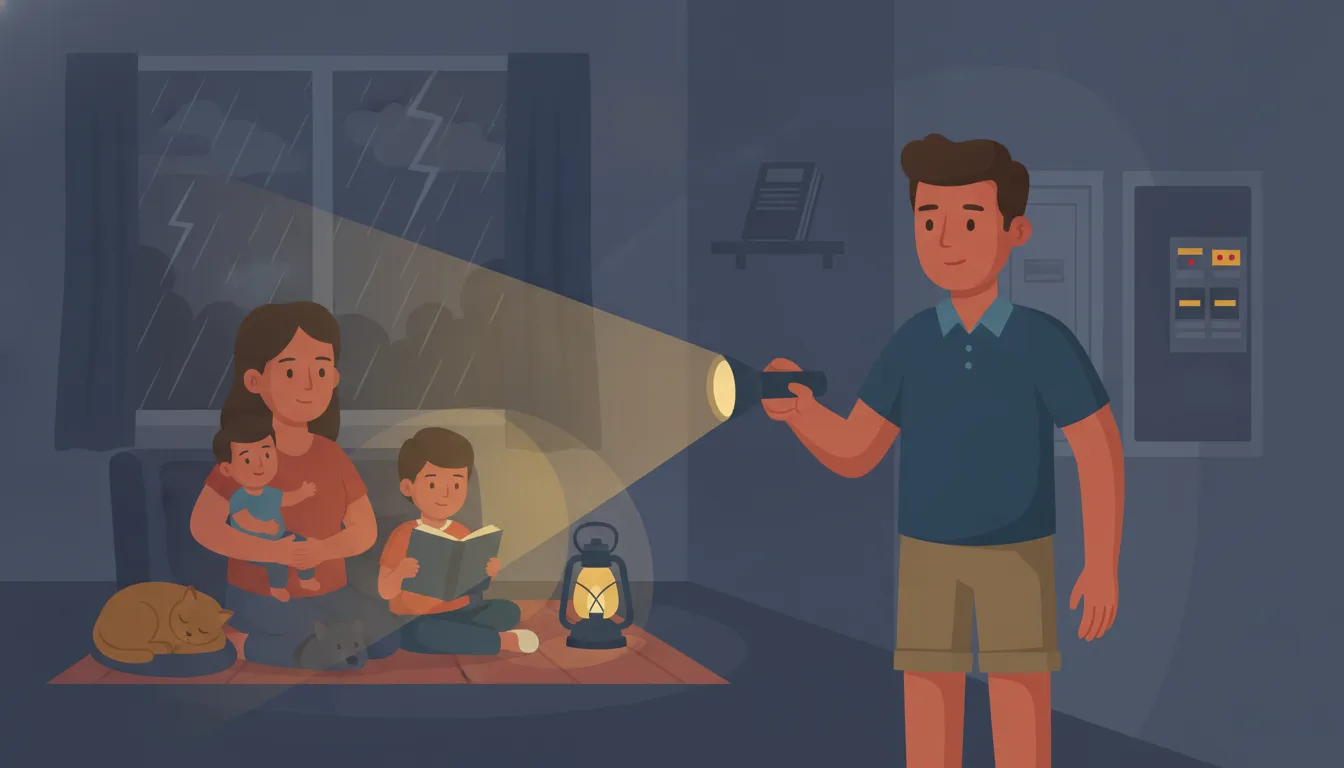
When power returns after an outage, do not switch everything back on at once. Check that people and pets are clear of hazards. Look for electrical damage from a safe position, and restore appliances gradually. This post focuses on what to do in a power outage after service returns. The immediate interruption has ended, but the home may still have damaged equipment, unstable power, or a generator that needs attention.
After power returns, leave damaged, wet, hot, sparking, or unusual-smelling equipment alone. Confirm that the utility has restored service. Keep sensitive electronics disconnected until power appears stable. Reconnect essential appliances one at a time. Stop if a breaker trips, lights flicker, or a device overheats. Never open an electrical panel or investigate exposed wiring yourself. If the outage left a localized problem or visible damage, arrange professional electrical service.
Schedule Service for outage-related electrical damage or unsafe power restoration.
What to Do in a Power Outage After Service Returns
Power returning is a good sign, but it is not proof that every circuit and connected device is safe. Restoration can expose problems caused by storm damage, water intrusion, a damaged service connection, a failed appliance, or an electrical fault that was present before the outage. Take a slow, observable approach. Do not try to make the entire home feel normal immediately.
- Confirm that service is actually restored. Check one light from a dry, safe location. If the light flickers, pulses, or turns off again, do not continue testing other circuits.
- Keep people away from questionable areas. Block off rooms with water, smoke, a burning odor, visible damage, or a hot outlet or switch. Keep children and pets away until the area has been evaluated.
- Leave sensitive equipment disconnected. Computers, televisions, networking equipment, chargers, and other electronics can remain unplugged while you observe whether power stays stable.
- Restore essential loads gradually. Reconnect or turn on one appliance at a time. Pause between devices so you can notice unusual sounds, heat, odors, or another interruption.
- Stop at the first warning sign. A repeated trip, buzzing, arcing, smoke, heat, or a burning smell is a reason to stop restoring power and request qualified help.
Do not treat a successful first light test as permission to reset every breaker or reconnect every appliance. A cautious sequence gives you useful information. It also avoids turning an uncertain situation into a shock, fire, or equipment-damage risk.
How Can You Inspect the Home Without Creating a Second Hazard?
A visual check can help you decide whether the home is ready for normal use. It should remain a visual check. Stand in a dry location and look for obvious signs of damage. Do not remove covers, pull out outlets, open the electrical panel, touch wiring, or walk through water to reach equipment.
Check for water and storm damage first
After a Florida storm, water can reach outlets, appliances, panels, service equipment, and extension cords. Do not enter a flooded room to retrieve belongings or investigate the outage. Water near electrical equipment can create a shock risk even when the lights appear to be working. Keep clear and contact emergency responders if anyone is injured, trapped, or exposed to an immediate threat.
Look from a safe position for damaged exterior equipment, a leaning service mast, loose conductors, downed lines, or debris near the electrical service. Never approach a downed or low-hanging line. Do not assume a line is inactive because the surrounding property has power. Keep people away and report it through the appropriate emergency or utility channel.
Look and listen for changes
Some damage is first noticed through a smell or sound. Stop using a device if you notice smoke, visible sparks, arcing, melted plastic, a hot faceplate, buzzing, crackling, or a sharp burning odor. A device that feels unusually warm is also a reason to stop handling it. Do not repeatedly switch it on to see whether the symptom returns.
If there is active smoke, fire, an explosion risk, or another immediate threat to people, leave the area if you can do so safely. Call 911 from a safe location. The electrical inspection comes after emergency responders and the utility make the situation safe.
Record what you can observe
Write down when power returned. Note whether the outage followed lightning, wind, flooding, a loud electrical pop, or another noticeable event. Record which rooms, outlets, or appliances appear affected. Take a photo only from a safe, dry position. Do not move closer to get a better view. This information can help the utility or electrician understand the sequence without asking you to diagnose the problem.
When Should You Reconnect Appliances and Electronics?
Reconnect equipment only after you have seen stable power. Confirm that the device and its surrounding area appear dry and undamaged. You do not need to restore everything immediately. A staged restart is safer. It also makes it easier to identify the appliance or circuit associated with a new problem.
Use a one-device-at-a-time restart
Start with an essential appliance that is dry, intact, and easy to observe. Allow it to run normally before reconnecting another load. Avoid starting several motor-driven appliances together, such as an air conditioner, refrigerator, pump, or washer. A large simultaneous load can make an existing electrical problem harder to identify.
Keep children and pets away while equipment restarts. Listen for humming, clicking, repeated cycling, or other sounds that were not present before the outage. Stop if the appliance smells hot, trips a breaker, causes lights to dim, or makes the power unstable. Do not keep resetting the breaker to force the device to run.
Protect sensitive electronics
Keep computers, televisions, internet equipment, and other sensitive electronics unplugged until power appears stable. Ready.gov recommends disconnecting appliances and electronics to help limit damage from electrical surges. Its power-outage guidance also recommends keeping refrigerators and freezers closed during the interruption. When you reconnect equipment, use a dry hand. Inspect the cord, and stop if the device has heat, smoke, water exposure, or visible damage.
A whole-house surge protector may be part of a broader electrical protection plan. It does not make damaged wiring or wet equipment safe to touch. If you want to discuss surge protection or have repeated problems after outages, an electrician can evaluate the home's electrical needs and recommend an appropriate service path.
Pay attention to food and medical equipment
Keep refrigerator and freezer doors closed as much as possible while service is interrupted. After restoration, follow current food-safety guidance for items that may have warmed. Do not rely on an appliance returning to operation as proof that its contents remained safe.
If someone depends on powered medical equipment or refrigerated medication, follow the person's backup plan. Contact the care team or emergency services when that plan is not sufficient. Ready.gov recommends making alternate arrangements for power-dependent medical devices and refrigerated medicines. Do not attempt an improvised electrical connection to keep a medical device running.
How Can You Check a Generator or Backup System Safely?
Generators and other backup systems need special care after an outage. A portable generator must operate outdoors and away from doors, windows, and vents. The CDC recommends keeping a gasoline-powered generator at least 20 feet from windows, doors, and vents. Carbon monoxide has no color or odor. Never use smell as a safety test.
Do not bring a portable generator into a home, basement, garage, porch, or other enclosed or partially enclosed space. Never connect a generator to a wall outlet or improvise a connection that can send power backward through the home's wiring. These actions can create dangerous conditions for occupants and utility workers.
What should you observe before shutting down a generator?
Follow the manufacturer's instructions for operation and shutdown. From a safe position, note whether the generator is supplying power as expected, making an unusual sound, producing an unusual smell, or showing visible damage. If it will not start, stops repeatedly, overheats, or appears damaged, shut it down according to the instructions if it is safe to do so. Do not open the generator or attempt a repair during an outage or storm cleanup.
For a permanent or professionally connected backup-power solution, use a qualified electrician rather than modifying the wiring yourself. My Electrician provides generator installation and repair services for homeowners who need help evaluating or maintaining backup power.
What Signs Mean the Outage May Have Damaged Electrical Equipment?
Some electrical damage is obvious. Other problems appear when loads are restored. Treat these signs as reasons to stop using the affected equipment and arrange an inspection:
- A breaker trips again after a cautious reset.
- Lights flicker, pulse, dim sharply, or become unusually bright.
- An outlet, switch, cord, plug, appliance, or panel feels hot.
- You hear buzzing, crackling, popping, or repeated clicking.
- You smell burning plastic or another sharp electrical odor.
- You see smoke, sparks, arcing, melted material, or scorch marks.
- Only part of the home has power after the utility confirms restoration.
- A generator will not start, will not carry its expected load, or behaves unusually.
Do not try to identify the failed component by opening the panel or removing an outlet cover. Do not replace a breaker with a larger one, bypass a protective device, or keep cycling a switch. The symptom can involve service equipment, a circuit, wiring, an appliance, or storm-related damage. A professional evaluation is safer than guessing.
If you see smoke or an active fire, leave the building and call 911. If you smell carbon monoxide, or someone has headache, dizziness, weakness, nausea, chest pain, or confusion after generator use, move everyone to fresh air and call 911. The CDC identifies carbon monoxide as an odorless, colorless gas that can cause sudden illness and death.
When Should You Call an Electrician After an Outage?
Contact the utility first when the neighborhood is still without power or the utility has not confirmed restoration. Contact an electrician when the utility has restored service but your home remains affected. When only part of the property has power, or when an electrical warning sign continues. You do not need to name the failed component before calling. Describe what happened, what the utility confirmed, and what you observed after restoration.
Request service for a localized or recurring problem
A home-only outage, repeated breaker trip, flickering light, dead room, or appliance that will not safely restart can point to a problem that needs professional attention. My Electrician lists power outages and restoration, storm damage response, and generator emergency repair among its emergency electrical services. Explain whether the issue affects the whole property, one room, or a particular appliance.
For a non-life-threatening concern, use the company's electrical repair service to arrange an evaluation. Keep the affected equipment off until the electrician gives you a safe next step. Avoid testing the same circuit repeatedly while waiting.
Request service after storm or water exposure
Storm damage can remain dangerous after the lights come back. Damaged service equipment, water near electrical components, exposed wiring, and melted or scorched materials should not be handled. Move away from the area and call the utility or emergency responders when appropriate. An electrician can evaluate the electrical issue after the area is made safe.
Choose emergency help when waiting is unsafe
My Electrician documents 24/7 emergency electrical response for urgent electrical concerns. That availability does not promise a particular arrival or restoration time. It gives homeowners and businesses a service option when a localized outage, storm concern, generator problem, or other electrical symptom cannot wait for routine scheduling. For fire, medical danger, suspected carbon monoxide exposure, or an active energized hazard, call 911 first.
| What you observe | Safest next step | What to avoid |
|---|---|---|
| Power is stable and equipment is dry and undamaged. | Reconnect essential loads one at a time. | Starting every appliance at once. |
| Only part of the home remains without power. | Contact an electrician after utility confirmation. | Repeated resets or opening the panel. |
| Smoke, fire, carbon monoxide symptoms, or active electrical danger. | Leave if safe and call 911. | Waiting for an electrical repair. |
Schedule Service before restoring a damaged or unstable electrical system.
Frequently Asked Questions
What is the safest first step after power comes back?
Check one light from a dry, safe location, then look for smoke, sparks, water, heat, burning odors, or other visible damage. Keep sensitive electronics disconnected and restore appliances gradually. Stop if the power flickers, a breaker trips, or equipment behaves unusually.
Should I reset the breaker after a power outage?
Do not open the panel or reset equipment that is wet, damaged, hot, or producing an unusual smell or sound. If a breaker trips again after a cautious reset, stop trying to restore it and arrange professional electrical service. Repeated resets can increase risk and hide the cause of the problem.
Can I use a portable generator after the outage?
Use a portable generator only according to its instructions, outdoors, and at least 20 feet from windows, doors, and vents. Never use it inside a home, basement, garage, or other enclosed space. Never plug it into a wall outlet or improvise a connection to the home's wiring.
When should I call an electrician instead of the utility?
Contact the utility when the neighborhood is out or restoration has not been confirmed. Call an electrician when the utility has restored service but your home remains without power. Only part of the home is affected, a breaker keeps tripping, lights flicker, or equipment shows heat, smoke, arcing, or burning odors. Call 911 first for fire, medical danger, carbon monoxide symptoms, or an active electrical hazard.
Schedule Service for Post-Outage Electrical Problems
If power returned but your home has a localized outage, recurring breaker problem, storm damage, generator concern, or other unsafe electrical symptom, do not keep troubleshooting. My Electrician can help identify the safest next step for residential and commercial electrical concerns.