

When a smoke detector is mounted in the wrong spot. A Florida family may lose valuable warning time or get so many nuisance alarms that the device is eventually ignored. Placement matters in older homes, remodeled spaces, and bedrooms located far from the main living area.
For most homes, where to place smoke detectors means inside every sleeping room, outside each separate sleeping area, and on every level, including the basement. Mount them on the ceiling or high on a wall, at least 4 inches from a wall or corner. And keep them at least 10 feet from cooking appliances to reduce nuisance alarms. These recommendations are supported by the U.S. Fire Administration and the National Fire Protection Association.
That basic map is only the starting point. The number of detectors, their power source, and whether they communicate with one another can all affect how quickly everyone hears an alert. Understanding the safety reason behind each placement decision makes it easier to protect your household and identify when professional installation is the safer choice.
Schedule Service for smoke detector placement and installation
Why the Placement of Your Smoke Detectors Matters So Much
A smoke detector can be present in your home and still fail to protect your family if it is placed where smoke cannot reach it quickly. A unit tucked too close to a cooking appliance may sound repeatedly and be ignored. One installed too far from a bedroom may not provide enough warning during the night. In a Port St. Lucie or Treasure Coast home, humidity, renovations, additions, and different floor plans can make thoughtful placement especially important.
Working smoke alarms are associated with about 36% fewer residential fire deaths. Yet approximately 20% of homes with smoke alarms have units that are not operational, according to the National Institute of Standards and Technology. That gap often comes down to dead or missing batteries, aging equipment, damage, or alarms that were installed but not maintained. Placement is the first part of the safety plan, but it only works when every alarm remains ready to sound.
Warning time is the reason location matters
Fire can spread rapidly, and sleeping occupants may not notice smoke or flames until conditions have become dangerous. An alarm near each bedroom and outside each sleeping area is intended to give people an earlier warning where they are most likely to need it. Alarms on every level also help alert residents who are upstairs, downstairs, or in a basement when a fire starts somewhere else in the home.
Data cited by NIST shows why operational status cannot be separated from placement. About 34% of civilian fire deaths occurred in homes with operating alarms. 22% occurred in homes where alarms were present but failed to operate, and 43% occurred in homes with no alarms. These figures do not mean an alarm guarantees safety. They show that a detector must be correctly located, powered, tested, and replaced when it reaches the end of its useful life.
Common placement mistakes can reduce protection
Homeowners sometimes remove an alarm after nuisance alarms, place one in a hallway but not inside a bedroom. Or install one near a bathroom where steam can trigger unwanted alerts. Those choices can leave important areas without timely coverage. In coastal Florida, high humidity can also affect sensor performance and increase nuisance alarms when the device is not suited to its location.
If you are unsure where your existing detectors belong, a professional inspection can identify coverage gaps without relying on guesswork. A licensed electrician can also evaluate alarms that need to be moved or connected to the home's electrical system. For safety guidance and professional smoke detector installation or replacement in the Treasure Coast, review the smoke detector installation and replacement service.
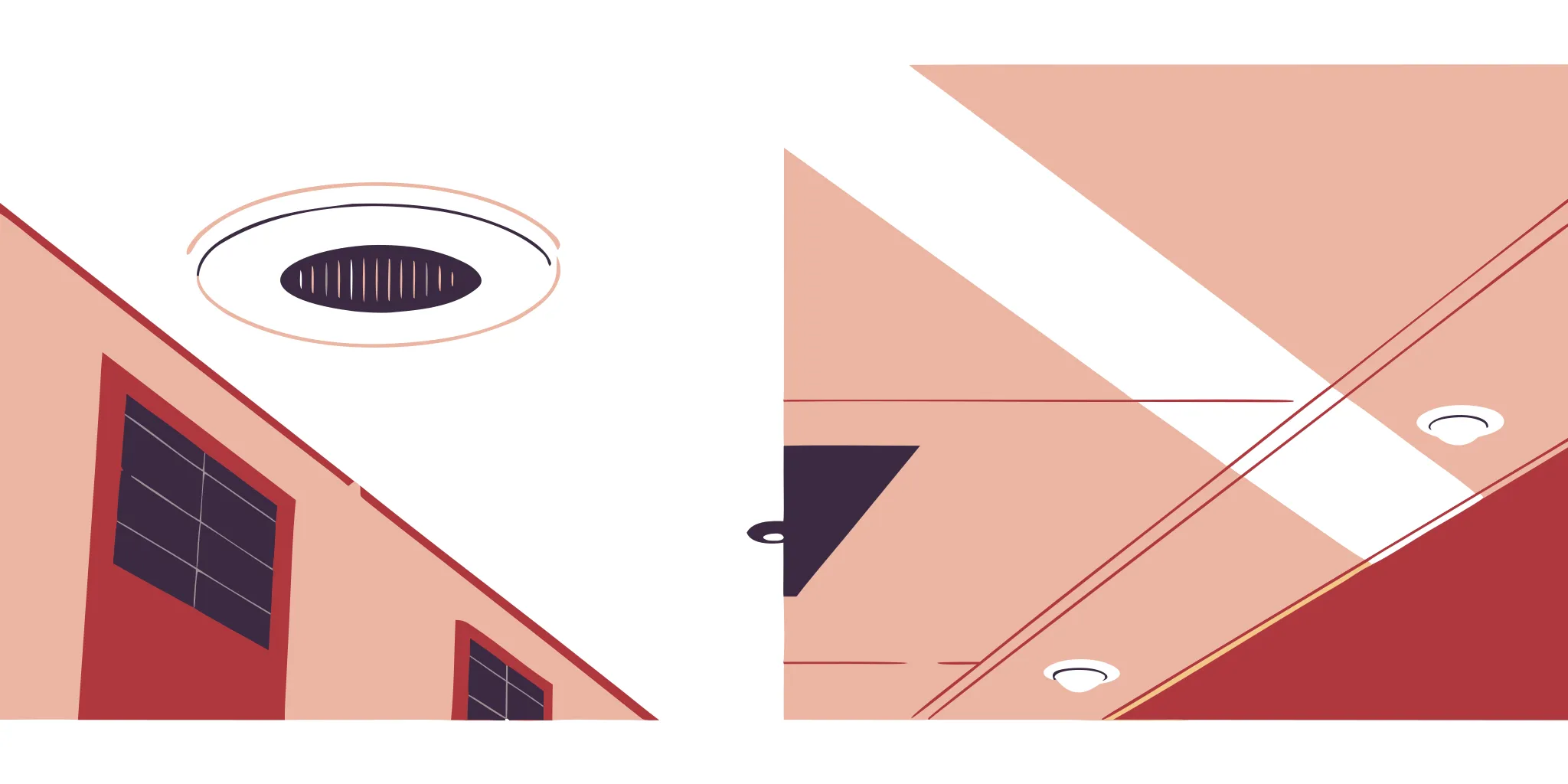
Where to Place Smoke Detectors in Your Home
Good smoke detector placement gives your family an earlier warning without creating so many nuisance alarms that someone disables the system. The basic rule is straightforward: install alarms inside every sleeping room, outside each separate sleeping area, and on every level of the home, including the basement. The U.S. Fire Administration and NFPA both emphasize this layered coverage.
Bedrooms and sleeping areas
Start with the rooms where people sleep. Place one smoke detector inside each bedroom, not just in the hallway outside. If a bedroom has a door that is usually closed, an alarm inside the room can provide a critical warning to the person sleeping there. Add another alarm immediately outside a group of bedrooms, such as in the hallway serving several rooms. In a home with a split floor plan. Treat each separate sleeping area as its own zone and make sure the hallway alarm can be heard from every bedroom.
Hallways and living areas
In hallways, mount the detector on the ceiling whenever practical. If ceiling installation is not possible, place it high on a wall. Keep it at least 4 inches away from the wall or any corner. Because smoke rises and can collect in areas where an alarm is blocked or poorly positioned. Avoid placing a detector directly above a doorway, beside an air vent, or where a ceiling beam interrupts the path of rising smoke.
Open living rooms, family rooms, and other common areas also need coverage, especially when they connect bedrooms to the rest of the home. A detector should be close enough to alert occupants, but not so close to a kitchen that normal cooking sends it into repeated alarm. Placement should account for the room's airflow, ceiling shape, and any renovations that may have changed the original layout.
Kitchens and bathrooms
Keep smoke detectors at least 10 feet from cooking appliances. Do not install them in the kitchen itself or near a bathroom shower. Steam, cooking smoke, and humidity can trigger nuisance alarms. In coastal Florida, high humidity can affect sensor performance and increase unwanted alarms if the unit is not properly located. If an alarm near a kitchen or bathroom chirps or activates frequently, do not remove its battery. Have the placement and sensor type evaluated instead.
Basements and stairs
Every level includes the basement, even when it is unfinished or used mainly for storage. Install an alarm on the basement ceiling or high on a wall, away from corners and sources of dust or moisture. For stairways, place detectors on the levels they serve rather than inside the stairwell where airflow can delay or distort smoke movement. A detector near the stairway landing can help cover the route between floors while keeping the unit accessible for testing and replacement.
Older homes and homes with additions may need a placement review because rooms, sleeping areas, and electrical systems change over time. For dependable coverage, a licensed professional can assess each floor, account for Florida's humidity, and confirm that hardwired alarms are positioned and interconnected correctly.

How Many Smoke Detectors Do You Need in a Typical Florida Home?
There is not one hard number that fits every home in Port St. Lucie or across the Treasure Coast. The right count depends on the home's bedrooms, floors, sleeping areas, basement, and layout. Instead of choosing a number at random, use a coverage checklist based on where people sleep and how they move through the house.
The U.S. Fire Administration recommends smoke alarms in every sleeping room, outside each separate sleeping area, and on every level of the home, including the basement. The National Fire Protection Association describes the same full-coverage approach: alarms should be on every level, inside every bedroom, and outside each sleeping area. Review the U.S. Fire Administration placement guidance and NFPA's smoke alarm recommendations for additional safety details.
A practical coverage checklist
- Count one alarm inside each bedroom or other room used for sleeping.
- Add an alarm in the hallway or other location immediately outside each separate sleeping area.
- Add coverage on every story of the home, including the first floor, upper floors, and any basement.
- Walk through the layout and check that alarms are not missing from areas where smoke could reach occupants before an alarm near a bedroom does.
For example, a three-bedroom, single-story home may need alarms in all three bedrooms, outside the sleeping area, and elsewhere on that level as needed for complete coverage. A two-story home with the same number of bedrooms needs to account for both floors, not just the bedroom hallway. A home with a basement needs an alarm there as well. These examples illustrate how to count coverage points, not a substitute for an evaluation of the actual floor plan or applicable local requirements.
Interconnection matters as much as the count
If the alarms are interconnected, one alarm sounding causes the others to sound too. That can alert someone in a distant bedroom, upstairs room, or basement sooner and provide more time to escape. NFPA recommends interconnected alarms for this reason. In older Treasure Coast homes, an electrician can review whether existing units can be interconnected and whether the rest of the electrical system is up to the task.
Do not let a chirping, missing, or poorly located alarm become the reason a coverage gap remains. For help evaluating your home's placement and installing or replacing alarms safely, learn about professional smoke detector installation and replacement.
Do You Need an Electrician to Install or Move Smoke Detectors?
It depends on the type of smoke detector and the work your home needs. A battery-only alarm can usually be mounted by a homeowner in the correct location, provided you follow the manufacturer's instructions and local requirements. Installing, replacing, relocating, or adding a hardwired alarm is different. It involves the home's electrical wiring, and a licensed electrician should handle the work.
| Alarm type | Power source | Installation | Best for |
|---|---|---|---|
| Battery-only | Batteries only | Can be mounted by a homeowner | Simple additions where no wiring exists |
| Hardwired | Home electrical system plus backup battery | Should be installed by a licensed electrician | New homes, renovations, code-mandated setups |
Battery-only alarms are simpler, but placement still matters
Battery-powered alarms do not connect to the home's electrical system. That makes them a practical option for some existing spaces and a relatively straightforward installation when no wiring is needed. They still need to be placed throughout the home, including inside sleeping rooms, outside sleeping areas, and on every level. The mounting location, alarm type, testing schedule, and replacement date all affect how well the system protects your household.
Battery-only does not mean maintenance-free. Test each alarm at least monthly, replace standard batteries at least once a year, and respond promptly to chirping. A missing or dead battery is a leading reason smoke alarms fail to operate. If you are unsure whether a battery unit is suitable for an older home, renovation. Rental property, or a room with unusual conditions, an electrician can help evaluate the options.
Hardwired alarms require electrical expertise
Hardwired smoke alarms draw power from the home's electrical system. They commonly include a backup battery so the alarm can continue operating during a power interruption. The International Association of Fire Chiefs advises having hardwired smoke detectors installed by a licensed electrician so the wiring meets local building and safety codes. In newer Florida homes, codes often require hardwired units with battery backup, but requirements can vary by city, county, property type, and project. Local or state regulations may also require a specific alarm type, so confirm the applicable requirements with the local fire marshal or a qualified professional.
Moving an existing hardwired alarm is not simply a matter of removing it and attaching it to a different ceiling. The new location may require extending wiring, creating a new electrical box, preserving interconnection between alarms, and repairing the old opening. Adding an alarm where none existed may require the same type of electrical work. Incorrect wiring can leave a detector without reliable power or prevent interconnected alarms from working together when one senses smoke.
For help selecting and safely installing the right system, professional smoke detector installation and replacement can provide a safer path for homeowners in Port St. Lucie and throughout the Treasure Coast. A licensed electrician can review the existing alarms, explain battery and hardwired options, and identify wiring or code concerns before the work begins.
How Long Do Smoke Detectors Last and When Should You Replace Them?
Smoke alarms are easy to ignore when they appear to be working, especially in a busy Port St. Lucie or Treasure Coast home. A simple schedule helps prevent a quiet failure. Check each unit monthly, replace batteries on a yearly schedule when the model uses replaceable batteries. And replace the entire alarm when it reaches 10 years from its manufacture date. The date is usually printed on the back or side of the unit.
- Test every smoke alarm monthly by pressing the test button on each unit.
- Replace standard batteries at least once a year, even before chirping starts.
- Check each alarm's manufacture date and replace any unit that is 10 years old.
- Respond to any chirping right away, rather than waiting for a scheduled test.
Use a monthly and yearly maintenance schedule
Press the test button on every smoke alarm at least once a month. Do not assume that hearing one alarm means the others are ready. Walk through the home and test each unit, including alarms in bedrooms, hallways, upper levels, and the basement. For standard battery-powered models, replace the batteries at least once a year, even if the alarm has not started chirping. The National Fire Protection Association recommends monthly testing and yearly battery replacement.
A chirping alarm needs attention rather than silence. It can signal a low battery or indicate that the unit is nearing the end of its useful life. Replace the battery first if the alarm is otherwise within its service life, then test it. If the chirping continues, check the manufacture date and replace the alarm if it is 10 years old. Never treat a dead or missing battery as a minor inconvenience. Research from the National Institute of Standards and Technology identifies missing or dead batteries as the leading cause of non-working smoke alarms.
Replace the complete alarm at 10 years
Battery changes do not renew an aging sensor. The U.S. Fire Administration says smoke alarms should be replaced 10 years from the manufacture date. While NFPA guidance says to replace all smoke alarms when they are 10 years old. This applies even when the test button still produces a sound. If you cannot find a manufacture date, the alarm is damaged, or its history is unknown, replacement is the safer choice.
Coastal Florida conditions also deserve consideration. High humidity can affect sensor performance and increase nuisance alarms, according to the U.S. Fire Administration. Do not remove a detector because it sounds during normal household activity. Instead, have its location and condition evaluated, particularly if it is near a bathroom, kitchen, or other humid area.
For hardwired alarms, replacing a unit may involve electrical connections, interconnection, or code requirements. A licensed electrician can replace aging devices and confirm that the system is operating throughout the home. If your alarms are due for replacement, professional smoke detector installation and replacement can help keep your household protection on a dependable schedule.
Schedule Service to review your smoke detector placement
Frequently Asked Questions
Is it better to install smoke alarms on the ceiling or wall?
Install a smoke alarm on the ceiling when practical, or high on a wall. Keep it at least 4 inches from a wall or corner so rising smoke can reach the sensor effectively. Follow the manufacturer's instructions for the specific model and mounting surface. NFPA placement guidance supports ceiling or high-wall installation.
How many smoke detectors do I need in a three-bedroom house?
Plan for at least one alarm inside each bedroom, one outside each separate sleeping area, and one on every level, including the basement. A three-bedroom home therefore needs more than three alarms in many layouts. Interconnected units are especially helpful because all alarms sound when one detects smoke.
Can smoke detectors be placed in the kitchen?
Keep smoke alarms at least 10 feet from cooking appliances to reduce nuisance alarms. Avoid placing them directly beside a stove, and do not install them near bathrooms where shower steam can cause problems. If the layout makes the distance difficult, an electrician can help identify a safer location without leaving the kitchen area unprotected.
Where should a smoke alarm be installed in a basement?
Install an alarm on the basement ceiling, ideally near the bottom of the stairs leading to the next level. This location can warn occupants about smoke moving toward the main living areas. The basement alarm is in addition to the alarms required on the home's other levels and near sleeping rooms.
How close should a smoke alarm be to a bedroom door?
Place an alarm outside each sleeping area so it can be heard when bedroom doors are closed, while keeping it away from kitchens, bathrooms, corners, and strong airflow. The exact distance depends on the hallway and room layout. For hardwired or interconnected alarms, have a licensed electrician confirm the placement and wiring meet applicable local requirements.
Schedule Professional Smoke Detector Service
Knowing where to place smoke detectors is the first step toward dependable protection, but installation and wiring are best left to a licensed electrician. Hardwired units, interconnection, and placement that meets Florida code all require careful work. My Electrician, Inc. serves Port St. Lucie and the Treasure Coast with prompt, professional service, transparent flat-rate pricing, and a 2-year warranty on parts and labor.
Schedule Service for smoke detector installation and placement
For hardwired installation, relocation, or a full safety review of your current alarms, call our team today. Our electricians will confirm every detector is mounted correctly, connected, and positioned where your family can hear it. You can also plan a visit through our contact page.