
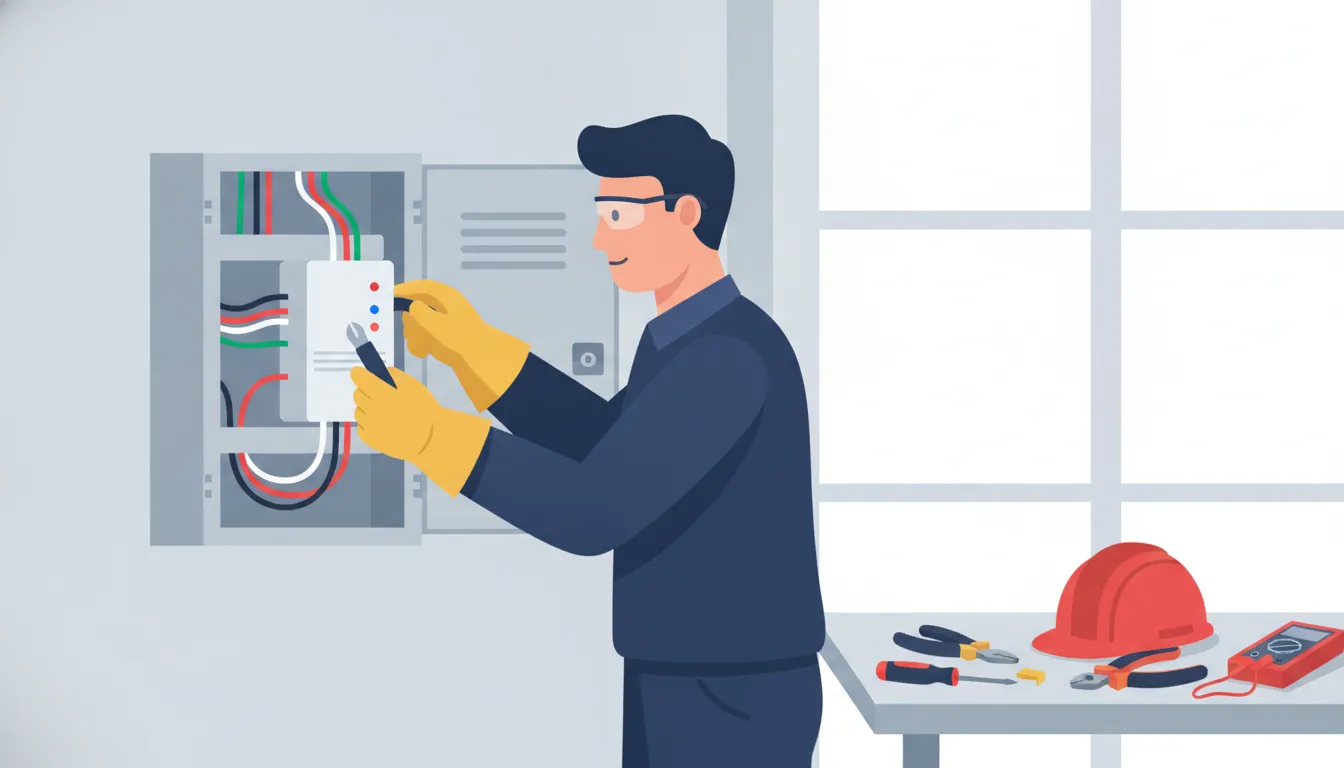
Storms are not the only threat to the electronics in your home. Utility fluctuations, equipment cycling, and lightning-related events can send voltage spikes through the wiring. The damage may not be obvious until a refrigerator, HVAC control, television, router, or computer starts resetting or behaving unpredictably.
Schedule Service to discuss whole-house surge protection for your home.
The main whole house surge protector benefits are broader coverage for connected electronics and appliances, protection against some internal surges, and a proactive way to reduce exposure to repair or replacement costs. A whole-house device is not a guarantee that every device will survive a severe event. It also does not replace proper wiring, grounding, or point-of-use protection for especially sensitive equipment.
For homeowners in Port St. Lucie and throughout the Treasure Coast and Palm Beaches, the right decision depends on the home's electrical system, the equipment needing protection, and the installation plan. This guide explains how panel-level protection works, where it helps, what it cannot do, and what to ask before approving an installation.
How Does Whole-House Surge Protection Work?
A whole-house surge protector is a panel-connected device that helps redirect excess electrical energy when voltage rises above a safe level. It works near the home's service entrance rather than at only one outlet. This location gives it a broader role in reducing the voltage that reaches branch circuits and connected equipment.
How does service-entrance protection differ from a plug-in strip?
A plug-in surge strip protects devices connected directly to that strip. It does not cover equipment in another room, a hardwired appliance, or a device connected to a different circuit. A whole-house protector is installed at the electrical panel, so it can provide a broader layer of protection across the property.
These are not competing choices. Many homeowners use a layered approach. Panel-level protection addresses the home's wider electrical system, while a listed point-of-use protector adds a local layer near a computer, television, router, or other sensitive setup. The National Institute of Standards and Technology provides consumer surge protection guidance for households evaluating protection options.
What happens during a voltage spike?
A surge protector detects abnormal voltage and provides a controlled path for excess energy. In normal conditions, electricity continues to supply the home as intended. During a surge, the device works with the home's grounding and electrical system to reduce the stress placed on connected circuits.
Proper installation matters. The protector must be compatible with the service equipment and correctly connected to the panel and grounding system. The goal is not to make electronics invulnerable or eliminate every power-quality problem. The goal is to reduce exposure to damaging spikes before they spread through the home. A qualified electrician can inspect the electrical panel, grounding, and available space before recommending a device.
What Are the Biggest Whole House Surge Protector Benefits?
Whole house surge protector benefits are easiest to understand when compared with the limits of a single plug-in strip. Panel-level protection can serve as a broader risk-reduction layer for connected circuits, including equipment that is not gathered around one outlet. It is a practical upgrade for a modern home, not a promise of total immunity from electrical damage.
Does whole-house protection cover more of the home?
A plug-in strip protects only the devices connected to it. A whole-house system provides a broader layer through the home's electrical panel. That can matter in a home where televisions, computers, smart-home equipment, garage-door openers, appliances, and other electronics are spread across several rooms.
Broad coverage does not mean every device becomes invulnerable. Point-of-use protection can still be useful for especially sensitive equipment. However, panel-based protection addresses the larger electrical system instead of leaving devices in other rooms outside the reach of one power strip.
Can it help protect electronics and major appliances?
Modern households contain more electronic controls than many homeowners realize. Refrigerators, HVAC equipment, televisions, routers, computers, laundry appliances, and security systems may all depend on sensitive circuitry. NIST identifies expensive electronic equipment in modern households as an important consideration when consumers evaluate surge protection.
Damage is not always immediate or obvious. A power event may leave a device working while weakening components, leading to intermittent problems or earlier failure. Repeated smaller surges can affect electronic components over time. A refrigerator or other appliance can therefore fail before a homeowner expects, even when there is no visible sign of electrical damage.
Can it reduce exposure to internal surges?
Storms and utility problems are not the only sources of voltage disturbances. Large equipment inside the home, such as an air-conditioning system or refrigerator, can create switching events when it turns on or off. Whole-house protection may help reduce the effect of some internal surges as they move through the home's wiring.
Does it add useful protection during Florida storm season?
For homeowners in Port St. Lucie, the Treasure Coast, and the Palm Beaches, storm preparation is a practical concern. A whole-house surge protector cannot prevent every type of electrical damage, but it can add a proactive layer of defense when storms or grid fluctuations threaten sensitive equipment.
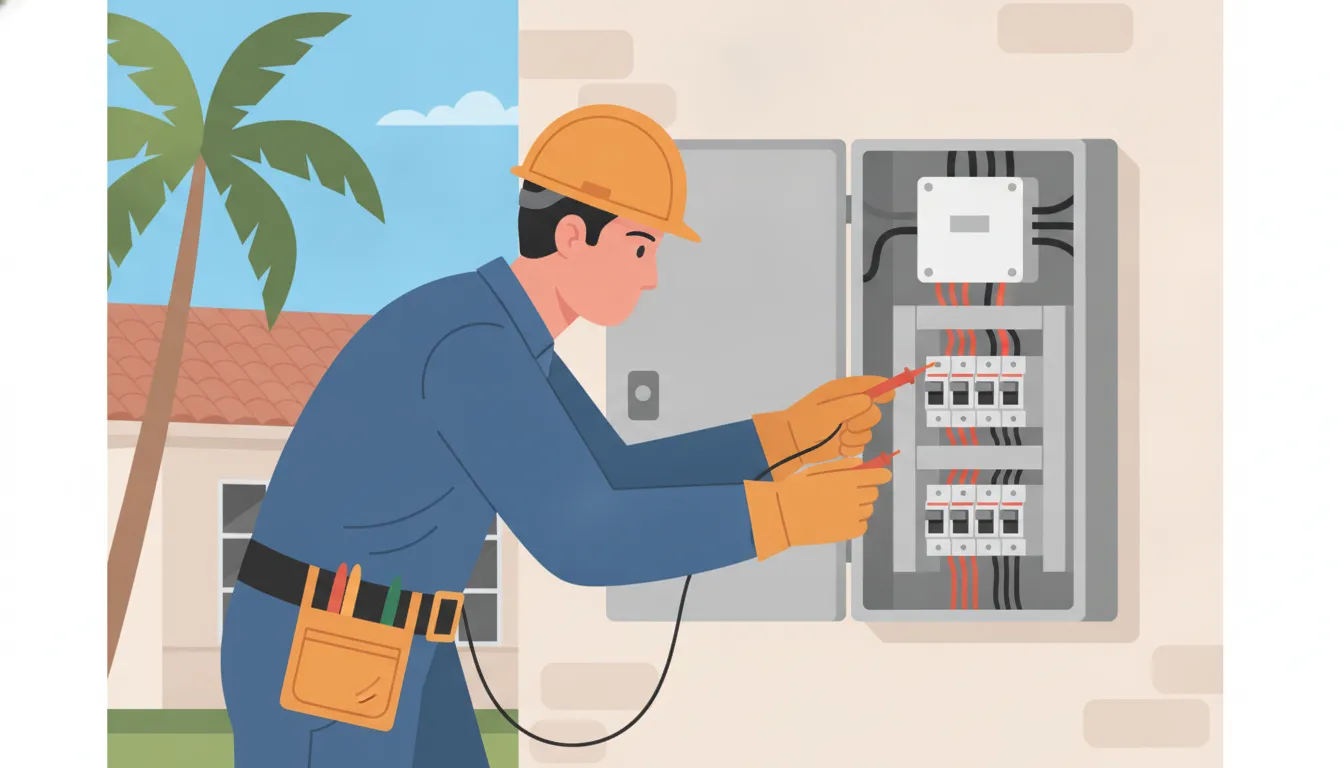
The result is not a guarantee. It is greater peace of mind that your electrical system has a professionally considered line of defense before the next surge occurs. My Electrician FL provides electrical services across local Treasure Coast service areas.
Is Whole-House Surge Protection Worth It for Your Home?
For many homeowners in Port St. Lucie, across the Treasure Coast, and through the Palm Beaches, whole-house surge protection is worth discussing because it can reduce exposure to certain voltage spikes across multiple circuits. It may be especially worth considering if your home contains expensive electronics, connected devices, modern appliances, or HVAC equipment that would be costly or inconvenient to repair or replace.
Storm exposure is another reason to evaluate the upgrade. Lightning and utility-related fluctuations can create damaging surges, and severe weather is a recurring concern for Florida homeowners. A whole-house protector does not guarantee that every device will remain undamaged. It can, however, help manage some voltage spikes before they reach circuits and equipment throughout the home.
When does the upgrade make the most sense?
Consider an evaluation if you rely on a home office, televisions and gaming equipment, security cameras, smart-home controls, network hardware, medical electronics, or other high-value devices. Refrigerators, HVAC systems, and other major appliances also contain electronic controls that may be affected by power irregularities. Replacing one damaged appliance can be disruptive. Replacing several devices after a major event can be significantly more burdensome.
The decision also deserves attention when an older electrical system is being updated. If you are planning a panel project, renovation, generator installation, or major appliance upgrade, discuss surge protection at the same time. This can help you assess grounding, panel capacity, and the broader condition of the electrical system.
There is no single answer for every property. A licensed electrician can review your panel, equipment, and priorities, then explain whether the whole house surge protector benefits justify the upgrade for your home.
What Are the Limitations of a Whole-House Surge Protector?
A whole-house surge protector is an important layer of defense, but it is not a guarantee that every electronic device will survive every electrical event. The device is designed to redirect voltage spikes away from connected circuits. It cannot eliminate every source of damage or correct an unsafe electrical system.
Does it replace proper grounding or wiring?
Surge protection works as part of the electrical system. It does not repair loose connections, damaged conductors, overloaded circuits, or other wiring problems. It also does not substitute for a properly grounded system. If grounding and bonding are not in good condition, the protector may not perform as intended.
An older or damaged panel may need attention before surge protection can be installed safely. In some homes, electrical repairs and panel work are part of a safer overall plan. The right solution depends on the panel's condition and the home's electrical demands, not simply on adding a device to the service equipment.
Does sensitive equipment still need point-of-use protection?
Whole-house protection helps cover equipment throughout the home, including devices that are not connected to one particular plug-in strip. It should not be viewed as the only layer for especially sensitive or high-value equipment. A computer, home office, television system, or network device may still benefit from a listed point-of-use protector when the manufacturer recommends one.
Does the device require follow-up after a major event?
Surge protectors can absorb or redirect damaging energy, but a significant event may affect the protector even when the damage is not obvious from outside. After a nearby lightning strike, major utility event, or other suspected surge, have the system inspected. Look for the device's status indicator if it has one, but do not treat an indicator as a complete electrical inspection.
If electronics begin flickering, resetting, or behaving unpredictably, arrange a professional evaluation. Whole-house surge protection is a proactive safety measure, not a substitute for sound wiring, proper grounding, or careful equipment protection.
How Much Does Whole-House Surge Protection Cost?
Published consumer cost guides commonly place whole-home surge protection installation in a broad range of several hundred dollars, depending on the device and the electrical work required. Bob Vila's whole-house surge protector cost guide discusses equipment, labor, and installation factors. This is planning information, not a quote from My Electrician FL. Your actual price may be lower or higher.
For homeowners comparing whole house surge protector benefits, cost should be weighed against the electronics, appliances, and systems they want to protect. A licensed electrician can inspect the installation point and provide a written flat-rate quote before work begins. My Electrician FL's electrical services include evaluations and installation planning for residential needs.
What affects the installation price?
Several factors can change the total:
- Panel condition: An older, damaged, crowded, or otherwise unsuitable panel may need attention before a surge protector can be installed safely.
- Access and wiring: The distance to the service equipment, available breaker space, and layout of the electrical system can affect labor and materials.
- Equipment selection: Surge protectors vary by system requirements, ratings, and the equipment being protected. The least expensive device is not automatically the right choice.
- Code and inspection requirements: Local requirements may affect the installation method, labeling, and whether an inspection is needed.
- Grounding and bonding: If the existing system needs correction, that work should be considered separately from the protector itself.
| Protection choice | Best use | Important boundary |
|---|---|---|
| Whole-house protector | Broad panel-level coverage for connected circuits | Does not replace sound wiring or grounding |
| Plug-in protector | Added protection near sensitive equipment | Only covers devices connected to it |
| Electrical evaluation | Checking panel, grounding, and installation conditions | Should be performed by a qualified electrician |
Before approving an installation, ask these questions:
- What equipment and circuits will the proposed device protect?
- Is the panel, grounding, and available space suitable for installation?
- What status check or follow-up is recommended after a major surge?
- Will any panel, wiring, bonding, permit, or inspection work be included in the written scope?
- What warranty terms apply to the installation and equipment?
Request a written quote that identifies the equipment, labor, any panel or wiring repairs, permit or inspection costs, and warranty terms. Clear scope makes it easier to compare proposals and avoid unexpected charges.
Schedule Service for a whole-house surge protection evaluation before storm season.
Frequently Asked Questions
Can a whole-house surge protector replace plug-in surge strips?
No. A whole-house device provides primary protection at the electrical service panel, while a plug-in strip can add point-of-use protection for especially sensitive equipment. Using both can create a layered approach, but a strip should not be treated as a substitute for properly installed panel protection.
Will a whole-house surge protector protect every appliance from every surge?
No surge protector makes electronics invulnerable. The system can redirect many voltage spikes, including some surges that begin inside the home. It does not correct faulty wiring or eliminate every possible source of electrical damage. Ask an electrician to evaluate grounding, panel condition, and the protection needs of major equipment.
How much does whole-house surge protection usually cost?
Published consumer cost guides describe professionally installed systems as a several-hundred-dollar project, but the range is only planning information, not a quote. Your price can vary based on the electrical panel, grounding, equipment selected, installation access, and any corrections needed. Get a written estimate after an on-site evaluation.
Who should consider installing one?
It is worth discussing if your home has expensive electronics, smart-home equipment, HVAC systems, a generator, or a home office, or if storms and power interruptions are a recurring concern. NIST identifies surge protection as an important consideration for households protecting modern electronics. A licensed electrician can help match the protection plan to your home.
Does a whole-house surge protector stop lightning damage?
No. A whole-house surge protector can reduce exposure to some voltage spikes, but it does not make a home lightning-proof or replace a complete lightning-safety plan. It should be installed as part of a sound electrical system, with proper grounding and additional point-of-use protection where appropriate.
Schedule Whole-House Surge Protection Service
Every home has different equipment, wiring, and installation considerations. A professional review can help you understand whether whole-house surge protection fits your needs and what the installation involves. Call 877-762-7483 to Schedule Service with My Electrician FL.