
Placing a smoke detector in your bedroom seems simple, but it gets tricky when a ceiling fan is involved. If you’ve been wondering where to install a smoke detector in a bedroom with a ceiling fan, you’re not alone. The position you choose can affect how quickly smoke is detected during an emergency. Here you’ll learn how airflow impacts placement, what locations actually work, and how to position your detector so it performs reliably when you need it most.
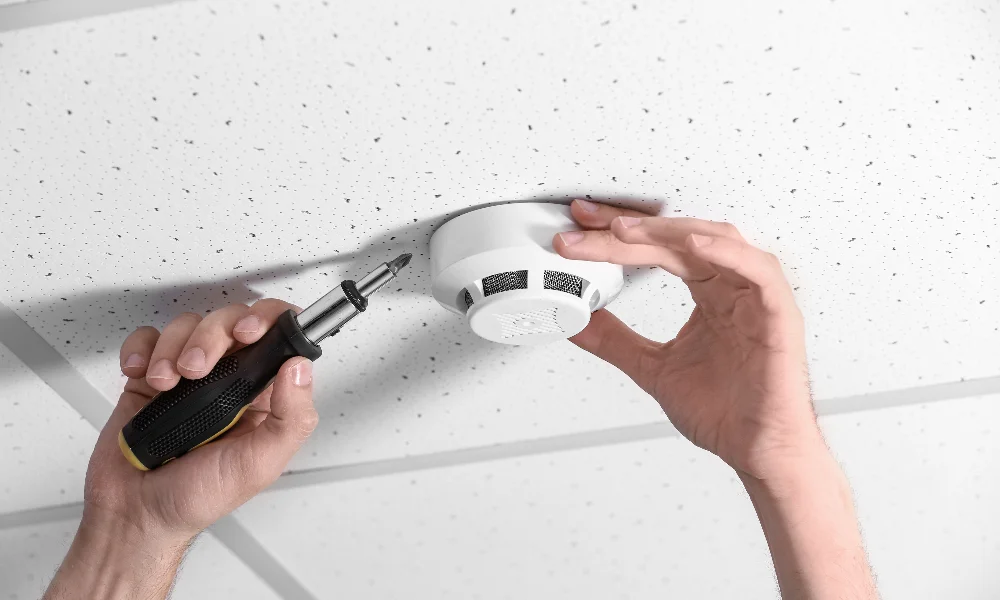
Where to Install a Smoke Detector in a Bedroom With a Ceiling Fan
Knowing the right place to install a smoke detector in the bedroom with a ceiling fan helps ensure early detection without interference from air movement. The goal is to place the detector where smoke can reach it naturally, without being redirected or diluted by fan airflow. Proper spacing from blades, correct ceiling positioning, and avoiding dead air zones all improve accuracy and response time. These small adjustments can make a critical difference during a fire event.
When placing a smoke detector in a bedroom with a ceiling fan, keep it at least 3 feet away from the fan blades. This distance prevents airflow from pushing smoke away from the sensor. Mounting the detector on the ceiling is ideal, but it should be slightly offset from the fan’s direct path. If ceiling placement is not possible, install it high on the wall, about 4-12 inches below the ceiling.
Also, avoid placing the detector directly above the fan or too close to corners. Air tends to circulate unevenly in these areas, which can delay smoke reaching the device. Always aim for a location where smoke can rise naturally without obstruction.
Why Ceiling Fans Affect Smoke Detector Placement
Ceiling fans influence how smoke travels through a room, which directly impacts how quickly a detector responds. Air circulation can push smoke away from sensors, slow its rise, or spread it unevenly. Because of this, placement must account for airflow patterns, not just standard installation rules. Proper positioning ensures that smoke reaches the detector quickly, even when the fan is running at different speeds.
Airflow Can Delay Smoke Detection
Ceiling fans create continuous air movement, which can redirect smoke away from the detector. Instead of rising straight upward, smoke may be pushed sideways or dispersed across the room. This delay can reduce the detector’s ability to respond quickly during a fire. Even at low speeds, airflow can interfere with smoke concentration near the ceiling. This is why detectors should never be installed directly in the fan’s path.
Smoke Movement Patterns in Bedrooms
Smoke naturally rises due to heat, but airflow changes its path. In a bedroom with a ceiling fan, smoke may circulate before reaching the ceiling. This creates uneven distribution, which affects detection timing. Furniture layout, room size, and fan speed also influence how smoke behaves. Understanding these patterns helps you choose a placement that captures smoke early.
How Proper Placement Maintains Accuracy
Correct placement allows smoke to reach the detector without interference. Keeping a safe distance from the fan ensures that airflow does not dilute smoke concentration.
According to the National Fire Protection Association (NFPA), working smoke alarms reduce the risk of dying in a home fire by about 60%. This highlights why proper installation is not just a guideline but a necessity.
Rooms and Locations Where You Should Install Smoke Detectors
Understanding where smoke detectors need to be installed helps create a complete safety system throughout your home. Placement should cover all sleeping areas, shared spaces, and escape routes. At the same time, avoiding areas with airflow interference or humidity ensures the detector works reliably. Balanced placement improves coverage while reducing false alarms and detection delays.
Where to Install
Inside Every Bedroom
Fire safety standards strongly recommend placing a smoke detector inside every bedroom because most fatal fires occur at night when people are asleep. According to fire safety data, closed doors can slow smoke spread, which means a hallway alarm may not activate soon enough. Installing a detector in your bedroom ensures you receive an immediate alert, giving you more time to react and exit safely.
Outside Sleeping Areas in Hallways
Hallway detectors act as a secondary layer of protection, especially if smoke escapes from another room before reaching sleeping areas. Safety guidelines from organizations like the National Fire Protection Association emphasize placing alarms outside bedrooms to cover shared spaces. This setup improves early warning coverage and helps alert everyone in the home at the same time.
On Every Level of the Home
Every level of your home, including basements, should have at least one smoke detector to maintain full coverage. Fires can start in hidden areas such as electrical systems or storage spaces, which may not be immediately visible. Installing detectors on each floor ensures that no matter where a fire begins, the alarm system can detect it early and provide timely alerts.
Near Stairways and Common Areas
Stairways act like vertical pathways that allow smoke and heat to travel quickly between floors. Placing detectors near these areas helps catch smoke as it rises and spreads. Common areas such as living rooms also need coverage because they often contain electrical devices and furniture that can contribute to fire risk. This strategic placement supports faster detection and improves overall home safety.

Areas to Avoid
Near Air-Conditioning Vents or Supply Registers
Installing a smoke detector near supply vents can reduce its effectiveness because forced air can push smoke away from the sensing chamber. Industry guidelines, including those from the National Fire Protection Association, caution against placing detectors in direct airflow paths. This disruption can delay activation, especially in early-stage fires when smoke is still light and easier to redirect.
Close to HVAC Return Vents
Return vents actively pull air back into the HVAC system, which can draw smoke away from the detector before it reaches the sensor. This creates a false sense of safety, as the alarm may activate later than expected. Proper placement away from return airflow helps maintain consistent detection performance across different conditions.
Near Open Windows
Open windows introduce unpredictable air movement that can interfere with how smoke travels. Wind can either dilute the smoke concentration or push it away from the detector entirely. In some cases, dust or outdoor pollutants may also trigger nuisance alarms, which can reduce trust in the system over time.
Near Bathroom or Kitchen Exhaust Fans
Exhaust fans remove air from the room, which can pull smoke away from the detector just like return vents. In addition, steam from bathrooms and cooking fumes from kitchens often cause false alarms. Repeated false alerts may lead occupants to disable the device, which increases safety risks.
In Corners Where Airflow May Prevent Smoke from Reaching the Detector
Corners often create stagnant air pockets where smoke does not circulate effectively. Because smoke typically rises and spreads outward, it may bypass these areas or take longer to accumulate. Installing detectors slightly away from corners ensures better exposure to rising smoke and improves response time.
FAQs
How Close Can a Smoke Alarm Be To a Ceiling Fan?
A smoke alarm should be at least 3 feet away from ceiling fan blades. This distance prevents airflow from interfering with smoke detection. Placing it too close can delay response time.
Where Should You Not Mount a Smoke Detector?
Avoid placing detectors near vents, windows, or high-moisture areas. Corners and directly above fans should also be avoided. These locations disrupt airflow and reduce effectiveness.
Can a Ceiling Fan Trigger a Smoke Detector?
A ceiling fan itself does not trigger a smoke detector. However, it can spread dust or cooking fumes, which may cause false alarms. More importantly, it can delay smoke detection by dispersing smoke.
Call My Electrician for Professional Smoke Detector Installation in Port St. Lucie, FL
Proper smoke detector installation requires more than just mounting a device. It involves understanding airflow, placement guidelines, and safety standards. A professional electrician ensures correct positioning, secure wiring, and compliance with local codes.
If you want a reliable installation, working with an expert like My Electrician FL helps you avoid common mistakes that reduce safety. Our team understands how airflow, room layout, and electrical setup affect detector performance. They assess your home carefully and install devices in locations that meet code requirements while improving real-world effectiveness. If you are unsure whether your current setup meets safety standards, it may be time to review when to call a local electrician for a professional evaluation. This approach gives you confidence that your smoke detection system will respond when it matters most.

Theresa Dudek
Theresa Dudek is Marketing Coordinator at My Electrician, Inc., a licensed electrical contractor serving the Treasure Coast and Palm Beach County since 2000. She oversees content strategy and client communications.