
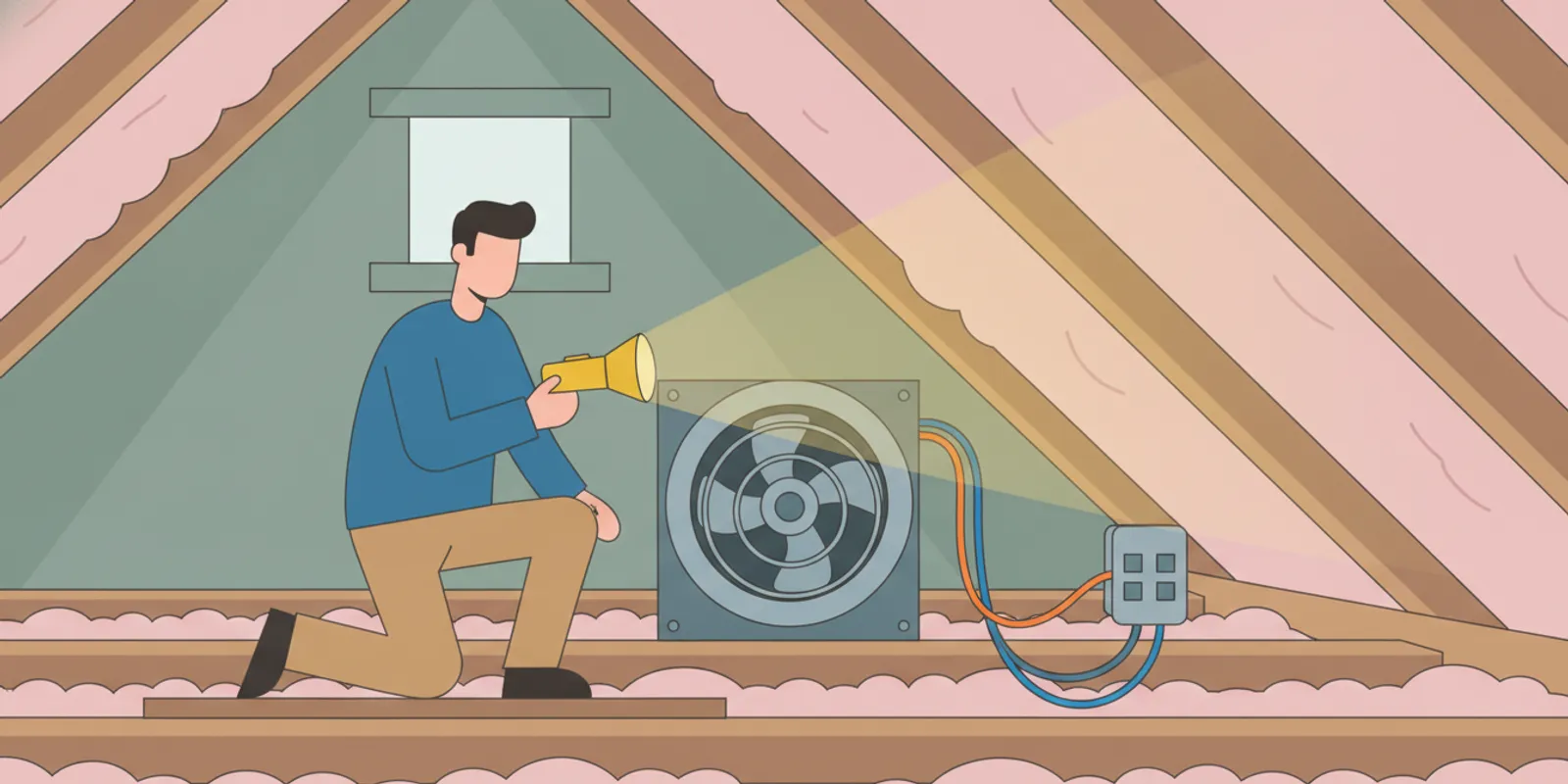
Attic roof fan maintenance is easier when you check the system before hot weather puts it to work for long stretches. A fan that is noisy, slow to start, or not moving air as expected may need attention, but homeowners should not reach into the fan or open electrical equipment to investigate. Use this guide to plan safe visual checks, recognize warning signs, and decide when to call an electrician.
Schedule service to have an electrician check your attic fan
Why prepare an attic roof fan before Florida summer?
An attic fan operates in a demanding part of the home. The space can become very hot, and dust, insulation fibers, and debris may collect near equipment over time. In Florida, it is useful to notice changes before a fan is needed regularly during hot weather. That does not mean every fan needs the same service, or that a fan alone will control indoor temperature or moisture. The right maintenance depends on the equipment, its condition, and the way it was installed.
Start with the product manual, if it is available. It may specify how the fan should be inspected and whether any maintenance is appropriate for a homeowner. Some tasks, such as cleaning an accessible exterior grille, may be simple. Other work involves electrical components, moving blades, roof access, or attic hazards and should be left to a qualified professional. A general internet checklist cannot replace the instructions written for your specific model.
Choose a cool, dry time for any visual check. Do not climb onto a roof or enter a hot attic just to inspect equipment. A view from a safe location can still help you describe a symptom when arranging service. If safe access is not possible, leave the inspection to a professional rather than turning a seasonal check into a fall, heat, or electrical hazard.
What can you safely check from outside the attic?
Use the normal control to switch the fan off before looking at it. Do not remove covers, touch wiring, or put a hand or tool near blades. Keep children and pets away. If the fan is located where you cannot see it safely from the floor or another secure place, stop there and ask a professional to inspect it. Never use an unstable ladder or reach into an opening to clear debris.
- Look for visible blockage. From a safe position, notice whether an exterior vent opening appears covered by leaves, a nest, or loose debris. Do not reach into the opening or remove a guard.
- Listen from a safe distance. Note new rattling, scraping, grinding, or repeated clicking when the fan is on under normal conditions. Do not keep running it just to reproduce a concerning sound.
- Observe how it starts and stops. Remember whether it starts when expected, runs steadily, and shuts off normally. Avoid repeatedly cycling a fan that struggles to start.
- Look for visible damage or water signs. A damaged cover, displaced screen, staining, or evidence of water near electrical equipment deserves professional attention.
- Notice the control setting. If a thermostat or switch controls the fan, note its setting and whether it appears changed. Follow the manual instead of guessing at an adjustment.
Do not remove roof parts, work near exposed conductors, or open an electrical box. If you see damaged wiring, scorch marks, a loose electrical cover, or water near electrical parts, leave the equipment off if that can be done safely and arrange an inspection. For general consumer safety information, visit the U.S. Consumer Product Safety Commission.
Which attic fan symptoms should homeowners take seriously?
A change in operation matters more than a guess about its cause. A new noise could come from a mechanical issue, a loose part, or something else. A fan that does not start may have a control, motor, or electrical issue. Those are possibilities, not diagnoses a homeowner can confirm by looking at the unit. Describe exactly what you observed, when it happened, and whether another electrical symptom appeared at the same time.
| What you notice | Safe homeowner response | What a professional may assess |
|---|---|---|
| Fan does not start or starts inconsistently | Stop repeated attempts; note the control setting and when it occurs. | Control operation, electrical supply, connections, and fan condition. |
| New rattling, scraping, or grinding | Switch it off if safe; do not reach through a grille or tighten parts. | Moving components, mounting, obstructions, and visible wear. |
| Fan runs but airflow seems weak | Check only for visible obstruction from a safe position; do not remove guards. | Fan operation, accessible vent path, and installation conditions. |
| Breaker trips when the fan runs | Stop using it; do not repeatedly reset the breaker. | Circuit condition, wiring, controls, and the fan's electrical load. |
| Burning odor, smoke, sparks, or hot electrical parts | Keep away. Switch off power only if the control is safely accessible. For smoke or fire, leave and call emergency services. | Urgent evaluation of the equipment and affected electrical components before reuse. |
A breaker that trips repeatedly, a burning smell, visible arcing, or smoke is not a routine maintenance reminder. Do not continue operating the fan to see whether the symptom returns. If the fan shares a circuit with other equipment, do not guess at the cause or move connections yourself. My Electrician provides electrical repair for homeowners who need help investigating an electrical problem.
How often should you maintain an attic roof fan?
There is no one calendar interval that fits every fan. Review the manufacturer's instructions and make a brief visual check before a season when the fan is likely to run more. If the manual specifies an inspection interval or restrictions, follow those directions. If the manual is missing, a professional can help identify the equipment and explain what upkeep makes sense for that model. Do not substitute a generic schedule for instructions specific to your fan.
Keep a simple record with the date, any unusual sounds, whether the fan started normally, and visible changes around the vent. This is more useful than repeatedly switching the fan on and off. Note if a symptom appears after rain, during especially hot weather, or when another appliance is operating, but do not recreate a potentially unsafe condition. A pattern helps the electrician understand what you observed without requiring you to diagnose the cause.
More frequent professional attention may be appropriate if a fan has a history of trouble or visible damage. That is a reason to ask for an assessment, not proof that the unit needs replacement. A technician can consider the specific fan and installation rather than relying on an assumed lifespan or generic interval. If your fan has been quiet and dependable, keep following the manual and watch for new symptoms instead of taking the unit apart preemptively.
What should you avoid during a DIY inspection?
Attics combine heat, limited footing, insulation, and electrical equipment. A quick check can become risky if it involves climbing, moving stored items, or reaching behind a guard. Limit homeowner maintenance to steps the product manual specifically identifies as safe and that can be completed without unsafe access. When in doubt, do not proceed.
- Do not enter an overheated attic to inspect a fan. Leave the area if you feel dizzy, weak, nauseated, confused, or unusually short of breath.
- Do not stand on ceiling joists, insulation, or drywall. A ceiling surface may not support your weight.
- Do not remove the fan's guard, motor cover, junction box, or electrical panel cover.
- Do not lubricate a motor unless the manufacturer calls for it and explains the procedure. Some motors are not intended for homeowner lubrication.
- Do not spray water or cleaning products on the fan or nearby electrical parts.
- Do not bypass a thermostat, switch, safety device, or breaker to make the fan run.
For electrical concerns beyond the fan itself, an electrician can inspect relevant components. My Electrician's electrical inspection service is an option when a homeowner wants a professional assessment of electrical conditions. A visual check does not confirm that hidden wiring, a control, or a circuit is safe.
What will an electrician check during an attic fan visit?
The scope depends on the symptom and installation. A visit may begin with questions about when the problem occurs, how long it has been happening, and whether a breaker or control has changed. The electrician can then examine accessible equipment and determine what further work is appropriate. Do not assume an inspection includes replacement or that a particular repair is needed before the equipment has been assessed.
Depending on the issue, a professional may check fan operation, controls, accessible wiring and connections, mounting, visible obstruction, and signs of damage. If the fan is not safe to operate, the electrician can explain why and discuss the next step. If the concern appears to involve another part of the home's electrical system, the electrician can explain whether that needs separate evaluation. Repairs should be based on what the assessment finds, not on a guess made from a sound or symptom alone.
Before the visit, make the area around the attic access clear if it is safe. Do not move heavy or unstable items into a hot attic. Gather model information or the product manual if readily available, and write down symptoms and approximate dates. Tell the electrician about repeated breaker trips, odor, moisture, unusual sounds, or a recent change in operation. These details help describe the problem without asking you to open or test equipment.
How can you decide between repair and replacement?
A noisy or unreliable fan does not automatically need to be replaced. The decision depends on equipment condition, the cause of the symptom, the availability of appropriate parts, and whether the existing fan suits its location. A professional can explain available options after evaluating it. Ask what the proposed work includes and whether separate roof, ventilation, or other trade work is outside the electrical scope.
Compare options by more than the immediate task. Consider whether the repair addresses the observed problem, how the fan is controlled, and whether the system has an appropriate electrical connection. If replacement is proposed, ask how new equipment will be matched to the existing opening and controls and whether additional changes are needed. Do not select a fan solely by appearance or assume a larger fan is automatically better. A qualified assessment can clarify what is practical for your particular installation.
My Electrician serves homeowners and businesses across its South Florida territory. Review the company's electrical services or its service areas before requesting help. The right next step may involve an electrician, a roofing professional, or both, depending on what you observed and which work is needed.
How can you prepare for a service appointment?
A clear description helps the electrician focus the visit. Note whether the fan is inactive, intermittent, noisy, or seems less effective. Mention whether a switch or thermostat controls it, if you know, and whether another electrical issue appeared at the same time. You do not need to diagnose the fan or dismantle it to provide useful information. Reporting what you actually saw is safer and more helpful than offering a technical guess.
- Write down what you notice and when it happens.
- Take a picture from a safe location if damage or obstruction is visible without climbing or opening equipment.
- Keep the area around an accessible control and attic entry clear, if safe.
- Share any manual or model details that are easy to access without entering a hazardous space.
- Tell the electrician if a breaker tripped or if you noticed smoke, odor, water, or heat.
If an urgent electrical symptom is present, describe it when you call rather than waiting for routine seasonal maintenance. My Electrician offers emergency electrical service; learn about emergency electrician service and discuss the situation directly. For non-urgent concerns, a written symptom list and the equipment manual can help keep the appointment focused.
What maintenance notes are useful for older attic fans?
Older equipment can have different controls, mounting arrangements, and manufacturer instructions from a recently installed fan. Do not assume a procedure you saw online applies to your model. If you do not know its make or model, do not remove a cover to find out. A visible label or paperwork already on hand may provide useful information, and an electrician can identify the equipment during an assessment.
Keep a record of earlier service, changes to a thermostat or switch, and symptoms that have come and gone. If a fan that used to operate occasionally now runs for long periods, note that pattern without changing settings to test it. If the fan is replaced, keep its product and installation information with other home records so future maintenance can follow the correct instructions.
When deciding whom to call, consider the nature of the symptom. Electrical issues such as repeated breaker trips or damaged conductors call for an electrician. If the concern is a roof leak, damaged roof opening, or ventilation design question, the appropriate roofing or ventilation professional may also need to be involved. Ask which parts of an assessment and proposed work fall within the electrician's scope. Learn more about My Electrician and read common service questions in the company's frequently asked questions.
Schedule an electrical repair visit if your attic fan is noisy, unreliable, or not starting
Frequently asked questions
Can I clean an attic roof fan myself?
Only do cleaning that the manufacturer's instructions identify as homeowner-safe and that you can complete from a secure location with the fan off. Do not remove a guard, reach near blades, climb onto the roof, or spray liquid near electrical parts. If access is difficult or you are unsure, ask a professional.
Should I keep using a fan that makes a new noise?
A new noise is a reason to stop and assess rather than ignore the change. Turn the fan off if safe, and arrange professional evaluation if the sound continues or is accompanied by heat, odor, vibration, or trouble starting. Do not open the unit to look for a loose part.
Why does my attic fan keep tripping a breaker?
A trip can have more than one cause, and the breaker is a safety device. Stop using the fan and do not repeatedly reset the breaker or replace it with a different size. Have an electrician evaluate the fan and circuit before you use it again.
Does a roof fan guarantee a cooler home?
No. A fan is one part of a home's ventilation setup, and the result depends on the house, installation, and other conditions. If a room feels unusually hot or humid, do not assume the fan is the only cause. An evaluation can help determine whether the fan is operating as intended and whether another professional may be needed.
When should I call an electrician instead of waiting for seasonal maintenance?
Call promptly for repeated breaker trips, a burning odor, smoke, sparks, visible electrical damage, water near electrical parts, or a fan that starts and stops unpredictably. For smoke or fire, leave the area and contact emergency services. For a fan that is simply due for a check, arrange an assessment before the season when you expect greater use.
Call My Electrician at (877) 762-7483 to discuss your attic fan concern
With a safe visual check, the equipment manual, and prompt attention to warning signs, you can approach attic roof fan maintenance with a clearer plan before Florida's summer heat arrives.