
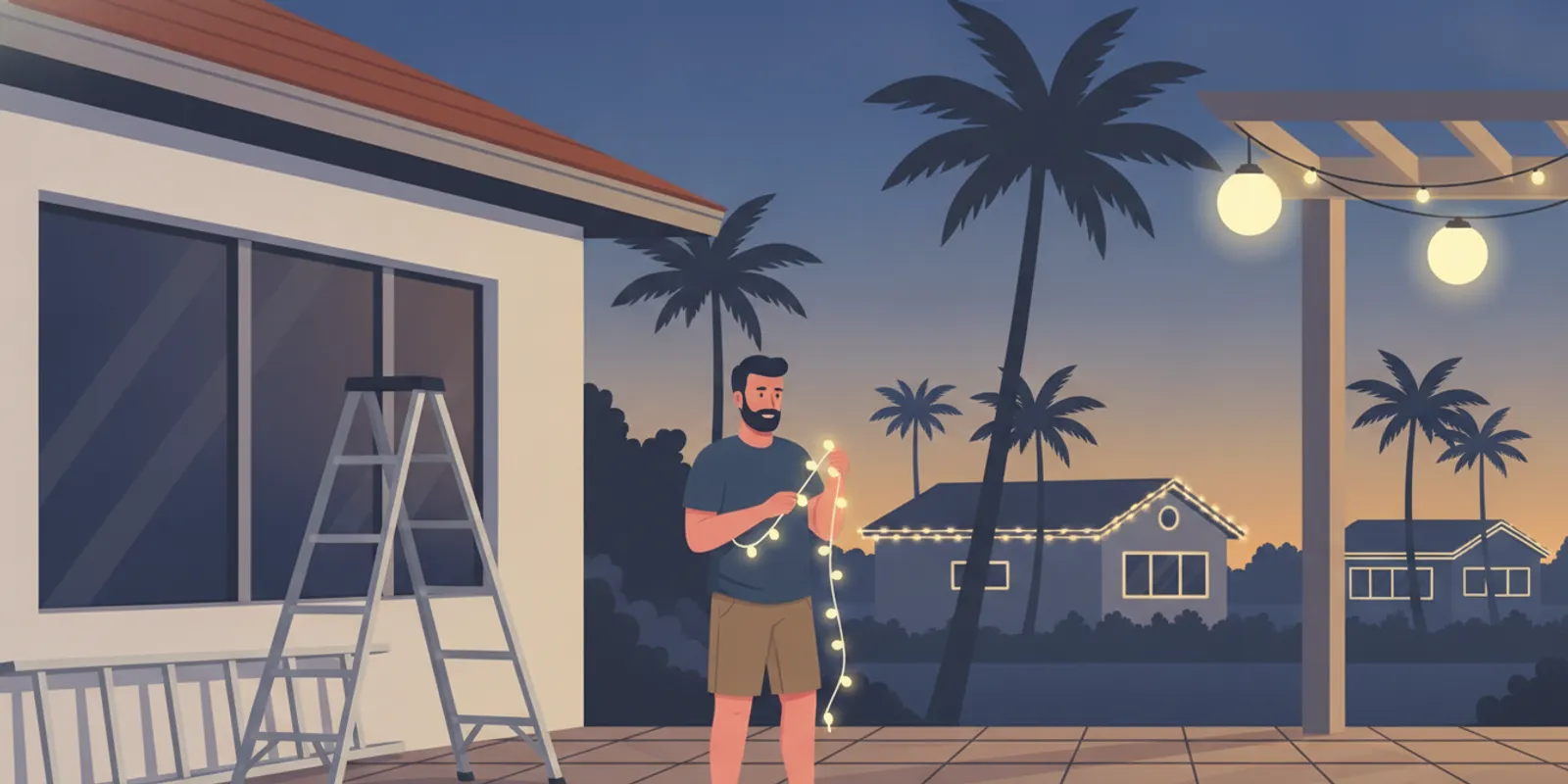
Christmas light installation can make a Florida home feel festive, but outdoor displays still depend on sound electrical connections and careful setup. Before you hang lights, check the products, the power source, and the place where every connection will sit. A little planning helps you avoid damaged cords, overloaded outlets, and risky ladder work.
Talk with an electrician about your lighting plan
What should you plan before Christmas light installation?
Start with a simple map of the display. Mark the areas you want to light, the available outdoor receptacles, and the route each cord would take. Keep cords away from walkways, doors that pinch them, standing water, sharp edges, and places where a vehicle might roll over them. A route that looks tidy from the street is not a safe route if it creates a trip hazard or leaves a cord exposed to damage.
Decide which parts of the work are practical for you to reach from the ground and which require a ladder or roof access. A modest display around a porch or low shrubs is different from roofline lights, tall trees, or decorations near service equipment. Do not let the design pressure you into a climb, a reach, or an electrical alteration you are not equipped to handle.
- Measure the areas to decorate and the distance to a suitable power source.
- Choose products marked for the location where you will use them, including outdoor use for exposed areas.
- Plan to keep plugs and connections out of wet areas and away from routes where people walk.
- Consider timer or control placement before hanging lights, so you do not have to move connections after the display is up.
- Scale the display to the outlets and circuits available rather than adding more strands without checking the load information.
For broader seasonal reminders, see the company's guide to holiday decorating safety. If your plan includes permanent or substantial exterior fixtures rather than temporary seasonal strands, review the options for outdoor lighting installation and repair.
How do you choose lights and cords for outdoor use?
Read the product label and instructions before buying or installing lights. A product intended for indoor use should not be placed outdoors, even if it appears sturdy. Look for clear manufacturer labeling that identifies outdoor suitability for exposed locations. Follow any stated limits on connected strands, wattage, or use with a particular accessory. Do not assume that two products can be combined just because their plugs fit together.
Inspect each strand before use. Look along the full length for cracked or brittle insulation, exposed wire, loose sockets, damaged plugs, corrosion, or signs of overheating. Check bulbs and connectors according to the manufacturer’s directions. Retire damaged equipment rather than taping over a fault or trying to repair a cord for another season. Store sound strands so they are less likely to be crushed, tangled, or damaged between holidays.
Extension cords also need to be suitable for the location and the electrical load. Use only the type and rating specified for the job, and follow the cord maker’s instructions. Do not run cords through a closed window or door, under rugs, or across a route where they can be tripped over or crushed. Avoid connecting extension cords together as a workaround for a display that is too far from a power source. Before setting up, lay out the proposed route and check that it does not block an exit, cross a driveway, or depend on a connector sitting in a low spot where rainwater may collect. If there is no safe route, reduce or rearrange the display rather than stretching a cord farther or forcing a connection.
Test a strand on the ground before hanging it, following its instructions. Look for intermittent lighting, a damaged plug, unusual warmth, or an unusual odor while it is operating. If you notice a problem, switch it off and stop using it; do not try to locate a fault by handling a live or wet strand. Testing first also helps you find a failed bulb or connection while you are still at a safe, reachable height. Use a timer only if it is intended for the product and location, and follow its ratings and instructions.
Use a connection method made for the products and environment, and keep electrical connections protected from moisture in a way the manufacturer permits. A plastic bag or improvised cover is not a substitute for a listed outdoor product. If water gets into a connection, if equipment is damaged, or if a breaker trips, disconnect power only if you can do so safely and stop using that setup until the cause is addressed.
How can you reduce risks at outlets and connections?
Check the outlet before decorating. It should be in good condition and appropriate for the location and equipment. Do not use a loose, cracked, discolored, warm, or buzzing receptacle. Do not force a plug that does not fit. If an outdoor outlet lacks a protective cover, appears damaged, or you are unsure whether it is suitable for outdoor use, ask an electrician to assess it before connecting a seasonal display.
Ground-fault circuit interrupter protection is an important safeguard where electricity may be exposed to moisture. If you are not sure whether the outdoor receptacle has the protection required for its location, do not guess based on appearance. Ask a qualified electrician to check it. Avoid using a receptacle that repeatedly trips; a trip is a warning to investigate, not a reason to bypass protection or keep resetting the device.
Keep the number and type of connected lights within the manufacturer’s stated limits. The number of strands alone does not tell you whether a setup is within capacity, because products can use different amounts of power. Follow the label and instructions for each product and avoid stacking adapters or adding splitters to make an overloaded arrangement fit.
Pay attention to how cords are arranged. Keep plugs elevated and connections away from puddles, sprinklers, and places where roof runoff collects. Do not staple, nail, or pinch electrical cords in a way that can damage the insulation. Use fasteners intended for the lighting product and surface, placed as directed. Unplug the display before changing bulbs, moving connections, or taking down equipment, unless the manufacturer gives another safe procedure.
What Florida weather issues should you consider?
South Florida weather can change quickly. Rain, humidity, wind, and salty coastal air can all make outdoor equipment and mounting points deserve closer attention. Use equipment rated for its setting, and inspect it after severe weather before turning the display back on. Do not touch wet electrical equipment or attempt to troubleshoot a connection while standing in water. If the equipment or outlet appears wet or damaged, keep clear and ask for qualified help.
Wind can pull on strands, clips, and cords, especially along roof edges and tall structures. Use the mounting method the product maker recommends, and do not fasten lights to gutters, utility lines, or electrical service equipment. Keep decorations clear of overhead power lines and do not use a pole or ladder near them. If a planned installation would bring you or your equipment close to an overhead line, do not proceed; have a professional assess a safe approach.
Warm weather does not remove the risks of climbing. Choose a dry, stable work area, and do not climb in rain, gusty conditions, or poor visibility. A ladder should be set on stable ground and used in accordance with its instructions. Do not overreach sideways, carry bulky decorations while climbing, or stand on a rung that is not intended for standing. Keep children and bystanders away from the work area. Arrange tools and clips before climbing so you do not need to make repeated trips while carrying items. If the ground is soft, uneven, or slippery, or the ladder cannot be positioned as its instructions require, stop and choose another plan.
After installation, make a final walk-through from the ground. Check that cords are not under tension, connections are secured as the product maker directs, and no strand is dangling where a person or animal could catch it. Confirm that doors and windows close without pinching any cord. If rain or wind changes the setup, switch off the lights and inspect from a safe position before using them again. Never reach toward a live connection from a ladder to fix a strand that shifted in the weather.
For a general reference on seasonal electrical and fire safety, consult the National Fire Protection Association. Follow the specific instructions supplied with your lighting products as well; general advice does not replace equipment labels or a site-specific electrical assessment.
Which installation choices are safer to handle yourself?
Homeowners may be able to handle a simple display when the lights are intact and rated for their location, the power source is suitable, and all work can be completed from a safe position without altering wiring. For example, you might decorate a low porch railing with a short strand, using the recommended clips and an appropriate outdoor receptacle. You still need to inspect the cord, avoid trip paths, and follow the product’s connection limits.
Some work should not become a do-it-yourself project. Do not splice or extend a cord, add an outlet, change a breaker, open electrical equipment, or modify permanent wiring to accommodate seasonal lights. Do not climb onto a steep or wet roof, reach near overhead lines, or work around damaged electrical components. These situations call for a qualified professional who can assess the wiring, access, and equipment safely.
If the display needs a new outdoor receptacle, a dedicated circuit, repair to a damaged outlet, or a permanent lighting fixture, have the electrical work assessed before decorating. My Electrician provides electrical services in the Treasure Coast and Palm Beaches region, including electrical repair and electrical inspection. A professional can help identify the right next step without assuming that a seasonal symptom has one particular cause.
How should you compare a simple display with professional help?
The right choice depends on access, the condition of the equipment, and whether the existing electrical setup is appropriate. Use this table as a planning aid, not as a substitute for a site assessment or the manufacturer's instructions.
| Situation | Reasonable next step | What to check |
|---|---|---|
| Low, simple display using intact outdoor-rated lights | Careful homeowner setup may be appropriate | Product labels, outlet condition, connection limits, clear cord route, and safe access |
| Roofline or tall-tree decorations requiring difficult ladder access | Do not take an unsafe climb; consider professional help | Height, roof slope, ground stability, wind, and proximity to overhead lines |
| Outdoor outlet is loose, damaged, wet, or repeatedly trips | Stop using it and have it assessed | Do not bypass protection or keep resetting a tripping device |
| Display needs a new outlet, wiring change, or permanent fixture | Ask a licensed electrician to evaluate the electrical work | Location, load needs, circuit suitability, and applicable installation requirements |
| Strand, plug, or cord shows damage or overheating | Remove it from service and replace it as directed | Do not conceal damage with tape or continue using the product |
What should you ask before electrical work begins?
When a display needs electrical work or a professional assessment, describe the intended setup clearly. Share where lights will go, how many areas you plan to decorate, whether the lights are temporary or permanent, and which outlets you expect to use. Mention any tripping, flickering, warmth, discoloration, or past repairs you have noticed. A clear description helps the electrician understand the question before arriving.
Ask what the assessment includes, whether the proposed work addresses the problem you described, and whether permits or additional work may be relevant. Request an explanation of any recommended changes before authorizing them. My Electrician states that it provides upfront, flat-rate pricing before work begins; confirm the scope and price for your specific job directly with the company. For information about the company and its services, you can also visit its electrical services page or learn about My Electrician.
If you are outside the immediate area, the company's service area information can help you check regional coverage. You can also review its frequently asked questions before contacting the team.
How can you take down and store lights safely?
Plan removal just as carefully as installation. Switch off and unplug the display before handling strands, following the product instructions. Do not pull on a cord to remove a plug or yank lights from clips; that can damage wire or mounting points. Use safe access practices, and do not climb in wet or windy conditions just because the season is ending.
Inspect equipment as you take it down. Separate damaged strands and cords from items you plan to reuse, and do not put questionable products back into storage for next year. Let equipment dry as directed before packing it. Store lights in a way that avoids crushing, sharp bends, and moisture, and keep the manufacturer's instructions with the product if they will be useful next season.
Contact My Electrician about an outdoor electrical concern
Frequently asked questions
Can indoor Christmas lights be used outside?
No. Use lights only in the locations identified by their manufacturer. Choose products clearly marked for outdoor use wherever they will be exposed to outdoor conditions, and follow all label instructions.
What should I do if an outdoor outlet trips while the lights are on?
Stop using the setup and do not bypass the protective device or repeatedly reset it. If you can unplug the lights without touching wet or damaged equipment, do so safely. Have the outlet and display assessed before using them again.
Can I use an extension cord to reach a distant area?
Only use a cord intended for the location and electrical load, and follow the cord and lighting manufacturers’ directions. Do not run it through a door or window, under a rug, through standing water, or where it can be crushed or tripped over. If the route cannot be kept safe, change the display plan or ask an electrician about a suitable option.
When should I call an electrician for Christmas lights?
Call when the plan requires wiring changes or a new outlet, when an outlet is damaged or trips repeatedly, or when you are unsure whether the existing outdoor power source is suitable. Also avoid unsafe roof or ladder work and work near overhead power lines; do not take the risk to complete a display.
Keep seasonal lighting safe and manageable
A safer display starts with suitable equipment, a sound power source, realistic access, and attention to changing weather. If your plan goes beyond a simple temporary setup or you notice a problem with an outlet or circuit, pause and get qualified electrical guidance before adding lights.