
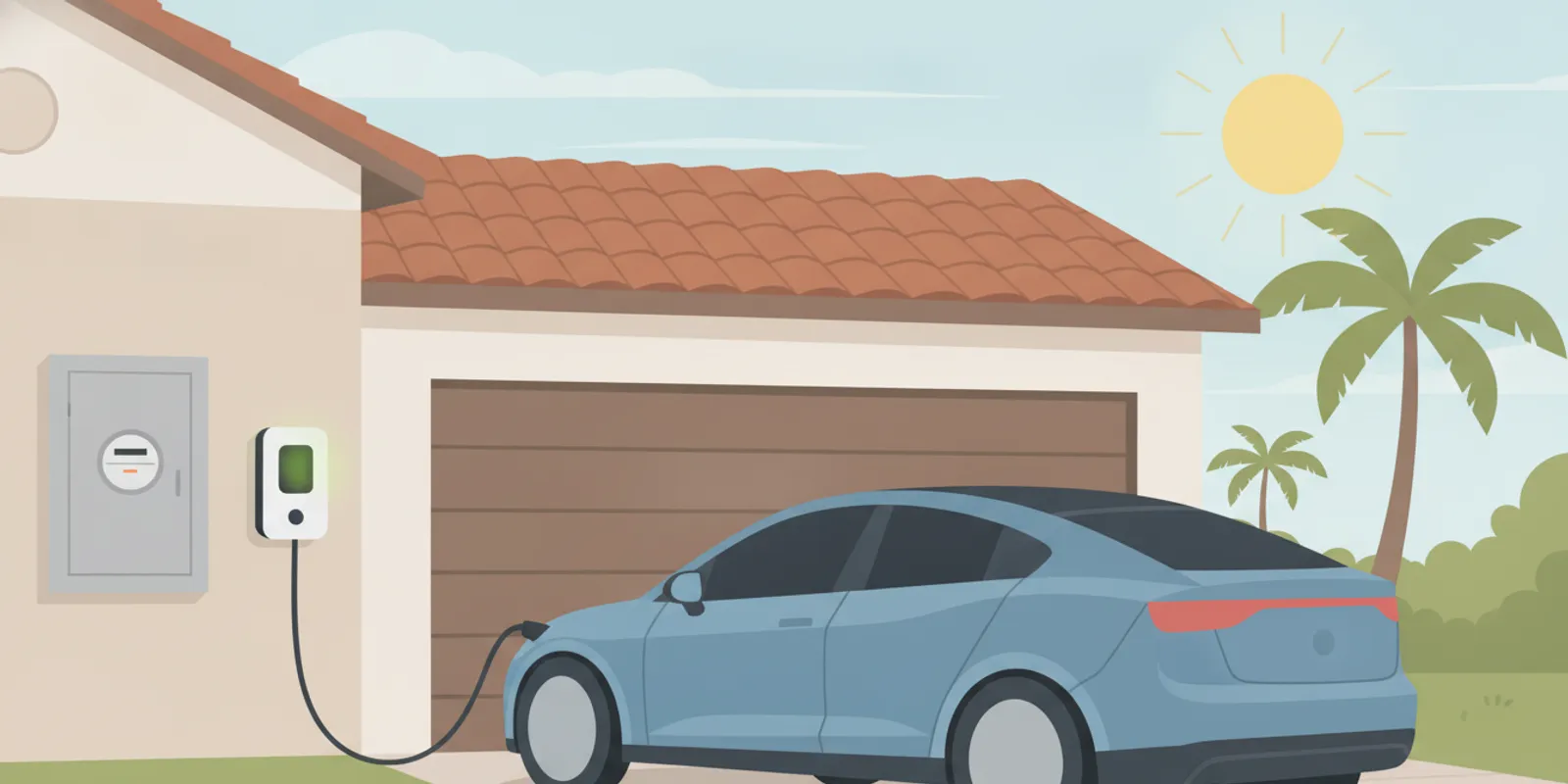
Before choosing charging equipment, homeowners often ask whether their electrical system can support it. EV charger load calculation questions for homeowners usually concern the proposed charging demand, other electrical equipment in the home, and whether the service and circuits can accommodate both under applicable requirements. The calculation is a planning step, not a prediction that every home needs a panel replacement.
Ask about an EV charger assessment
What does an EV charger load calculation evaluate?
A load calculation estimates the electrical demand a home may place on its service and equipment. For a charging project, an electrician reviews the charger being considered alongside other significant household loads and the characteristics of the existing electrical system. That helps determine whether the planned installation is suitable and what further checks or changes may be needed.
This is not the same as adding up the numbers printed on circuit breakers. Breakers protect individual circuits, and their ratings do not show how much power a house uses at the same moment. Nor does a panel’s main rating alone establish that a particular charger can be added. The electrician evaluates the service, panel, wiring route, charger specifications, and intended use in context.
The National Fire Protection Association publishes information about the National Electrical Code, the benchmark used by jurisdictions for electrical safety requirements. Local adoption and project conditions matter, so homeowners should ask the electrician and local authority which requirements apply to the installation. See the NFPA overview of NFPA 70, the National Electrical Code.
An estimate made from a photograph or a quick description is not the same as a project-specific evaluation. The electrician may need to inspect equipment and confirm the actual installation conditions. Be wary of treating a single panel label, a neighbor’s experience, or a charger advertisement as the final answer. Two homes with similar-looking panels can have different combinations of service equipment, wiring, appliances, and intended charging use.
What information should I gather before the assessment?
Useful details help an electrician understand the project and identify what needs to be checked on site. Collect what is readily available, but do not remove panel covers or handle wiring to find answers.
- Vehicle: make and model, or the charging equipment recommended for it.
- Charger: manufacturer and model, if selected, plus its installation instructions or nameplate information.
- Charging routine: where the vehicle will park, typical charging hours, and whether it needs frequent top-ups or mainly overnight charging.
- Electrical history: approximate home age, known service or panel upgrades, and recent electrical work.
- Large loads: electric cooking, clothes drying, water heating, air conditioning, pool equipment, or other substantial electrical appliances.
- Physical route: approximate distance from the panel to the parking space, walls in between, and whether wiring must pass outdoors.
A photo of the closed panel and its label may assist initial planning, but it does not replace an on-site evaluation. Keep the panel closed and do not touch exposed parts. For a general project overview, review the company’s EV charging installation guide.
It helps to describe the ordinary pattern, not just an unusual peak day. For example, mention whether the household usually cooks and runs laundry in the evening, whether air conditioning is running for long periods, and whether pool equipment follows a timer. The point is not to produce a do-it-yourself calculation. The list helps the professional understand how charging fits into the home’s regular use.
How does the calculation shape charger choices?
Charging equipment differs in electrical demand and the rate at which it can replenish a vehicle’s battery. The right selection depends on the vehicle, daily driving needs, household capacity, and installation conditions. Choosing the largest available unit is not automatically useful if the home cannot support its demand or the added speed does not fit the driver’s routine.
Describe a normal week rather than asking only for the fastest charger. For example, a car parked at home overnight may have different practical needs from a vehicle that returns home briefly between trips. Give the electrician a realistic account of when the car is present, how much driving is typical, and whether another vehicle may use the charging location. These details help frame the design without assuming a particular charger rating.
Ask whether the proposed setup is intended to use the charger’s full rating, whether a lower-demand option would meet the routine, and whether a managed charging approach is appropriate. In some systems, charging can be controlled in relation to other household demand, but availability depends on compatible equipment and applicable requirements. Get an explanation of any operating limits and how they affect day-to-day charging.
Consider two illustrative households. One driver parks at home for most of the night and typically has a consistent charging window. Another household has two vehicles and a shorter period when both are parked. The first may be able to prioritize a modest, predictable arrangement; the second may need to discuss how charging is sequenced or managed. These examples do not establish a rating or prove capacity. They show why routine matters alongside equipment specifications.
| Planning path | What it may involve | Questions to resolve |
|---|---|---|
| Use existing capacity | A suitable charger and dedicated circuit, if the assessment supports the proposed installation. | What charger rating, route, location, permits, and inspections apply? |
| Adjust the charging setup | Choose equipment or settings that better match household demand and charging needs. | What charging expectations are realistic, and what equipment is compatible? |
| Consider load management | Use compatible equipment that coordinates charging with other electrical demand, when appropriate. | What system is proposed, what conditions does it monitor, and what happens at high household demand? |
| Modify electrical infrastructure | Evaluate service, panel, or related electrical work if needed for the intended installation. | What is included, what approvals are required, and what is the sequence and written scope? |
The table describes possible paths, not a promise that each option is available in every house. Ask the electrician to connect the recommendation to the actual findings. If load management is proposed, clarify whether it is built into the charging equipment or requires another component, what it monitors, and how the system behaves when other demand rises. If a lower charging setting is suggested, ask how it changes the time needed for your regular routine.
What if the existing system needs further review?
An assessment that raises a capacity concern does not automatically mean home charging is impossible. It means the design should be reviewed before equipment is installed. Depending on the home and the charger, the electrician may discuss a different charging setup, compatible load management, or electrical infrastructure work. Do not assume that a panel replacement is necessary based only on a panel’s age or a brief phone conversation.
Ask the electrician to explain the result in plain language: what was evaluated, what assumptions were used, and which issue drives the recommendation. If the proposed solution changes the expected charging experience, ask how. If service or panel work is being considered, clarify the scope, approvals, inspections, and whether the charging circuit is included. You can learn more about electrical panel services and dedicated circuits.
Compare complete options rather than a single equipment price. A lower-demand charger might avoid some changes but take longer to deliver the needed charge; a higher-demand design might require additional infrastructure. The electrician should identify the trade-offs relevant to the particular home. Request the written scope before approving work, including equipment, wiring route, any related panel or service work, and the steps needed to complete and inspect the installation.
A practical comparison can separate the decision into four columns: proposed equipment, electrical changes, charging expectations, and approvals or inspection steps. For instance, if one option uses existing capacity with a different setting, write down the expected routine and any limits. If another option includes service or panel work, identify what that work changes and whether it includes the circuit and charger installation. Ask for uncertainties to be stated rather than hidden inside a broad phrase such as “electrical upgrade.”
Do not decide based only on an attractive equipment price. The route from the panel to the parking space can affect the installation plan, and the scope may include work beyond the charger itself. A clear quote should let you understand what is included, what is excluded, which approvals are needed, and what could prompt a revised scope after site conditions are confirmed.
How can I prepare for the site visit?
A short preparation list can make the visit more useful. Decide where you would prefer to park and whether the charger needs to be accessible from more than one space. Clear access to the closed electrical panel and the proposed mounting area. If the parking area is detached or separated from the panel by finished walls, mention that; the route can affect how the project is evaluated.
Make a simple inventory of significant electrical equipment and note what tends to run at the same time. For example, if cooking, clothes drying, pool equipment, and vehicle charging may overlap in the evening, tell the electrician. Do not try to calculate the combined load yourself or switch equipment on to test the service. The purpose of the inventory is to describe normal use, not to substitute for a professional calculation.
Bring the charger’s documentation if you have already chosen a model. If you have not chosen one, say so; the assessment can help establish what electrical characteristics to look for before purchase. Avoid buying equipment solely because a retailer describes it as compatible with your vehicle. Vehicle compatibility is only one part of the home installation decision.
Walk the proposed route with the electrician and explain preferences: mounting height, cable reach, protection from weather, and where the vehicle’s charging port is located. Avoid committing to a mounting spot before the route and operating arrangement have been reviewed. A location that looks convenient from the driveway may not be the simplest or most suitable wiring path. Ask whether the proposed location keeps the cable from crossing a walkway or creating a tripping concern.
For installations in a business, condominium, or shared parking area, explain the property arrangement at the outset. The customer may need coordination with a property owner or manager, and shared electrical infrastructure can change the questions the electrician must address. For commercial properties, see the company’s commercial electrical services information.
In a shared setting, also clarify who can authorize work, whether the parking space is assigned, and whether the proposed wiring route crosses common areas. Those are coordination questions, not a substitute for electrical review. Resolving permission and access early can prevent a plan from stalling after the technical assessment.
What should I ask the electrician?
A useful conversation covers both electrical capacity and the practical work. Consider asking these questions and writing down the answers:
- What on-site checks are needed to evaluate my service, panel, and proposed charger?
- What charger and circuit are being considered, and why do they suit my use?
- Does the evaluation account for the major electrical loads in my home?
- Where will the charging equipment be installed, and what route will the wiring follow?
- Would a different charger rating or managed charging be an option, and what limitations would it create?
- Will permits or inspections be required, and who will coordinate them?
- What assumptions, exclusions, and potential changes should I understand before approving the work?
- Can I review the complete scope and price before work begins?
These questions help separate a capacity decision from installation details. A system may have capacity for a charger, while the final placement or wire route still needs planning. Conversely, a convenient mounting location does not establish that the electrical service can support the proposed equipment. Both parts need to be considered before the installation proceeds.
Ask for a clear explanation of what happens next. Does the assessment lead directly to a written proposal, or are additional information and approvals needed? If the electrician identifies more than one reasonable path, request a comparison that uses the same assumptions for each. That makes it easier to evaluate charging convenience, electrical scope, and required coordination without confusing a preliminary idea with an approved design.
For information on the actual installation process, read the company’s EV charger installation service page. The frequently asked questions page is another place to review general service information.
Why should a qualified electrician evaluate the system?
Load calculations involve electrical service conditions, equipment specifications, and requirements that may vary with the project and local jurisdiction. Homeowners can gather information and explain their charging routine, but should not work inside a panel, install a circuit, or bypass protective devices. Do not rely on a rule based only on the number printed on a panel or the home’s age.
Electrical work also needs to be considered as a complete installation rather than a charger purchased in isolation. The service, circuit, equipment location, wiring method, and any required approvals all contribute to the final plan. A project-specific review gives you a basis for comparing options and deciding what to do before equipment is connected.
If you notice warning signs such as unusual heat, buzzing, visible damage, or repeated breaker trips, do not treat them as routine obstacles to the charger project. Tell the electrician and ask what should be addressed first. Do not open equipment or keep resetting a breaker to make room for a new load. A charger installation should not proceed on the assumption that existing electrical concerns will resolve themselves.
My Electrician serves residential and commercial clients across the Treasure Coast and Palm Beaches region. Learn about the company through the About Us page, or review the full range of electrical services.
Frequently asked questions
Can I tell from the panel rating whether I can install a charger?
No. The panel rating alone does not show the home’s full electrical demand or confirm that a particular charger and circuit are suitable. An electrician needs to evaluate the system and proposed installation.
Does a load calculation always mean I need a panel upgrade?
No. The evaluation may show the existing system can support a suitable installation, or it may lead to other options. Any proposed infrastructure work should follow a project-specific assessment.
Should I buy the charger before the assessment?
Not necessarily. If you have a model in mind, provide its documentation, but you can also ask for guidance before choosing. That may help you avoid selecting equipment whose electrical requirements or installation needs do not suit the home.
Can I install the charger myself?
Do not work inside a panel or install electrical circuits unless qualified and authorized to do so. Use a qualified electrical professional and follow applicable local rules.
Contact My Electrician to discuss your charging plans
What is the safest next step?
Gather the vehicle and charger details you have, make a list of major electrical equipment, and describe your parking and charging routine. Then ask an electrician to evaluate the proposed installation before you purchase or connect equipment. A project-specific review can clarify capacity, installation requirements, and the options that fit your home.