
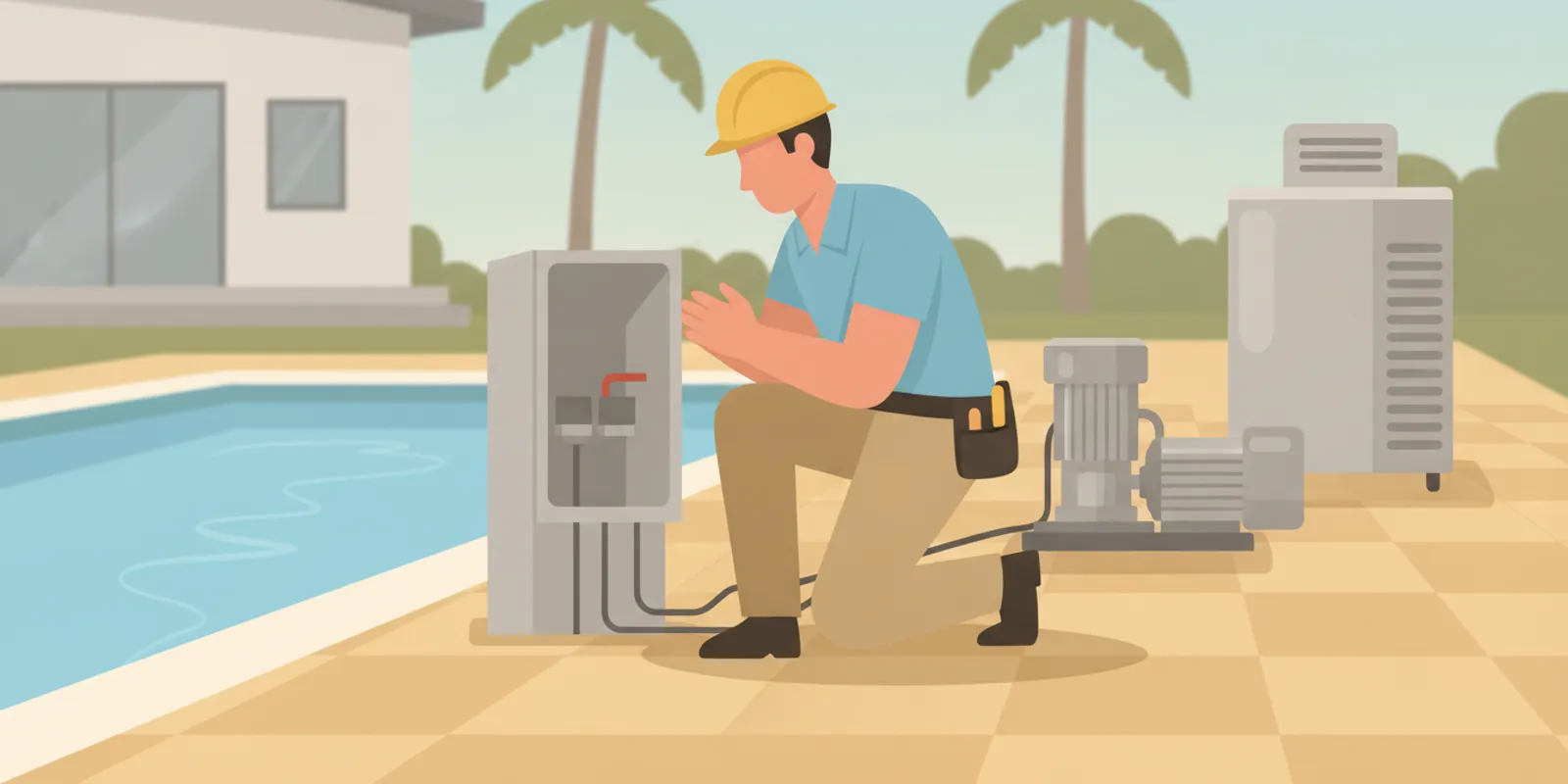
Pool bonding is one part of electrical safety around a swimming pool. It connects conductive components so they are less likely to sit at different electrical potentials, but it is not a stand-alone fix for faulty wiring or a replacement for grounding and protective devices. If you are planning pool work, changing equipment, or responding to a shock or tingling sensation, keep people away from the suspected hazard and have a qualified electrician assess the system.
Request an electrical safety assessment
What does pool bonding do?
Electrical safety around a pool involves more than the equipment that plugs in or the wires that are easy to see. People may touch the water, a metal ladder, a handrail, a light fixture, or another conductive part in close succession. If nearby conductive parts have different electrical potentials, current may flow through an unintended path. Pool bonding is intended to connect the conductive parts that are covered by the applicable requirements, helping limit differences in potential between them.
The exact arrangement depends on the pool, its construction, equipment, and applicable electrical rules. Some portions may be concealed in or around the pool structure. A visible wire, clamp, or metal part cannot tell a homeowner whether the complete system is correctly connected, continuous, and suitable for the installation. Likewise, a lack of visible corrosion does not prove that an electrical connection is sound.
Bonding should be understood as one element in a coordinated system. Correct wiring, grounding, overcurrent protection, and ground-fault circuit interrupter (GFCI) protection may also apply. Each serves a different purpose. A GFCI does not make missing bonding acceptable, and a bonding connection does not make damaged wiring safe. For general pool-safety information, the U.S. Consumer Product Safety Commission provides resources for consumers.
How is bonding different from grounding?
The terms are related, but they do not mean the same thing. Bonding connects conductive parts together. Grounding connects electrical equipment or a system to the grounding path provided for it. Both may be part of a safe installation, and a concern with one does not prove that the other is correct.
| Topic | Bonding | Grounding |
|---|---|---|
| Main role | Connects covered conductive parts to help limit voltage differences between them | Provides the intended grounding path for electrical equipment or a circuit |
| Pool-related question | Are applicable conductive components connected as required for this layout? | Does equipment have the appropriate grounding path for its installation? |
| What it does not replace | Grounding, GFCI protection, correct wiring, or proper installation | Bonding, GFCI protection, correct wiring, or proper installation |
| Homeowner action | Do not add, remove, or test connections; arrange a professional assessment | Do not open equipment or panels; ask a qualified electrician to evaluate it |
It is useful to ask an electrician to explain which function is being evaluated and why. For instance, if a pump has been replaced, the question is not simply whether a wire is present. The professional needs to consider the equipment connection, applicable bonding, grounding, protective devices, and how the new equipment fits the existing installation. The relevant requirements can depend on the project, code edition, and local permitting authority. Do not assume that a checklist for another pool applies to yours.
Which pool components may need attention?
Depending on the pool design and applicable requirements, bonding may involve a conductive pool shell or reinforcing material, certain metal fittings, ladders, rails, and pool-associated equipment. Pumps, heaters, lights, and other electrical equipment also have wiring and grounding considerations. Nearby conductive features may matter in some layouts, while other metal objects in the yard may not be part of the pool system. An electrician determines what applies to the actual installation rather than relying on a generic list.
Construction type can affect what is visible. A connection associated with a pool structure may be hidden after construction, while some equipment connections may be accessible only after a qualified professional takes appropriate safety precautions. The homeowner should not uncover components, remove covers, or use a metal object to probe for a connection. A photograph of a wire near equipment is not enough to establish what it connects to or whether it is intact along its full route.
Pay attention to project changes that could affect the system. A replacement pump may have different connection details from the old unit. A heater, light, or other equipment addition can change what needs to be considered. Pool resurfacing, deck work, landscaping, or other renovation can also make it sensible to ask whether electrical components or connections were disturbed. This does not mean every project has created a defect; it means changes deserve review in context.
What signs call for immediate caution?
A shock, tingling, or unusual electrical sensation in or near pool water should be treated seriously. Do not enter the water to investigate. If someone is in immediate danger, contact emergency services and do not put yourself at risk by touching the water, the person, or nearby equipment. Keep others away from the pool area. Once people are safe, seek professional guidance and do not resume use until the concern has been evaluated.
Other concerns deserve prompt attention, even if no one has felt a shock. Examples include damaged wiring or equipment, water intrusion near electrical equipment, a missing cover, an unusual burning smell, or repeated tripping of a breaker or protective device. Do not repeatedly reset a tripping breaker, bypass a device, or assume the equipment is safe because it restarts. If a part is wet or visibly damaged, stay clear and let a qualified professional advise you.
Some situations are less urgent but still justify planning an assessment. These include an older pool with no available electrical records, recent construction, equipment replacement, electrical work near the pool, or uncertainty about what a previous contractor changed. A professional can help determine the next appropriate step; age alone does not establish whether a pool is unsafe or compliant.
| Situation | What to do now | Information to share |
|---|---|---|
| Shock or tingling reported | Keep everyone out of the pool; call emergency services if anyone is in immediate danger; request professional guidance | Where it happened, when, who was present, and whether equipment was operating |
| Breaker trips repeatedly | Stop resetting it and avoid using affected equipment until it is evaluated | Which device trips, how often, and what was running beforehand |
| New or replacement equipment | Ask for a review of the complete installation, not just the new unit | Equipment type, installation date, and any work records you have |
| Old or undocumented pool | Arrange an assessment instead of guessing from appearance | Approximate pool age, renovations, and known electrical changes |
What can you safely do before calling?
Gathering useful information can make a service conversation more focused. You do not need to open anything or conduct a test. From a safe location, note the pool's approximate age, whether it has been renovated, what equipment has recently changed, and what prompted your concern. If a sensation occurred, record the location, timing, and whether anyone noticed a pattern. Do not recreate the event to collect more information.
- Keep people out of the water if a shock, tingling, or other electrical concern has been reported.
- Do not open the electrical panel, pump, heater, light niche, junction box, or other equipment enclosure.
- Do not disconnect a wire, attach a wire to a rail, or try a do-it-yourself bonding repair.
- Do not enter the water or touch equipment to check whether it is energized.
- Only record labels or take photographs from a safe, dry position if doing so does not require approaching damaged or wet equipment.
- Keep available paperwork, such as equipment details or records of recent work, to share with the electrician.
If you see a hazard, do not move closer just to get a better photograph. A written description is enough to begin the conversation. Tell the service professional clearly if anyone felt a shock, if a breaker is repeatedly tripping, or if there is water near electrical equipment. Ask whether the pool should remain closed while you wait for assessment. If there is immediate danger, prioritize emergency help rather than a routine appointment.
For related electrical concerns, you can review the company’s electrical inspection services and electrical repair information. Which service is appropriate depends on the symptoms and what the electrician finds.
What happens during a professional assessment?
The assessment begins with context. Expect questions about the pool type, approximate age, equipment, recent work, symptoms, and any breaker trips or unusual events. If you have service records or equipment information, they may help clarify the scope. The electrician will determine which parts of the installation need attention and what examination or testing is appropriate for the conditions at the site.
Some components may be accessible for visual examination, while others are concealed or require specific procedures. A professional may review equipment connections and accessible parts of the installation, and may determine that additional testing, repair, or coordination with a pool contractor or local authority is needed. Do not expect a quick look at one visible wire to answer every question about the pool’s electrical safety.
Before work starts, ask what the proposed assessment includes and whether the pool should remain out of use until the concern is resolved. If a defect is found, ask for an explanation in plain language: what was observed, what could not be confirmed, what correction is recommended, and whether follow-up inspection or permitting may apply. Requirements vary with the scope and local rules, so the electrician should explain how those considerations apply to your project.
It can also help to separate an initial safety assessment from repair authorization. Ask which findings need immediate attention and which are recommendations for planned work. Request clarity about any limitations, such as concealed components that could not be evaluated without further work. A careful explanation should help you understand what is known, what remains uncertain, and what the next step is rather than implying that one basic check proves every part of the system is sound.
How should you plan equipment replacement or pool renovations?
Bring electrical planning into the project before a new pump, heater, light, or other feature is installed. Share the pool layout and equipment information with the electrical professional. Ask who is responsible for coordinating electrical work and how the new component will be evaluated with the existing wiring and protective devices. If several contractors are involved, make sure it is clear who handles each part of the electrical scope and who confirms that the work is ready for use.
A replacement part does not automatically make the existing installation suitable for the new equipment. For example, a homeowner replacing an aging pump may be focused on matching the pump’s size and function. The electrical review should also consider the connections and existing system in the context of that change. If the installer finds an unexpected condition, pause to understand the issue before authorizing a workaround or allowing the equipment to operate.
For a larger pool renovation, include electrical questions while the work is being scheduled, not only at the end. Ask whether the project could affect concealed wiring or bonding connections, what access may be needed, and whether inspections or permits apply. The answer depends on the work and local requirements. Keep invoices, equipment details, and inspection records together so future service providers can understand what changed and when.
Maintenance planning should follow the same principle. Do not treat an annual visual walk-around as proof that the bonding system is intact. Note visible changes, newly installed equipment, unexplained trips, or damage, then ask a professional whether evaluation is warranted. If you need to discuss electrical work beyond the pool, the electrical services overview explains the range of service information available.
How can you prepare for the service visit?
A short, organized summary helps avoid missing details. Write down when the issue began, whether it occurred once or more than once, what equipment was operating, and what has changed recently. Include the pool type and any known age or renovation history, but mark estimates as estimates. If the pool is shared by family, tenants, or guests, ask whether anyone else noticed a sensation or equipment issue. Do not ask them to repeat an event or perform a test.
Make the site information available without creating a hazard. You can identify the location of the equipment from a safe path and explain whether there is a gate or access restriction. Do not move stored items around wet equipment, remove covers, or attempt to create access by handling electrical parts. If the equipment area is flooded or visibly damaged, state that clearly when you arrange service so the professional can advise you before arrival.
Useful questions to ask include:
- Which parts of this pool’s electrical system are included in the assessment?
- Should the pool remain closed until the inspection or any recommended repair is complete?
- How will you evaluate bonding, grounding, wiring, and protective devices as distinct parts of the system?
- Are there limits to what can be confirmed without additional access or work?
- Does the proposed project require a permit or inspection by the local authority?
- Will you explain the findings and identify any next steps in writing?
For general preparation about working with an electrical contractor, see the company’s frequently asked questions. If the concern involves active shocks or immediate danger, do not wait for a scheduled visit to keep people away and seek urgent help.
What is a practical way to think through a pool concern?
Consider a homeowner whose pool pump was recently replaced. The pump runs, and there is no visible damage, but the homeowner does not know whether anyone reviewed the existing pool bonding or grounding during the work. The absence of an obvious symptom is not proof of a defect, and it is not proof that every part of the installation is correct. The practical next step is to gather the replacement details and ask a qualified electrician whether an assessment of the relevant pool electrical system is appropriate.
Now consider a different case: someone reports tingling while in the water. This is not a situation for a homeowner to troubleshoot by switching equipment on and off or testing the water. Keep everyone out of the pool, avoid contact with nearby electrical equipment, and seek emergency help if anyone is in danger. Then arrange professional guidance and do not reopen the pool based only on the sensation stopping. The two cases call for different urgency, but neither is resolved by guessing at a visible connection.
A third example is a planned deck or pool renovation. Before work begins, the homeowner can ask the project team how electrical components and any concealed connections will be protected, who coordinates the electrical scope, and whether local approvals apply. Those questions do not replace the contractor’s assessment. They help ensure that electrical considerations are not left until after surfaces are closed or the project is ready for use.
Frequently asked questions
Does pool bonding make the water safe by itself?
No. Bonding is one part of a broader electrical system. Correct wiring, grounding, applicable GFCI protection, appropriate installation, and the condition of equipment also matter. A qualified professional should assess the system as a whole when there is a concern.
Can I test pool bonding with a home tester?
Do not rely on a consumer tester to decide whether a pool is safe, and do not perform tests around pool water or wet equipment. Ask a qualified electrician to determine the appropriate inspection and testing methods for the particular installation.
Is pool bonding the same as grounding?
No. Bonding connects applicable conductive parts to help limit voltage differences between them. Grounding serves a separate function in the electrical system. Depending on the installation, both may be relevant, along with other protective measures.
Should we use the pool after someone reports a shock?
No. Keep everyone out of the water and do not touch the water or equipment to investigate. Contact emergency services if someone is in immediate danger. Seek professional guidance and have the concern evaluated before the pool is used again.
Does replacing a pump mean bonding should be replaced?
Not necessarily. The right response depends on the existing installation, the new equipment, the work performed, and applicable requirements. Ask an electrician to assess how the replacement relates to the pool’s electrical system rather than assuming that either a repair or no change is automatically needed.
Discuss a pool electrical concern
Pool bonding is not a do-it-yourself wire check; it is part of an electrical installation that must be considered alongside the pool, equipment, and protective measures. If you suspect a hazard, keep people away and ask a qualified electrician to determine the safest next step.