
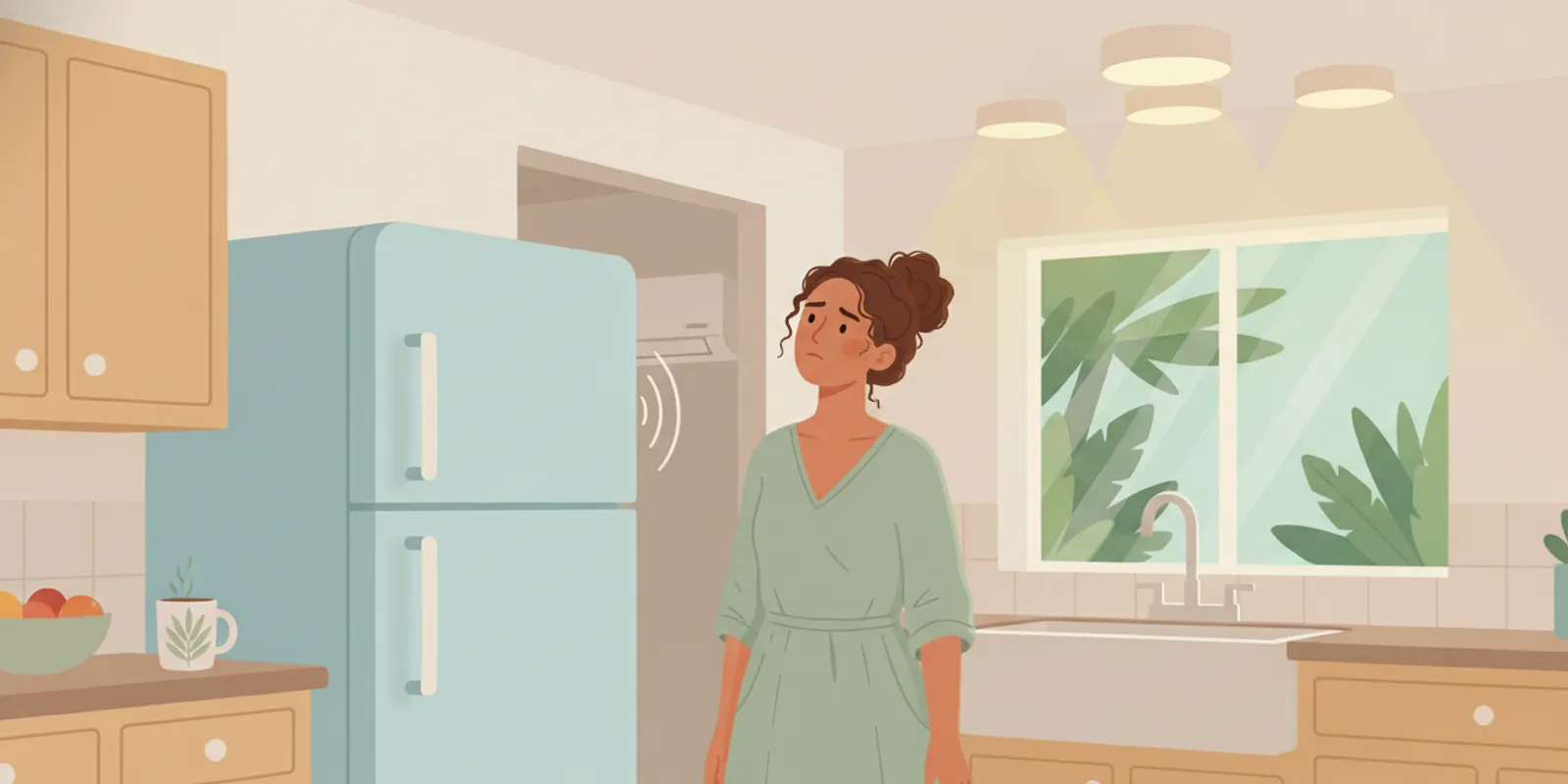
If you are wondering why lights flicker when appliances turn on, the cause may be a brief change in electrical demand—or a problem with a circuit, connection, appliance, or the home’s incoming supply. A quick, slight dip that happens only as a motor starts is different from persistent, worsening, or widespread flickering. Observe what happens, but do not open electrical equipment or attempt repairs.
Why can an appliance make lights flicker?
Some appliances draw a short burst of current when they start. Motors in air conditioners, refrigerators, pumps, and similar equipment can create a momentary change in voltage as they begin running. Lights on the same circuit, or elsewhere in a home affected by the same electrical supply, may briefly dim or flutter. The effect can be more noticeable with certain lamps and fixtures, so the visible symptom alone does not identify the cause.
A short, subtle dip at startup does not by itself identify a specific fault. The pattern matters: how long the flicker lasts, whether it happens with one appliance or many, and whether the lights recover immediately. Repeated, pronounced, or new flickering deserves attention, especially if it occurs with other symptoms. The U.S. Department of Energy explains that power quality concerns can include changes in voltage and interruptions; see its overview of power quality. That general information does not diagnose a particular home, but it helps explain why changes in supply can affect equipment and lighting.
Which patterns should you notice?
Make a few observations during ordinary use from a safe distance. Do not remove outlet covers, open the electrical panel, touch wiring, or deliberately repeat a concerning event to gather data.
- One light or room: The issue may be limited to a lamp, fixture, switch, or branch circuit. Note which lights are affected and whether other lights nearby behave normally.
- Several rooms: Flicker across multiple areas when a large appliance starts may point to a broader supply or connection concern that needs professional assessment.
- Only one appliance: If the change occurs only when one appliance starts, record which one and whether the flicker is brief or sustained. Note any unusual sounds or changes in how it runs.
- More frequent over time: A change from occasional and slight to frequent or more noticeable is useful information for an electrician, even if no other symptom is apparent.
- Dim or brighten: Note whether lights dip, brighten, pulse, or flutter. Different lights may react differently, so describe what you actually see rather than trying to name a fault.
- Other electrical symptoms: Buzzing, unusual heat, a burning odor, sparks, repeated breaker trips, or outlets that stop working make the situation more urgent.
These clues help describe the problem, but they are not a do-it-yourself diagnosis. A qualified electrician can inspect relevant circuits and connections and determine whether the appliance, wiring, panel, or incoming supply needs attention. If multiple neighbors also report a power issue, note that fact when you contact the utility or electrician; do not assume a neighborhood issue explains an unsafe symptom inside your home.
What causes are worth checking professionally?
Several conditions can produce similar symptoms. A professional evaluation is important because the same visible flicker can have different causes. The table is a guide to what an observation may suggest, not a way to confirm the source.
| Possible factor | What you might notice | Safe next step |
|---|---|---|
| Normal startup demand | A very brief, mild dip as a motor starts, with no other symptoms | Note the appliance and pattern; mention it if it becomes more pronounced |
| Shared or heavily loaded circuit | Lights dim when equipment on a circuit starts or runs | Do not move wiring or add a circuit yourself; ask an electrician to assess the arrangement |
| Loose or deteriorated connection | Intermittent, worsening flicker, potentially accompanied by heat, buzzing, or odor | Avoid touching affected equipment and arrange prompt professional help |
| Appliance or motor issue | The flicker appears tied to one appliance, which may also behave unusually | Record the appliance and symptoms; arrange evaluation of the electrical and appliance concerns |
| Supply or service concern | Multiple rooms or circuits are affected, or the problem occurs with several appliances | Ask an electrician to determine whether the concern is inside the home or needs utility coordination |
| Light, lamp, or fixture issue | One fixture flickers at times unrelated to appliance startup | Only replace a bulb if the fixture is cool, intact, and safe to access; seek help if flicker continues |
How can you check the situation safely?
- Identify the trigger during normal use. Note which appliance starts just before the flicker. Do not repeatedly switch equipment on and off to recreate a concerning symptom.
- Note the scope. Record which rooms or lights are affected and whether the lights dim, brighten, or flutter. If you cannot tell whether nearby lights are affected, do not run risky tests; describe what you observed.
- Estimate the duration. Does it stop almost immediately, last while the appliance runs, or continue afterward? A rough description such as “briefly at startup” is enough.
- Look for related warning signs without touching equipment. Pay attention to odor, unusual sounds, visible damage, warmth noticed without contact, or loss of power.
- Write down the timing. Record when the pattern began, how often you notice it, and whether a recent change in appliance use or electrical work preceded it.
- Share the details. Explain the pattern to an electrician. A concise log is more useful than opening equipment or guessing at a cause.
Do not remove a panel cover, tighten connections, replace breakers, or use an outlet tester as a substitute for diagnosis. Electrical work can expose you to shock, burns, or fire risk. If you see smoke, flames, or active sparking, move away and call emergency services. If there is a burning smell or a hot, buzzing electrical device, avoid touching it and seek urgent professional guidance. If a device appears damaged, do not continue using it merely to see whether the flicker returns.
When should you call an electrician?
Arrange an inspection if flickering is persistent, increasingly noticeable, affects several rooms, or occurs with repeated breaker trips, buzzing, unusual heat, a burning odor, or damaged outlets or switches. Do not keep using equipment that appears unsafe. If a breaker trips, do not repeatedly reset it; repeated trips can indicate a condition that needs investigation.
Seek urgent help when there is smoke, fire, active sparking, a burning odor, or a device that is hot or buzzing. Keep people away from the affected area. Call emergency services for an active fire or immediate danger; do not approach a panel or try to shut off power if doing so would put you at risk. For non-emergency but persistent symptoms, describe the urgency when you contact an electrician. My Electrician’s emergency electrical service information may help you decide how to request assistance.
A professional can review the symptoms, inspect accessible electrical components, and determine whether the concern relates to circuit capacity, wiring, a connection, the appliance, or the electrical supply. Depending on what they find, repair or other corrective work may be recommended. For general electrical repair information, see electrical repair services. If a breaker is part of the concern, this guide to when to replace a circuit breaker offers related context, but it is not a substitute for an inspection.
What information helps during an appointment?
Before you contact an electrician, gather details without taking anything apart. A short description is often more useful than a guess about the cause. You do not need to map circuits or determine whether lights share a breaker; those are tasks for a professional.
- The appliance that seems to trigger the flicker, such as an air conditioner, refrigerator, pump, or other motor-driven equipment.
- Whether one light, one room, or multiple areas are affected.
- Whether the light dims briefly, pulses, brightens, or stays affected.
- How often it happens and whether the pattern is getting worse.
- Any related sounds, odors, breaker trips, or changes in appliance operation.
- Whether the symptom began after a new appliance, repair, or other change, if you know.
- Whether the lights return to normal as soon as the appliance is running or remain affected.
For example, “The kitchen lights dip for a second when the air conditioner starts, and the living room light does it too” is more actionable than “the power seems bad.” Another useful description is “one ceiling light flickers at random, whether or not the refrigerator is running.” These statements convey the timing and scope without claiming a diagnosis.
If you are contacting a service provider, mention any immediate warning signs first. Then give the appliance, affected rooms, and duration. If you can safely note the time and frequency on a phone, that is enough; do not record by standing near a sparking or hot device. Avoid testing by adding appliances to an outlet or running equipment that has shown unsafe behavior.
How does circuit capacity fit in?
A circuit serves a defined group of electrical loads. If several devices draw power from the same circuit, the way those loads operate together can matter. Large appliances may also have dedicated circuit requirements, depending on the equipment and applicable installation requirements. Only an assessment can determine whether the existing arrangement is appropriate.
Do not assume that a flicker means the panel is undersized, or that a larger breaker will solve it. Breakers and conductors must be properly matched; changing a breaker without evaluating the circuit can create a hazard. An electrician may inspect the appliance connection, circuit, panel, and other relevant parts before recommending any change. Learn more about dedicated circuits and electrical panel services.
Moving an appliance to another outlet is not always a safe or meaningful test. The outlet may be on the same circuit, the appliance may have specific requirements, or the new location could introduce an extension cord or overload risk. Do not use extension cords as a permanent solution or run a large appliance from an outlet not intended for it. If you are unsure whether a device can be used safely, stop and ask an electrician or the appliance manufacturer for guidance.
Could the appliance itself be involved?
Yes. A motor or compressor that struggles to start, cycles unusually, or behaves differently than before may be part of the picture. The flicker does not prove that the appliance is defective, and an appliance issue does not rule out a wiring or supply concern. Both sides may need evaluation, especially when the symptom is new or has become stronger.
Note whether the appliance starts normally, makes a new sound, stops unexpectedly, or triggers a breaker. Do not remove its cover or attempt internal repairs. Follow the manufacturer’s safety instructions, and stop using the appliance if it is visibly damaged, smells burnt, sparks, or becomes unusually hot. A qualified appliance technician may be appropriate for an appliance fault, while an electrician can assess the home’s circuit and connections. If you cannot tell which applies, start by describing the combined symptoms to an electrician.
What should you avoid doing?
Trying a series of fixes can make the situation more dangerous or obscure the pattern. Avoid these common mistakes:
- Do not open the electrical panel. Internal parts may remain hazardous even when a breaker is off.
- Do not tighten wiring or replace a breaker. The underlying cause must be identified before any repair or component change.
- Do not keep resetting a tripped breaker. If it trips again, stop and arrange an evaluation.
- Do not repeatedly trigger the appliance. Recreating a concerning symptom adds no safe diagnosis.
- Do not ignore warning signs because the lights later recover. A temporary return to normal does not establish that everything is safe.
- Do not use a larger breaker or an extension cord to make the symptom go away. Those actions can create additional hazards.
A safe response is simple: keep clear of suspicious equipment, note what happened if you can do so safely, and contact the appropriate professional. For general guidance on when to call an electrician, review the related overview.
Frequently asked questions
Is a brief flicker when an appliance starts always dangerous?
Not necessarily. Some motor-driven equipment can cause a brief change when starting, but the flicker alone cannot confirm that the system is safe. Persistent, pronounced, worsening, or widespread flickering—or any accompanying warning sign—should be assessed.
Why do lights flicker when the air conditioner turns on?
An air conditioner has components that can draw a startup surge, and the resulting momentary change may be visible in lights. If the dimming is strong, lasts, affects multiple areas, or is new or worsening, arrange an electrical evaluation rather than assuming it is normal.
Should I reset a breaker if the lights flicker?
A flicker alone is not a reason to reset a breaker. If a breaker has tripped, do not keep resetting it, particularly if it trips again or there are other symptoms. Have the cause checked by a qualified electrician.
Can I fix the flickering by changing the light bulb?
A loose or failing bulb can cause flickering at one fixture, but it would not explain every pattern. If you can safely replace a bulb according to its instructions and the fixture is cool and undamaged, that may address a bulb-specific issue. Do not touch exposed wiring or a damaged, hot, or buzzing fixture; get professional help.
Should I call the utility company or an electrician?
If several areas or neighbors are affected, a utility-side issue may be possible, but symptoms inside a home can still need inspection. Contact the utility about a suspected area outage or service issue, and contact an electrician for persistent symptoms, warning signs, or concerns limited to your property. In an emergency, prioritize safety and emergency services.
Contact an electrician about flickering lights
What is the safest next step?
Pay attention to the timing and scope of the flicker, avoid opening or repairing electrical equipment, and seek an inspection if the symptom is persistent, worsening, widespread, or accompanied by warning signs. Clear observations help an electrician identify what needs to be checked.