
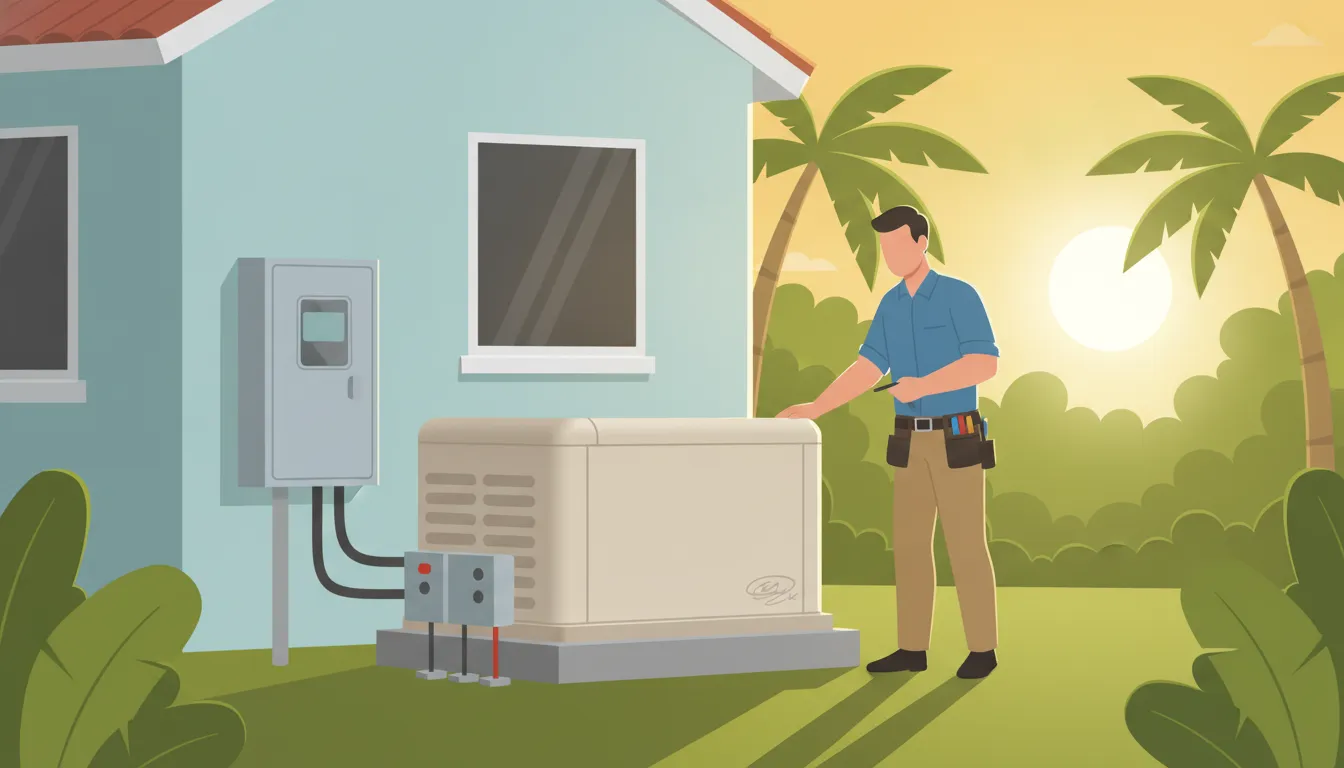
When Florida storms interrupt utility service, a backup generator can help keep essential systems running, but installation is more than placing equipment beside the home. The electrical load and fuel connection shape the project. Transfer equipment, site conditions, and required inspections matter too.
The backup generator installation cost depends on the coverage your home needs and the work required to connect and safely test the system. Standby generators are sized by electrical output in kilowatts. An automatic transfer switch can start the generator during an outage and return your home to utility power when service is restored, according to Pacific Northwest National Laboratory.
That is why a reliable quote should be based on an assessment rather than a universal package price. The first step is understanding which parts of the property, electrical system, and installation site must be evaluated before work begins.
Schedule Service for professional generator installation planning.
What goes into backup generator installation cost?
A complete project quote covers much more than the generator cabinet. A standby generator provides electricity when the primary grid is unavailable, but it must be selected, connected, fueled, placed, tested, and maintained as one working system. That is why a universal price can be misleading. A property assessment and load review are needed before an electrician can define the actual scope.
Equipment and load planning
The generator itself is one cost driver, but the right model depends on what you want to keep operating during an outage. Standby generators are sized by electrical output in kilowatts, or kW. The assessment considers the home's electrical demand and whether the plan covers selected essential circuits or a broader portion of the property. Residential standby units are typically single-phase devices, but the recommendation still depends on the home's existing electrical system and expected loads. The Pacific Northwest National Laboratory explains the role of standby systems and kW sizing in its standby generator guidance.
Transfer equipment and electrical work
An automatic transfer switch, commonly called an ATS, monitors the utility supply and signals the generator to start when the grid fails. When utility power returns, it transfers the load back and signals the generator to stop. The switch must be compatible with the service equipment and the selected coverage plan. The quote may therefore include the transfer equipment, panel compatibility checks, load balancing, wiring, grounding verification, and electrical modifications needed for a safe connection.
Existing conditions matter. An older or crowded panel, limited service capacity, inaccessible wiring, or circuits that require reconfiguration can change the work involved. These details are not visible in a generic online calculator, which is why a professional generator installation assessment is more useful than comparing a generator-only figure.
Fuel, site preparation, permits, and follow-up
Fuel planning is another part of the scope. Depending on the selected system and property, the work may involve a natural-gas or propane connection, approved piping, connection testing, and coordination with the existing fuel setup. The installation location also needs suitable clearances, a stable base, weather-aware placement, and any required trenching or surface preparation. Local permitting and inspections can add required labor, documentation, and scheduling steps. The applicable Florida jurisdiction and the manufacturer's instructions control these requirements.
Finally, commissioning is part of a complete installation. The electrician should test the transfer sequence, verify connections and grounding, confirm that intended loads operate correctly, and explain basic system care. Ongoing maintenance should also be planned so the equipment remains ready when an outage occurs. A scope-based quote makes each of these components visible before work begins, helping you compare complete proposals rather than incomplete equipment-only estimates.
How do generator type and capacity change the project?
The right system depends on what you want to keep running, how the generator will be used, and what your property can support. A smaller portable unit may serve selected appliances through a planned connection. A standby system is installed as part of the home's electrical system and can respond when utility power is unavailable. Standby generators may use diesel, propane, natural gas, or other liquid fuels, and they are generally intended for limited operation rather than continuous, extended use. The U.S. Department of Energy's Pacific Northwest National Laboratory explains standby generator operation and fuel options.
Portable or standby: what fits your outage plan?
Portable equipment can be appropriate when your priority is a short list of essential loads, such as a refrigerator, selected lighting, or medical equipment. It usually requires more hands-on planning during an outage, including safe placement, connection, operation, and fuel management. A permanently installed standby system is designed around the home's electrical distribution and can provide a more automatic response. The project may involve a transfer switch, wiring changes, a fuel connection, and a suitable outdoor location. Those added components affect the work involved, not just the generator selection.
Essential circuits or whole-home coverage?
Backup power does not have to mean powering every circuit. An essential-load plan focuses capacity on selected equipment and may reduce the generator size and electrical modifications needed. Whole-home coverage aims to support substantially more of the property, including larger loads that may start at different times. Your electrician must evaluate the actual circuits, appliances, motor loads, and expected starting demand before recommending either approach. Square footage alone does not determine the required size. Two homes with similar floor plans can have very different electrical demands.
Why do kW and phase matter?
Generator capacity is expressed in kilowatts, or kW, which describes the electrical output available to the home. The recommendation must account for loads that run together. It must also account for extra demand when some equipment starts. Residential standby generators are typically single-phase devices, but the property's service and connected equipment still need to be checked for compatibility. A correct assessment helps prevent an undersized system that cannot support the intended circuits or an oversized project that adds equipment without a practical benefit.
Fuel availability, storage requirements, local utility connections, placement, and storm exposure can also shape the installation scope. For a project-specific recommendation, ask for a professional load assessment and a written quote. It should explain the selected coverage, kW capacity, phase, fuel plan, and electrical work before installation begins.
Which transfer and electrical work affects the estimate?
The generator is only one part of a safe backup-power system. The electrical work connects that equipment to your home, controls how power moves during an outage, and confirms that the finished installation operates as intended. Those details can meaningfully change the scope behind a project-specific estimate.
How does an automatic transfer switch work?
An automatic transfer switch, or ATS, is the equipment that manages the changeover between utility power and generator power. When the grid goes out, the ATS can signal a standby generator to start and begin supplying the connected loads. When utility service returns, it transfers the load back to the grid and signals the generator to stop. This sequence helps prevent unsafe backfeeding and allows the system to respond without a homeowner manually moving cables or breakers.
The switch must be properly sized and compatible with the generator, service, and intended coverage. Its location, connection method, controls, and required wiring are part of the installation scope. For a closer look at the variables involved, review these transfer switch cost factors, while keeping in mind that this article addresses the complete generator project rather than the switch alone.
What existing electrical work may be needed?
An electrician needs to evaluate how the generator will connect with the service equipment and which circuits the system is expected to support. Panel compatibility matters because the existing panel, breakers, service conductors, and available capacity must work with the planned transfer equipment. If the panel cannot safely accommodate the design, panel modifications or a broader electrical panel upgrade may become part of the scope.
Load balancing is another important consideration. The system may be designed for whole-house coverage or for selected essential circuits, depending on the home and the owner's priorities. The electrician may need to organize circuits so the generator is not asked to carry more demand than its rated output. That assessment can include reviewing heating and cooling equipment, well or pool equipment, refrigeration, pumps, and other significant loads.
The physical installation can also include conductors, conduit, grounding and bonding, dedicated circuits, labeling, and protection for the wiring. A permit value may account for the generator, labor, and materials. Depending on the jurisdiction and project, inspections can include an electrical inspection, required testing, final approval, and electrician presence during the final inspection. Service-entrance labeling may also be required so future service personnel can clearly identify the system.
Before the project is complete, the system should be tested under appropriate conditions. Testing and safety verification help confirm transfer operation, grounding, voltage, load response, and the communication between the generator and ATS. A professional assessment followed by an upfront, scope-based quote gives you a clearer picture of what your home actually needs.
Schedule Service for a backup generator assessment at 877-762-7483
How do fuel, placement, and permits affect the scope?
Fuel routing, installation location, and required inspections can change the work involved in a backup generator project. These details are part of the complete backup generator installation cost conversation because they determine materials, site preparation, coordination, and testing. A qualified installer should review them before finalizing the scope.
Confirm the fuel connection
Standby generators may use natural gas, propane, diesel, or another approved fuel. The existing fuel source, regulator capacity, connection point, and distance to the generator all matter. Gas piping and regulators must be adequately supported and protected from physical damage. If the project requires a new gas line, the installer may also need to coordinate a pressure-test inspection before the system can be approved. These requirements can add piping, fittings, protection, testing, and scheduling to the work.
Choose a compliant placement
The generator needs an outdoor location that supports safe operation and service access. Manufacturer instructions control the required clearances from the house, fences, sheds, windows, vents, air intakes, and exhaust obstructions. A government installation guide from Essex, Connecticut, provides examples. These include five feet from dwelling openings, ten feet from a propane tank fill or vent, and five feet from a gas-regulator vent when applicable. Those measurements are examples from one local guide, not Florida-wide law. Your local authority having jurisdiction and the specific generator manufacturer instructions control the requirements for your property.
Prepare the approved base
A generator generally needs a stable, approved base rather than loose soil or an improvised platform. The same Connecticut guide describes a concrete or approved base at least three inches above surrounding grade. Treat that measurement as a local-guide example only. Depending on the site, the scope may include a new pad, surface preparation, drainage considerations, or adjustments for access and flood-related conditions.
Account for trenching and underground work
When fuel piping or electrical conduit must cross a yard, the route can affect excavation, restoration, materials, and inspection timing. The cited guide specifies twelve inches as an example minimum depth for underground gas piping. It calls for adjacent tracer wire on plastic underground gas pipe, with the wire terminating above grade at both ends. Local requirements, site conditions, utility locations, and the approved installation plan may differ. Never assume a trench can be backfilled before the required inspection.
Plan permits and final approval
Permit scope may account for the generator, labor, and materials, not just the equipment. Depending on the jurisdiction and work performed, inspections can include gas pressure testing, underground gas and electrical inspections before backfill, and a final inspection. The cited guide also calls for manufacturer installation instructions to be available and the electrician to attend the final inspection. A service-entrance label identifying the optional standby source may be required as well. Ask whether permitting, inspection coordination, corrections, and final system testing are included in the written scope. See the local installation guide example, then confirm every requirement with your local authority having jurisdiction.
What maintenance should you include after installation?
Installation is only the beginning of keeping backup power ready. A maintenance plan should make it easier to identify small issues before an outage puts the system under stress. The Pacific Northwest National Laboratory notes that operations and maintenance support generator efficiency and preparation for power outages, while neglected maintenance can contribute to system failure and loss of power. Plan routine service as part of the project rather than treating it as an afterthought.
Inspect the connections and operating components
A qualified technician should inspect electrical connections, fuel connections, and visible wiring for looseness, damage, corrosion, or other changes. In coastal Florida, humidity and salt air can make corrosion a more important concern, especially for homes near the water. The technician can also inspect oil and air filters, clean accessible components, and replace worn parts when needed. These checks help keep the equipment and its supporting connections in suitable operating condition without promising a specific lifespan or performance level.
Test the system under an appropriate load
A generator should not be judged only by whether its engine starts. Maintenance can include testing its ability to carry the intended electrical load, verifying voltage, checking grounding where appropriate, and confirming that the transfer equipment operates correctly. The automatic transfer switch should move the selected load to generator power during an outage and return it to utility power when service is restored. A complete test gives the homeowner and technician a clearer picture of whether the installed system still matches the property's needs.
Check the battery and prepare for storms
Battery voltage should be verified during routine service, along with the condition of battery connections and other starting components. Before hurricane season or a forecast storm, confirm that the generator area is clear, vents and air paths are unobstructed, and the system's maintenance status is current. Never improvise around fuel, exhaust, electrical connections, or manufacturer clearances. Follow the equipment instructions and have a qualified professional address warning lights, unusual noises, failed exercise cycles, or visible damage.
For a practical service checklist, review this generator maintenance guidance. When planning backup generator installation cost, include ongoing inspections, filter and oil service, load testing, cleaning, battery checks, and replacement of worn components in your ownership plan.
How can Florida homeowners compare generator installation quotes?
When comparing backup generator installation cost, look beyond the bottom line. Two quotes may appear very different because one includes the full project and the other covers only part of the work. A useful quote explains what will be installed, how the system will connect to your home, which loads it will support, and what testing or follow-up is included.
Ask whether the electrician has assessed your property and expected electrical loads. Generator recommendations can differ between whole-home and partial-home backup, and existing panel conditions may affect the work. Transparent, upfront, scope-based pricing gives you a clearer basis for comparison than an estimate built around a generic package.
| Quote type | What it should clarify | Questions to ask |
|---|---|---|
| Complete project quote | Equipment, load assessment, transfer equipment, wiring, panel compatibility, fuel connection, placement, permits, testing, and warranty documentation. | Which loads will operate? Are site preparation, inspections, startup, and final testing included? What is excluded? |
| Equipment-only quote | The generator model and capacity, but not necessarily the electrical, fuel, permitting, or commissioning work needed for a safe installation. | Who will install and test the system? Does the equipment match the property assessment and the planned transfer setup? |
| Labor-only quote | The installation work covered by the electrician, while equipment, materials, permits, fuel work, or panel modifications may remain separate. | Which materials and subcontracted work are excluded? Who coordinates permits, inspections, equipment delivery, and warranty paperwork? |
A complete scope should also explain how the system will be tested under expected conditions and whether panel compatibility, load balancing, wiring, and grounding checks are part of the work. These details help prevent an attractive initial quote from becoming an incomplete project plan.
My Electrician FL provides professional assessment and upfront pricing before work begins. The company also backs its workmanship with a 2-year written guarantee. Homeowners can review professional generator installation services and, if helpful for planning a larger upgrade, explore available financing options without assuming approval or specific terms.
What should you ask before scheduling generator installation?
A careful conversation before work begins can clarify the project scope and help you understand what the backup generator installation cost will include. Ask the electrician to walk through these items for your home:
- Which loads should the generator support? Decide whether you need selected essentials, such as refrigeration and critical equipment, or broader whole-house coverage. Ask how the load assessment and load balancing will determine the recommendation.
- What fuel source and connection work are required? Discuss whether the proposed system uses propane, natural gas, diesel, or another approved fuel. Ask who evaluates the existing fuel supply, completes any connection work, and verifies that the installation meets applicable requirements.
- Will my electrical panel work with the system? Confirm panel compatibility, transfer-switch selection, wiring, grounding, and whether an electrical modification is needed. If the panel needs attention, ask whether an electrical panel upgrade is part of the scope or a separate recommendation.
- Where can the generator be placed safely? Ask who reviews manufacturer clearances, windows and vents, property access, drainage, weather exposure, and the need for a stable approved base. The manufacturer instructions and local authority having jurisdiction control the final placement, not a generic distance found online.
- Who handles permits and inspections? Clarify which permits may apply, who submits them, whether fuel or underground work requires an inspection before backfilling, and who coordinates the final inspection. Keep the manufacturer installation instructions available for the inspection process.
- How will the completed system be tested? Ask whether the installer will verify transfer operation, voltage, grounding, load performance, safety controls, and the customer handoff before considering the work complete.
- What maintenance and warranty support should I expect? Confirm the recommended maintenance schedule, who handles future service, what the equipment warranty covers, and what workmanship protection is provided. My Electrician's customer context states that its work includes testing, customer education, warranty paperwork, and a 2-year written workmanship guarantee.
My Electrician serves homeowners across the Treasure Coast and Northern Palm Beach County, including Port St. Lucie, Stuart, Fort Pierce, Vero Beach, Jupiter, Tequesta, and Palm Beach Gardens. A property assessment from a qualified electrical team can turn these questions into a written, scope-based plan. Review the options for professional generator installation, then confirm who is responsible for each part before approving the work.
Frequently Asked Questions
How much is a generator for a 2,000-square-foot house installed?
Square footage alone cannot determine the project scope or the backup generator installation cost. The estimate depends on which appliances and systems you want to operate, the home's electrical load, generator capacity, fuel connection, installation location, transfer equipment, panel compatibility, permits, and required testing. A professional assessment can identify whether partial-home or whole-house coverage is appropriate and provide a written quote based on the actual property.
How much does Home Depot charge to install a Generac generator?
Home Depot installation pricing can vary by location, generator model, site conditions, and the installer assigned to the project. Rather than relying on a general figure, ask for an itemized quote that explains what is included, such as electrical work, transfer-switch installation, fuel connections, permits, inspections, startup, and testing. Comparing the complete scope is more useful than comparing a headline installation price.
Is a whole-house backup generator worth it?
It can be worthwhile when you want the convenience of keeping more of the home operating during an outage, including selected large loads. However, not every household needs whole-house coverage. A partial-home system may better match your priorities and property. Discuss essential circuits, comfort needs, fuel supply, placement, maintenance, and the available budget with an electrician before choosing the system size.
Is a whole-house generator a tax write-off?
Tax treatment depends on your individual circumstances, how the equipment is used, and current federal, state, or local rules. Do not assume that a whole-house generator qualifies for a deduction or credit. Ask a qualified tax professional about your situation before relying on any potential tax benefit, and base the installation decision on the system's practical value and complete project scope.
Schedule Your Backup Generator Assessment
A property and load assessment helps clarify the generator capacity, electrical work, fuel connection, and installation details your home requires. That gives you a clear scope for planning the project without relying on a generic price range.